Seiðr Loom

Æsir

Odin

Óðinn

Chief of the Æsir: a one-eyed god of wisdom, poetry, magic, war and the dead, who gave an eye and hanged himself on a tree for knowledge, and who dies at Ragnarök.
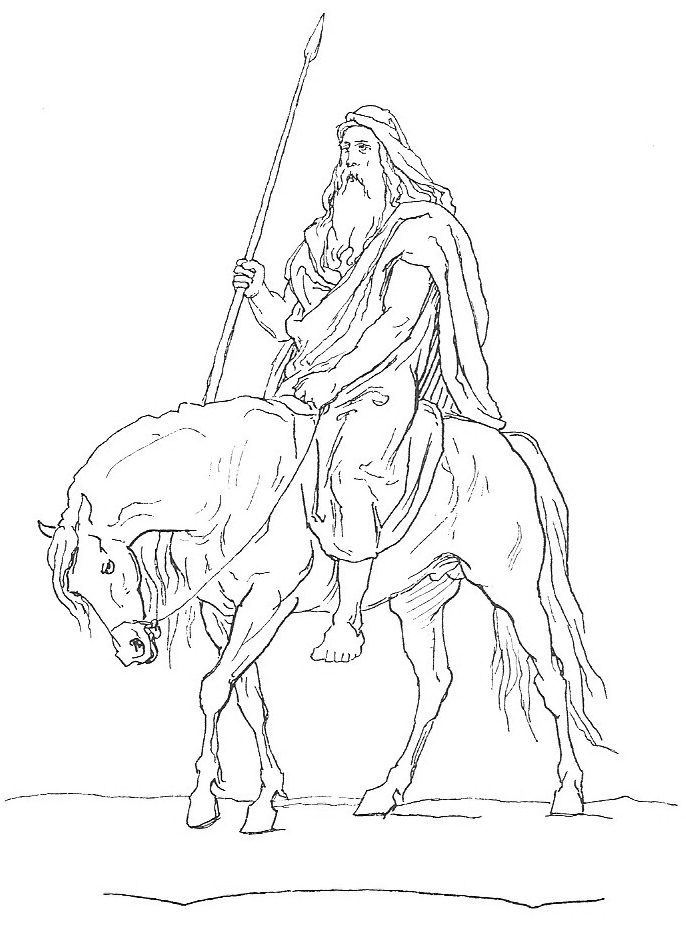
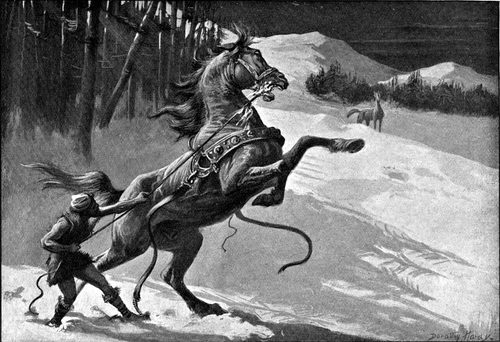
Odin holding Gungnir atop Sleipnir by Frølich
Odin holding Gungnir atop Sleipnir by Frølich, Lorenz Frølich (1895). Wikimedia Commons, public domain.

Odin is the chief of the Æsir and the most complicated figure in Norse myth. Snorri calls him "highest and eldest of the Æsir", the god whom all the others serve "as children obey a father" Gylfaginning 20. Yet the poems seldom show him ruling. They show him travelling, asking questions, lying about his name, and paying heavily for what he learns. Bellows spells the name Othin; Brodeur, Odin.

Family and the making of the world

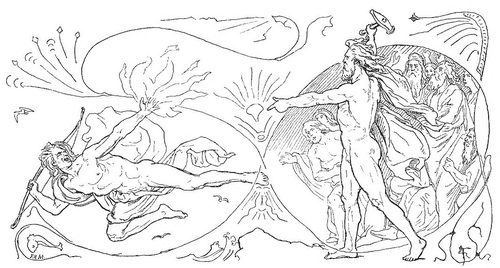
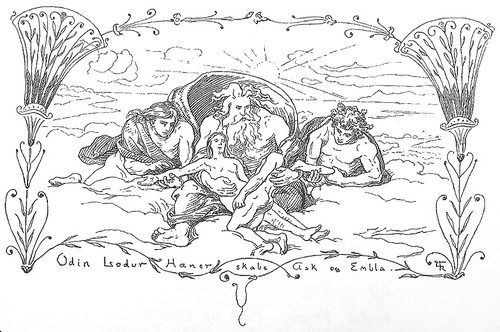
Odin's father was Borr, son of Búri, the first being licked out of the ice; his mother was the giantess Bestla, daughter of Bölþorn Gylfaginning 6. The chief god is therefore half giant. With his brothers Vili and Vé he killed the giant Ymir and built earth, sea and sky from the body Gylfaginning 7 Gylfaginning 8. Snorri also has the three brothers make the first people, Askr and Embla Gylfaginning 9; Völuspá gives that work to Odin, Hœnir and Lóðurr instead Völuspá 18.

His wife is Frigg, who "knows all the fates of men" Gylfaginning 20. Snorri calls him Allfather "because he is father of all the gods" Gylfaginning 20, and the sources name many sons: Thor by Jörð, the Earth Gylfaginning 9; Baldr Gylfaginning 22; Höðr Skáldskaparmál 13; Hermóðr Gylfaginning 49; Váli by Rindr Gylfaginning 30; Víðarr by the giantess Gríðr Skáldskaparmál 18; and, in Skáldskaparmál, Týr and Bragi Skáldskaparmál 9 Skáldskaparmál 10.

The price of wisdom

Odin wants to know things, and he pays for knowledge with his own body. He gave an eye to drink from Mímir's well: "I know where Othin's eye is hidden," the seeress tells him Völuspá 29, and Snorri explains that Mímir would not let him drink "until he had laid his eye in pledge" Gylfaginning 15.

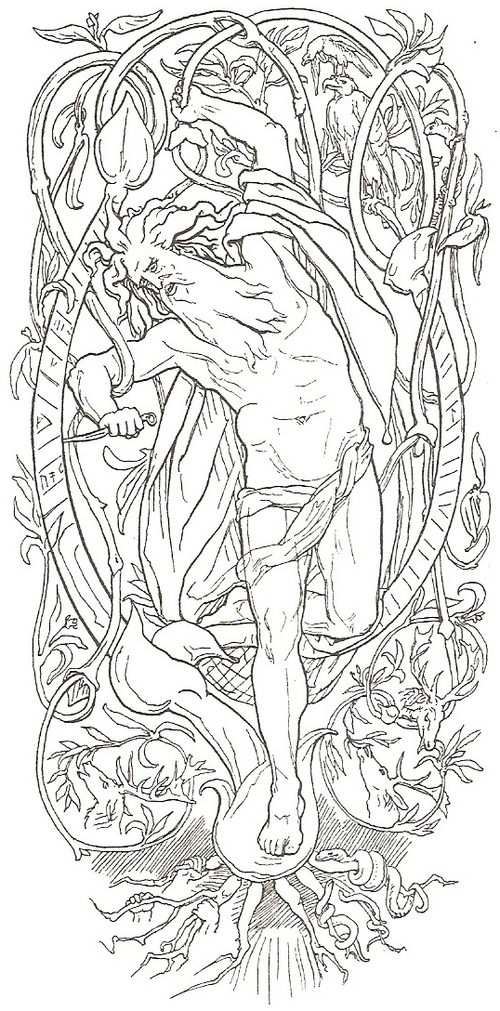
His most famous sacrifice is told in his own voice in Hávamál. He hung for nine nights on a windstruck tree, wounded with a spear, without food or drink, given "to Othin, myself to myself" Hávamál 139. At the end he seized the Runes and fell back Hávamál 140.

I ween that I hung on the windy tree,Hung there for nights full nine;With the spear I was wounded, and offered I wasTo Othin, myself to myself,Hávamál 139

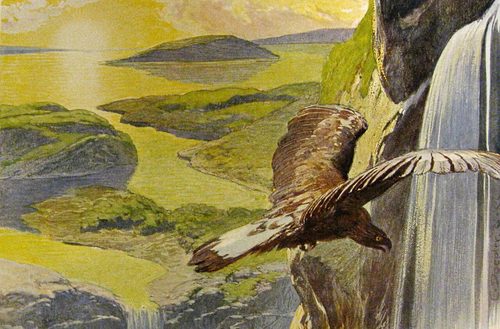
He then learned nine songs from his mother's brother and drank the precious mead Hávamál 141. That mead, the mead of poetry, he won by seducing the giantess Gunnlöð and abandoning her; Hávamál admits as much: "Suttung's betrayal he sought with drink, and Gunnloth to grief he left" Hávamál 110. Snorri tells the full theft, with Odin escaping as an eagle Skáldskaparmál 1.

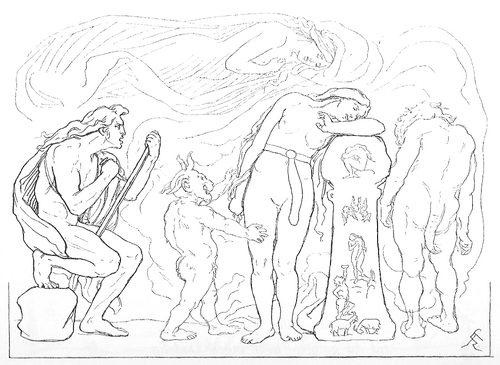
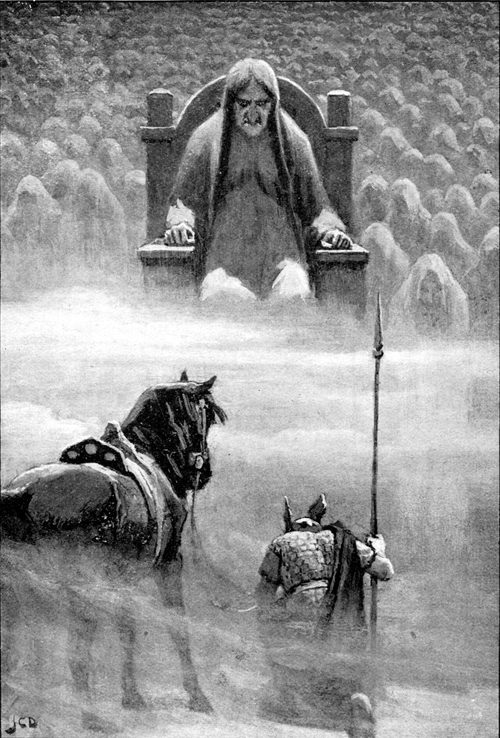
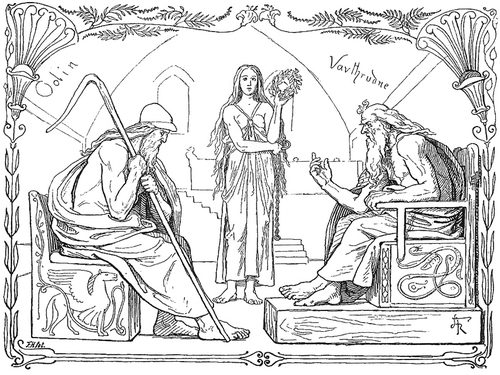
Much of what Odin knows he gets by questioning others. He wagers his head in a contest of lore with the giant Vafþrúðnir and wins with a question only he can answer: what he whispered into his dead son's ear Vafþrúðnismál 54. He rides Sleipnir to the gates of Hel and raises a dead seeress to learn Baldr's fate Baldrs draumar 4. Völuspá itself is framed as a seeress speaking to him Völuspá 1 Völuspá 28.

God of the slain

Odin chooses the dead. In his hall Valhöll, roofed with shields, he gathers men who fell in battle Grímnismál 8, the einherjar, who fight each day and feast each night Gylfaginning 41. He shares the slain with Freyja, who takes half Grímnismál 14. He feeds his food to the wolves Geri and Freki and lives on wine alone Grímnismál 19; his ravens Huginn and Muninn fly over the world every day Grímnismál 20. From the high seat Hliðskjálf he can see "every man's acts" Gylfaginning 9.

The sources do not make him a reliable patron. In Völuspá he throws the spear that starts the first war in the world Völuspá 23. In Lokasenna Loki accuses him of giving victory to cowards Lokasenna 22 and of practising womanish magic on Samsey Lokasenna 24. In Hárbarðsljóð, disguised as a ferryman, he boasts of stirring up wars and seducing women, and sneers that "the noble who fall in the fight hath Othin, and Thor hath the race of the thralls" Hárbarðsljóð 24.

Names and disguises

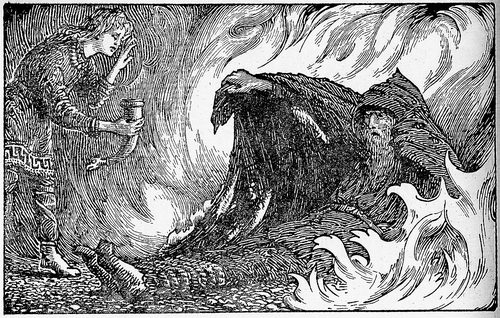
Odin rarely travels under his own name. As Grímnir, tortured between two fires by King Geirröðr, he recites dozens of names and ends: "Now am I Othin" Grímnismál 54. He is Gagnráðr to Vafþrúðnir Vafþrúðnismál 8, Vegtamr to the dead seeress Baldrs draumar 6, Bölverkr to the giants he robs Hávamál 109.

Death at Ragnarök

Odin knows how he will die. At Ragnarök he consults Mímir's head Völuspá 47, then rides first into battle with his spear Gungnir Gylfaginning 51. Fenrir swallows him Gylfaginning 51, and his son Víðarr avenges him, tearing the wolf's jaws apart Vafþrúðnismál 53 Gylfaginning 51 or, in Völuspá, thrusting a sword to its heart Völuspá 54. Odin does not return in the renewed world.

Beyond the Eddas

Snorri's Prologue offers a different, rationalised Odin: a human king from Troy, "far-famed for wisdom", who led his people north and was taken for a god Prose Edda, Prologue. Outside the Eddas he is Woden in Anglo-Saxon royal genealogies and Wodan among the continental Germans. Scholars agree that the frenzy in his name connects his roles as god of poetry, ecstatic magic and battle-rage; how and when he became the head of the gods is still debated.

In the sources

Quoted from the hosted translations; each line is checked against the text when the site is built. Select a reference to read it in context.

Odin is highest and eldest of the Æsir: he rules all things, and mighty as are the other gods, they all serve him as children obey a father.
Gylfaginning 20 Snorri's summary of Odin's rank among the gods.
I know where Othin's eye is hidden, Deep in the wide-famed well of Mimir
Völuspá 29 The seeress knows the price Odin paid for wisdom: an eye left in Mímir's well.
I ween that I hung on the windy tree, Hung there for nights full nine; With the spear I was wounded, and offered I was To Othin, myself to myself
Hávamál 139 Odin's own account of the self-sacrifice that won him the runes.
Stands Valhall stretching wide; And there does Othin each day choose The men who have fallen in fight.
Grímnismál 8 Odin as chooser and host of the battle-dead.
O'er Mithgarth Hugin and Munin both Each day set forth to fly
Grímnismál 20 His two ravens, Thought and Memory, scout the world for him daily.
A single name have I never had Since first among men I fared.
Grímnismál 48 In disguise as Grímnir, Odin recites a long list of his names.
The wolf shall fell the father of men, And this shall Vithar avenge
Vafþrúðnismál 53 Odin's death at Ragnarök, and his son's revenge, foretold by a giant.
his son was he who is named Vóden, whom we call Odin: he was a man far-famed for wisdom and every accomplishment
Prose Edda, Prologue The Prologue's rationalised version: Odin as a human king descended from the Trojans.

Where the sources disagree or fall silent

In modern culture

Not from the medieval sources.

Odin's Old English name survives in Wednesday ('Woden's day'). Richard Wagner made him Wotan, the troubled ruler of the gods in the Ring cycle (1876). Marvel's comics and films cast him as Thor's stern father and the king of Asgard, a role far tidier than the trickster of the poems; Neil Gaiman's novel American Gods (2001) shows him as the con-man Mr. Wednesday, closer to the sources' wanderer in disguise.
Myths with Odin

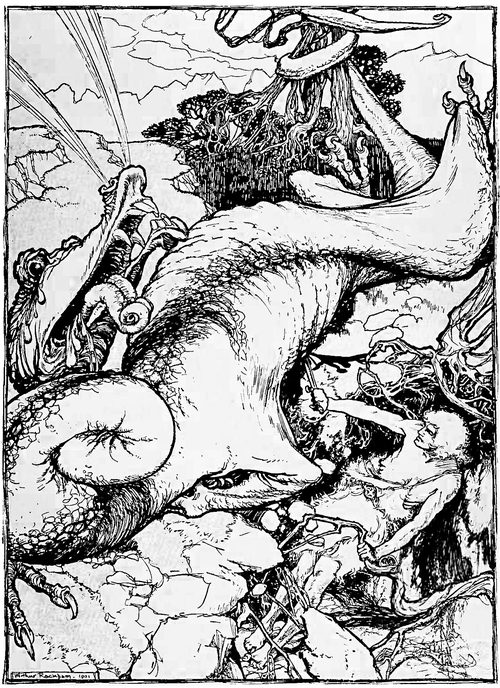
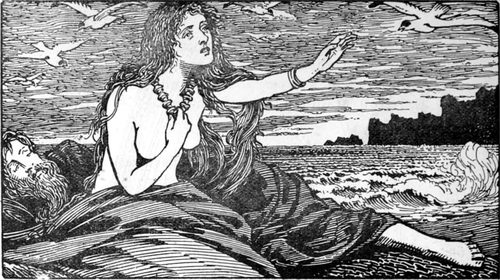
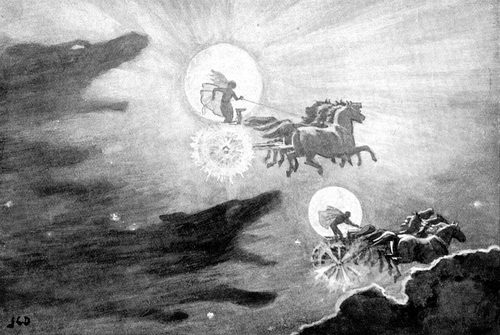
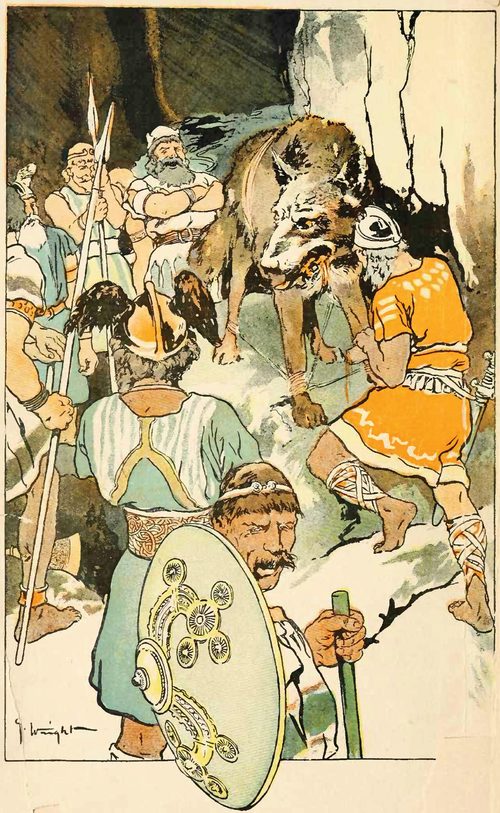
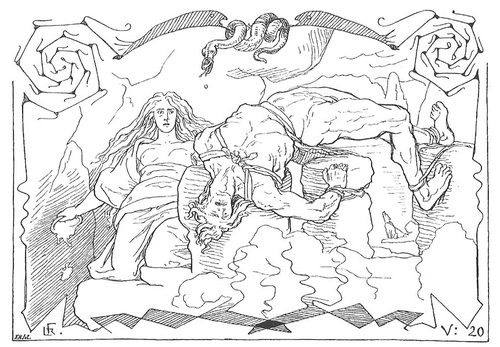
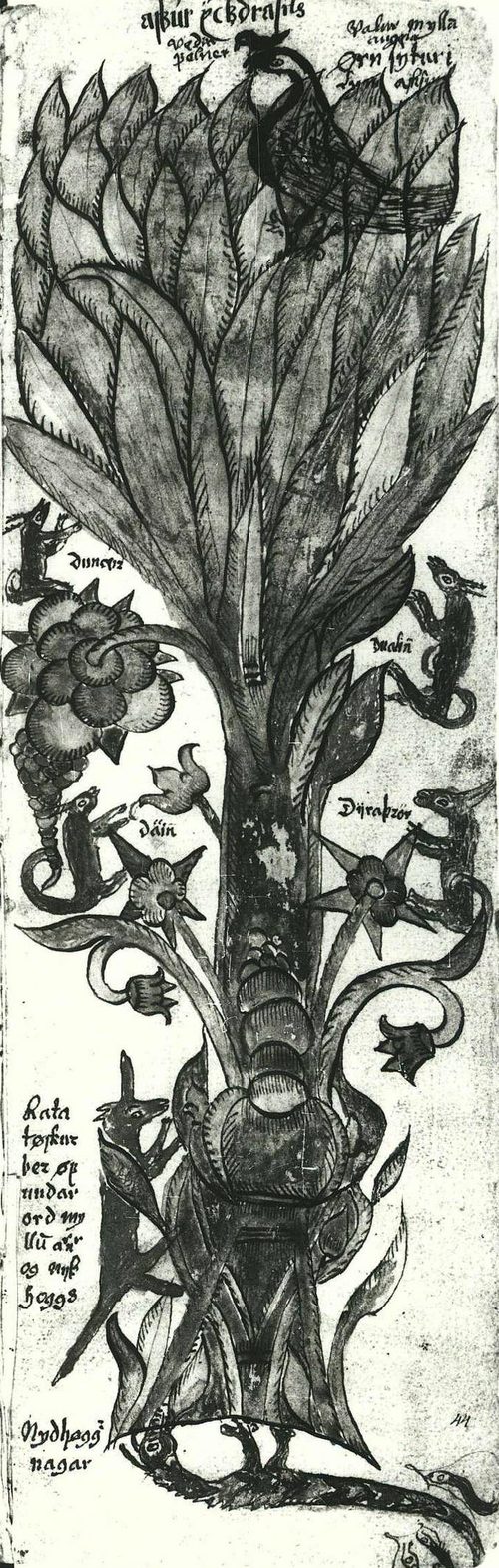
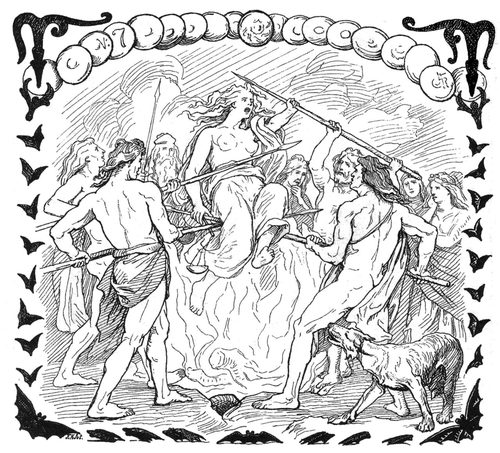
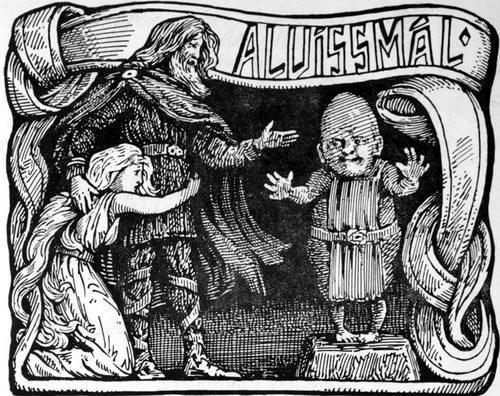
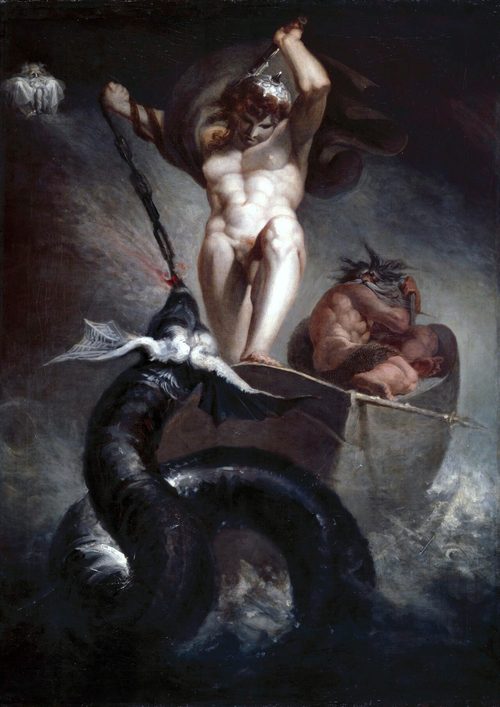
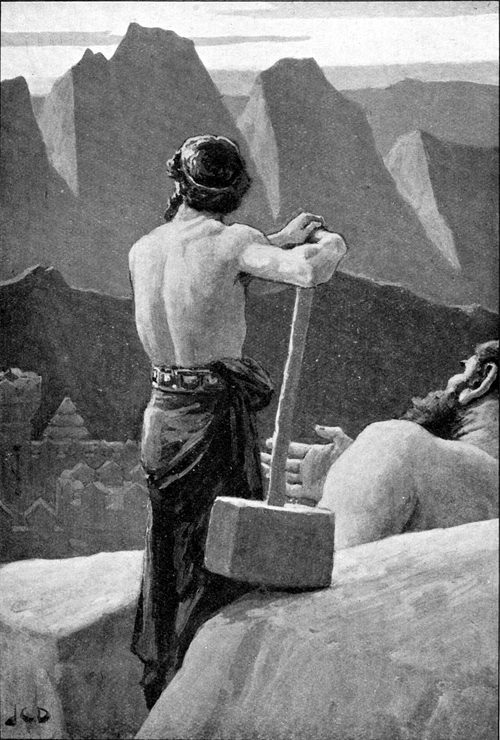
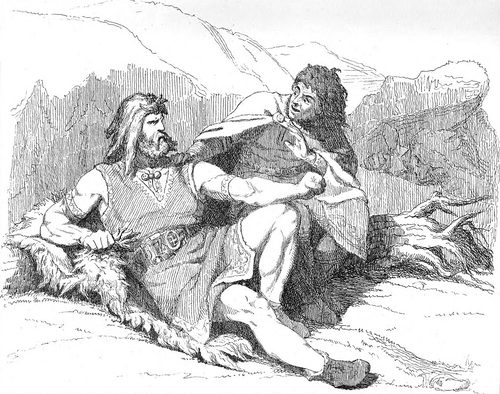
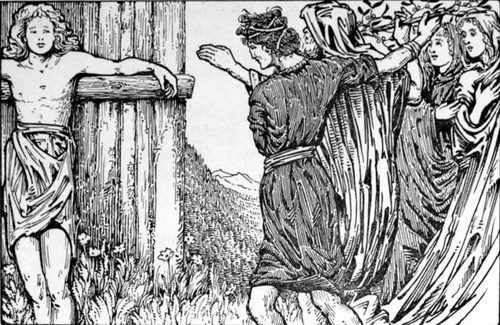
Ask and Embla: the first humans Three gods walking by the shore find two lifeless pieces of wood, Ask and Embla, and give them breath, mind, warmth and colour. Völuspá and Snorri agree on the gifts but not on who gave them. Baldr's dreams and death Baldr dreams of his own death; Odin rides to Hel to question a dead seeress; and, in Snorri's telling, Loki puts a sprig of mistletoe into blind Höðr's hand. The gods lose their brightest member and the slide toward Ragnarök begins. Freyr and Gerðr Freyr sits in Odin's high seat, glimpses the giant's daughter Gerðr and is sick with love. His servant Skírnir rides through fire to woo her, and when gifts fail he wins her with threats and a curse. The price is Freyr's sword. Hermóðr's ride to Hel After Baldr's death Hermóðr rides Sleipnir nine nights down to Hel to ransom his brother. Hel agrees to let Baldr go if everything in the world weeps for him; one giantess in a cave will not. Loki's flyting at Ægir's feast Thrown out of the sea-giant Ægir's feast for killing a servant, Loki walks back in and insults every god and goddess in turn, until Thor comes home and threatens him with the hammer. Odin as Grímnir between the fires To win a wager with Frigg, Odin visits his foster-son King Geirröðr in disguise and is tortured between two fires for eight nights. Given a drink by the king's young son, he pours out a vision of the gods' halls and the world-tree, then reveals himself, and the king falls on his own sword. Odin on the tree: how the runes were won In Hávamál Odin tells how he hung for nine nights on a windswept tree, wounded with a spear and given to himself, without food or drink, until he seized the runes and fell back. It is the most famous passage in Old Norse poetry, and one of the most mysterious. Odin's contest of wisdom with Vafþrúðnir Against Frigg's advice, Odin goes in disguise to the wisest of the giants and stakes his head on a contest of questions about the creation, the gods and the end of the world. He wins with a question only he can answer. Odin's eye and Mímir's well Odin gave one of his eyes as a pledge for a drink from the well of wisdom kept by Mímir. The sources tell it in a few lines, and the eye's hiding-place becomes one of the secrets the seeress of Völuspá throws back at the god. Otter's ransom and Andvari's curse Loki kills an otter that turns out to be a farmer's son. To buy their lives the gods must fill and cover its skin with gold, which Loki wrings from the dwarf Andvari, along with a ring Andvari curses. The curse starts working at once. Ragnarök: the doom of the gods The end of the Norse world as told in Völuspá, Vafþrúðnismál and Snorri's Gylfaginning: winter and war, the wolf and the serpent loose, the gods killed one by one, and Surtr's fire over the earth. Sigurðr slays Fáfnir Urged on by his foster-father Reginn, the young Sigurðr digs a trench on the dragon's path and stabs Fáfnir from below. A taste of the dragon's heart-blood lets him understand the birds, who warn him that Reginn means to kill him. Skaði chooses a husband Þjazi's daughter Skaði comes armed to Asgard for vengeance and accepts a settlement instead: a husband chosen by his feet, and a laugh. She picks Njörðr, hoping for Baldr, and the marriage of mountain and sea does not last. Sun, Moon, Night and Day How the Norse sources explain the sky's clock: Night and Day ride round the world on two horses, the children of Mundilfari drive the sun and moon, and two wolves chase them until the end of the world. The binding of Fenrir The gods raise Loki's wolf-son Fenrir at home until they fear him, then trick him into a magic fetter made of impossible things. Týr puts his hand in the wolf's mouth as a pledge, and loses it. The binding of Loki After Baldr's death Loki hides as a salmon in a waterfall. The gods catch him in a net, bind him on three stones with his own son's entrails, and hang a serpent over his face. Sigyn catches the venom in a bowl until Ragnarök. The giant builder and the wall of Asgard A stranger offers to wall the gods' stronghold in a single winter, for the price of Freyja, the sun and the moon. When he is about to win, Loki saves the gods by turning himself into a mare — and gives birth to Sleipnir. The making of the world Before anything existed there was only a yawning gap. Fire and ice met in it, the giant Ymir woke out of the melting rime, and Odin and his brothers killed him and built the world from his body. The mead of poetry From the spittle of the gods' peace comes Kvasir, wisest of beings; from his blood two dwarfs brew a mead that makes poets. It passes to the giant Suttungr, and Odin wins it by labour, seduction and theft, flying home as an eagle. The theft of Iðunn and her apples Caught by a giant in eagle's shape, Loki buys his freedom by luring Iðunn and her apples out of Asgard. The gods grow old, and Loki must steal her back as a falcon, with Þjazi beating after him. The treasures of the gods: Sif's hair and Brokkr's wager Loki shaves Sif's head, and to save his own skin sets two families of dwarf-smiths competing. The result is six treasures — golden hair, a folding ship, a spear, a ring, a golden boar and Thor's hammer — and Loki's lips sewn shut. The war of the Æsir and the Vanir The first war in the world, fought between the two families of gods. The surviving texts give only fragments — a witch burned three times, Odin's spear, a broken wall, a truce sealed with spittle and hostages — but they add up to the story of how the Vanir came to live among the Æsir. The world reborn After Ragnarök a green earth rises from the sea. Surviving gods meet on Iðavöllr, Baldr returns from Hel, two humans come out of hiding, and a new sun rides the sky. The sources do not agree on who survives. Thor and the dwarf Alvíss A dwarf named Alvíss, 'All-Wise', comes to claim Thor's daughter as his promised bride. Thor agrees, if the dwarf can tell him what everything is called in every world, and keeps him answering until the sun comes up. Thor fishes for the World Serpent Sent to fetch a giant's brewing kettle, Thor goes fishing with the giant Hymir, baits his hook with an ox-head and hauls the Midgard Serpent up to the gunwale. The poem Hymiskvíða and Snorri tell it differently, and disagree on how it ended. Thor's duel with Hrungnir A horse race with Odin brings the stone-headed giant Hrungnir drunk and boasting into Asgard. Thor challenges him to the first single combat of his life, kills him with Mjölnir, and carries a piece of the giant's whetstone in his skull for ever after. Thrym steals Thor's hammer Thor wakes to find Mjölnir gone. The giant Þrymr will return it only for Freyja as his bride, so Thor goes to the wedding himself, in a veil, with Loki as his bridesmaid.

Related

Frigg Odin's wife and the foremost of the goddesses: she knows the fates of all but never speaks them, and her failed attempt to protect her son Baldr is the hinge of Norse myth. Sleipnir Odin's grey, eight-legged horse, best of all steeds, foaled by Loki after he lured away the giant builder's stallion Svaðilfari. Huginn and Muninn Huginn ok Muninn Odin's two ravens, Thought and Mind, who fly over the world every day and bring him news; Odin admits he fears they will not come back. Geri and Freki Geri ok Freki Odin's two wolves, to whom he gives all the food from his table, since he himself lives on wine alone. Gungnir Odin's spear, made by the dwarves called Ívaldi's sons; Snorri says it never stops in its thrust, and Odin carries it into his last battle. Valhalla Valhöll Odin's vast hall of the battle-dead, roofed with shields and raftered with spears, where the einherjar feast and fight each day until they march out to meet the wolf at Ragnarök. Mímir The wise guardian of the well beneath Yggdrasil, where Odin pledged an eye for a drink. In the poems only his head survives, and Odin consults it for secret knowledge. The mead of poetry skáldskapar mjaðar The mead brewed from the blood of the wise Kvasir: whoever drinks it becomes a poet or a scholar. Odin steals it from the giant Suttungr and gives it to the gods and to poets. Runes rúnar The letters of the old Germanic alphabets, used from about the 2nd century AD for inscriptions, and in myth the secret signs Odin won by hanging on the tree, carved for victory, healing and protection. Hliðskjálf Odin's high seat, from which he can see over all the worlds; Frigg shares it with him, and Freyr's one forbidden turn in it costs him his sword.