A myth retold · about 6 minutes
Loki's flyting at Ægir's feast
Thrown out of the sea-giant Ægir's feast for killing a servant, Loki walks back in and insults every god and goddess in turn, until Thor comes home and threatens him with the hammer.
A senna is a flyting, a formal exchange of insults. Lokasenna is the most extreme one in Old Norse: sixty-five stanzas in which Loki stands in a hall full of gods and tells each of them, in public, the worst thing he knows about them. The gods answer, and nobody wins the argument; it ends only when Thor arrives with his hammer.
The feast and the killing
The prose introduction sets the scene. The sea-giant Ægir (also called Gymir) has brewed ale for the gods in the great kettle that Thor won from Hymir, a story told in Hymiskvida Lokasenna, prose 1. Nearly everyone is there: Odin and Frigg, Sif, Bragi and Iðunn, one-handed Týr, Njörðr and Skaði, Freyr and Freyja, Odin's son Víðarr, Freyr's servants Byggvir and Beyla, many gods and elves, and Loki. Thor is away on a journey in the east Lokasenna, prose 1.
The hall is lit by shining gold instead of fire, the ale serves itself, and "great was the peace." The guests praise Ægir's two servants, Fimafeng and Eldir. Loki cannot stand it and kills Fimafeng. The gods shake their shields, shout at him and drive him into the forest, then sit down to drink again Lokasenna, prose 2.
Loki comes back. Outside he meets Eldir and asks what the gods are talking about. Their weapons and their prowess, says Eldir, and no one in there has a kind word for Loki Lokasenna 1-2. Loki states his intention plainly:
"In shall I go into Ægir's hall,For the feast I fain would see;Bale and hatred I bring to the gods,And their mead with venom I mix."Lokasenna 3
A seat at the table
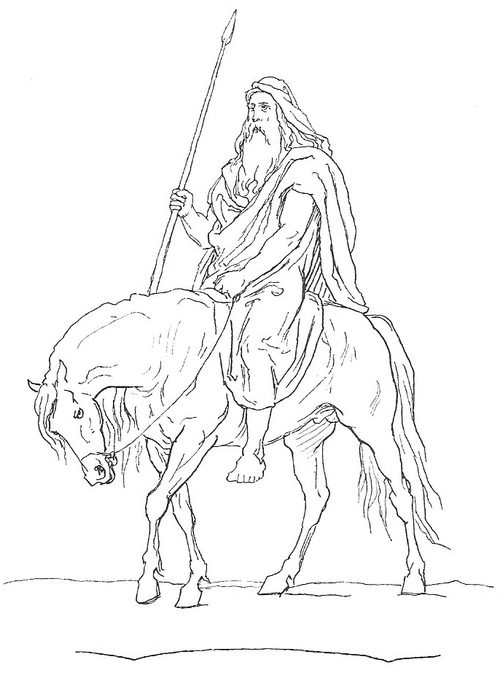
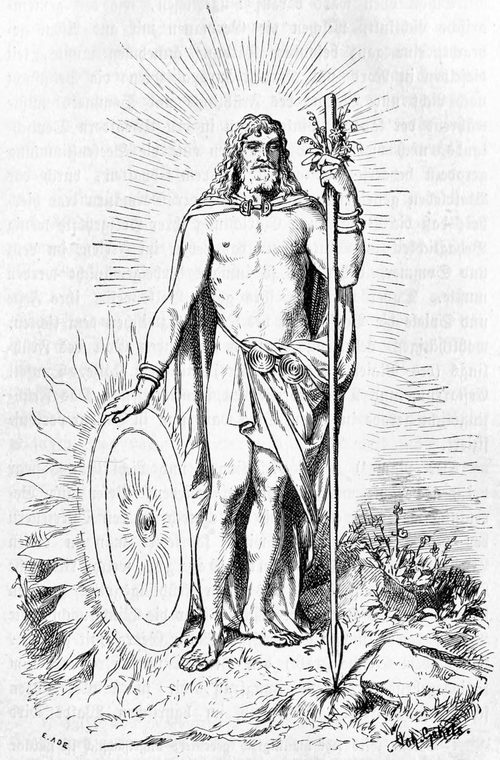
When Loki walks in, the hall goes silent Lokasenna, prose 3. He asks for a drink, calling himself Lopt, and asks why the gods sit there "swollen with pride" Lokasenna 6-7. Bragi refuses him a seat. Loki goes over Bragi's head to Odin: in the old days they mixed their blood, and Odin swore never to drink ale unless it was brought for both of them Lokasenna 9. Odin gives in. He tells Víðarr to make room for "the wolf's father", so that Loki will say nothing evil in Ægir's hall Lokasenna 10. Víðarr pours, and Loki drinks a toast to every god and goddess except Bragi Lokasenna, prose 4 Lokasenna 11.
The round of insults
From here the poem runs in pairs: a god speaks, Loki answers, usually with "Be silent!" and an accusation. Bragi offers a horse, a sword and a ring to keep the peace; Loki calls him the most cowardly god in the hall Lokasenna 12-13. Iðunn tries to calm her husband; Loki says she once embraced her brother's killer Lokasenna 16-17. Gefjun tries to make peace; Loki says she sold herself for a necklace Lokasenna 19-20.
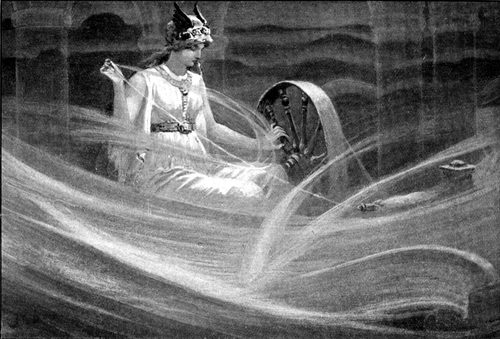
Odin warns Loki that Gefjun knows fate as well as he does. Loki turns on Odin: he gives victory to cowards. Odin answers that Loki spent eight winters under the earth as a milkmaid and bore children. Loki replies that Odin practised women's magic on Samsey and went among men in a witch's shape Lokasenna 21-24. Frigg tells them both that old deeds should not be raked up. Loki accuses her of sleeping with Odin's brothers Vili and Vé Lokasenna 25-26. Frigg says that if she had a son like Baldr in the hall, Loki would not leave alive. Loki's answer is the cruellest line in the poem:
Loki spake:"Thou wilt then, Frigg, that further I tellOf the ill that now I know;Mine is the blame that Baldr no moreThou seest ride home to the hall."Lokasenna 28
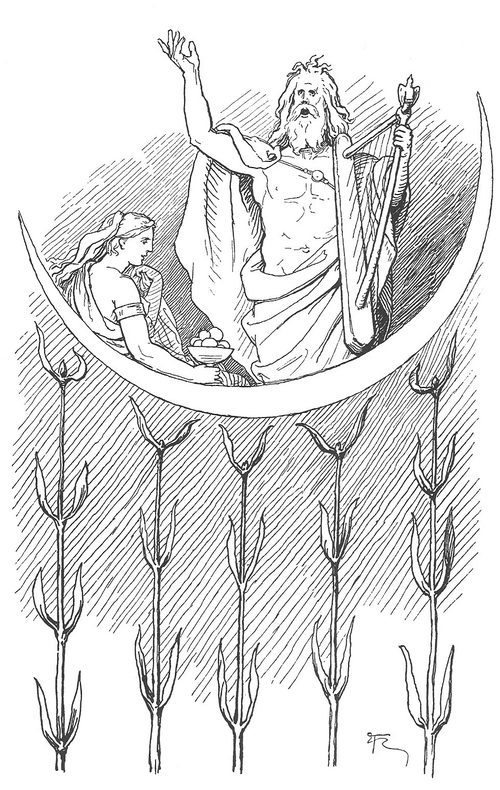
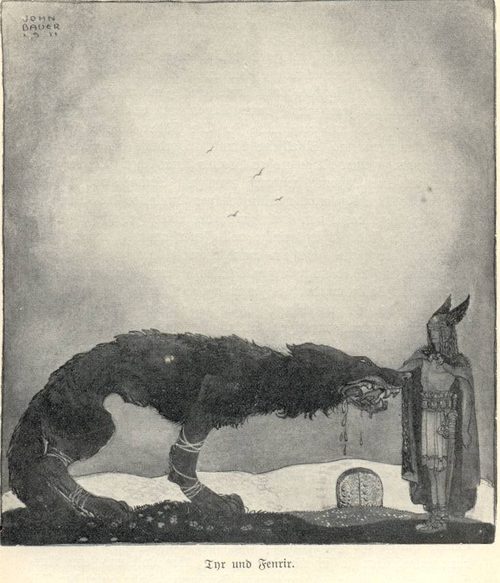
It goes on in the same way. Freyja has slept with every god and elf present, and with her brother Lokasenna 30-32. Njörðr was a hostage, and the daughters of Hymir used his mouth as a privy; Freyr is the child of Njörðr's union with his own sister Lokasenna 34-36. Týr lost his hand to Fenrir, and his wife had a son by Loki Lokasenna 38-40. Freyr bought Gerðr with gold and gave away his sword, and will stand weaponless when Muspell's sons ride Lokasenna 42. Byggvir hid in the straw when men went to fight Lokasenna 46. Heimdallr is doomed to stand forever stiff-backed as the gods' watchman Lokasenna 48.
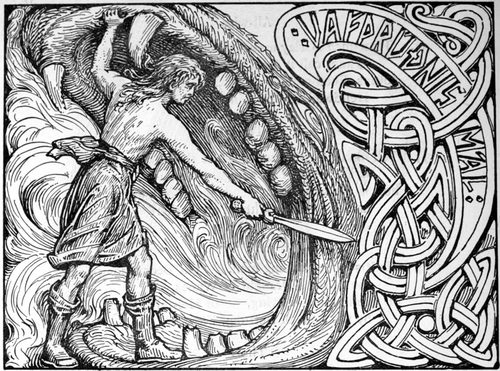
Several of the gods answer with threats that sound like prophecies. Týr says the wolf waits in fetters for the doom of the gods; Freyr says Loki will be bound too if he does not hold his tongue Lokasenna 39 Lokasenna 41. Skaði is the most exact:
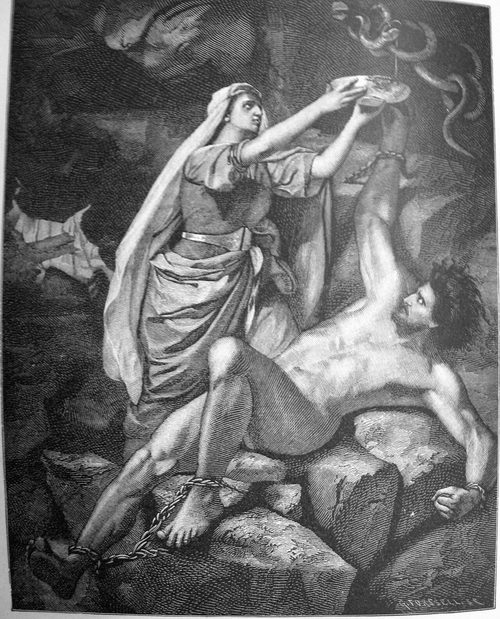
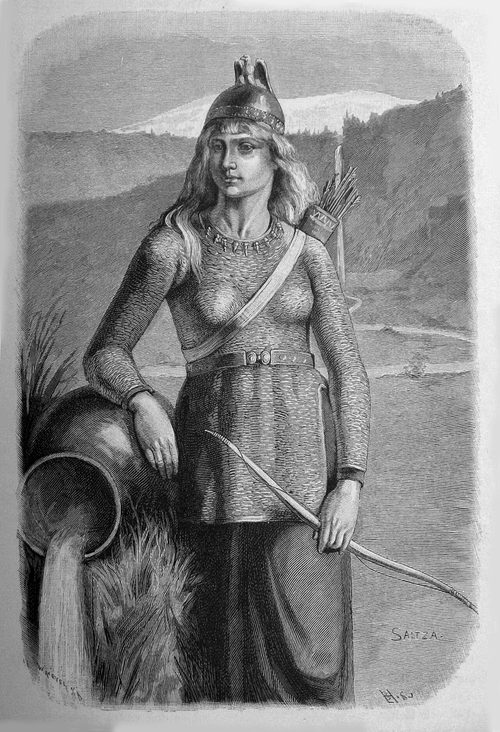
Skathi spake:"Light art thou, Loki, but longer thou mayst notIn freedom flourish thy tail;On the rocks the gods bind thee with bowels tornForth from thy frost-cold son."Lokasenna 49
Loki answers that he was "first and last" at the killing of her father Þjazi, and that she once invited him to her bed Lokasenna 50-52. Then Sif comes forward and pours him mead in a crystal cup, saying that she at least is blameless Lokasenna, prose 5 Lokasenna 53. Loki says she is not: he himself had her once, behind Thor's back Lokasenna 54.
Thor comes home
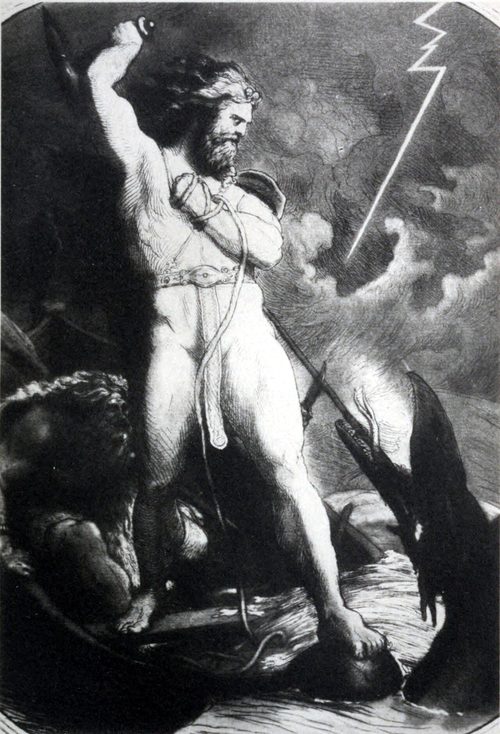
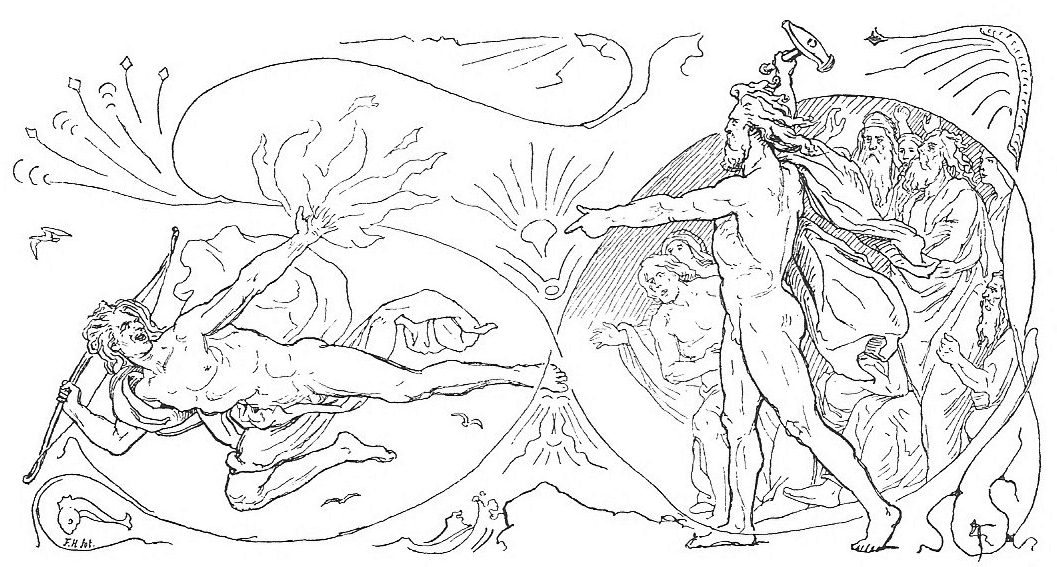
Beyla says the mountains are shaking: Thor must be coming Lokasenna 55. Loki insults her too. Then Thor arrives Lokasenna, prose 6 and says the same thing four times: "Unmanly one, cease, or the mighty hammer, Mjollnir, shall close thy mouth" Lokasenna 57. Each time he adds a different threat, and each time Loki answers with a jibe. Thor will be less fierce when the wolf swallows his father; Thor once hid in the thumb of a giant's glove; Thor could not open Skrýmir's food bag Lokasenna 58 Lokasenna 60 Lokasenna 62.
After the fourth threat Loki gives way. He has said everything he meant to say, he tells the gods, but he will leave because of Thor alone, "for thou fightest well, I ween" Lokasenna 64. His last words are a curse on the host: Ægir will never brew such a feast again, and fire will play over everything he owns Lokasenna 65. A closing prose passage tells how the gods caught and bound him afterwards (see The binding of Loki) Lokasenna, prose 7.
Where the story comes from
Lokasenna survives in the Codex Regius of the Poetic Edda (13th century). Its age is debated, with proposals ranging from the tenth century to the twelfth or later. The framing prose is the work of the compiler, not part of the poem. Snorri does not retell the flyting, but he knew the story. In Skáldskaparmál he summarises it: Ægir invites the gods to a feast lit by gold, Thor is away in the east killing trolls, and Loki "bandied sharp words with all the gods, and slew one of Ægir's thralls", whom he calls Five-Finger; the other thrall he calls Fire-Kindler Skáldskaparmál 33. In Gylfaginning he quotes one stanza of the poem Gylfaginning 20.
The poem's value lies in the mythology hidden in Loki's jibes. Many of them refer to stories told nowhere else, or only by Snorri: Odin's magic on Samsey, Gefjun's necklace, Týr's wife, Loki's eight winters underground, Skaði's invitation. Some match surviving stories closely. Týr's hand and Fenrir, Freyr's sword given for Gerðr (Freyr and Gerðr), Thor in the glove and Skrýmir's bag (Thor's journey to Útgarða-Loki), and Loki's part in Þjazi's death (The theft of Iðunn and her apples) are all told elsewhere. One detail does not match: the prose ending of the poem disagrees with Snorri about which of Loki's sons was killed (see The binding of Loki).
Reading it today
Readers disagree about the poem's tone. Some see it as satire, perhaps by a Christian poet mocking the old gods; others think a pagan audience could laugh at its gods without losing faith in them, and note that the insults work only if listeners already know the myths. The poem is also full of foreboding: the gods' threats and Loki's answers keep pointing ahead to Fenrir's escape, Freyr's death, Odin swallowed by the wolf and Loki bound, which is to say to Ragnarök.
Key passages
Loki might not endure that, and he slew Fimafeng.
Bale and hatred I bring to the gods, And their mead with venom I mix.
Remember, Othin, in olden days That we both our blood have mixed
Mine is the blame that Baldr no more Thou seest ride home to the hall.
On the rocks the gods bind thee with bowels torn Forth from thy frost-cold son.
The slayer of Hrungnir shall send thee to hell, And down to the gate of death.