Æsir
Loki
The giant-born trickster counted among the Æsir: father of Fenrir, the Midgard Serpent and Hel, contriver of Baldr's death, bound until Ragnarök.
Loki is the hardest figure in Norse myth to pin down. He is counted among the Æsir, yet his father is a giant; he travels with Odin and Thor, yet he arranges the death of the best of the gods and leads the enemy at the end of the world. Snorri introduces him as "the mischief-monger of the Æsir, and the first father of falsehoods," handsome to look at, "evil in spirit, very fickle in habit," and a master of the kind of wisdom called "sleight." The same sentence states the pattern of most of his stories: he "would ever bring the Æsir into great hardships, and then get them out with crafty counsel" Gylfaginning 33.
Family
Snorri names Loki's father as the giant Fárbauti, his mother as Laufey or Nál, and his brothers as Býleistr and Helblindi Gylfaginning 33. The poems call him "Laufey's son" Lokasenna 52 Þrymskviða 17, and Hyndluljóð calls him "the brother of Byleist" Hyndluljóð 42. His wife is Sigyn, and their son is Nari or Narfi Gylfaginning 33.
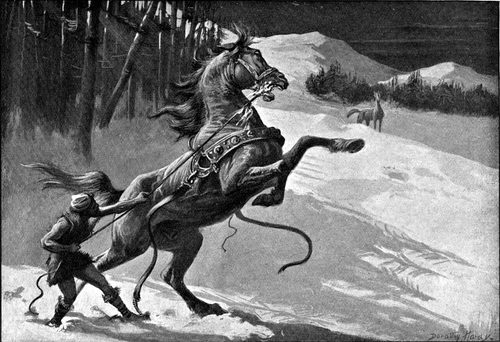
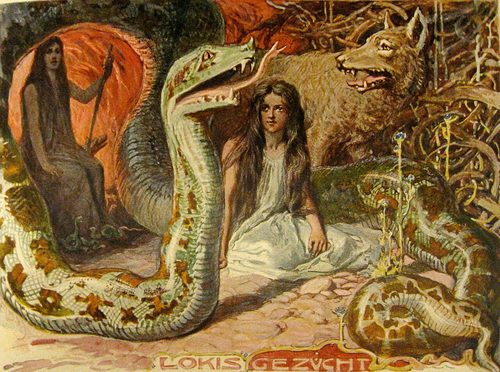
His other children are monsters. With the giantess Angrboða he fathered Fenrir, Jörmungandr and Hel Gylfaginning 34. Disguised as a mare, he drew the giant builder's stallion Svaðilfari away from work and later gave birth to the eight-legged horse Sleipnir Gylfaginning 42. Hyndluljóð adds a stranger tale: Loki ate a half-burnt woman's heart, became pregnant, "and thence among men came the monsters all" Hyndluljóð 43. In Lokasenna he reminds Odin that the two of them once mixed their blood as sworn brothers Lokasenna 9.
Trouble and rescue
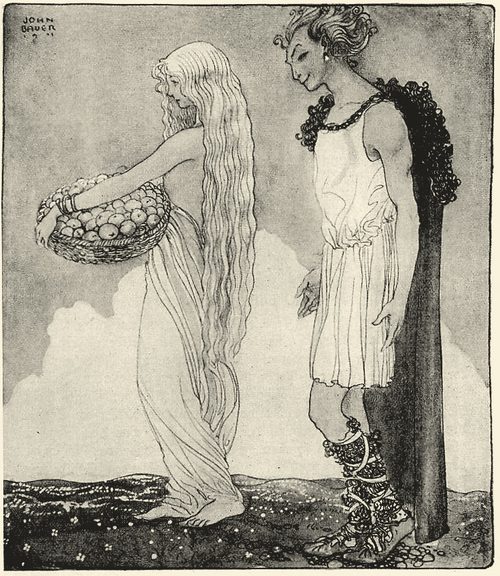
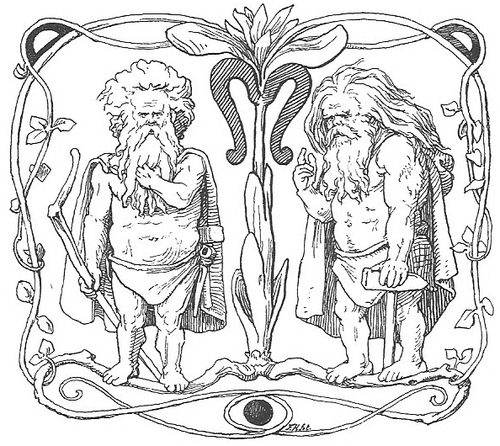
Many stories show Loki causing a crisis and then being forced to end it. He advised the gods to let the builder of their wall use his stallion, and when the deal threatened to cost them Freyja, the sun and the moon, they threatened him with death until he found a way out (The giant builder and the wall of Asgard) Gylfaginning 42. He lured Idunn out of Ásgard to the giant Thjazi, then fetched her back in Freyja's hawk-plumage, carrying her as a nut Skáldskaparmál 1. He cut off Sif's hair, and to save his skin he had dwarves make her new hair of gold; the bet he then made with the dwarf Brokkr brought the gods Mjöllnir, Draupnir and Gungnir, and cost Loki his lips sewn shut (The treasures of the gods: Sif's hair and Brokkr's wager) Skáldskaparmál 35.
He can also be simply useful. In Þrymskviða he flies in Freyja's feather-dress to find Thor's stolen hammer Þrymskviða 4 and goes with Thor to the giants as his "maid-servant" Þrymskviða 20. On the journey to Útgarða-Loki he loses an eating contest to Logi, who turns out to be wildfire itself Gylfaginning 47. He changes shape readily: a mare, a salmon, a woman.
Baldr and the binding
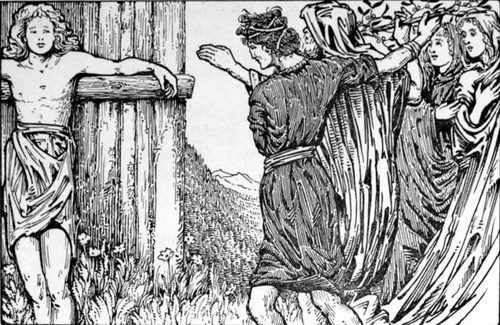
The tone changes with Baldr. In Snorri's account Loki, displeased that nothing could hurt Baldr, took the shape of a woman, learned from Frigg that only the mistletoe had sworn no oath, and guided blind Höðr's hand as he threw it Gylfaginning 49. When the whole world wept to free Baldr from Hel, one giantess, Þökk, refused, and "men deem" she was Loki. Völuspá tells Baldr's death without naming Loki Völuspá 32-33; in Lokasenna he boasts of it himself: "Mine is the blame that Baldr no more / Thou seest ride home to the hall" Lokasenna 28.
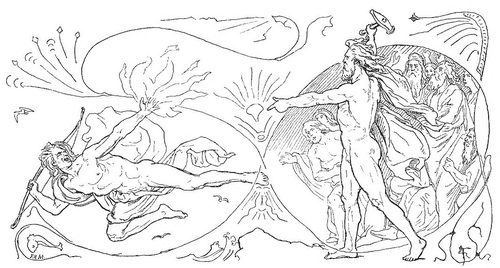
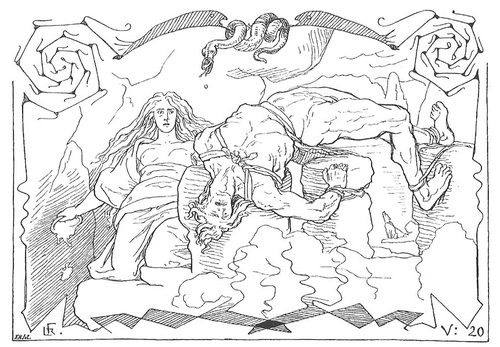
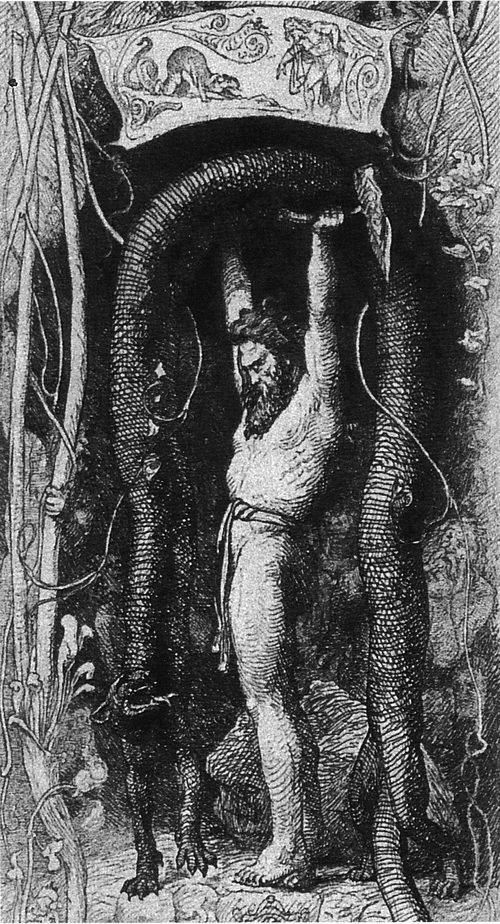
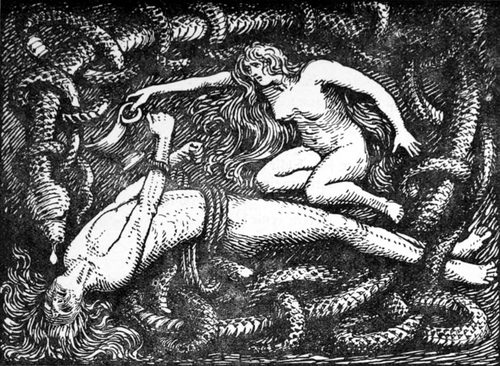
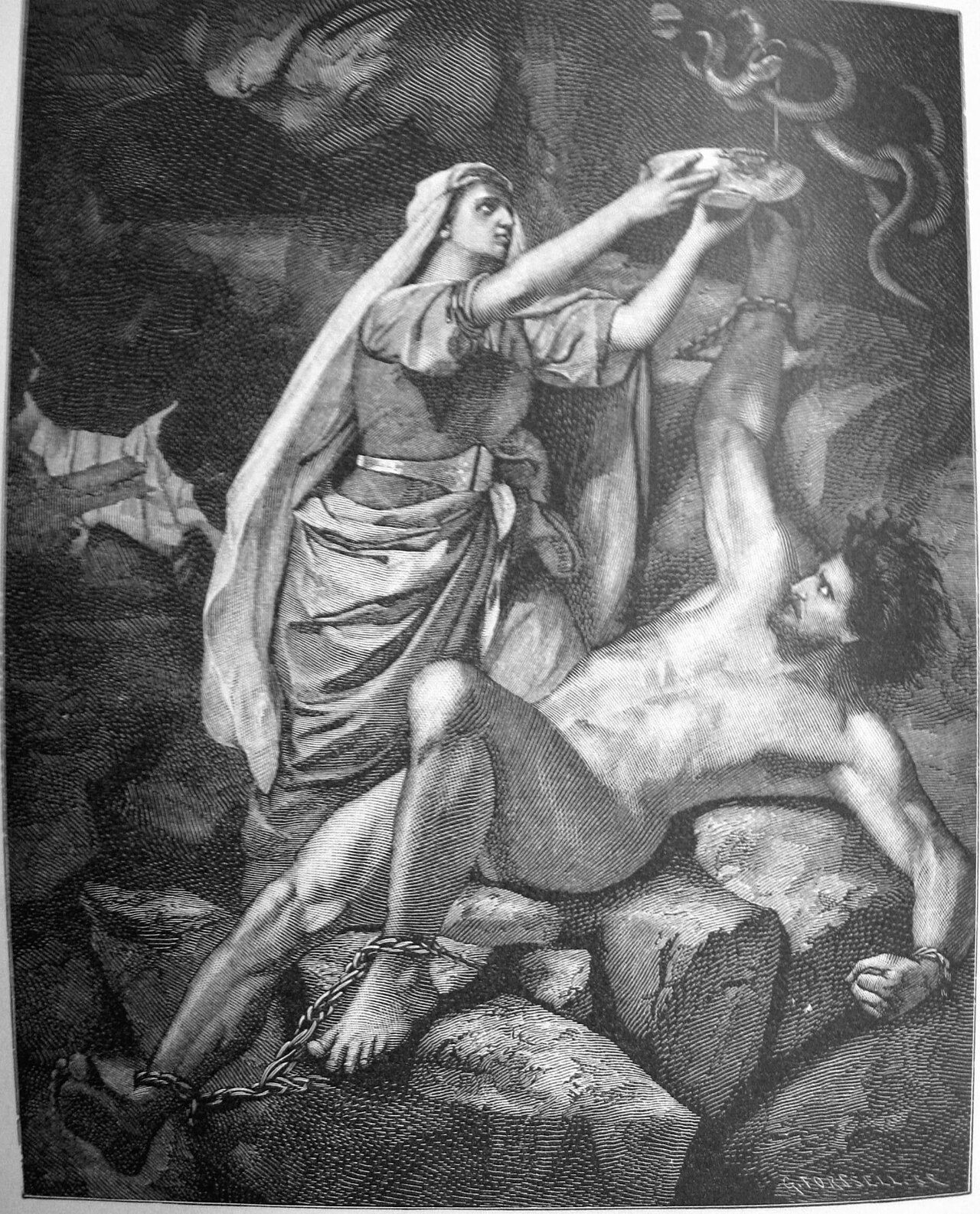
Lokasenna shows him at his most savage, accusing each god in turn at Ægir's feast until Thor threatens him with the hammer (Loki's flyting at Ægir's feast). He then hid as a salmon in Fránangr's waterfall, and the gods netted him with a net copied from the ashes of his own Gylfaginning 50. They bound him over three stones with the entrails of his son. The two accounts disagree about which son: Snorri says Váli was turned into a wolf and tore apart Narfi, whose guts were used Gylfaginning 50; the prose of Lokasenna says he was bound with the bowels of his son (Váli in Bellows's translation; the Old Norse manuscript reads Nari), and Narfi became the wolf Lokasenna, prose 7. Skaði hung a snake over his face; Sigyn catches the venom in a bowl, and when she goes to empty it the drops make him writhe so hard that the earth shakes (see The binding of Loki).
One did I see in the wet woods bound,A lover of ill, and to Loki like;By his side does Sigyn sit, nor is gladTo see her mate: would you know yet more?Völuspá 35
At the end
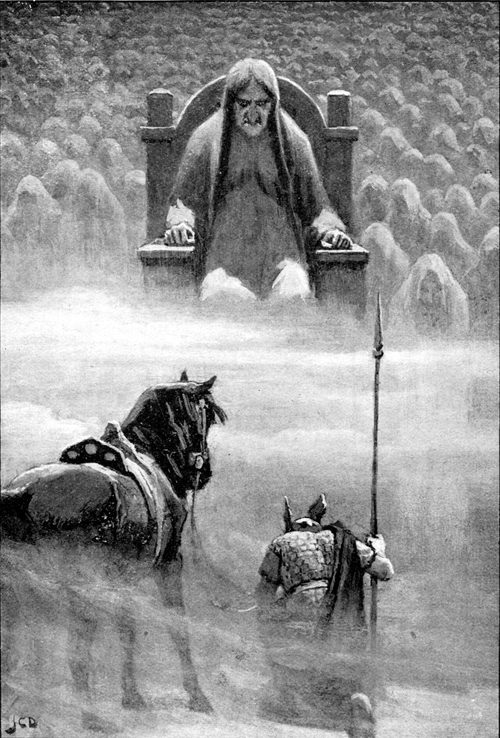
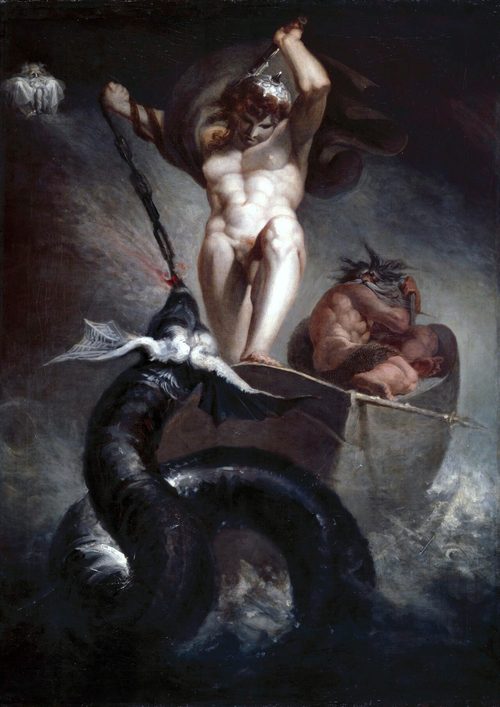
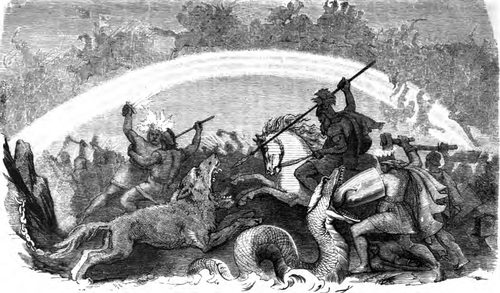
He lies bound "till the Weird of the Gods" Gylfaginning 50. The seeress of Baldrs draumar warns Odin that no one will seek her again "Till Loki wanders loose from his bonds" Baldrs draumar 14. At Ragnarök Völuspá puts him at the helm of a ship carrying "the people of Hel" Völuspá 51; in Snorri, Hel's champions follow him onto the field of Vígríðr, and he and Heimdallr kill each other Gylfaginning 51.
Reading Loki
What Loki was to the people who told these stories is debated. Scholars commonly compare him to the tricksters of other mythologies, a boundary-crosser between gods and giants, male and female, helper and enemy. Older attempts to make him a fire god, partly on the strength of his contest with Logi, now find little support. Scholars also generally find no clear evidence that he was ever worshipped. His darkening from mischief-maker to Baldr's killer and the gods' last enemy may reflect the shape Snorri gave to his material as much as older belief, though how far is uncertain.
In the sources
Quoted from the hosted translations; each line is checked against the text when the site is built. Select a reference to read it in context.
he whom some call the mischief-monger of the Æsir, and the first father of falsehoods, and blemish of all gods and men: he is named Loki or Loptr
Angrboda was the name of a certain giantess in Jötunheim, with whom Loki gat three children
Hödr took Mistletoe and shot at Baldr, being guided by Loki
Bale and hatred I bring to the gods, And their mead with venom I mix.
He was bound with the bowels of his son Vali, but his son Narfi was changed to a wolf.
One did I see in the wet woods bound, A lover of ill, and to Loki like
With the people of Hel, at the helm stands Loki
Where the sources disagree or fall silent
- Snorri says only that men 'deem' the giantess Thökk was Loki in disguise; the identification is not certain even in his own telling.
- The sources disagree on which of Loki's sons was turned into a wolf and whose entrails bound him (gylfaginning 50 against lokasenna p7).
- Snorri's list of Loki's sons varies: Nari or Narfi and Váli in Gylfaginning, 'Nari, and Áli' in Skáldskaparmál.
In modern culture
Not from the medieval sources.
Loki is now one of the best-known figures of Norse myth, largely through Marvel Comics, where he first appeared in Journey into Mystery #85 (1962), and Tom Hiddleston's portrayal in the Marvel films (from Thor, 2011) and the series Loki (2021–2023). Marvel makes him Odin's adopted son and the child of a frost-giant king named Laufey; in the Eddas Laufey is his mother, and Loki is Odin's sworn blood-brother, not his son.