A myth retold · about 6 minutes
Sigurðr slays Fáfnir
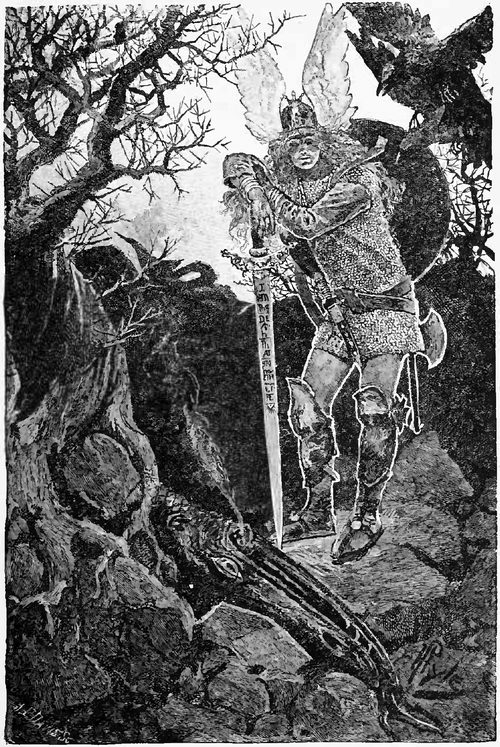
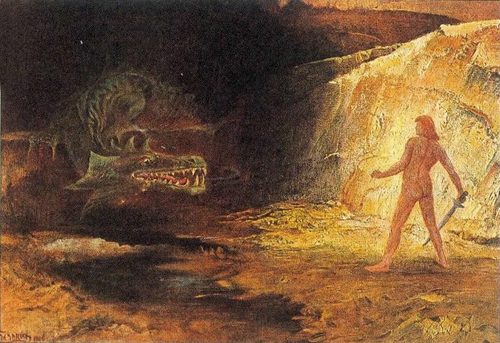
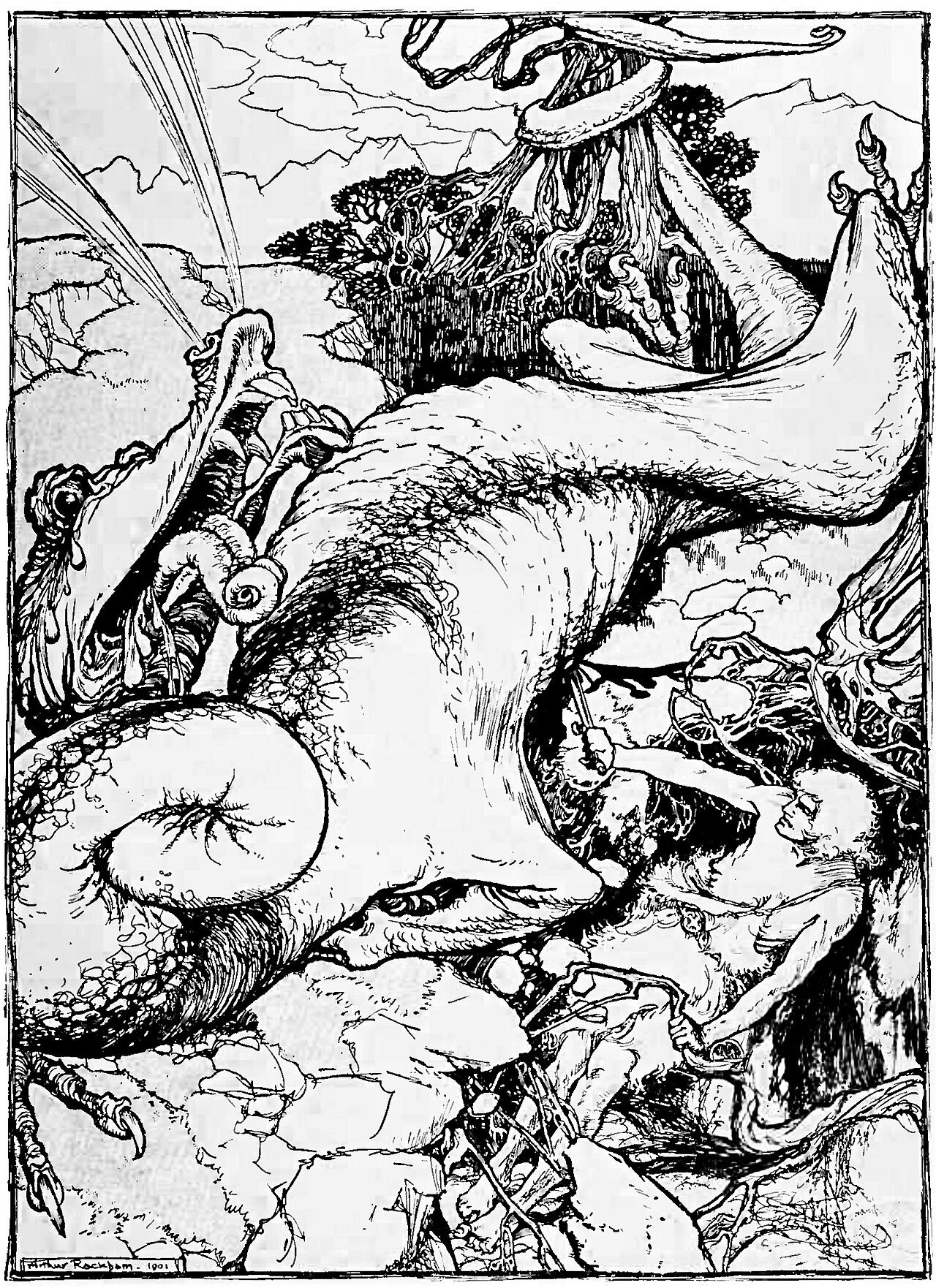
Urged on by his foster-father Reginn, the young Sigurðr digs a trench on the dragon's path and stabs Fáfnir from below. A taste of the dragon's heart-blood lets him understand the birds, who warn him that Reginn means to kill him.
This is the most famous deed of the most famous hero of the North. Its earlier half is told in Otter's ransom: how a god's careless stone and a dwarf's curse put a hoard of gold in the hands of Fáfnir, who killed his father for it and now lies on it as a serpent. The story of the killing is told in two linked poems of the Codex Regius, Reginsmál and Fáfnismál, with much connecting prose, and more briefly by Snorri in Skáldskaparmál. The retelling follows the poems.
The foster-son
Sigurðr is the son of Sigmundr, who fell in battle against the sons of Hunding, and of Hjördís, who then married the son of King Hjálprekr. Sigurðr grows up at Hjálprekr's court Frá dauða Sinfjötla, prose 2. There he chooses a horse from the king's stud, the horse later called Grani Reginsmál, prose 1. Also at court is Reginn, son of Hreiðmarr: cleverer than other men, dwarfish in size, fierce, and skilled in magic. He becomes Sigurðr's foster-father and teacher and tells him the story of the gold Reginsmál, prose 1.
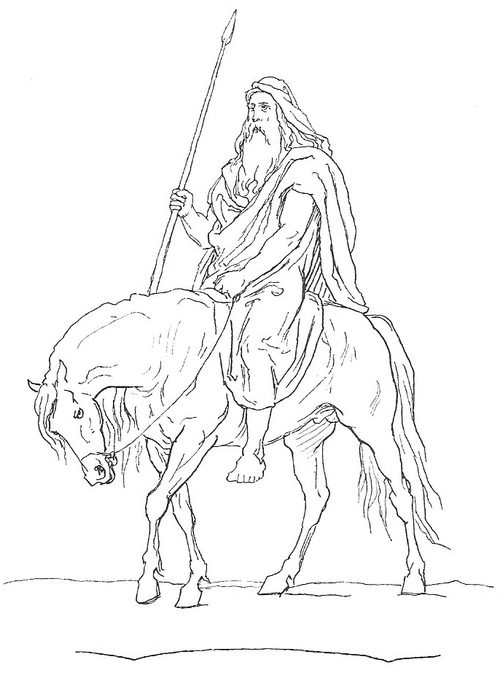
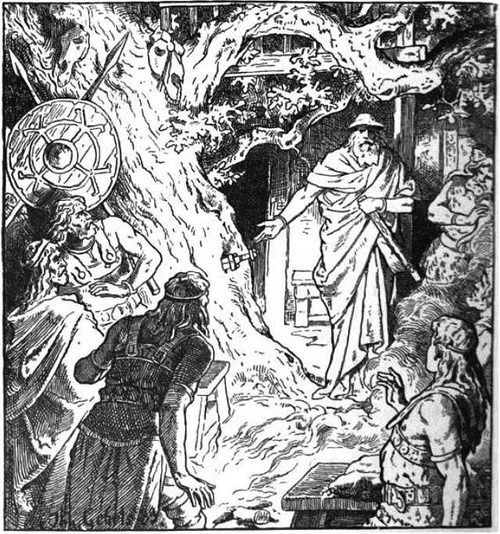
Reginn welcomes the boy as a fighter "eager" for battle, a "hardy wolf" Reginsmál 13. Vengeance comes first. The next stanza says the sons of Hunding would laugh if the hero went looking for red rings before he avenged his father Reginsmál 15. Hjálprekr gives him a fleet. In a storm off a headland a man calls from the mountain and asks to come aboard. He names himself Hnikarr, Fengr or Fjölnir, all names of Odin, and once on board he teaches Sigurðr the omens of battle Reginsmál, prose 8 Reginsmál 16-25. Sigurðr kills Lyngvi son of Hunding and his brothers, and Reginn praises the "bloody eagle" carved on the back of Sigmundr's killer Reginsmál, prose 9 Reginsmál 26. Back home, Reginn urges him on against Fáfnir Reginsmál, prose 10.
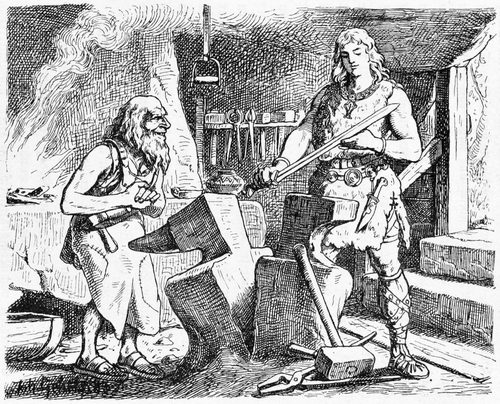
Snorri tells something the poems leave out: how Reginn forged the sword Gramr. It was so sharp that when Sigurðr held it in running water it cut through a lock of wool carried onto its edge, and with it he split Reginn's anvil down to the stand Skáldskaparmál 40.
The trench on Gnitaheiðr
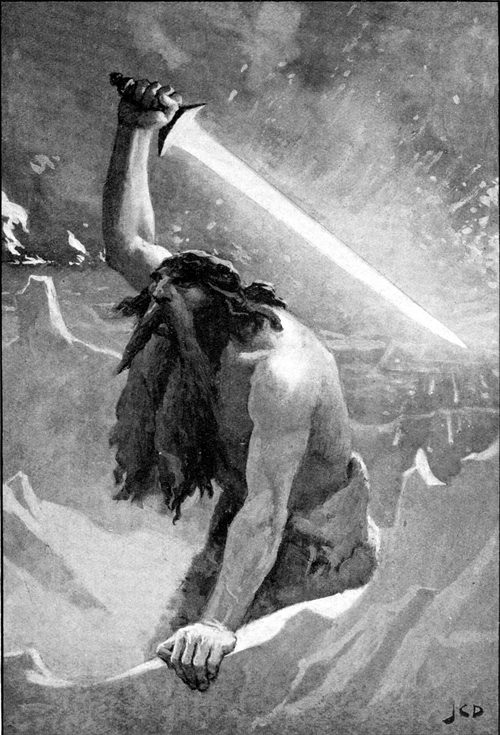
Sigurðr and Reginn ride up to Gnitaheiðr and find the track Fáfnir makes when he crawls down to drink. Sigurðr digs a trench across the path and gets into it. When Fáfnir leaves his gold he blows out venom, which pours down on Sigurðr's head; as the dragon crawls over the trench, Sigurðr drives his sword up into its heart. Fáfnir thrashes with head and tail. Sigurðr jumps out, and the two look at each other Fáfnismál, prose 1.
A conversation with the dying
Fáfnir asks who his killer is. Sigurðr first hides his name, because people believed that a dying man's curse had power if he knew his enemy's name Fáfnismál, prose 2. He calls himself a "Noble Hart", a motherless and fatherless wanderer Fáfnismál 2. Fáfnir sees through it, and Sigurðr answers:
Sigurth spake:"My race, methinks, is unknown to thee,And so am I myself;Sigurth my name, and Sigmund's son,Who smote thee thus with the sword."Fáfnismál 4
Fáfnir taunts him for being a prisoner in a foreign court; Sigurðr answers that he lives free Fáfnismál 7-8. Then the dragon passes on the curse that came with the hoard: "The sounding gold, the glow-red wealth, And the rings thy bane shall be" Fáfnismál 9. Sigurðr is unmoved: everyone dies some day, and someone always holds the gold until then Fáfnismál 10.
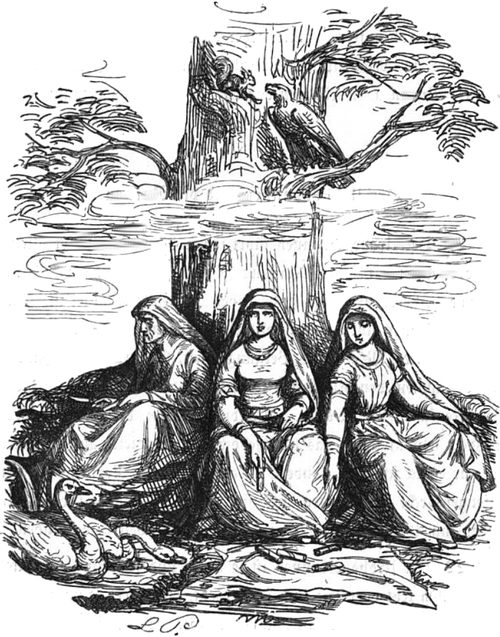
The talk turns into a wisdom contest. Sigurðr asks about the Norns who help at childbirth; Fáfnir answers that they are of many races, kin to gods, elves and dwarves Fáfnismál 12-13. Sigurðr asks the name of the island where the gods and Surtr will fight at the end; Fáfnir calls it Óskópnir, where Bilröst (that is, Bifröst) breaks under them Fáfnismál 14-15. Fáfnir boasts of the fear-helm he wore and the venom he breathed. He warns Sigurðr a second time to ride home, and then gives one last, true warning: "Regin betrayed me, and thee will betray" Fáfnismál 16-22.
The heart and the birds
Reginn, who has kept well away during the fight, comes back while Sigurðr is wiping his sword on the grass. He is happy to share the credit Fáfnismál, prose 3 Fáfnismál 25-27. Sigurðr reminds him that he hid in the heather. Reginn cuts out Fáfnir's heart with his sword Ríðill, drinks the blood, and asks Sigurðr to roast the heart for him while he sleeps Fáfnismál, prose 4 Fáfnismál 31.
Sigurðr roasts it on a spit. To test whether it is done he touches it, burns his finger and puts it in his mouth. As the heart's-blood touches his tongue, he understands what the nuthatches in the thicket are saying Fáfnismál, prose 5.
"There sits Sigurth, sprinkled with blood,And Fafnir's heart with fire he cooks;Wise were the breaker of rings, I ween,To eat the life-muscles all so bright."Fáfnismál 32
The birds speak one after another. Reginn is lying there planning to betray the boy who trusts him and avenge his brother. Sigurðr should take the "chatterer hoary" down "by a head" and keep all the gold for himself. It would be foolish to spare one brother after killing the other Fáfnismál 33-38. Sigurðr agrees: Reginn will not live to tell of Sigurðr's death Fáfnismál 39. He cuts off Reginn's head, eats Fáfnir's heart, and drinks the blood of both brothers Fáfnismál, prose 6.
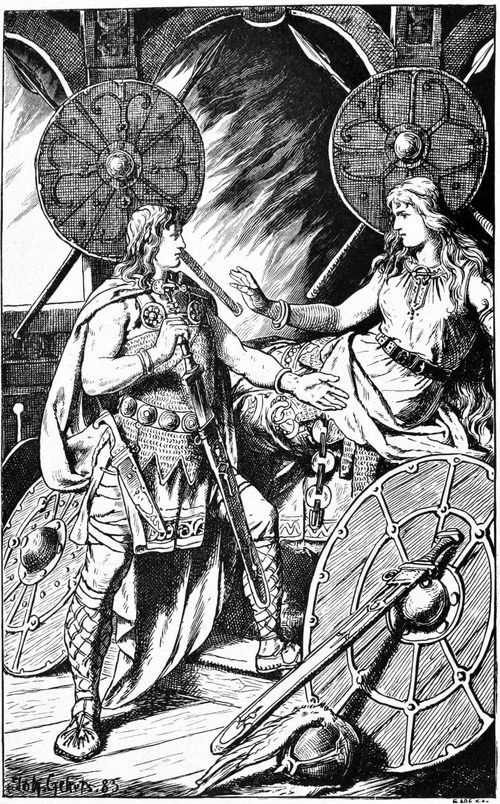
The birds have more to say. Gather the rings; there is a king, Gjúki, with a daughter to win (unnamed here, but later poems make her Guðrún); and on Hindarfjall there is a hall ringed with fire where a battle-maiden sleeps, put to sleep by Odin's thorn for killing the warrior he favoured Fáfnismál 40-44. That is the path to Brynhildr and to everything that follows.
Where the story comes from
Reginsmál and Fáfnismál follow each other in the Codex Regius (c. 1270), in a section of heroic poems so thickly linked by prose that the compiler's narrative matters almost as much as the verse. Skáldskaparmál 40 (Snorri, c. 1220s) gives a compact summary to explain kennings for gold such as "Fáfnir's lair" and "Grani's burden" Skáldskaparmál 40.
The versions differ:
- The ambush. Fáfnismál: a trench across the path Fáfnismál, prose 1. Snorri: a pit Skáldskaparmál 40. The idea is the same.
- Reginn's sword. Ríðill in Fáfnismál Fáfnismál, prose 4, Refill in Snorri Skáldskaparmál 40.
- The forging of Gramr is only in Snorri. The poem just has Reginn claim credit for "the weapon … that once I forged" Fáfnismál 27.
- The order of events. Fáfnismál's prose has Sigurðr kill Reginn first and then eat the heart and drink both brothers' blood Fáfnismál, prose 6. In Snorri he tastes the blood by accident, hears two birds, kills Reginn and rides off with the gold on Grani Skáldskaparmál 40.
- The birds. Fáfnismál has a whole chorus, seven or more voices. Snorri quotes two stanzas.
Fáfnir's "Óskópnir" is a different name for the last battlefield from the Vígríðr of Vafþrúðnismál and Snorri Vafþrúðnismál 18, one of several places where the heroic poems borrow mythological lore.
Reading it today
The dragon-slaying is one of the most often depicted scenes of Viking-Age art. The Ramsund carving in Sweden shows Sigurðr stabbing upward into the serpent, the roasting of the heart, the burnt thumb, the birds and Grani. Carvings on Manx crosses and on the portals of Hylestad stave church in Norway show related scenes. Scholars have long compared the story with Beowulf's dragon and with the German Nibelungenlied, where Siegfried's bath in dragon's blood plays the role that the heart plays here. Wagner's Siegfried (1876) follows the Norse version closely: the forging of the sword, the dragon, the taste of blood and the bird that guides him to the sleeping valkyrie.
Key passages
Then Sigurth made a great trench across the path, and took his place therein.
Sigurth my name, and Sigmund's son, Who smote thee thus with the sword.
The sounding gold, the glow-red wealth, And the rings thy bane shall be.
But when Fafnir's heart's-blood came on his tongue, he understood the speech of birds.
Less by a head let the chatterer hoary Go from here to hell
Then Reginn fashioned the sword Gramr, which was so sharp that Sigurdr, bringing it down into running water, cut asunder a flock of wool