concept
Einherjar
einherjar
The dead warriors of Valhalla, who fight and fall every day, rise to feast on boar-meat and mead, and wait to march out with Odin against the wolf at Ragnarök.
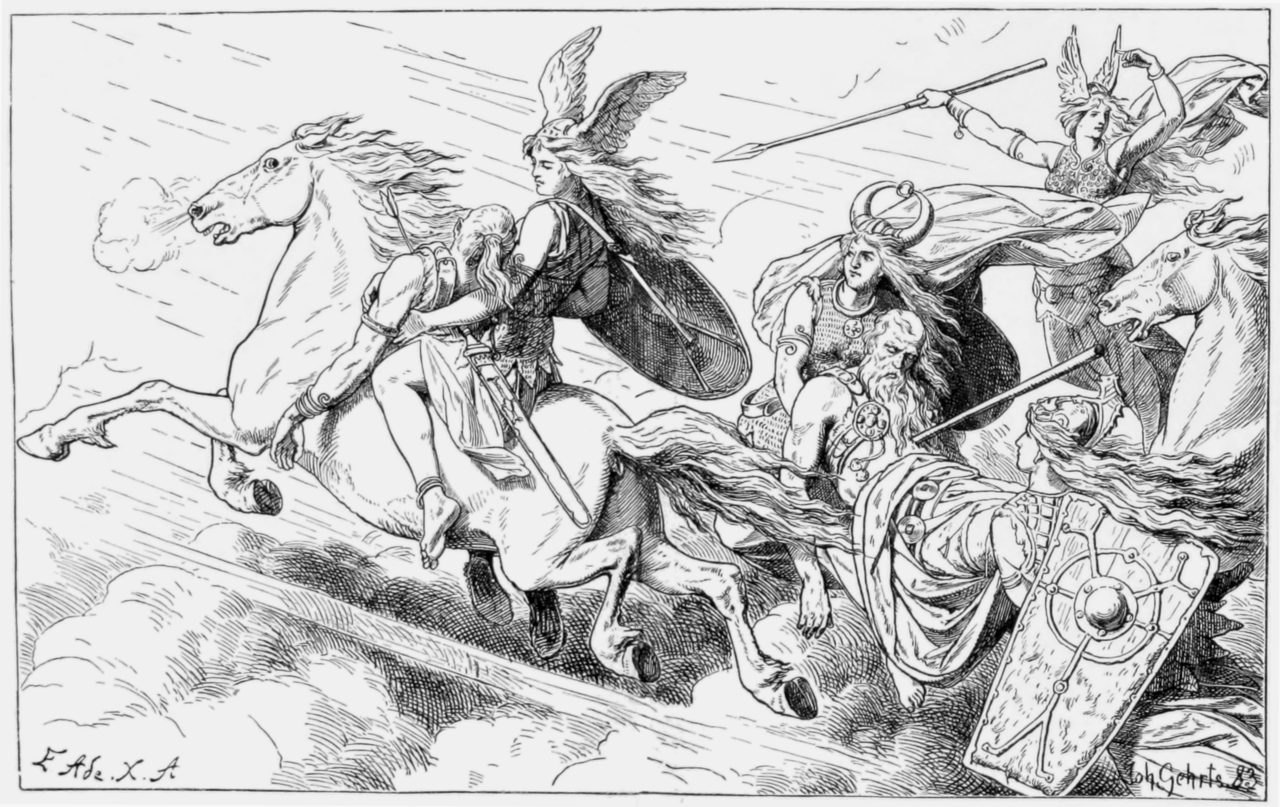
The einherjar are the dead warriors who live with Odin in Valhalla. Snorri explains the arrangement: Odin is called "Father of the Slain, because all those that fall in battle are the sons of his adoption", and those he takes into Valhall and Vingólf "are then called Champions" Gylfaginning 20. "Champions" is Brodeur's usual translation of einherjar; Bellows prefers "warriors" or "heroes", so the word itself is rarely visible in the English poems.
A day in Valhalla
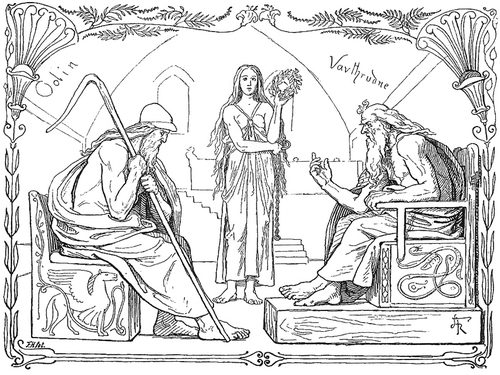
The core of the idea is a cycle of fighting and feasting. In Vafþrúðnismál, Odin asks the giant about the men who go out to fight each day in Odin's home, and Vafþrúðnir answers:
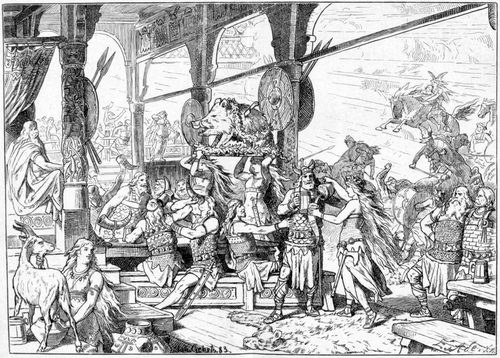
The heroes all in Othin's hallEach day to fight go forth;They fell each other, and fare from the fightAll healed full soon to sit.Vafþrúðnismál 41
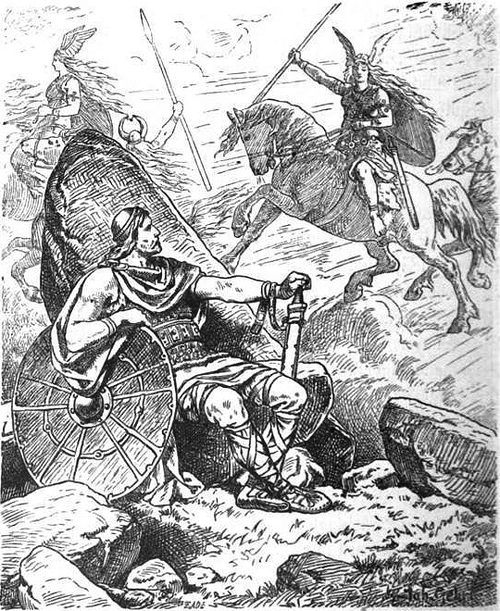
Odin's question Vafþrúðnismál 40 is damaged in the manuscript, but the answer is clear. Snorri gives the same routine in prose: every morning they arm, go out into the court "and fight, and fell each other. That is their sport"; toward the mid-day meal they ride home to drink Gylfaginning 41. The verse he quotes says they "Sit later in love together". It does not mention the healing that Vafþrúðnismál puts at the centre.
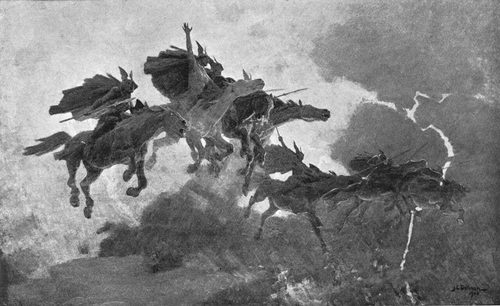
The rest is hospitality. Andhrímnir boils the meat of Sæhrímnir in the kettle Eldhrímnir Grímnismál 18, which Snorri says is a boar that is whole again every evening Gylfaginning 38. The goat Heiðrún gives a vat of mead daily, enough to make them all drunk Gylfaginning 39. The valkyries serve it: "Beer to the warriors bring" Grímnismál 36, or, in the version Snorri quotes, "These bear the Einherjar ale" Gylfaginning 36. Odin himself eats nothing; he lives on wine and gives his food to his wolves Grímnismál 19.
Who they are
Two sources disagree about the numbers. Gangleri says that "all those men who have fallen in battle from the beginning of the world" have come to Odin, and Hárr agrees: "a very mighty multitude is there, but many more shall be" Gylfaginning 38. But Grímnismál gives half the dead each day to Freyja in Fólkvangr Grímnismál 14, and Snorri repeats that too Gylfaginning 24. Nor are they a crowd of equals. When Helgi arrives, Odin bids him rule beside him Helgakviða Hundingsbana II, prose 14, and Helgi makes his old enemy Hunding wash the heroes' feet Helgakviða Hundingsbana II 38. In Eiríksmál, Odin rouses "the champions" to strew the benches for a king's arrival Skáldskaparmál 2.
The rule that dying in battle is what qualifies comes from Snorri, who sets the two kinds of death side by side: the fallen go to Odin Gylfaginning 20, while Hel receives "men dead of sickness or of old age" Gylfaginning 34. The poems never state the rule so neatly.
The last battle
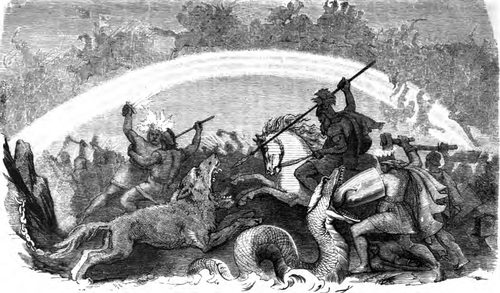
The daily fighting is training. Valhalla's 540 doors are counted for the moment when "Eight hundred champions / go out at each door / When they fare to fight with the Wolf" Gylfaginning 40; Bellows's version is in Grímnismál Grímnismál 23. Snorri says however many come, "it will seem all too small, in the time when the Wolf shall come" Gylfaginning 38. At Ragnarök, the gods "and all the Champions" put on their war-gear and advance to the field behind Odin Gylfaginning 51. He is swallowed by Fenrir, and afterwards Gangleri speaks of a world where "dead are all the gods and all the champions and all mankind" Gylfaginning 52. The sources do not say what becomes of the einherjar themselves.
In the sources
Quoted from the hosted translations; each line is checked against the text when the site is built. Select a reference to read it in context.
The heroes all in Othin's hall Each day to fight go forth; They fell each other, and fare from the fight All healed full soon to sit.
Every day, as soon as they are clothed, they straightway put on their armor and go out into the court and fight, and fell each other. That is their sport
All the Einherjar in Odin's court Deal out blows every day; The slain they choose and ride from the strife,— Sit later in love together.
He is also called Father of the Slain, because all those that fall in battle are the sons of his adoption; for them he appoints Valhall and Vingólf, and they are then called Champions.
Hrist and Mist bring the horn at my will, Skeggjold and Skogul
Eight hundred champions go out at each door When they fare to fight with the Wolf.
Where the sources disagree or fall silent
- Snorri says all men fallen in battle since the beginning of the world come to Odin (Gylfaginning 38); Grímnismál 14 and Gylfaginning 24 say Freyja takes half. The sources never say whether the warriors in Fólkvangr count as einherjar.