A myth retold · about 5 minutes
The giant builder and the wall of Asgard
A stranger offers to wall the gods' stronghold in a single winter, for the price of Freyja, the sun and the moon. When he is about to win, Loki saves the gods by turning himself into a mare — and gives birth to Sleipnir.
Gangleri, the questioner in Snorri's Gylfaginning, asks a simple question: who owns the horse Sleipnir? The answer is one of the best-made stories in Norse myth, a folktale of a bargain with a monster, told with a straight face and a sly ending. It is also a story in which the gods do not come off well.
The bargain
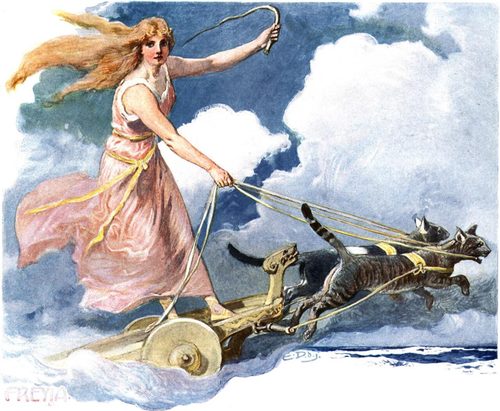
It happened, Snorri says, "early in the first days of the gods' dwelling here", after they had made Miðgarðr and built Valhalla Gylfaginning 42. A craftsman arrived — Snorri calls him simply "a certain wright" — and offered to build the gods a stronghold so strong that no hill-giant or frost-giant could break in, and to finish it in three seasons. His price was Freyja as his wife, and, if he could get them, the sun and the moon.
The gods talked it over and made a counter-offer they thought he could never meet. He could have what he asked if he finished the whole fortress in a single winter. If any part was unfinished on the first day of summer, he would get nothing. And he must have help from no man.
The builder asked for one concession: he wanted to use his stallion, Svaðilfari. Loki advised the gods to agree, and they did. The bargain was sworn with many oaths and witnesses, because, Snorri adds, the builder did not feel safe among the gods without a truce "if Thor should come home". Thor was away in the east, fighting trolls.
A winter's work
The builder began on the first day of winter. By night he hauled stone with Svaðilfari, and the gods watched with growing alarm: the horse dragged enormous rocks and did twice as much heavy work as its master.
Now when the winter drew nigh unto its end, the building of the citadel was far advanced; and it was so high and strong that it could not be taken. When it lacked three days of summer, the work had almost reached the gate of the stronghold.Gylfaginning 42
The gods sat down on their judgment seats and asked one another who had advised them to give Freyja away to Jötunheimr and to ruin the sky by giving the sun and moon to the giants. They agreed it must have been the one who always gives bad advice, Loki Laufeyjarson. They told him he deserved an evil death unless he found a way to cheat the builder of his wages, and threatened him with violence. Frightened, Loki swore that he would manage it, whatever it cost him.
The mare in the wood
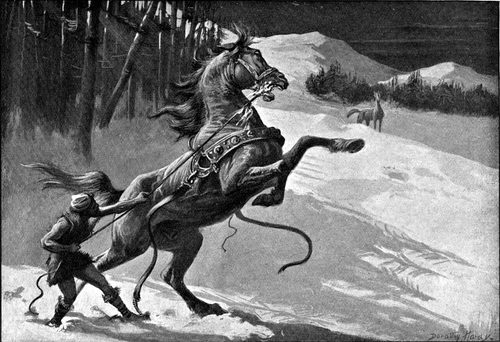
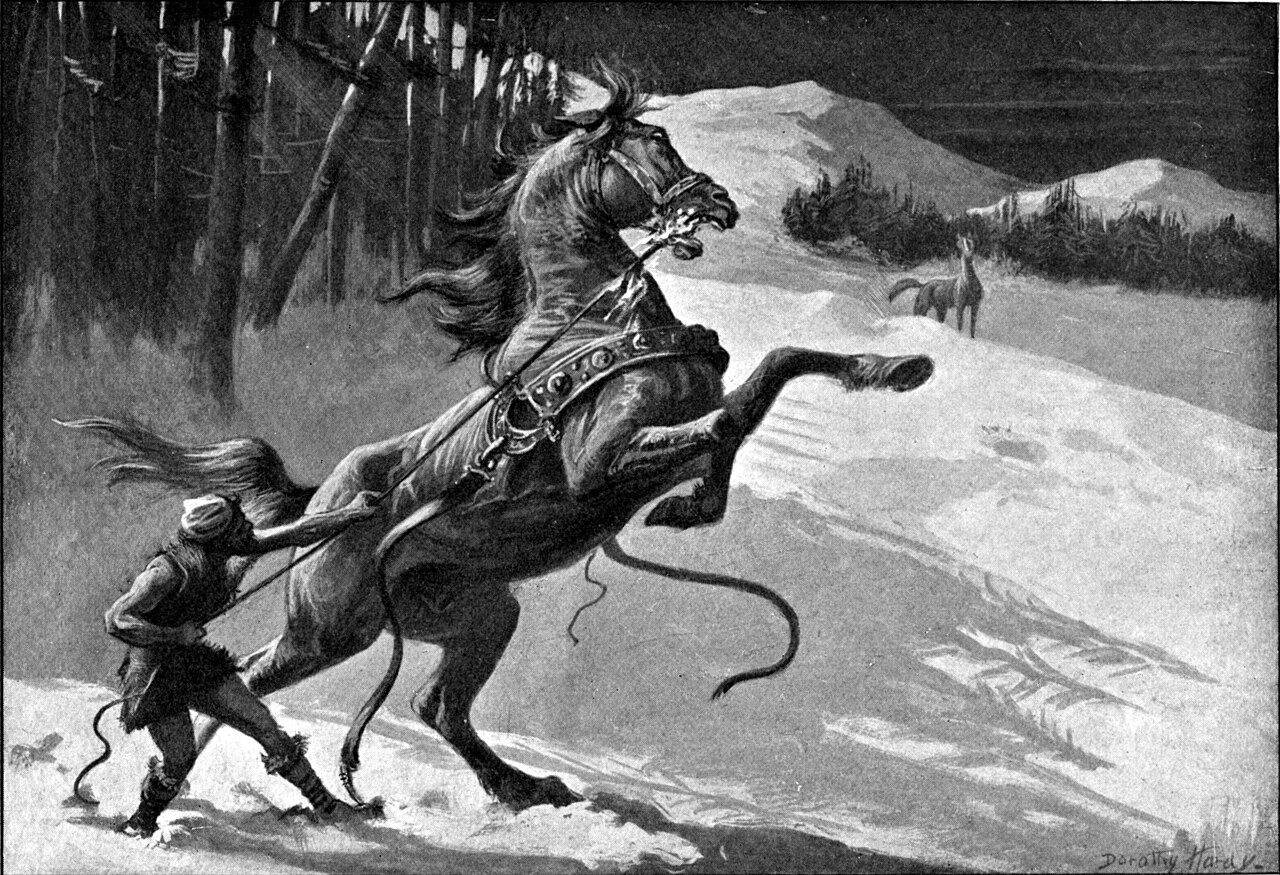
That evening, as the builder drove out for stone with Svaðilfari, a mare ran out of a wood and whinnied. The stallion knew what kind of horse she was. He went wild, broke his traces and galloped after her into the wood, with the builder running after him. The horses ran all night. The next day the work did not go as it had before, and the builder saw that he could not finish in time.
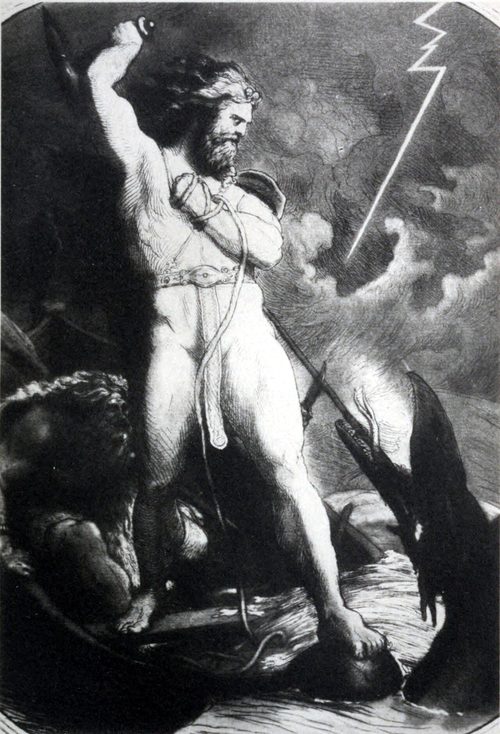
He flew into a "giant's fury", and with that the gods knew for certain what he was: a hill-giant. Snorri's next sentence is pointed: the gods "did not regard their oaths reverently". They called on Thor, who came at once. He raised Mjöllnir and paid the builder's wages, "and not with the sun and the moon", shattering his skull with the first blow and sending him down beneath Niflhel Gylfaginning 42.
Then comes the ending:
But Loki had such dealings with Svadilfari, that somewhat later he gave birth to a foal, which was gray and had eight feet; and this horse is the best among gods and men.Gylfaginning 42
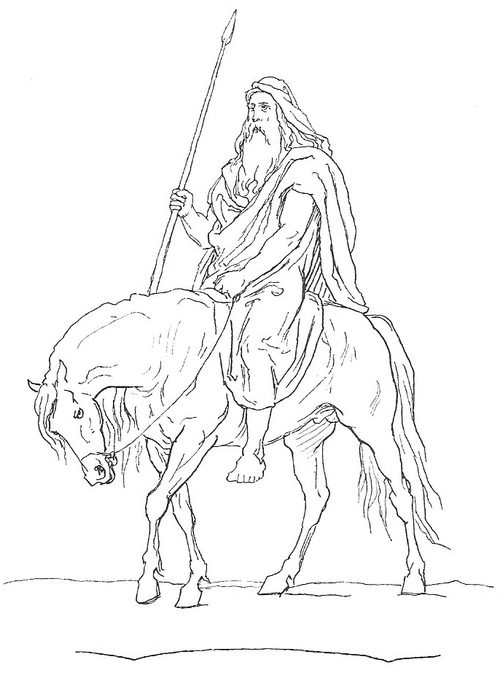
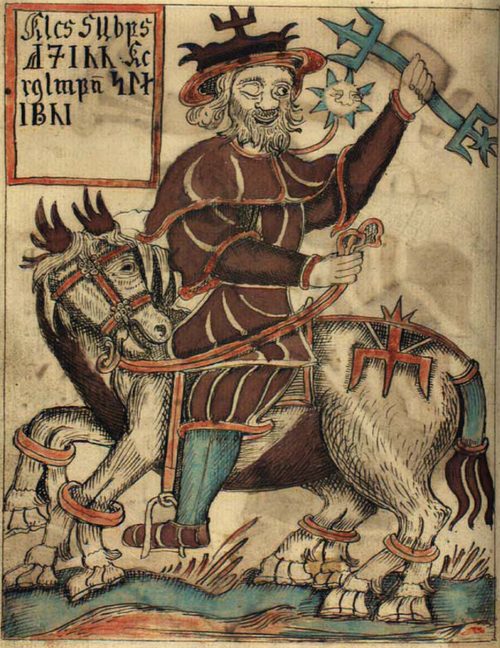
The mare was Loki. The foal was Sleipnir, which became Odin's horse. Hyndluljóð confirms the parentage in a single line: Loki "Sleipnir bore … to Svathilfari" Hyndluljóð 42. Grímnismál calls Sleipnir "the best of steeds" Grímnismál 44, and in Baldrs draumar it is Sleipnir that Odin saddles for the ride down to Niflhel Baldrs draumar 2.
Where the story comes from
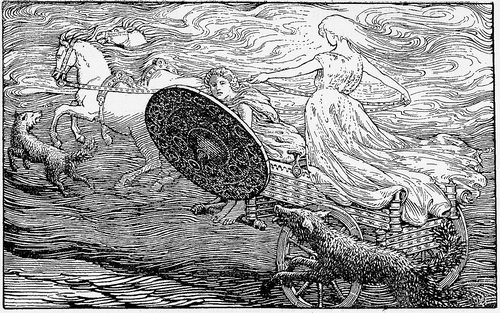
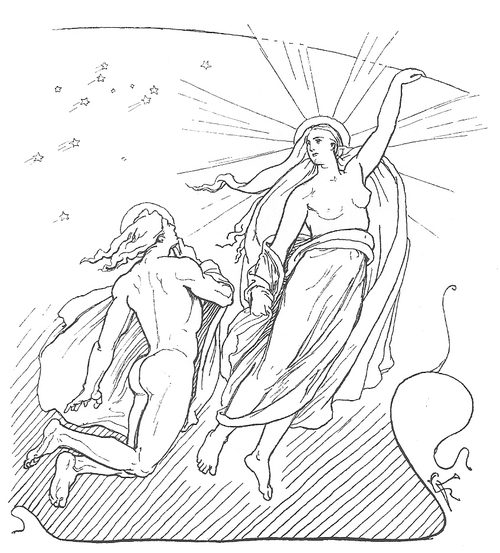
The full story exists only in Gylfaginning chapter 42, written by Snorri Sturluson in the 1220s. No poem tells it. Snorri, however, ends the chapter by quoting Völuspá as his authority, and two stanzas of Völuspá do seem to allude to it Völuspá 25-26. The gods meet in council "to find who with venom the air had filled, or had given Oth's bride to the giants' brood". Óðr's bride is Freyja; "venom in the air" fits the promise of the sun and moon. Then Thor rises in rage, and "the oaths were broken, the words and bonds, the mighty pledges between them made".
In swelling rage then rose up Thor,—Seldom he sits when he such things hears,—And the oaths were broken, the words and bonds,The mighty pledges between them made.Völuspá 26
Those stanzas name no builder, no horse, no wall and no Loki. It is possible that Snorri built his narrative to explain them, and many scholars think he drew at least partly on a folktale type well known across northern Europe, in which a giant or troll builds a church or bridge for a reckless price and is cheated at the last moment. Others think he knew a fuller myth now lost. The poems, in any case, are consistent with his story without proving it.
Two other details are worth setting beside it. Snorri's quotation of the stanza, in Brodeur's translation, says "Thor alone smote there, swollen with anger" Gylfaginning 42: it is Thor who acts, and he kills. Bellows's "rose up Thor" is vaguer. And Völuspá's account of the war with the Vanir, two stanzas earlier, says that "the wall that girdled the gods was broken" Völuspá 23. Some readers have suggested that the giant's wall was built to replace the one the Vanir broke; the texts do not make that connection.
Snorri also never names the place. He says "a citadel" and "the stronghold", and the tradition of calling it the wall of Ásgard is a reasonable inference from where the gods live, not a phrase from the source. Nor does Snorri say whether the gods ever finished the last three days' work.
Reading it today
The story is often read as a comedy of bad faith. The gods take a deal they mean to cheat, blame Loki for a decision they all made, frighten him into solving it, and then break the sworn truce with murder. Völuspá treats that broken oath as a turning point: in the poem the stanzas on the oaths sit just before the visions of Baldr's death and the coming doom, and many readers see it as one of the moral failures that lead the gods toward Ragnarök.
It is also one of the myths in which Loki crosses the boundaries of sex and species. In Lokasenna both Odin and Njörðr taunt Loki with having borne children Lokasenna 23 Lokasenna 33; readers often connect this with Sleipnir, though the poem names no child. The episode has been retold many times in modern children's collections of Norse myths, usually with the gods' oath-breaking softened.
Key passages
there came at that time a certain wright and offered to build them a citadel in three seasons, so good that it should be staunch and proof against the Hill-Giants and the Rime-Giants
he demanded as wages that he should have possession of Freyja, and would fain have had the sun and the moon
a mare bounded forth from a certain wood and whinnied to him
To find who with venom the air had filled, Or had given Oth's bride to the giants' brood.
In swelling rage then rose up Thor,— Seldom he sits when he such things hears,— And the oaths were broken, the words and bonds, The mighty pledges between them made.
And Sleipnir bore he to Svathilfari