A myth retold · about 6 minutes
The mead of poetry
From the spittle of the gods' peace comes Kvasir, wisest of beings; from his blood two dwarfs brew a mead that makes poets. It passes to the giant Suttungr, and Odin wins it by labour, seduction and theft, flying home as an eagle.
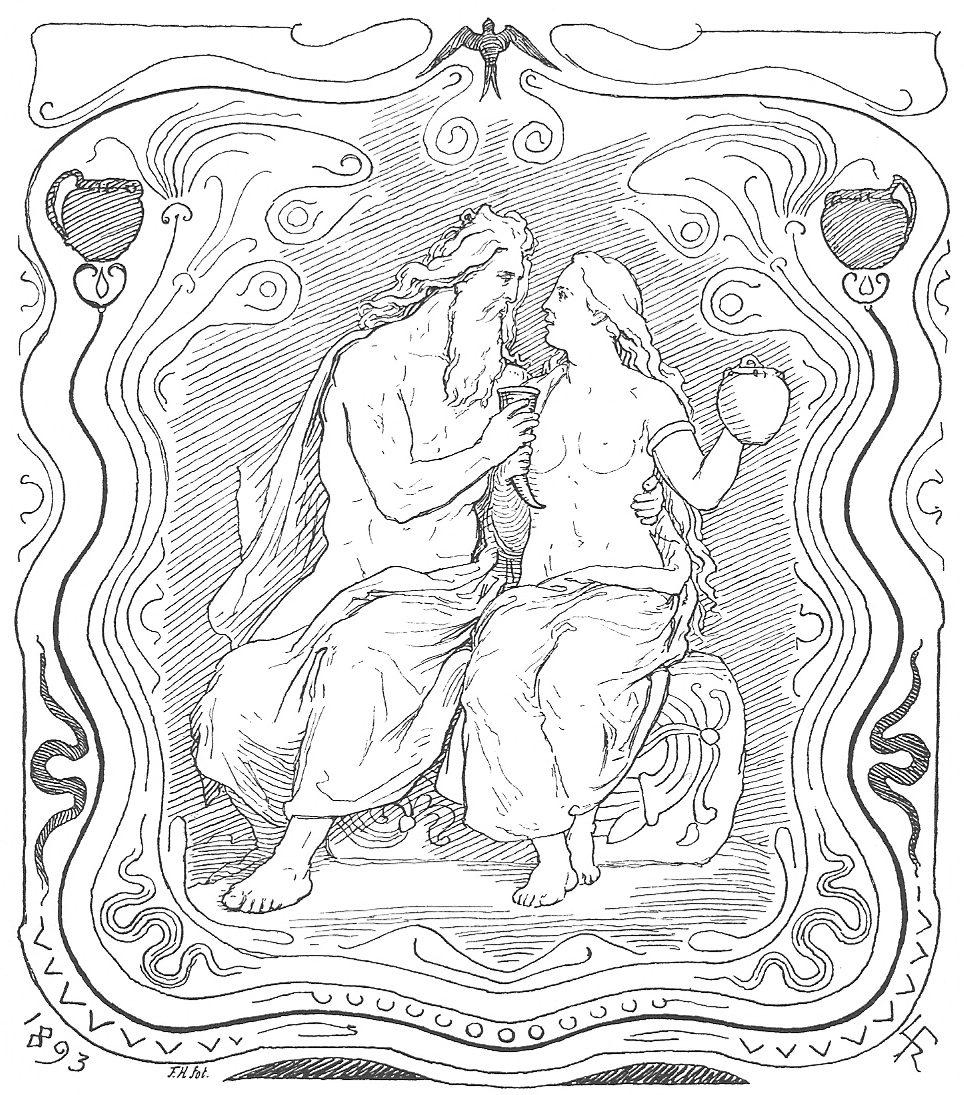
Where does poetry come from? Snorri Sturluson's answer, put into the mouth of Bragi, god of poets, is a story of murder and theft. Poetry is a drink, brewed from the blood of a murdered sage, ransomed to a giant, and stolen back by Odin, who still hands it out to the few who can use it. The story explains dozens of poetic phrases for "poetry", which is why Snorri tells it in his handbook for poets, Skáldskaparmál. Hávamál gives a much older, much darker, glimpse of the same events in Odin's own voice.
Kvasir's blood
The sea-giant Ægir, feasting with the gods, asks Bragi how the art of poetry began Skáldskaparmál 1. Bragi goes back to the end of the gods' war with the Vanir. At the peace-meeting both sides spat into a vat to seal the truce. The gods did not want that token of peace to perish, so they made a man of it. He was called Kvasir, and he was so wise that no one could ask him anything he could not answer.
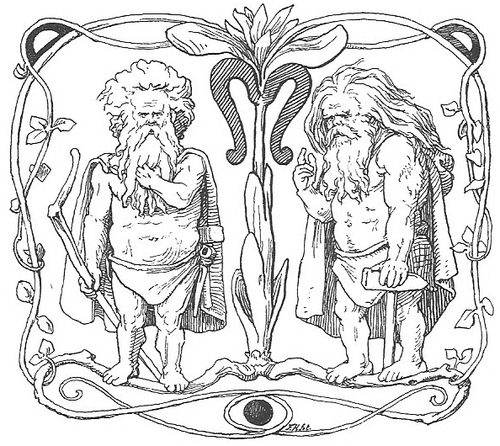
Kvasir travelled the world teaching. Two dwarfs, Fjalar and Galarr, invited him to their home, drew him aside and killed him. They drained his blood into two vats, Són and Boðn, and a kettle called Óðrerir, mixed it with honey, and made a mead: whoever drinks it becomes "a skald or scholar". To the gods, the dwarfs said that Kvasir had choked on his own learning, since no one was clever enough to question him.
The dwarfs killed again. They invited the giant Gillingr and his wife, took Gillingr rowing, and capsized the boat; he could not swim and drowned. When his wife would not stop weeping, Fjalar sent Galarr up over the doorway with a millstone to drop on her head as she went out, "saying that her weeping grew wearisome to him" Skáldskaparmál 1.
Suttungr's ransom
Gillingr's son, the giant Suttungr, came for revenge. He carried the dwarfs out to sea and set them on a rock that the high tide would cover. To save their lives they offered the mead as compensation for his father. Suttungr took it home and hid it inside the mountain Hnitbjörg, with his daughter Gunnlöð to guard it. This, Bragi says, is why poets call poetry "Kvasir's Blood", "Dwarves' Drink", "Suttungr's Mead" or "the Liquor of Hnitbjörg" Skáldskaparmál 1.
Bölverkr
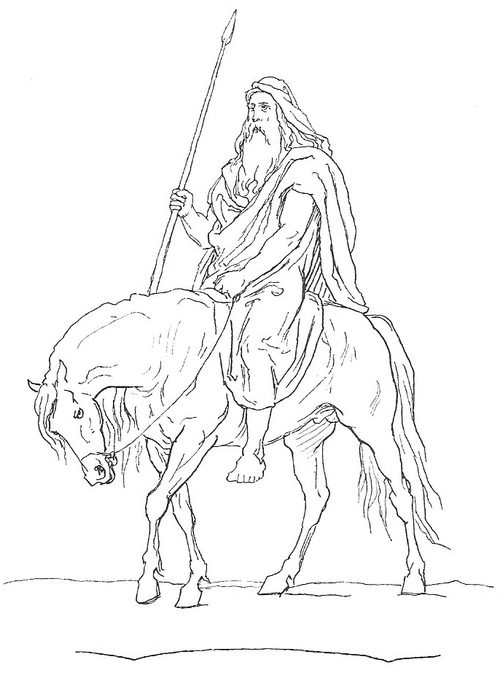
"But how did ye Æsir come at Suttungr's Mead?" Ægir asks. Odin left home and came upon nine slaves mowing hay. He offered to sharpen their scythes with a whetstone from his belt; the scythes cut so much better that all nine wanted to buy the stone. Odin threw it up in the air. They scrambled for it and cut each other's throats with their scythes.
That night Odin lodged with Baugi, Suttungr's brother, who was lamenting that his nine workmen had killed each other. Calling himself Bölverkr — "evil-worker" — Odin offered to do the work of nine men all summer, for one wage: a drink of Suttungr's mead. Baugi said the mead was not his to give, but promised to help. At the end of the summer they went together to Suttungr, who refused them a single drop.
So Bölverkr produced an auger called Rati and told Baugi to bore into the mountain. Baugi said he was through. Bölverkr blew into the hole, the chips flew back in his face, and he knew he was being cheated. Baugi bored again; this time the chips blew inward. Bölverkr turned into a snake and slid into the hole — and Baugi stabbed at him with the auger and missed.
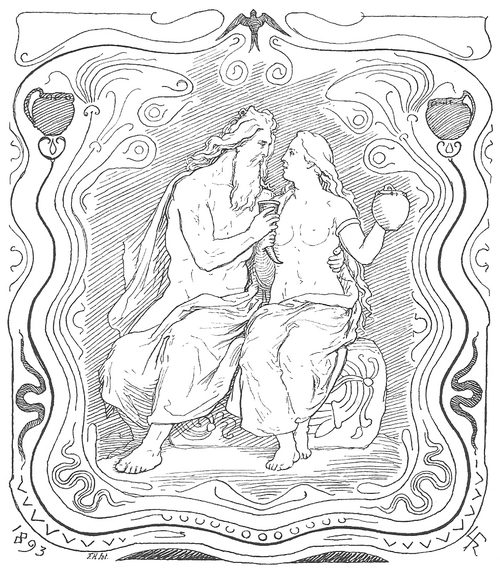
Bölverkr proceeded to the place where Gunnlöd was, and lay with her three nights; and then she gave him leave to drink three draughts of the mead. In the first draught he drank every drop out of Ódrerir; and in the second, he emptied Bodn; and in the third, Són; and then he had all the mead.Skáldskaparmál 1
The eagles
Odin took the shape of an eagle and flew for home as fast as he could. Suttungr saw him, turned into an eagle himself and followed. When the Æsir saw Odin coming they set out vats in the courtyard of Ásgard, and Odin spat the mead into them. Suttungr was so close behind that some of the mead escaped "backwards" — Snorri does not shrink from the joke — and no one took care of that part: whoever wants it can have it, and it is "the poetaster's part" Skáldskaparmál 1. The rest Odin gave to the gods and to those men who have the gift of composing. That is why poetry is called "Odin's Booty", "Odin's Find" and "the Drink of the Æsir".
Odin remembers
Hávamál tells part of the same story, without the dwarfs, the slaves or the eagles, and with a very different emphasis. The speaker, Odin, says he found "the old giant" and won what he wanted by talking, "in Suttung's hall" Hávamál 104. "The mouth of Rati" gnawed a passage through the stone for him, with the giants' paths above and below Hávamál 105.
Gunnloth gave on a golden stoolA drink of the marvelous mead;A harsh reward did I let her haveFor her heroic heart,And her spirit troubled sore.Hávamál 106
He enjoyed the beauty he had won, and so Óðrerir "now has up been brought to the midst of the men of earth" Hávamál 107. He admits he would hardly have escaped "had not Gunnloth helped me, the maiden good, whose arms about me had been" Hávamál 108. The next day the frost-giants came to the hall of Hár asking whether Bölverkr was back among the gods, or whether Suttungr had killed him Hávamál 109. The poet's verdict is cold: Odin swore an oath on a ring, and who can trust him now? He robbed Suttungr of his drink "and Gunnloth to grief he left" Hávamál 110.
Earlier in the same poem, in a stanza on drunkenness, Odin recalls lying "with the heron's feathers fettered … in Gunnloth's house", and being "dead-drunk" with "Fjalar wise" Hávamál 13-14.
Where the story comes from
Snorri's prose (Skáldskaparmál chapter 1 in Brodeur's numbering, written in the 1220s) is the only full narrative. Hávamál 104–110 and 13–14, in the Codex Regius of about 1270 but probably much older, give Odin's side of it. Their differences are concrete:
- Getting in. In Hávamál, Rati is something with a "mouth" that gnaws the stone Hávamál 105; in Snorri, Rati is an auger and Odin crawls through as a snake.
- Fjalar. In Snorri, Fjalar is one of the murderous dwarfs. In Hávamál 14, "Fjalar wise" is the host with whom Odin got drunk, apparently the giant in whose house Gunnlöð lived, which would make it another name for Suttungr.
- Óðrerir. In Snorri it is a kettle Skáldskaparmál 3; in Hávamál "Othrörir now has up been brought" reads more naturally as the mead itself Hávamál 107.
- Gunnlöð. Snorri says only that she let him drink after three nights. Hávamál makes her a willing helper, without whom he would not have escaped, and calls her treatment a "harsh reward".
- The escape. Snorri has the eagle-chase; Hávamál has the giants arriving next day to ask after Bölverkr, and an oath on a ring that Odin broke. Snorri mentions no oath.
Reading it today
Many scholars see the story as an explanation of what poetry felt like to the people who made it: inspired speech came from outside, like intoxication, and its origin was both sacred and stolen. Kvasir's name has often been linked to words for crushed fruit or fermented drink, which would make the brewing literal; this is a common but not certain etymology. Others have compared the theft of the mead with the Indian myth of the eagle that steals soma, the drink of the gods; the parallel is often cited and much discussed.
The story is also one of the bluntest pictures of Odin's methods. He kills nine men with a trick, lies to his employer, seduces his guard and breaks his oath, and the gift of poetry is the result.
Key passages
This man is called Kvasir, and he was so wise that none could question him concerning anything but that he knew the solution.
they blended honey with the blood, and the outcome was that mead by the virtue of which he who drinks becomes a skald or scholar
Then Bölverkr turned himself into a serpent and crawled into the auger-hole
The mouth of Rati made room for my passage, And space in the stone he gnawed; Above and below the giants' paths lay, So rashly I risked my head.
Gunnloth gave on a golden stool A drink of the marvelous mead; A harsh reward did I let her have For her heroic heart
On his ring swore Othin the oath, methinks; Who now his troth shall trust? Suttung's betrayal he sought with drink, And Gunnloth to grief he left.