creature
Sleipnir
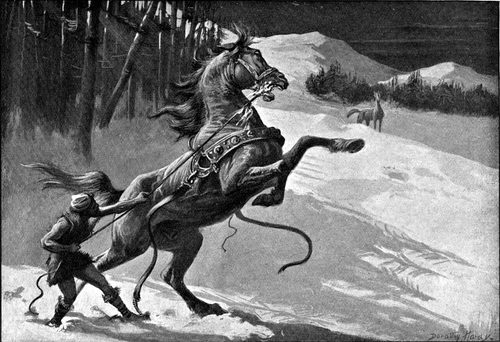
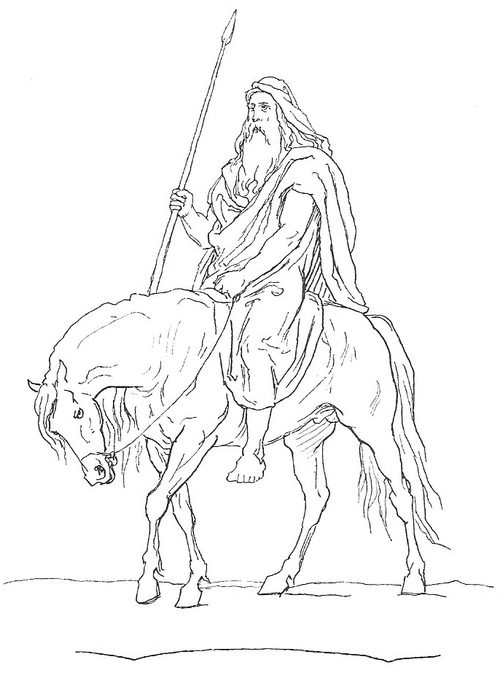
Odin's grey, eight-legged horse, best of all steeds, foaled by Loki after he lured away the giant builder's stallion Svaðilfari.
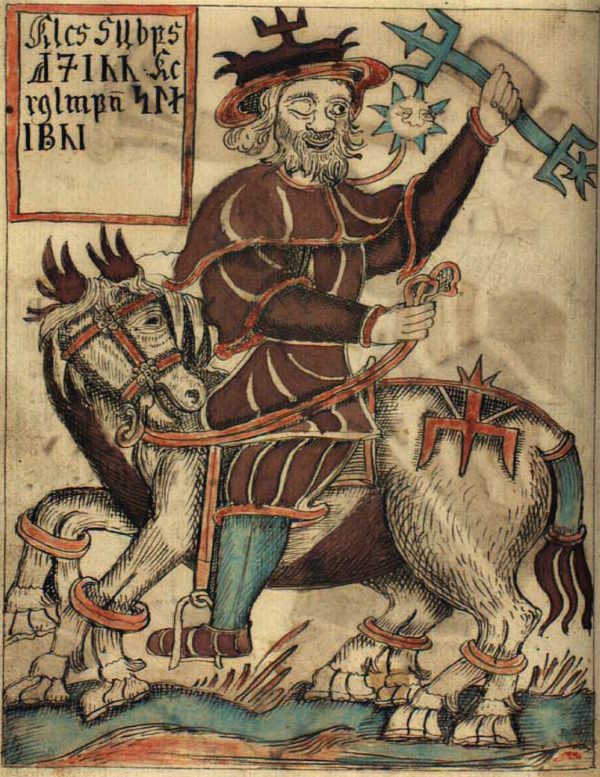
Sleipnir is Odin's horse, grey and eight-legged, and by every account the best horse there is. Grímnismál ranks him with the greatest of each kind: Yggdrasil of trees, Odin of gods, "Sleipnir the best of steeds" Grímnismál 44. Snorri repeats the list Gylfaginning 41 and puts Sleipnir first among the horses the gods ride each day to their court under the ash: "Sleipnir is best, which Odin has; he has eight feet" Gylfaginning 15.
His birth
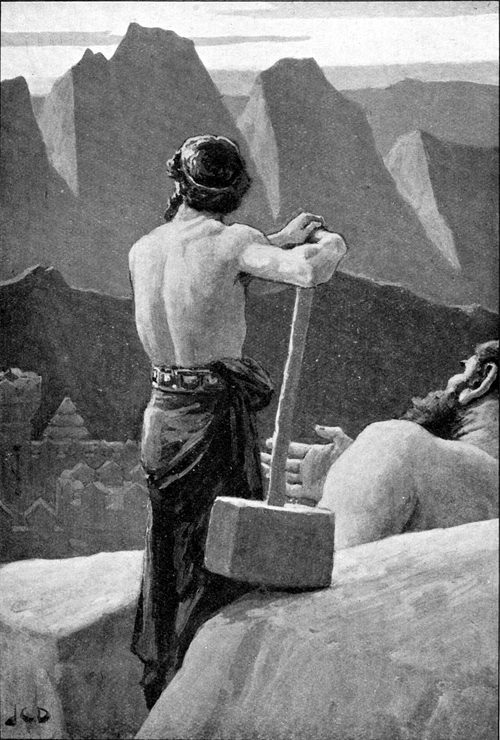
Sleipnir's origin is one of the strangest stories in the myths (see The giant builder and the wall of Asgard). A giant builder offered to wall Ásgard in three seasons; the gods held him to a single winter, in return for Freyja, the sun and the moon, and he was allowed the help of his stallion Svaðilfari on Loki's advice. When the work was nearly done, the gods forced Loki to undo the deal. One evening a mare came out of a wood and whinnied to the stallion, which broke its traces and ran after her all night; the work fell behind and the builder was killed by Thor. "But Loki had such dealings with Svadilfari, that somewhat later he gave birth to a foal, which was gray and had eight feet" Gylfaginning 42. Hyndluljóð knows the same story in one line Hyndluljóð 42, and Snorri lists "Kinsman of Sleipnir" among the names for Loki Skáldskaparmál 16.
Rides to the dead
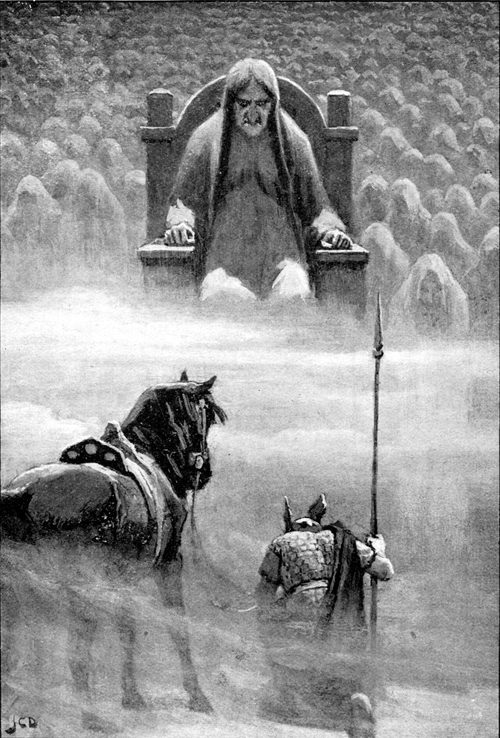
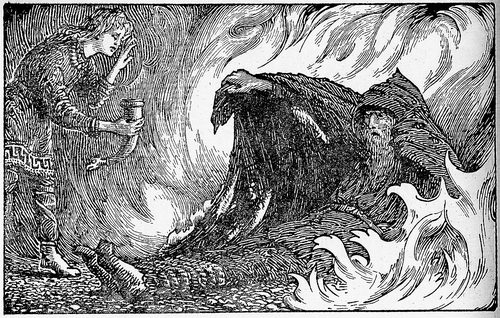
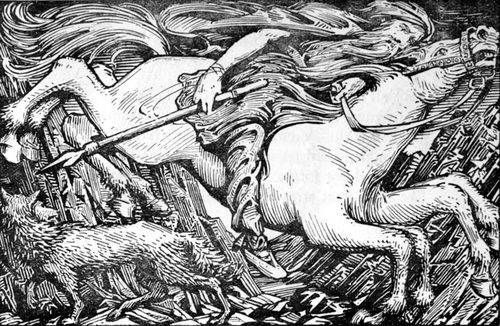
Sleipnir is the horse that crosses into the world of the dead. In Baldrs draumar Odin saddles him and rides "down to Niflhel deep" to question a dead seeress about Baldr's dreams Baldrs draumar 2. After Baldr's death Hermóðr borrows him for the ride to Hel, and Sleipnir clears Hel-gate in one leap Gylfaginning 49. He also carries Odin into Jötunheim in the challenge that leads to Thor's duel with Hrungnir Skáldskaparmál 17, and runes are said to be cut "On Sleipnir's teeth" Sigrdrífumál 15.
Many scholars have linked the eight legs to the bearers of a coffin, or to shamanic spirit-horses, and see Sleipnir's journeys to the dead as a sign of Odin's role as a god who travels between worlds. These are interpretations; the sources never explain the eight legs.
In the sources
Quoted from the hosted translations; each line is checked against the text when the site is built. Select a reference to read it in context.
But Loki had such dealings with Svadilfari, that somewhat later he gave birth to a foal, which was gray and had eight feet; and this horse is the best among gods and men.
Of all the gods is Othin the greatest, And Sleipnir the best of steeds
And the saddle he laid on Sleipnir's back; Thence rode he down to Niflhel deep
And Sleipnir bore he to Svathilfari
Then Sleipnir was taken, Odin's steed, and led forward; and Hermódr mounted on that horse and galloped off.
In modern culture
Not from the medieval sources.
Sleipnir is a familiar image in modern Scandinavian culture and in fantasy and games. An eight-legged horse on the Gotland picture stones (such as the Tjängvide stone) is often identified with Sleipnir; the identification is widely accepted but not proven.