concept
Ragnarök
The foretold end of the gods' world: wolves swallow sun and moon, Loki and the monsters break loose, the gods fall in battle, Surtr burns the earth, and a new world rises.
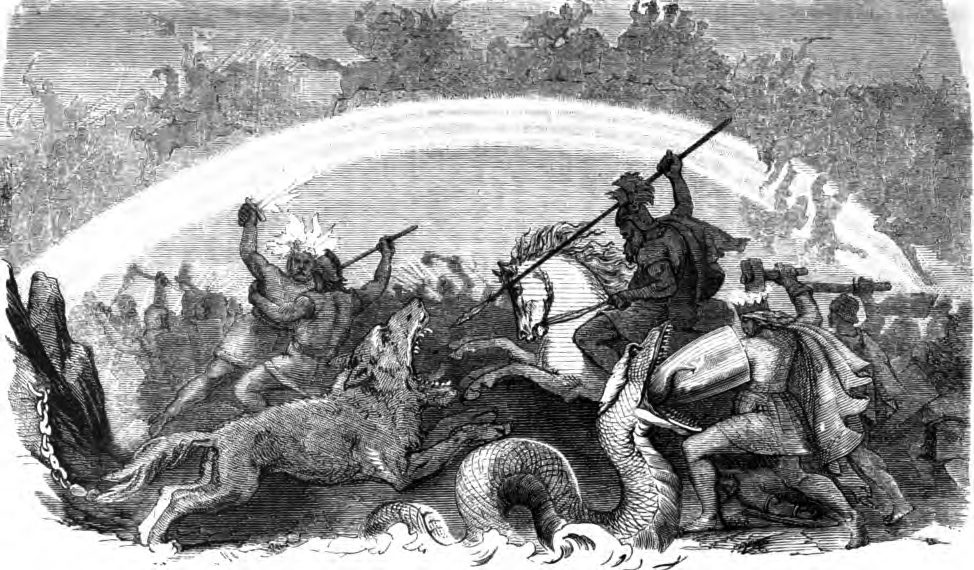
Ragnarök is the end of the world the gods have built: the death of most of them, the burning and drowning of the earth, and a new world afterwards. It is not told as a past event or a myth of the gods' own doings, but as prophecy. In Völuspá a seeress tells Odin what she sees coming; in Vafþrúðnismál Odin, disguised, quizzes a giant about it; Snorri's Gylfaginning stitches these poems into one continuous narrative, quoting them as he goes Gylfaginning 51.
The signs
Snorri begins with the Awful Winter (Fimbulvetr): three winters in a row with no summer between, preceded by three more winters of war across the world Gylfaginning 51. Vafþrúðnismál knows it as "the mighty winter" Vafþrúðnismál 44. Völuspá describes the moral collapse in a famous stanza:
Brothers shall fight and fell each other,And sisters' sons shall kinship stain;Hard is it on earth, with mighty whoredom;Axe-time, sword-time, shields are sundered,Wind-time, wolf-time, ere the world falls;Nor ever shall men each other spare.Völuspá 45
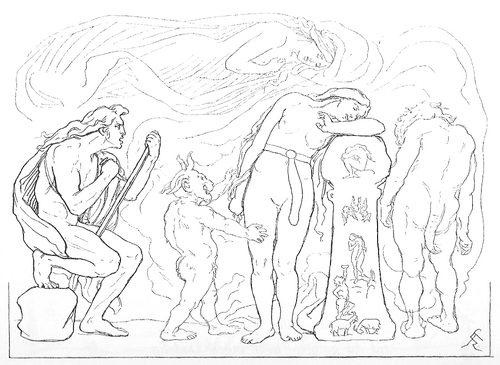
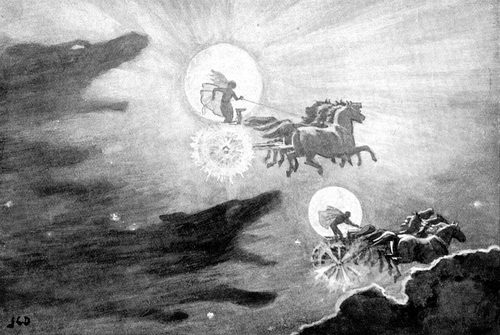
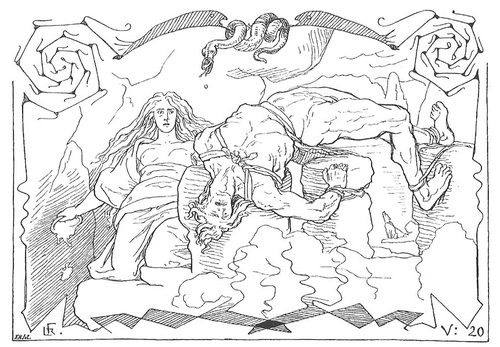
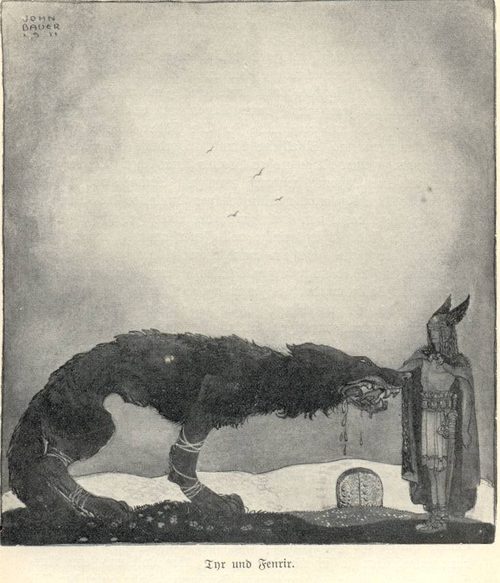
Then the wolves catch the sun and moon (see Sköll and Hati) and the stars vanish. The earth shakes, all bonds break, and Fenrir runs free Gylfaginning 51. In Völuspá three cocks crow, one of them to the gods and one "at the bars of Hel" Völuspá 42-43, and the hound Garmr howls before Gnipahellir Völuspá 44. Heimdallr blows the Gjallarhorn, Odin speaks with Mímir's head, and Yggdrasil shakes Völuspá 46-47.
The hosts
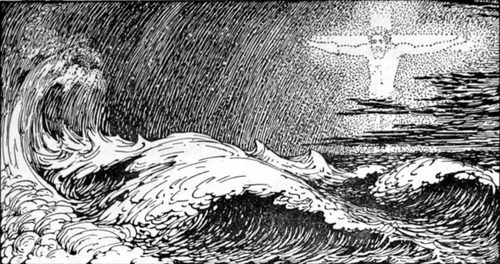
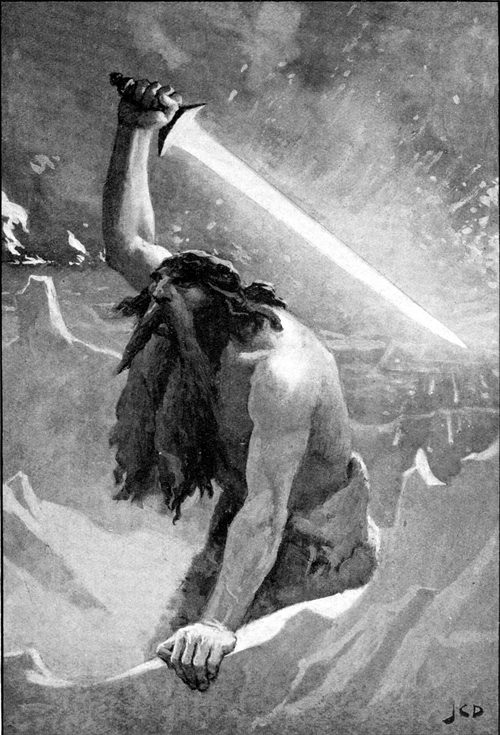
The enemies come from every side. The Midgard Serpent writhes up onto the land, flooding it. Hrymr comes from the east and the ship Naglfar is loosed Völuspá 50. A ship sails with "the people of Hel" and Loki at the helm Völuspá 51. Surtr comes from the south with fire, and "heaven is cloven" Völuspá 52. In Snorri's version the sons of Múspell ride over Bifröst, which breaks under them, and all the hosts gather on the plain of Vígríðr, a hundred leagues each way Gylfaginning 51.
The battle
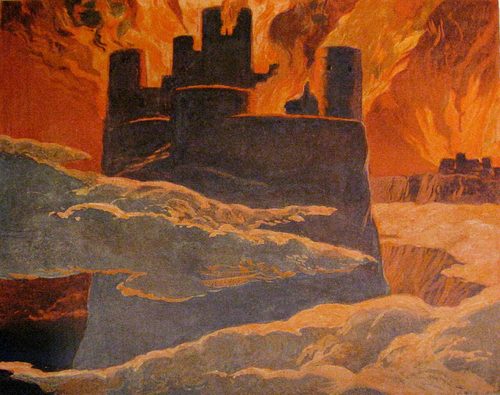
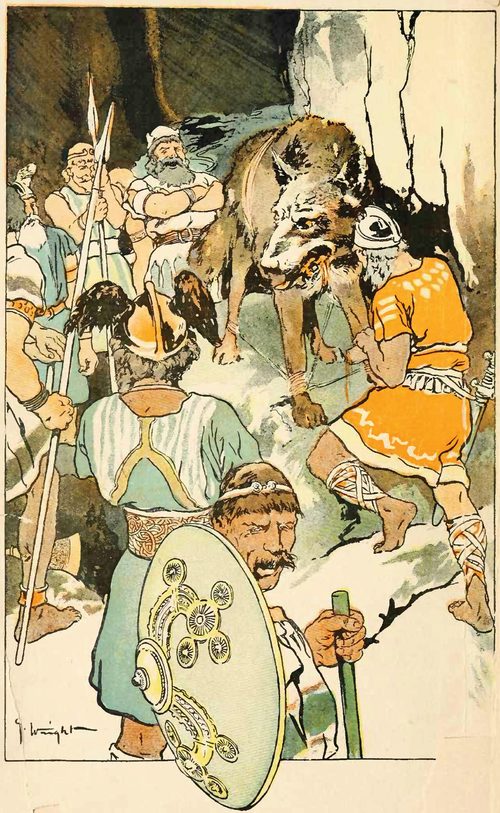
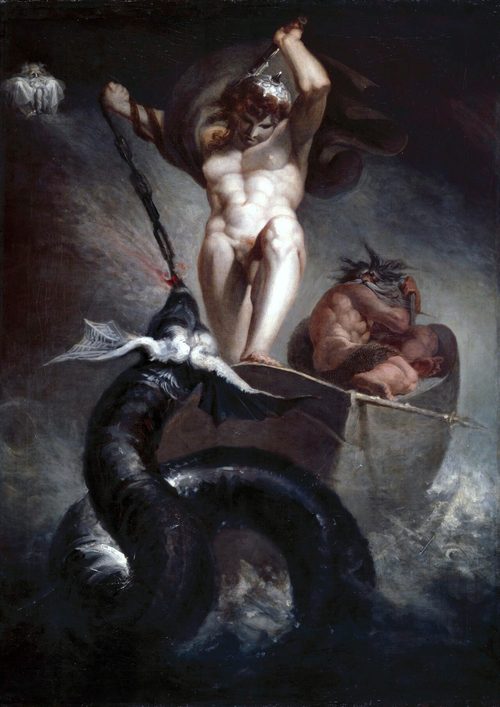
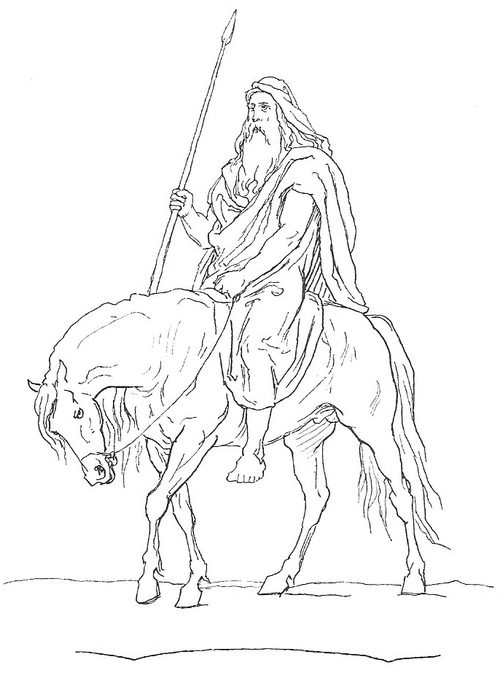
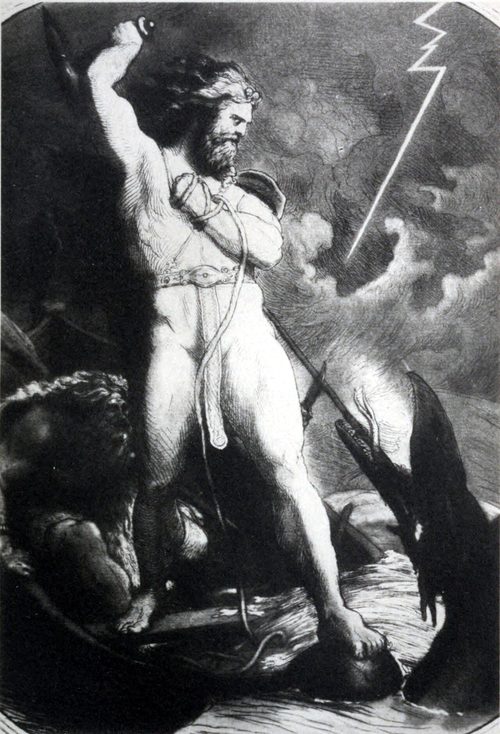
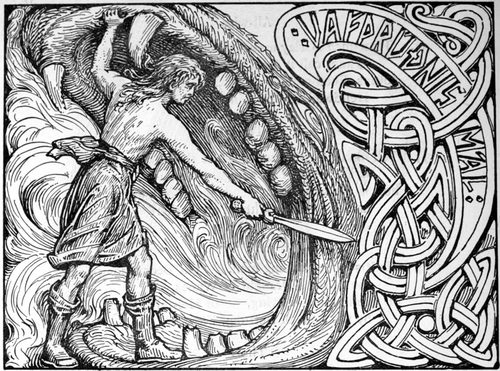
The fights are paired. Odin goes against Fenrir and is swallowed; his son Víðarr avenges him Völuspá 53-54. Thor kills the serpent, walks nine paces and falls dead from its venom Völuspá 56. Freyr falls to Surtr, lacking the sword he gave away Gylfaginning 51. Snorri adds two pairings the poems do not have: Týr and Garmr kill each other, and so do Loki and Heimdallr. Then Surtr throws fire over the earth.
The sun turns black, earth sinks in the sea,The hot stars down from heaven are whirled;Fierce grows the steam and the life-feeding flame,Till fire leaps high about heaven itself.Völuspá 57
Afterwards
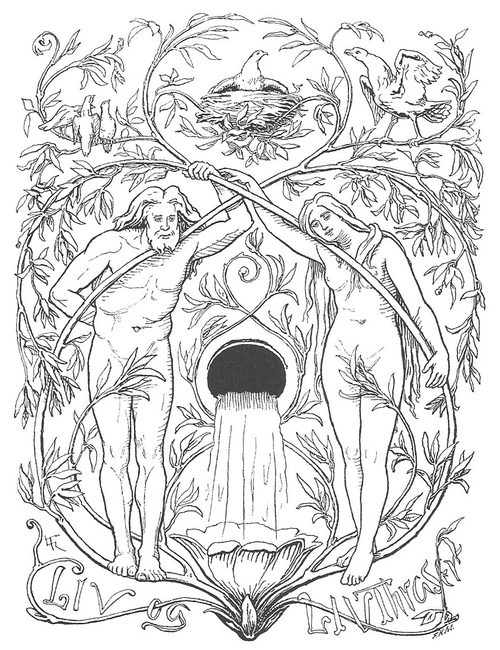
The earth rises "all green from the waves again" Völuspá 59. The surviving gods meet at Iðavöllr, talk of the serpent and the old runes, and find the golden gaming-pieces they once owned in the grass Völuspá 60-61. Baldr and Höðr come back from Hel Völuspá 62. Vafþrúðnismál names Víðarr and Váli as rulers of the new home of the gods, with Thor's sons Magni and Móði holding Mjöllnir Vafþrúðnismál 51. Two humans, Líf and Lífþrasir, survive in Hoddmímir's wood to repopulate the world Vafþrúðnismál 45, and the sun's daughter takes over her mother's road Vafþrúðnismál 47. Völuspá ends with a golden hall at Gimlé for the righteous Völuspá 64, but also with the dragon Níðhöggr flying up from below with corpses on his wings Völuspá 66.
How the sources differ
The three main accounts agree on the shape of the story but not its details.
Odin's avenger. Völuspá has Víðarr thrust a sword into the wolf's heart Völuspá 54; Vafþrúðnismál has him tear its jaws apart Vafþrúðnismál 53; Snorri does both, describing a foot on the lower jaw and a hand on the upper, then quoting the sword stanza Gylfaginning 51.
Loki's ship. Bellows's Völuspá has a ship "from the north" carrying the people of Hel with Loki at the helm Völuspá 51. Snorri's quotation of the same stanza reads "From the east sails the keel; come now Múspell's folk," and in his prose it is Hrymr who steers Naglfar Gylfaginning 51.
The battlefield. Vafþrúðnismál calls it Vigrith Vafþrúðnismál 18; Fáfnismál calls the island where gods and Surtr meet Oskopnir Fáfnismál 15.
The sun. Vafþrúðnismál says Fenrir snatches the sun Vafþrúðnismál 46; Snorri gives that to the wolf Sköll Gylfaginning 12.
Reading it today
Scholars disagree about how much of this is pre-Christian. The general idea of a world-ending battle and fire is usually thought to be old, and Old High German Muspilli, a Christian poem about the Last Judgment, uses a word related to Múspell. But the green world after the fire, the hall for the righteous and especially the "mighty lord" who comes "all power to hold" Völuspá 65 have suggested to many readers an influence from Christian teaching about the end of days. Whether the cycle is meant to repeat is also unclear: the sources describe one ending and one renewal.
In the sources
Quoted from the hosted translations; each line is checked against the text when the site is built. Select a reference to read it in context.
Axe-time, sword-time, shields are sundered, Wind-time, wolf-time, ere the world falls
Yggdrasil shakes, and shiver on high The ancient limbs, and the giant is loose
The sun turns black, earth sinks in the sea, The hot stars down from heaven are whirled
Now do I see the earth anew Rise all green from the waves again
The wolf shall fell the father of men, And this shall Vithar avenge
there shall come that winter which is called the Awful Winter
In that time the earth shall emerge out of the sea, and shall then be green and fair
Where the sources disagree or fall silent
- Whether the new world in Völuspá reflects pre-Christian belief or Christian influence is debated; the 'mighty lord' who comes 'all power to hold' (Völuspá 65) is especially disputed.
- The poems do not agree on the name of the battlefield: Vígríðr in Vafþrúðnismál, Óskópnir in Fáfnismál.
- Who swallows the sun differs between sources: Fenrir in Vafþrúðnismál, a wolf of the Ironwood brood in Völuspá, Sköll in Snorri.
In modern culture
Not from the medieval sources.
Richard Wagner's Götterdämmerung ('Twilight of the Gods', first performed in 1876 as the last part of the Ring cycle) fixed the 'twilight' form of the name in modern languages, though its plot owes more to the Völsung legend than to Völuspá. Recent versions include the Marvel film Thor: Ragnarok (2017) and the video game God of War Ragnarök (2022), both of which treat the end freely.