A myth retold · about 5 minutes
Freyr and Gerðr
Freyr sits in Odin's high seat, glimpses the giant's daughter Gerðr and is sick with love. His servant Skírnir rides through fire to woo her, and when gifts fail he wins her with threats and a curse. The price is Freyr's sword.
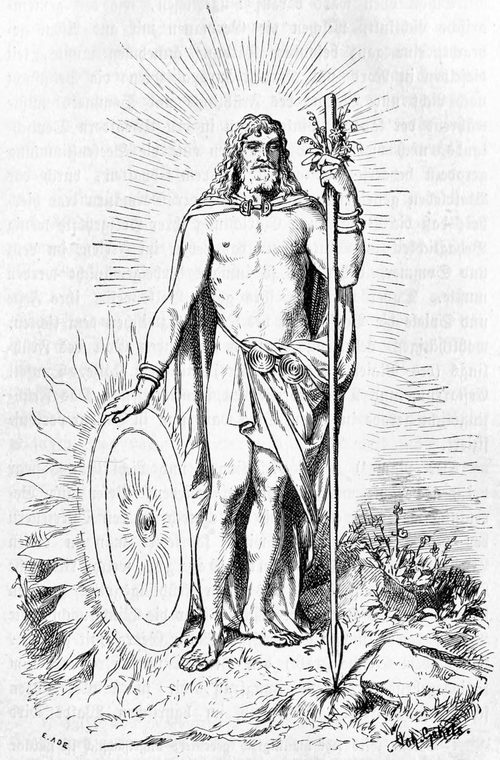
Freyr is the god of plenty and good seasons, one of the Vanir and son of Njörðr. His love story is told in Skírnismál, one of the most dramatic poems in the Poetic Edda, and more briefly by Snorri. It is a wooing with almost no tenderness in it: the lover never leaves home, and the bride is won by his servant at sword-point.
What Freyr saw
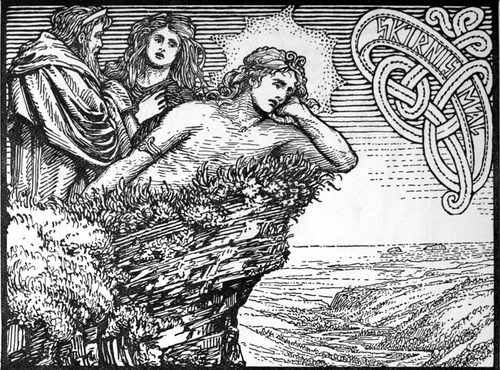
One day Freyr sat in Hliðskjálf, the high seat from which the whole world can be seen, and looked into Jötunheimr. He saw a beautiful girl walk from her father's house to her own hall Skírnismál, prose 1. In his own words:
"From Gymir's house I beheld go forthA maiden dear to me;Her arms glittered, and from their gleamShone all the sea and sky.Skírnismál 6
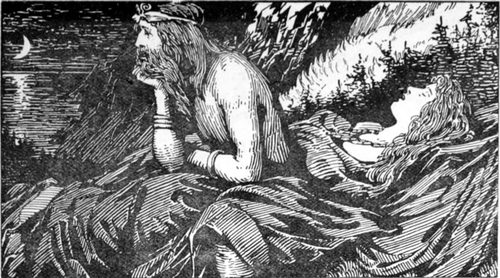
He fell at once into a deep lovesickness. Snorri says he came home and would not speak, sleep or drink, and nobody dared speak to him Gylfaginning 37. Njörðr sent for Skírnir, Freyr's servant, and told him to find out what was wrong. Skírnir went, expecting harsh words Skírnismál 2. The two had been young together, he reminded Freyr, so they could trust each other Skírnismál 5. Freyr told him: no maiden was ever dearer to a man, but "no one of gods or elves will grant / That we both together should be" Skírnismál 7.
The horse and the sword
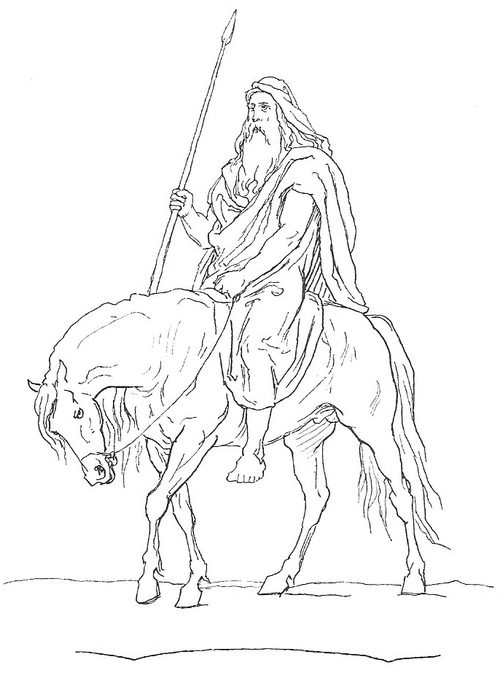
Skírnir agreed to go and woo her, on terms. He asked for the horse that could carry him through the dark and the magic flickering flames, and for the sword that fights by itself against the giants. Freyr gave both, adding only that the sword fights of itself "if a worthy hero wields it" Skírnismál 8-9. Skírnir spoke to the horse in the dark: they would both come back, or the giant would take them both Skírnismál 10.
He rode to the house of Gymir, where fierce dogs were tied at the gate of the fence round Gerðr's hall. A herdsman sitting on a mound asked him whether he was doomed to die or already dead, and told him he would never speak with Gymir's daughter Skírnismál 12. Skírnir answered that boldness beat complaint; his life's span was already fixed Skírnismál 13.
Inside, Gerðr heard the ground shake. She told her maid to bring the stranger in for mead, though she feared he might be her brother's killer, and asked whether he was an elf, a god or one of the Vanir, to have come through the flames alone Skírnismál 14-17. The poem says nothing more about the brother.
Gifts, then threats
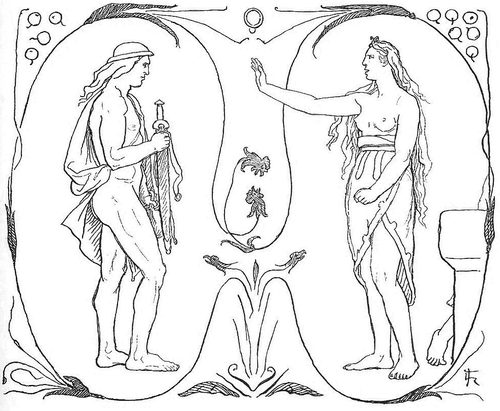
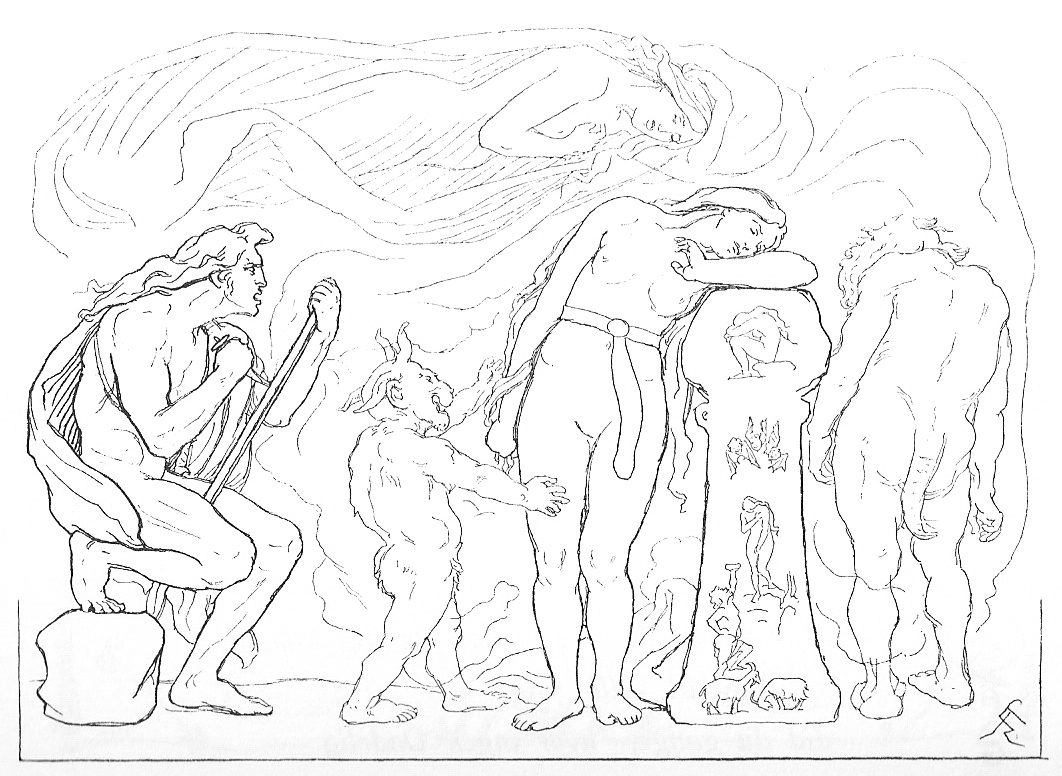
Skírnir offered her eleven golden apples for her promise to love Freyr. She refused. He offered a ring "that was burned / Of old with Othin's son", from which eight rings of equal weight drip every ninth night. She refused again: there was no lack of gold in her father's house Skírnismál 19-22. He drew the sword and threatened to cut off her head; she said no man would force her, and that Gymir would gladly fight him Skírnismál 23-24. He said the old giant would fall before that blade Skírnismál 25.
Then he took out a magic staff and began to curse her. It is the longest speech in the poem. She would sit on an eagle's mound staring towards Hel; food would disgust her; she would become a sight to make the giant Hrímnir stand and stare. Rage, longing, fetters and tears would be hers; she would live among three-headed giants or have no husband at all, and wither like a thistle crushed in a loft Skírnismál 26-31. Odin and Freyr would be her enemies Skírnismál 33. He called on the giants and the gods to hear him forbid her any joy of men Skírnismál 34, and promised her a giant named Hrímgrímnir by the doors of Hel and horns of filth to drink Skírnismál 35-36. And he finished:
"I write thee a charm and three runes therewith,Longing and madness and lust;But what I have writ I may yet unwriteIf I find a need therefor."Skírnismál 37
Gerðr gave way. She welcomed him with a frost-cup of mead and said she had never thought she would love one of the Vanir Skírnismál 38. She named the place: in nine nights she would meet the son of Njörðr in Barri, a quiet grove they both knew Skírnismál 40.
Nine nights
Skírnir rode home. Freyr was waiting outside and would not let him take the saddle off before he gave his news. When he heard it, he said:
"Long is one night, longer are two;How then shall I bear three?Often to me has a month seemed lessThan now half a night of desire."Skírnismál 43
The poem ends there. Neither source describes the wedding. Snorri counts Gerðr among the goddesses at Ægir's feast Skáldskaparmál 1, and Hyndluljóð calls her "Freyr's wife … the daughter of Gymir" Hyndluljóð 32.
Where the story comes from
Skírnismál survives complete in the Codex Regius, written down around 1270; the poem may be older, but its date is debated. Snorri's version in Gylfaginning (around 1220) follows it closely and quotes its last stanza Gylfaginning 37, with real differences:
- Snorri leaves out the whole wooing. He says only that Skírnir went, wooed her and got her promise; the gifts, the threats and the curse are not mentioned.
- Snorri adds a moral: Freyr's misery was punishment for his presumption in sitting in that holy seat Gylfaginning 37, which belonged to Odin. The poem passes no judgment.
- Snorri names Gerðr's mother, Aurboða, and calls Gerðr the fairest of all women; he places the meeting at "Barrey" rather than Barri Gylfaginning 37.
- Skírnir asks only for the sword in Snorri; in the poem he also takes the horse Skírnismál 8.
Both agree on the cost. Snorri says giving away the sword is why Freyr fought the giant Beli with a hart's antler, and why he will be weaponless when the sons of Muspell come at Ragnarök Gylfaginning 37. In Lokasenna Loki taunts him that he bought Gymir's daughter with gold and "sold thy sword to boot", and will wait weaponless at the end Lokasenna 42. In Völuspá "Beli's fair slayer" goes to fight Surtr Völuspá 53, and Snorri says he falls there for want of his good sword Gylfaginning 51.
Reading it today
The ring "burned of old with Othin's son" that drips eight more rings every ninth night matches Snorri's description of Draupnir, which Odin laid on Baldr's pyre Gylfaginning 49; most readers take it to be that ring, though the poem does not name it.
The most influential interpretation, put forward by scholars in the 19th and 20th centuries, reads the poem as a seasonal or fertility myth: the god of growth wins a bride from the frozen giant world, and their union in a grove after nine nights brings spring or harvest. It is attractive but rests on Freyr's general character rather than on anything the poem says. Other readers stress the darker side: Skírnir's curse is a rare detailed picture of verbal magic, and the "bride" yields only under threat of madness and starvation. Both readings fit the text.
Key passages
Freyr, the son of Njorth, had sat one day in Hlithskjolf, and looked over all the worlds. He looked into Jotunheim, and saw there a fair maiden
From Gymir's house I beheld go forth / A maiden dear to me; / Her arms glittered, and from their gleam / Shone all the sea and sky.
And the sword as well that will fight of itself / If a worthy hero wields it.
I write thee a charm and three runes therewith, / Longing and madness and lust
Long is one night, longer are two; / How then shall I bear three?
Thus his overweening pride, in having presumed to sit in that holy seat, was avenged upon him
The daughter of Gymir with gold didst thou buy, / And sold thy sword to boot