Vanir
Freyja
The Vanir goddess of love, wealth and the slain: daughter of Njörðr, owner of the necklace Brísingamen, who takes half of those who fall in battle to her hall Fólkvangr.
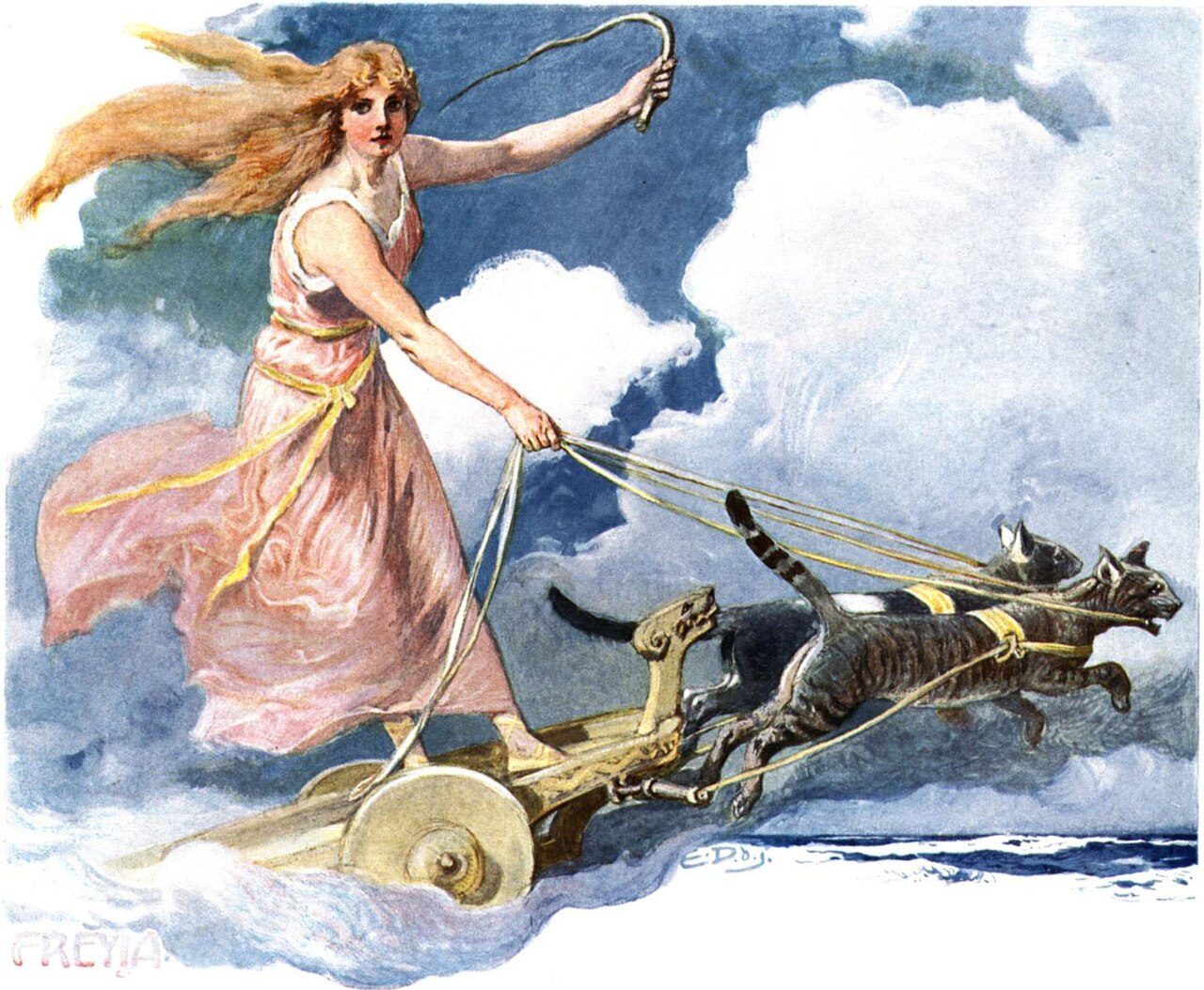
Freyja is the leading goddess of the Vanir: daughter of Njörðr, sister of Freyr Gylfaginning 24, and in Snorri's words "the most renowned of the goddesses". He adds that she answers prayers readily, that love-songs please her, and that "it is good to call on her for furtherance in love" Gylfaginning 24. That is only part of her. In the poems she also commands the dead, owns the most famous necklace in the myths, and is the prize giants keep demanding.
Hall of the slain
Freyja shares the battle-dead with Odin:
The ninth is Folkvang, where Freyja decreesWho shall have seats in the hall;The half of the dead each day does she choose,And half does Othin have.Grímnismál 14
Snorri repeats this, adding that "wheresoever she rides to the strife, she has one-half of the kill" Gylfaginning 24. Her estate is Fólkvangr and her hall Sessrúmnir; she travels in a chariot drawn by cats Gylfaginning 24, and drove it to Baldr's funeral Gylfaginning 49. The sources do not explain how her share of the dead differs from Odin's Valhalla.
Husband, tears and names
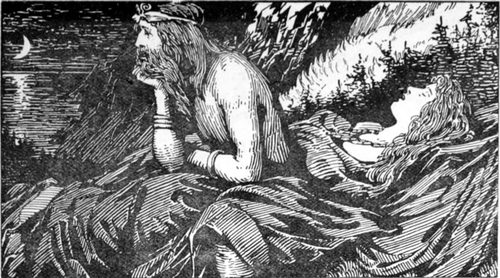
Snorri says Freyja is married to a man named Óðr, who "went away on long journeys, and Freyja weeps for him, and her tears are red gold" Gylfaginning 35. Searching for him among foreign peoples, she took other names: Mardöll, Hörn, Gefn, Sýr. Their daughter is Hnoss, whose name means "treasure" Gylfaginning 35. Skalds therefore call gold "Freyja's tears" Skáldskaparmál 37. Snorri also calls her "Lady of the Vanir" and says she owned the necklace Brísingamen Gylfaginning 35.
The goddess the giants want
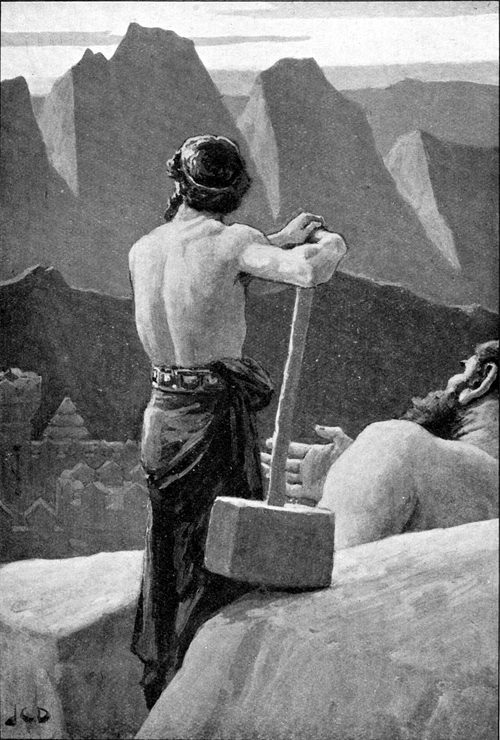
Freyja's value shows in how often the giants ask for her. The builder of Asgard's wall wants Freyja, the sun and the moon as his wages Gylfaginning 42 (see The giant builder and the wall of Asgard). In Þrymskviða, the giant Þrymr will return Thor's hammer only "If Freyja I win not to be my wife" Þrymskviða 7. Freyja's answer is fury: she snorts, the hall shakes, and the necklace bursts. She will not "look lustful" by riding to Jötunheim as a bride Þrymskviða 12, so Thor goes in her place, in her veil and her necklace (see Thrym steals Thor's hammer). The drunken giant Hrungnir boasts that he will carry off Freyja and Sif, and "Freyja alone dared pour for him" Skáldskaparmál 17. She also owns a feather-dress, a falcon shape that she lends to Loki for flights to Jötunheim Þrymskviða 3-4 Skáldskaparmál 1.
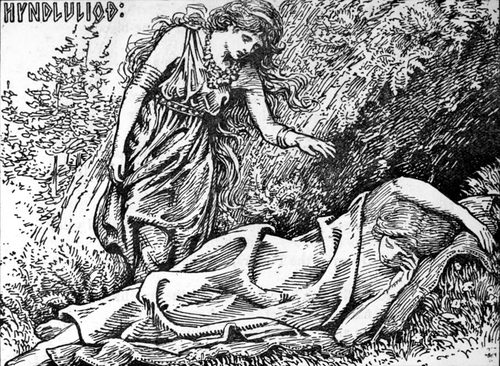
Her enemies attack her sex life. In Lokasenna Loki claims every god and elf in the hall has been her lover, and that the gods caught her with her own brother Lokasenna 30 Lokasenna 32. In Hyndluljóð she rides the golden boar Hildisvíni to the giantess Hyndla to get a family tree for her human favourite Óttarr, who built her a stone altar reddened with sacrifices Hyndluljóð 10. Hyndla reads the boar as Óttarr in disguise, "thy lover" Hyndluljóð 6, and sends Freyja off with the insult that she runs about at night "As Heithrun goes the goats among" Hyndluljóð 47.
Beyond the Eddas
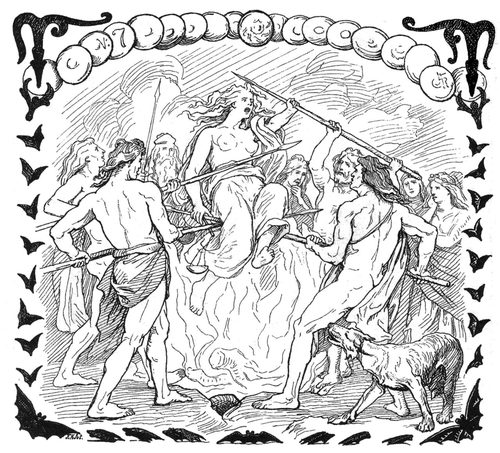
Snorri's Ynglinga saga, outside the Eddas, says that Freyja was a priestess who first taught the Æsir seiðr, a kind of magic the Vanir practised. Some scholars link this to the witch Heiðr in Völuspá, whose burning starts the war between the gods and the Vanir Völuspá 21-22, and read her as Freyja; this is an interpretation, not something the poem states. Scholars have also found her name in a number of Scandinavian place-names, a sign of real worship rather than only poetic invention.
In the sources
Quoted from the hosted translations; each line is checked against the text when the site is built. Select a reference to read it in context.
The ninth is Folkvang, where Freyja decrees Who shall have seats in the hall; The half of the dead each day does she choose, And half does Othin have.
When she goes forth, she drives her cats and sits in a chariot
Ódr went away on long journeys, and Freyja weeps for him, and her tears are red gold.
Wrathful was Freyja, and fiercely she snorted, And the dwelling great of the gods was shaken, And burst was the mighty Brisings' necklace
There shines the boar with bristles of gold, Hildisvini, he who was made By Dain and Nabbi, the cunning dwarfs.
Of the gods and elves who are gathered here, Each one as thy lover has lain.
Where the sources disagree or fall silent
- Whether Freyja and Frigg were once a single goddess, and whether Óðr is a form of Odin. Both are modern hypotheses, built on the likeness of the names; the Eddas treat them as separate.
- Whether the witch Gullveig/Heiðr of Völuspá 21-22 is Freyja. Some scholars think so; the poem does not say.
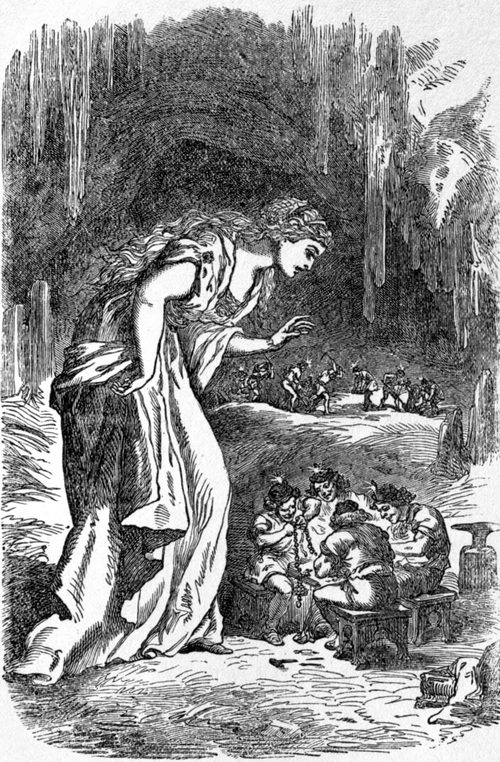
- The Eddas never say how Freyja came by Brísingamen. The story of the four dwarves comes from a much later saga.
In modern culture
Not from the medieval sources.
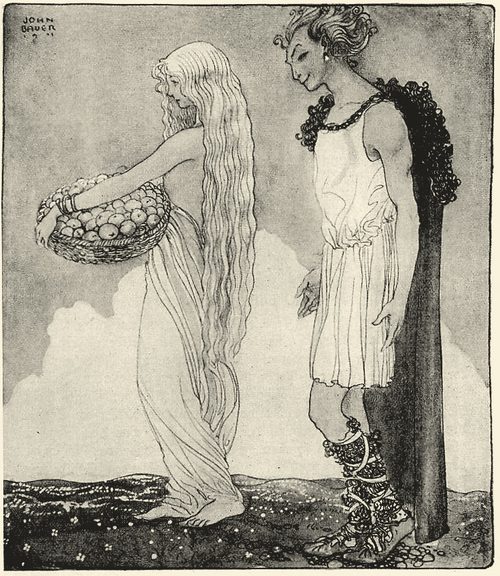
Freyja is the best-known Norse goddess today. Wagner's Ring turns her into Freia, the goddess of youth who keeps the golden apples (a role the Eddas give to Iðunn). She appears in many games and novels, including God of War (2018) and its sequel, where she is a witch and Odin's estranged wife; the medieval sources do not marry her to Odin. The English 'Friday' is usually traced to Frigg (Old English Frīg) rather than Freyja, though the two are often confused.