A myth retold · about 5 minutes
Hermóðr's ride to Hel
After Baldr's death Hermóðr rides Sleipnir nine nights down to Hel to ransom his brother. Hel agrees to let Baldr go if everything in the world weeps for him; one giantess in a cave will not.
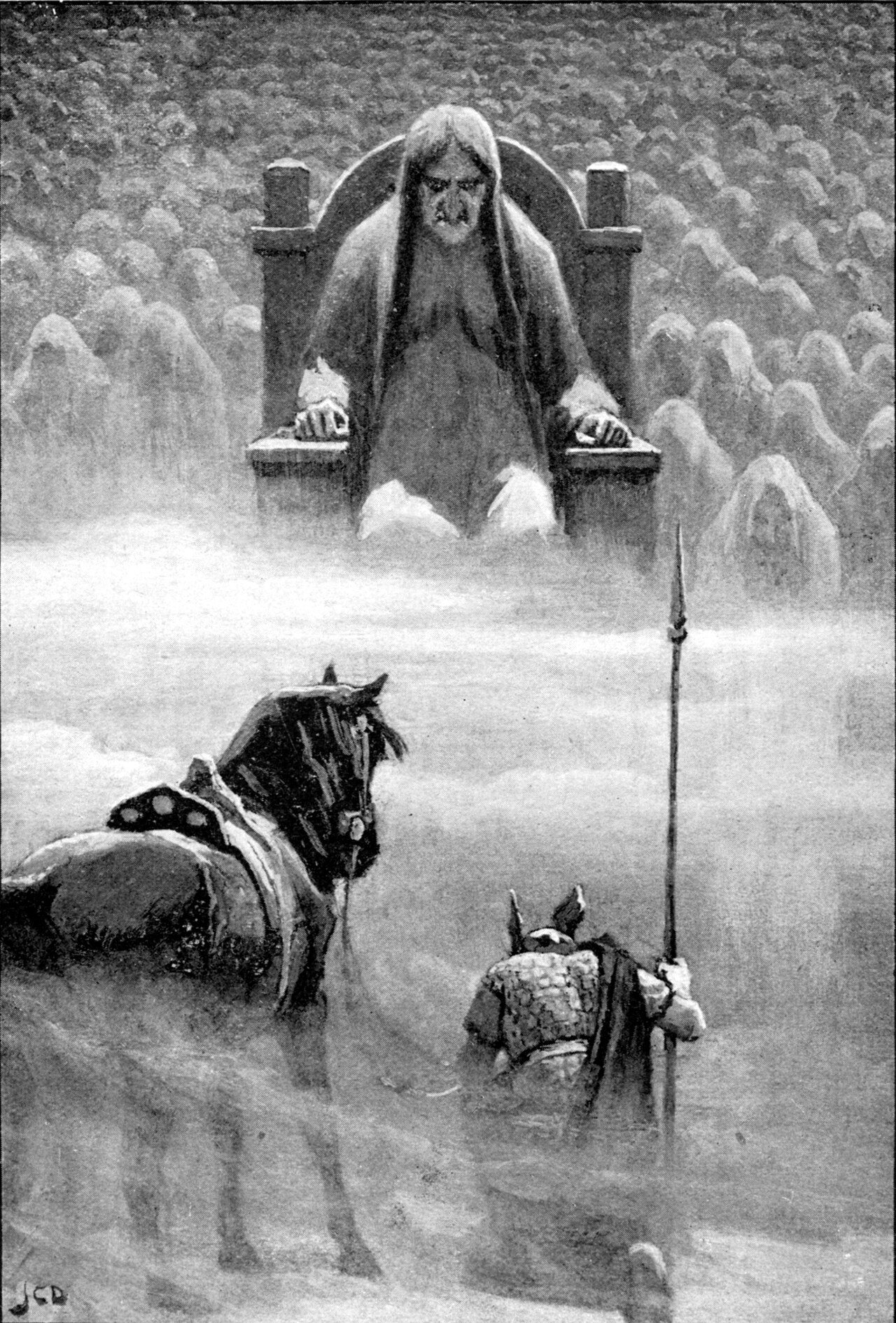
This is the most hopeful episode in Norse myth, and the cruellest. For a few pages of Gylfaginning it looks as if death can be undone. The whole story is told only by Snorri Sturluson, in the same long chapter as Baldr's death Gylfaginning 49; no surviving Eddic poem tells it.
Frigg's offer
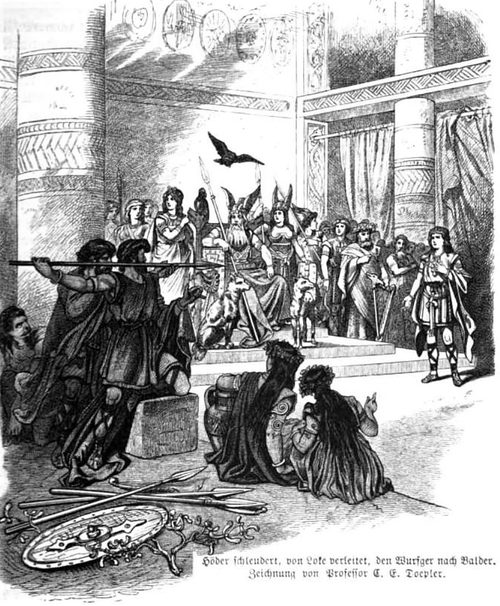
Baldr lies dead at the assembly, killed by mistletoe in Höðr's hand. When the gods have recovered enough to speak, Frigg asks who among the Æsir wants to win all her love and favour. Whoever it is must ride the road to Hel, find Baldr, and offer Hel a ransom to let him come home to Ásgard Gylfaginning 49.
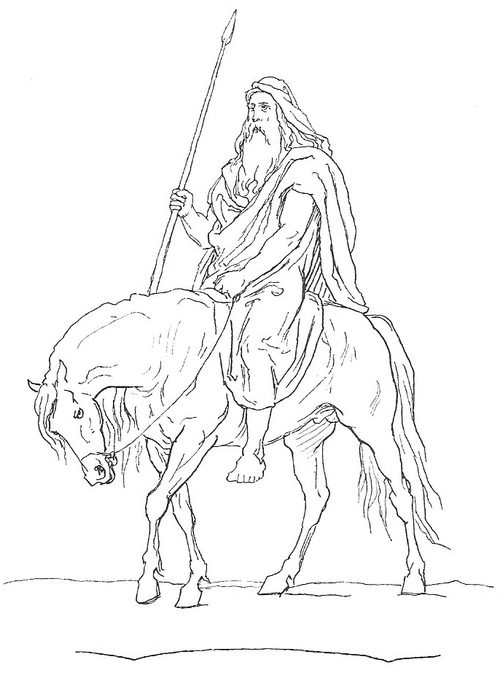
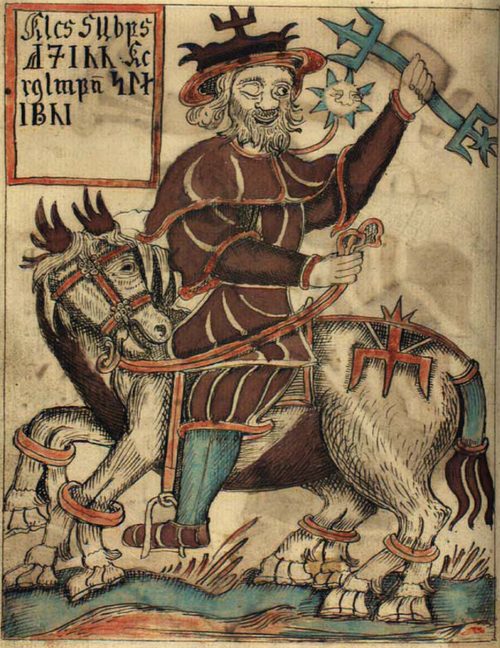
The one who volunteers is Hermóðr the Bold, whom Snorri calls Odin's son. This is almost his only appearance in the myths. Odin's eight-legged horse Sleipnir is led out; Hermóðr mounts and gallops away. Snorri then leaves him on the road while he describes Baldr's funeral, and picks up the journey afterwards.
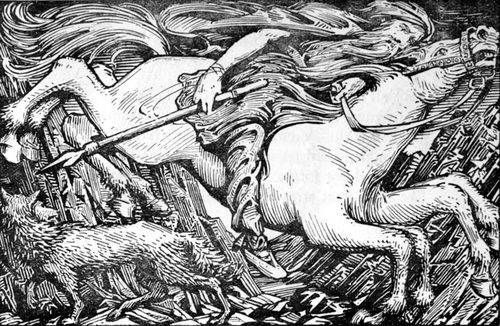
It is a road Sleipnir has travelled before. In Baldrs draumar, before Baldr dies, Odin himself saddles Sleipnir and rides "down to Niflhel deep" to wake a dead seeress Baldrs draumar 2. In that poem a blood-stained hound howls at him, and he rides on until he reaches "the house so high of Hel" Baldrs draumar 3. Hermóðr's journey retraces Odin's, but with a different purpose: Odin went to learn the future, Hermóðr goes to change it.
Nine nights to the Gjöll bridge
Hermóðr rides for nine nights through valleys so dark and deep that he can see nothing, until he comes to the river Gjöll and rides onto its bridge, which is roofed with shining gold Gylfaginning 49. The bridge has a guardian, a maiden named Móðguðr. She asks his name and family, and points out what is wrong with him:
the day before there had ridden over the bridge five companies of dead men; but the bridge thunders no less under thee alone, and thou hast not the color of dead men. Why ridest thou hither on Hel-way?Gylfaginning 49
Hermóðr answers that he has been sent to find Baldr, and asks whether she has seen him. She has: Baldr rode over Gjöll's bridge before him. "Down and north lieth Hel-way," she tells him Gylfaginning 49.
The leap over Hel-gate
Hermóðr rides on to the gate of Hel. He does not ask to be let in. He dismounts, tightens the girths, remounts and spurs Sleipnir, and the horse jumps the gate so high that he comes nowhere near it Gylfaginning 49.
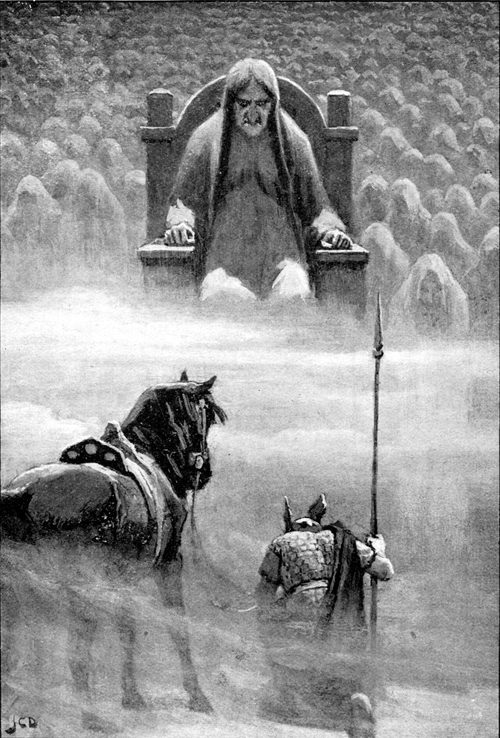
Inside, the scene is not the grim hall Snorri describes elsewhere, where Hel's dish is called Hunger and her bed Disease Gylfaginning 34. Hermóðr rides up to the hall, goes in, and sees his brother Baldr sitting in the high seat. It matches what the seeress told Odin in Baldrs draumar: in Hel the benches were already decked with rings and the mead brewed for Baldr's coming Baldrs draumar 6-7. Hermóðr stays the night.
In the morning he asks Hel to let Baldr ride home with him, and tells her how the Æsir are weeping. Hel answers with a test:
'If all things in the world, quick and dead, weep for him, then he shall go back to the Æsir; but he shall remain with Hel if any gainsay it or will not weep.'Gylfaginning 49
Baldr walks Hermóðr out of the hall. He sends the ring Draupnir, which Odin had laid on his pyre, back to his father as a keepsake. His wife Nanna, who died of grief at the funeral and is with him in Hel, sends Frigg a linen robe and other gifts, and a gold ring for Fulla Gylfaginning 49.
The world weeps
Hermóðr rides back to Ásgard and tells what he has seen and heard. The Æsir send messengers over the whole world asking everything to weep Baldr out of Hel. Everything does: people, living things, the earth, stones, trees and every metal. Snorri adds an explanation from nature: this is why such things seem to weep when they come out of frost into warmth Gylfaginning 49.
On their way home, satisfied, the messengers find a giantess sitting in a cave. She calls herself Þökk. They ask her to weep Baldr out of Hel, and she answers in verse:
Thökk will weepwaterless tearsFor Baldr's bale-fare;Living or dead,I loved not the churl's son;Let Hel hold to that she hath!Gylfaginning 49
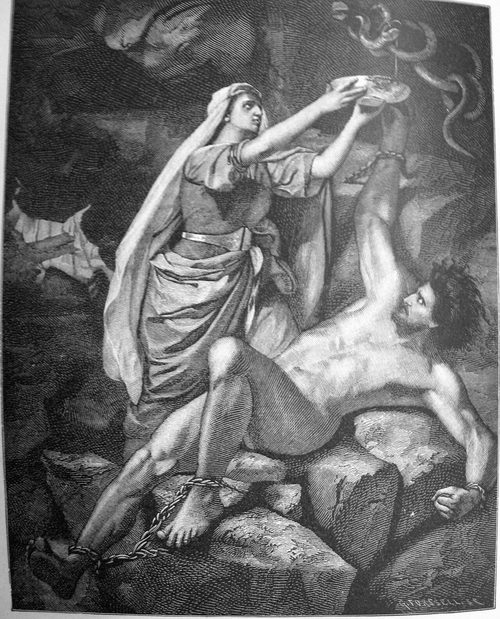
So Baldr stays. Snorri ends the chapter by saying that men believe the giantess was really Loki, "who hath wrought most ill among the Æsir" Gylfaginning 49. Gylfi then asks whether Loki was ever punished for causing both Baldr's death and his failure to return, and the answer leads into the binding of Loki Gylfaginning 50.
Where the story comes from
Everything in this episode is from Gylfaginning 49, written in Iceland around 1220–1230: Frigg's offer, Hermóðr, the Gjöll bridge and its keeper, the leap over the gate, Hel's condition, the returned gifts, the world's weeping and Þökk's refusal. No poem in the Poetic Edda describes Hermóðr's ride, and Hermóðr's other appearance in Snorri's books is a verse by the poet Eyvindr in which Odin sends Hermóðr and Bragi to greet a king arriving at his hall Skáldskaparmál 2. Þökk's verse is the one piece of poetry in the episode. Snorri presents it as a quotation, so it was probably older than his prose, but its source is unknown.
The poems do show that the ending was known in some form. Völuspá promises that after Ragnarök "Baldr comes back", together with Höðr Völuspá 62, which means he did not come back before. Loki's boast in Lokasenna that it is his fault Frigg no longer sees Baldr "ride home to the hall" Lokasenna 28 fits Snorri's story of Þökk as well as the story of the mistletoe.
There is one small internal tension. Hel's condition is that "all things in the world, quick and dead" must weep Gylfaginning 49, yet Snorri's list of weepers names only living things and natural objects; nothing is said of the dead in Hel. Snorri also says only that "men deem" Þökk was Loki. He presents it as a belief, not a certainty.
Reading it today
The episode is often read as a statement that death in this mythology is final, even for a god, and even when everything but one creature wants it otherwise. Another common reading looks at the structure: everything else consents, and one refusal is enough, as in the other oath-taking where one sprig of mistletoe was overlooked. Scholars have also compared Hermóðr's journey with other journeys to the underworld (Orpheus is the usual comparison) and with the ride of the dead along "Hel-way" in the Eddic poem Helreið Brynhildar. How much of the detail of the Gjöll bridge and its keeper Snorri took from tradition and how much he shaped himself cannot be known.
Key passages
let him ride the road to Hel, and seek if he may find Baldr, and offer Hel a ransom if she will let Baldr come home to Ásgard
the bridge thunders no less under thee alone, and thou hast not the color of dead men
If all things in the world, quick and dead, weep for him, then he shall go back to the Æsir
Thökk will weep waterless tears For Baldr's bale-fare
Thence rode he down to Niflhel deep, And the hound he met that came from hell.