Æsir
Baldr
Odin and Frigg's son, the brightest and best-loved of the gods. His death by a mistletoe dart, thrown by his blind brother Höðr, is the first great loss on the road to Ragnarök.
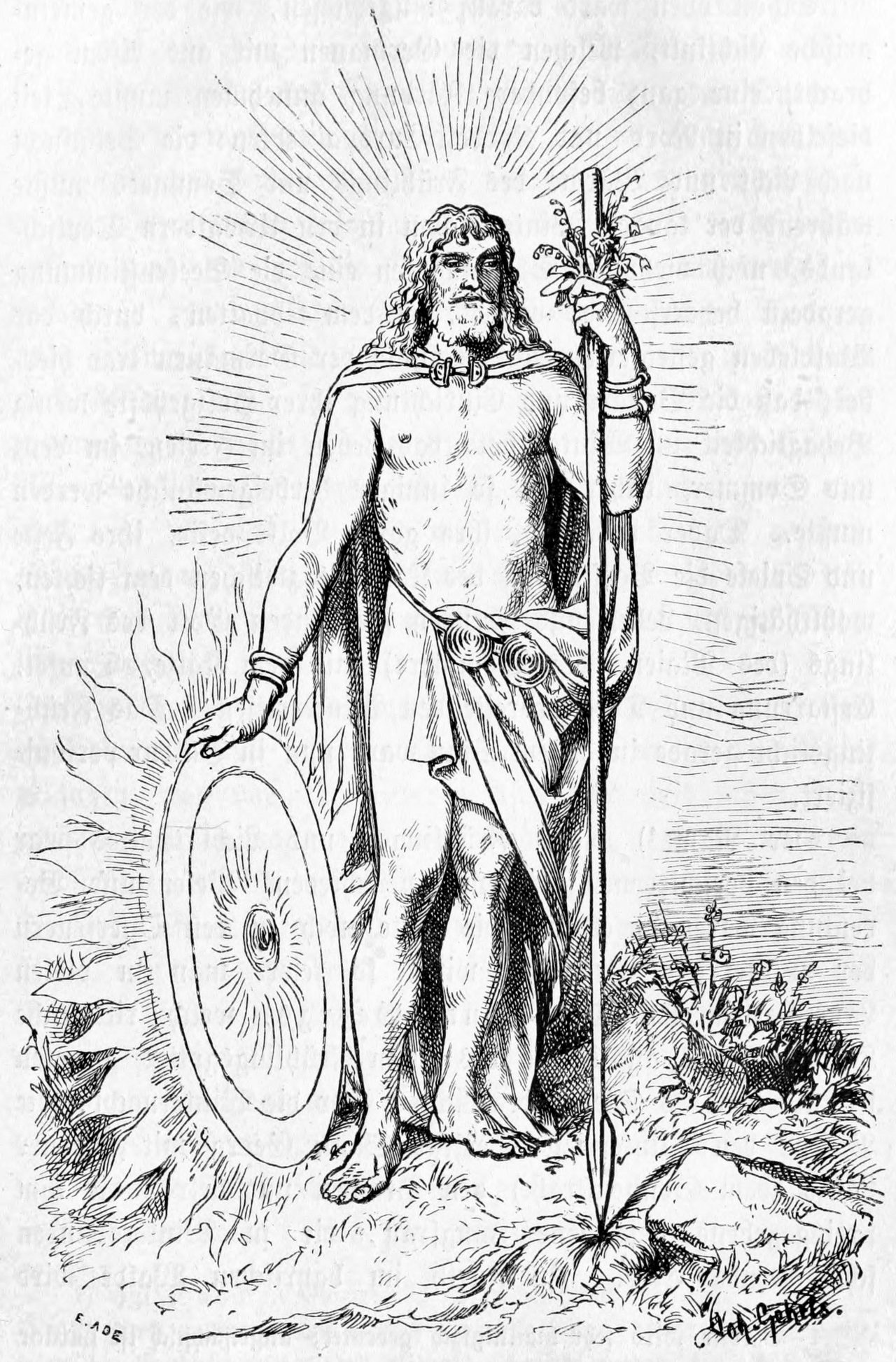
Baldr is the son of Odin and Frigg, and the god whose death the whole mythology turns on. Snorri says that "good things are to be said of him. He is best, and all praise him", so fair and bright "that light shines from him" Gylfaginning 22. He is the wisest of the gods and the most gracious, and "none may gainsay his judgments" (a phrase some scholars read as meaning that his judgments never take effect). He lives in Breiðablik, where nothing unclean may be Gylfaginning 22 Grímnismál 12.
His wife is Nanna, daughter of Nep Gylfaginning 49, and their son is Forseti Gylfaginning 32. Otherwise Baldr does almost nothing in the sources while alive. His story is his death.
The dreams and the oaths
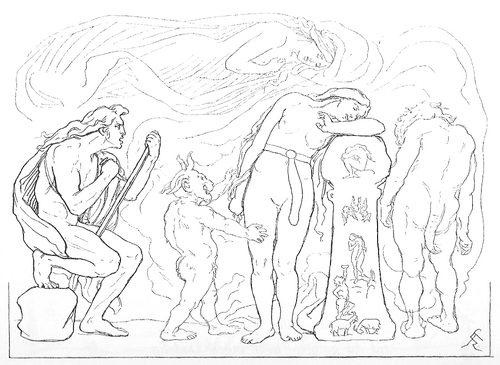
Baldrs draumar opens with the gods meeting to learn "why baleful dreams to Baldr had come" Baldrs draumar 1. Odin rides to Hel and wakes a dead seeress, who tells him that Höðr will kill Baldr and that a son born to Rindr will avenge him Baldrs draumar 9 Baldrs draumar 11. Völuspá sees the same fate: the mistletoe standing "full grown in strength", the shaft that Hoth will hurl, and the avenger who fights "one night old" Völuspá 32 Völuspá 33.
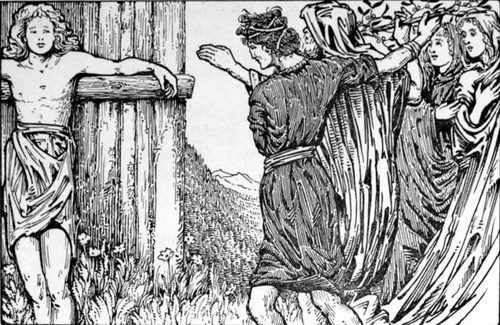
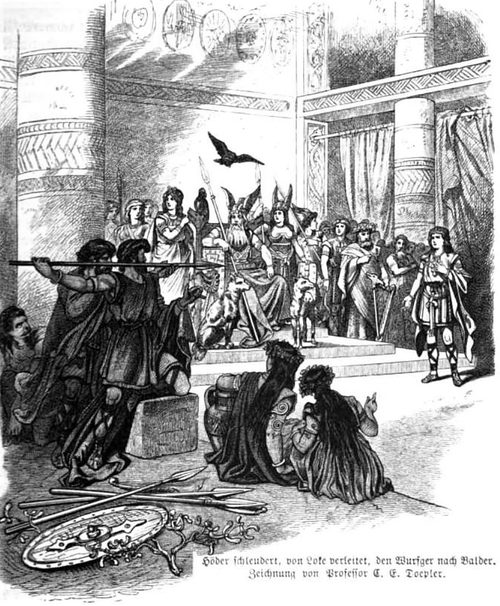
Snorri tells the full story in Gylfaginning. Frigg made every kind of thing swear not to harm Baldr, and the gods amused themselves by throwing weapons at him in their assembly. Loki, disguised as a woman, learned from Frigg that she had left out one young shoot, the mistletoe. He pulled it up and took it to blind Höðr, who stood outside the ring. Loki guided his aim, "and he fell dead to the earth; and that was the greatest mischance that has ever befallen among gods and men" Gylfaginning 49.
Funeral and the ride to Hel
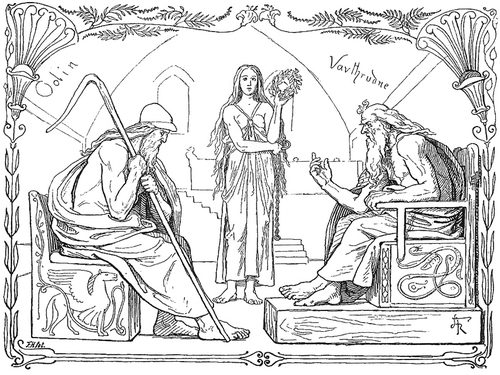
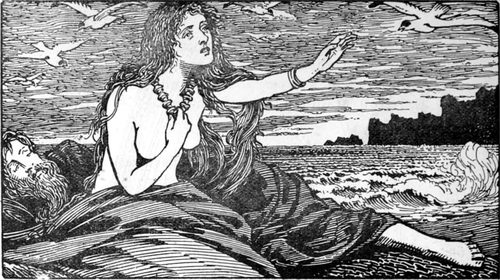
The gods could not avenge the killing on the spot, because the place was sacred. They built Baldr's pyre on his ship Hringhorni, which only the giantess Hyrrokkin could push into the water. Nanna's heart burst with grief and she was burned with him. Odin laid the ring Draupnir on the pyre, and Baldr's horse was led to the fire Gylfaginning 49. In Vafþrúðnismál Odin wins a contest of wisdom with a giant by asking what he whispered in his son's ear before the son was burned Vafþrúðnismál 54; the son is not named, but most readers take him to be Baldr.
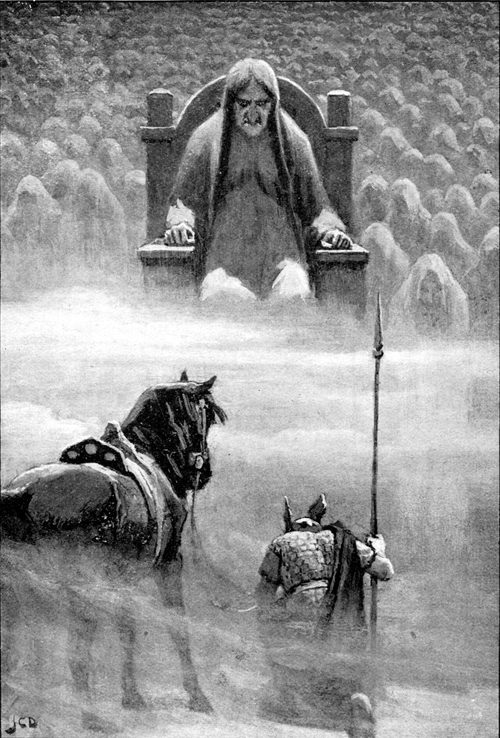
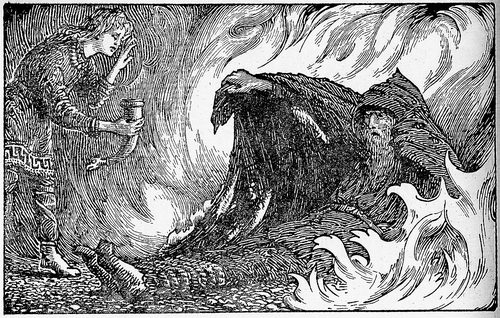
His brother Hermóðr rode Sleipnir for nine nights to Hel's hall and found Baldr in the high seat. Hel agreed to release him if everything in the world, living and dead, would weep for him. Everything did except a giantess called Þökk in a cave: "Living or dead, I loved not the churl's son; let Hel hold to that she hath!" Snorri adds that men believe she was Loki Gylfaginning 49.
Vengeance and return
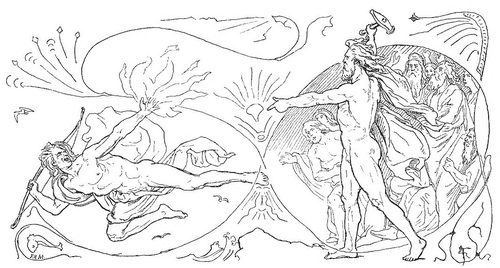
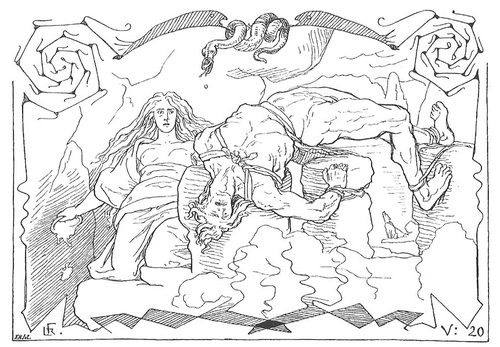
Baldr's death is avenged twice. Váli, Odin's son by Rindr, kills Höðr when one night old Völuspá 33 Hyndluljóð 30. The gods then hunt down Loki and bind him Gylfaginning 50. In Lokasenna Loki boasts to Frigg that he is to blame for Baldr's absence Lokasenna 28.
After Ragnarök, when the earth rises green again, "Baldr comes back", and he and Höðr live together in Odin's old hall Völuspá 62 Gylfaginning 53. Many readers see in this a deliberate image of reconciliation; whether it shows Christian influence on Völuspá is a long-running debate. See Baldr's dreams and death and Hermóðr's ride to Hel for the full stories.
In the sources
Quoted from the hosted translations; each line is checked against the text when the site is built. Select a reference to read it in context.
He is best, and all praise him; he is so fair of feature, and so bright, that light shines from him.
I saw for Baldr, the bleeding god, The son of Othin, his destiny set
Hoth thither bears the far-famed branch, He shall the bane of Baldr become, And steal the life from Othin's son.
Hödr took Mistletoe and shot at Baldr, being guided by Loki: the shaft flew through Baldr, and he fell dead to the earth
If all things in the world, quick and dead, weep for him, then he shall go back to the Æsir
All ills grow better, and Baldr comes back; Baldr and Hoth dwell in Hropt's battle-hall
Where the sources disagree or fall silent
- Loki's part: Snorri makes Loki trick Frigg and guide Höðr's hand (Gylfaginning 49), and in Lokasenna Loki boasts of Baldr's death (Lokasenna 28). Völuspá and Baldrs draumar name only Höðr as the killer (voluspa 33, baldrs-draumar 9).
- The mistletoe: Völuspá calls it a tree 'full grown in strength' (Völuspá 32), and Snorri has Höðr shoot it like a shaft. Real mistletoe is a small parasitic plant; some scholars think the word originally meant something else, or that the poet did not know the plant.
- Snorri's Prologue makes Baldr (Beldeg) a human king of Westphalia (Prose Edda, Prologue). The Danish historian Saxo Grammaticus tells a different story in which Balderus and Høtherus are rivals for Nanna and Balderus dies of a sword wound.
In modern culture
Not from the medieval sources.
Baldr's death has attracted more scholarly theory than almost any Norse myth, from James Frazer's The Golden Bough (1890), which built a theory of dying gods partly on the mistletoe, to later debates about Christian influence. In the video game God of War (2018) Baldur is the main antagonist, a figure cursed with invulnerability who feels nothing, a deliberate inversion of the gentle god of the sources.