A myth retold · about 4 minutes
Thor and the dwarf Alvíss
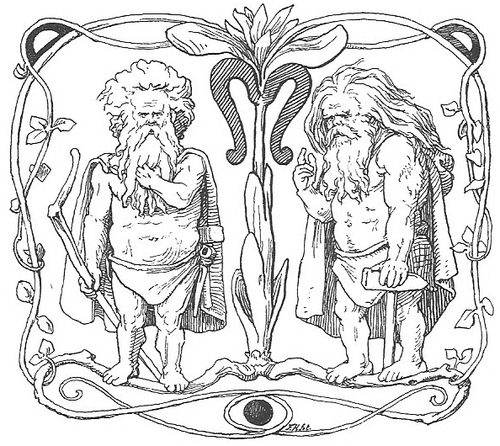
A dwarf named Alvíss, 'All-Wise', comes to claim Thor's daughter as his promised bride. Thor agrees, if the dwarf can tell him what everything is called in every world, and keeps him answering until the sun comes up.
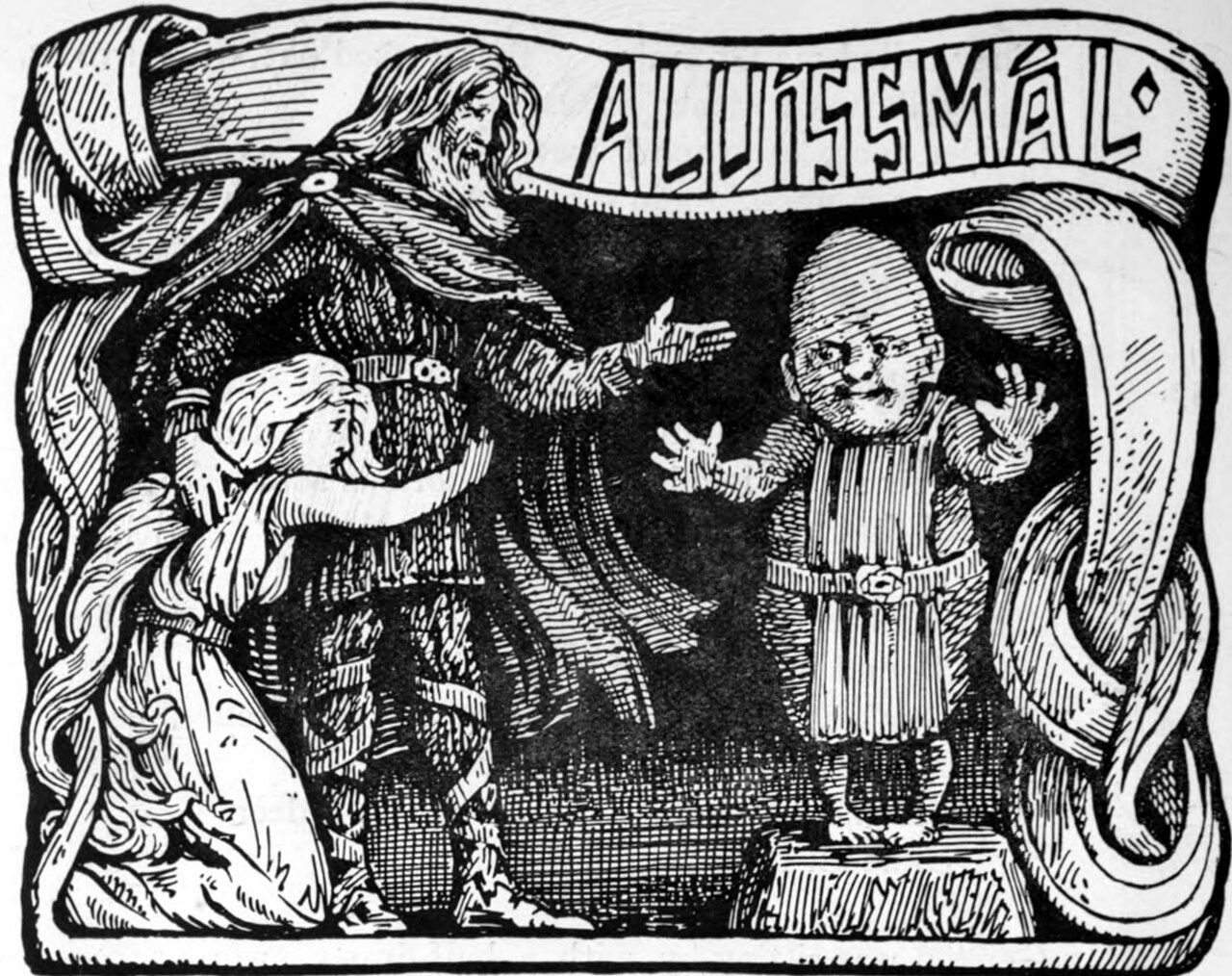
Alvíssmál is the shortest of the wisdom contests in the Poetic Edda and the only one in which Thor, not Odin, does the questioning. It has no prose frame, and almost all of it is a list. But the list is a trap, and Thor, usually the god of the direct blow, wins this time by patience and a trick.
The bridegroom at the door
The poem opens in mid-scene. A stranger is speaking, in a hurry. The bride will come home with him and grace his benches; he will seem eager for marriage, and no one at home will rob him of his rest Alvíssmál 1.
Thor is not impressed:
"What, pray, art thou? Why so pale round the nose?By the dead hast thou lain of late?To a giant like dost thou look, methinks;Thou wast not born for the bride."Alvíssmál 2
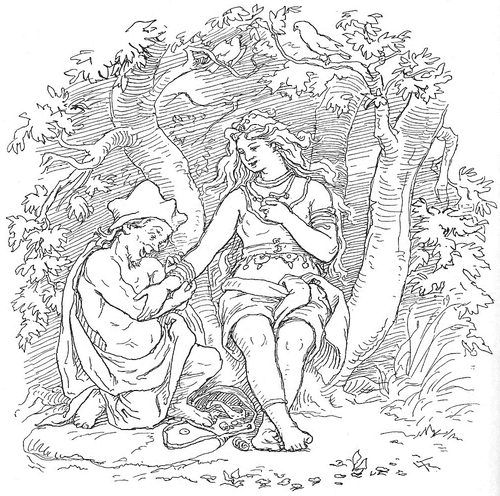
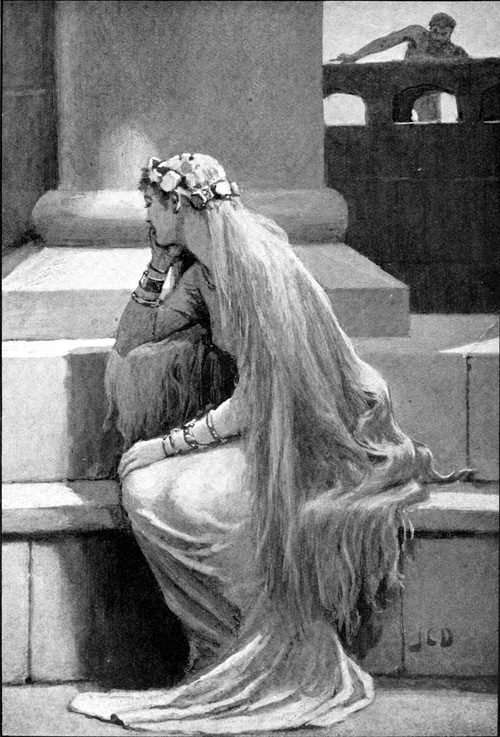
The stranger explains. He is Alvíss ("All-Wise"), he lives under the earth beneath the rocks, and he has come to speak with Thor: the gods should not break their bond Alvíssmál 3. The bride, it emerges, has been promised to him while Thor was away. Thor will have none of it. He was not at home when the promise was made, and over a bride her father has the first right; he alone of the gods will give her away Alvíssmál 4. So the girl is Thor's daughter. The poem never names her.
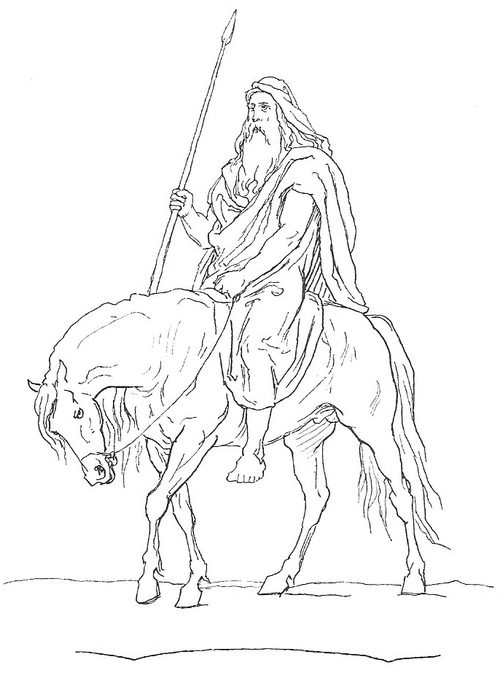
Alvíss does not recognise him, and sneers at this "wandering man": who is he to claim such rights? Thor names himself: "Vingthor, the wanderer wide", son of Síðgrani, which is a name of Odin Alvíssmál 5-6. Alvíss changes his tone and asks for Thor's good will; he longs for the snow-white girl Alvíssmál 7.
The test
Thor offers terms:
"The love of the maid I may not keep theeFrom winning, thou guest so wise,If of every world thou canst tell me allThat now I wish to know.Alvíssmál 8
What follows is thirteen questions in an identical formula: "Answer me, Alvis! thou knowest all, / Dwarf, of the doom of men". What is the earth called, in each and every world? And the sky, the moon, the sun, the clouds, the wind, the calm, the sea, fire, the forest, night, grain and ale Alvíssmál 9-34.
Alvíss answers every one, each time giving the name used by men, by the gods, by the Vanir, by the giants, by the elves, by the dwarves and in Hel, though he varies the set each time. The earth is "Earth" to men, "Field" to the gods, "The Ways" to the Vanir, "Ever Green" to the giants, "The Grower" to the elves Alvíssmál 10. The moon is "The Wheel" in Hel and "The Teller of Time" to the elves Alvíssmál 14. Night is "Darkness" to the gods and, to the dwarves, "The Weaver of Dreams" Alvíssmál 30. Ale is "The Feast-Draught" to the sons of Suttungr Alvíssmál 34.
One answer should have warned him:
"Men call it 'Sun,' gods 'Orb of the Sun,''The Deceiver of Dvalin' the dwarfs;The giants 'The Ever-Bright,' elves 'Fair Wheel,''All-Glowing' the sons of the gods."Alvíssmál 16
The dwarves call the sun the deceiver of Dvalinn, one of their own kind. The poem lets that name pass without comment.
Sunrise in the hall
When the last answer is given, Thor admits he has never met so much ancient wisdom in one breast. Then he springs the trap:
"In a single breast I never have seenMore wealth of wisdom old;But with treacherous wiles must I now betray thee:The day has caught thee, dwarf!(Now the sun shines here in the hall.)"Alvíssmál 35
That is the end of the poem. Thor never meant to keep the bargain; he kept the dwarf talking all night until daylight reached him. What daylight does to Alvíss is not said. The poem does not say whether the dwarf dies or turns to stone, and it does not say what happens to the bride.
Where the story comes from
Alvíssmál survives in the Codex Regius (around 1270). Snorri never tells the story. Its date is disputed; many scholars think it fairly late, a learned poem built to show off a store of poetic synonyms, with the dramatic frame added to give the list a shape.
No other source names Thor's daughter in this connection. Snorri names Þrúðr as Thor's daughter Skáldskaparmál 4, and calls Sif her mother Skáldskaparmál 20; many readers have assumed she is the bride, but that is an inference.
The idea that dwarves cannot bear daylight rests mainly on this poem. Elsewhere in the Eddas the dwarves live in rocks and earth (Alvíss himself says his home is "under the earth" Alvíssmál 3), and the sun's dwarf-name "Deceiver of Dvalin" suggests a story about a dwarf caught by the sun, but no such story survives. The idea that dwarves or trolls turn to stone in sunlight is best known from later Scandinavian folklore; the clearest Old Norse parallel is the giantess Hrímgerðr in Helgakviða Hjörvarðssonar, who is held talking until dawn and becomes a harbour-mark of stone Helgakviða Hjörvarðssonar 30.
Reading it today
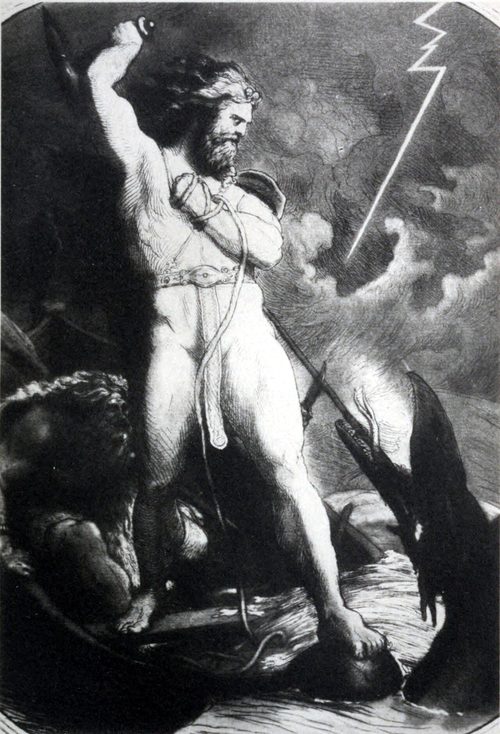
Most readers take the poem as a vocabulary lesson in story form: the "words of the worlds" are mostly real poetic synonyms (heiti) of the kind Snorri collected, assigned more or less freely to gods, giants and elves. Scholars have long debated whether the distribution means anything, that is, whether the poet thought the races really spoke different languages, or simply needed alliterating words. The frame is also a Thor story with an unusual shape: the thunder god wins not with Mjölnir but with talk, and the dwarf's great knowledge is exactly what destroys him.
J. R. R. Tolkien, who knew the poem, used the motif of trolls turned to stone by the dawn while arguing among themselves in The Hobbit (1937), with Gandalf's voice keeping them talking.
Key passages
What, pray, art thou? Why so pale round the nose? / By the dead hast thou lain of late?
Alvis am I, and under the earth / My home 'neath the rocks I have
If of every world thou canst tell me all / That now I wish to know.
Men call it 'Sun,' gods 'Orb of the Sun,' / 'The Deceiver of Dvalin' the dwarfs
But with treacherous wiles must I now betray thee: / The day has caught thee, dwarf!