Æsir
Heimdall
Heimdallr
The watchman of the gods, born of nine mothers, who guards Bifröst from his hall Himinbjörg and will blow the Gjallarhorn when Ragnarök begins.
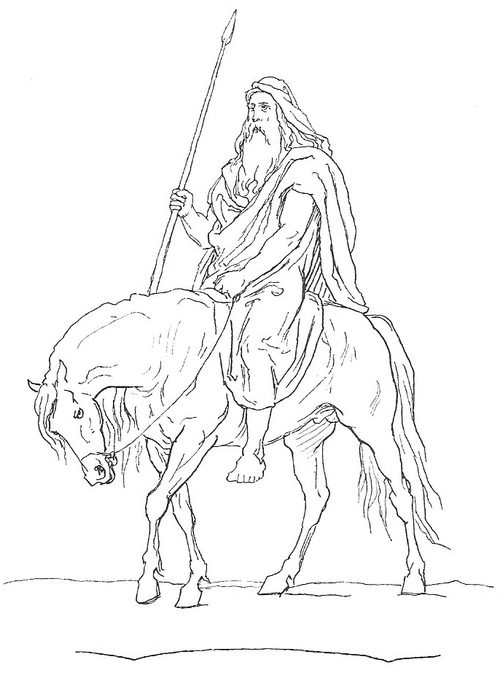
Heimdall is the gods' watchman. Snorri calls him "the White God", "great and holy", and sets him at the edge of heaven by Bifröst "to guard the bridge from the Hill-Giants" Gylfaginning 27. He needs less sleep than a bird, sees a hundred leagues by night as well as by day, and hears grass grow and wool lengthen on sheep Gylfaginning 27. His hall is Himinbjörg, where "the warder of heaven" drinks good mead Grímnismál 13, his horse is Gulltoppr, and his teeth are of gold, which gives him the by-name Gullintanni Gylfaginning 27.
Son of nine mothers
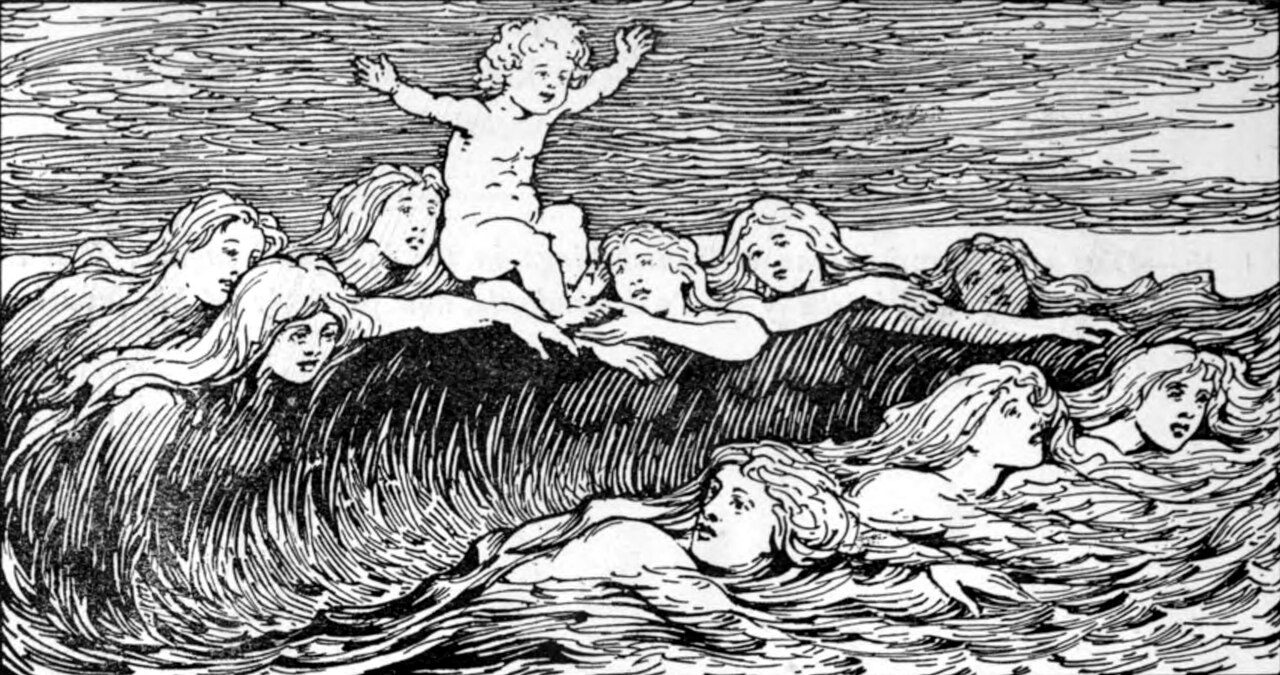
Heimdall's birth is the strangest in the myths. Snorri says "nine maids, all sisters, bore him for a son", and quotes two lines from a lost poem, Heimdalar-galdr, in the god's own voice:
I am of ninemothers the offspring,Of sisters nineam I the son.Gylfaginning 27
Hyndluljóð has a passage on a god "Of the race of the gods, and great was his might" whom nine giant women bore "at the world's edge", and names them: Gjolp, Greip, Eistla, Eyrgjafa, Ulfrun, Angeyja, Imth, Atla and Jarnsaxa Hyndluljóð 37-38. The poem does not name the son, but because it matches Snorri so closely, editors generally take him to be Heimdall. Snorri also lists "Son of Odin" among his kennings Skáldskaparmál 8; nothing else in the Eddas names his father.
Watchman and father of men
The poems show the duty as a burden as well as an honour. In Lokasenna Heimdall tells Loki he is drunk, and Loki replies that an "evil fate" was fixed for him long ago: "With back held stiff must thou ever stand, As warder of heaven to watch" Lokasenna 48. His watchfulness comes with foresight: in Þrymskviða he is "whitest of the gods, Like the Wanes he knew the future well", and it is his idea to send Thor to the giants dressed as Freyja Þrymskviða 14-15.
He has a second role as an ancestor of humans. Völuspá opens by asking a hearing from "Heimdall's sons, both high and low" Völuspá 1, and the prose introduction to Rígsþula says that the god Rig, who fathers the thralls, the free farmers and the nobles, was Heimdall travelling under another name Rígsþula, prose 1 (see Rígr).
Heimdall and Loki
Heimdall and Loki are old enemies. Snorri gives Heimdall the kennings "Foe of Loki" and "Seeker of Freyja's Necklace", and says the two fought over the necklace Brísingamen at a place called Singasteinn, in the shape of seals, a story told in the lost poem Húsdrápa by Úlfr Uggason Skáldskaparmál 8. Snorri quotes a verse from it in which "the famed rain-bow's defender" strives with Loki and wins the stone Skáldskaparmál 16. Their feud ends at Ragnarök: "Loki shall have battle with Heimdallr, and each be the slayer of the other" Gylfaginning 51.
The horn
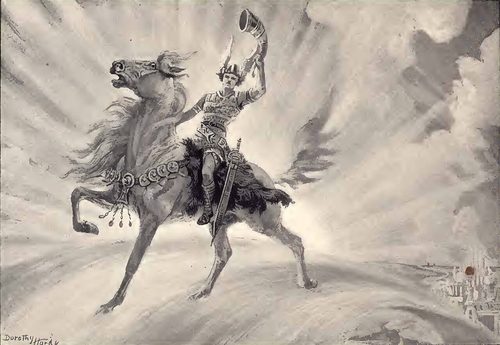
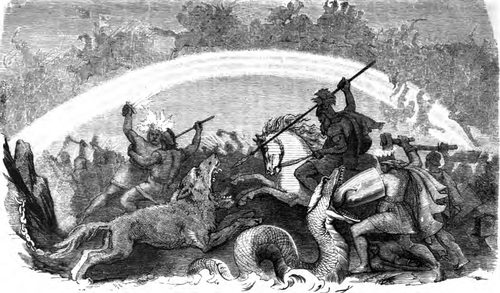
Heimdall owns the Gjallarhorn, "and its blast is heard throughout all worlds" Gylfaginning 27. When the end comes, he sounds it:
Fast move the sons of Mim, and fateIs heard in the note of the Gjallarhorn;Loud blows Heimdall, the horn is aloft,In fear quake all who on Hel-roads are.Völuspá 46
Snorri adds that the blast wakes all the gods, who then meet in council Gylfaginning 51. An earlier stanza of Völuspá speaks of "the horn of Heimdall, hidden Under the high-reaching holy tree" Völuspá 27; Bellows translates it as a horn, but the Old Norse word may mean his "hearing", which would make this a pledge like Odin's eye. Scholars remain divided.
In the sources
Quoted from the hosted translations; each line is checked against the text when the site is built. Select a reference to read it in context.
He needs less sleep than a bird; he sees equally well night and day a hundred leagues from him, and hears how grass grows on the earth or wool on sheep
Himinbjorg is the eighth, and Heimdall there O'er men holds sway, it is said; In his well-built house does the warder of heaven The good mead gladly drink.
Loud blows Heimdall, the horn is aloft
With back held stiff must thou ever stand, As warder of heaven to watch.
Then Heimdall spake, whitest of the gods, Like the Wanes he knew the future well
one of the gods, whose name was Heimdall, went on his way along a certain seashore, and came to a dwelling, where he called himself Rig.
Where the sources disagree or fall silent
- Who Heimdall's nine mothers were. Hyndluljóð names nine giantesses who bore a god 'at the world's edge' (Hyndluljóð 37-38) but does not name the son; editors generally take him to be Heimdall because Snorri also gives Heimdall nine mothers.
- The Heimdalar-galdr that Snorri quotes (Gylfaginning 27) is lost apart from the two lines he gives, so the story of his being 'pierced by a man's head' cannot be reconstructed.
- Whether Völuspá 27 speaks of Heimdall's horn or his 'hearing' laid under the tree; the Old Norse word is ambiguous.
In modern culture
Not from the medieval sources.
Heimdall is familiar from Marvel's Thor comics and films, where he is played by Idris Elba as the guardian of a rainbow bridge in Asgard; the bridge and the all-seeing watchman come from Snorri, but Marvel makes him Sif's brother, which no medieval source does. He also appears in games such as God of War Ragnarök (2022).