A myth retold · about 6 minutes
Sun, Moon, Night and Day
How the Norse sources explain the sky's clock: Night and Day ride round the world on two horses, the children of Mundilfari drive the sun and moon, and two wolves chase them until the end of the world.
Why does the sun cross the sky, and why so fast? Where does the morning dew come from? Why does the moon wax and wane? The Norse answers survive as a set of short scenes in three poems and in Snorri's Gylfaginning, and they read like a myth of clockwork: every light in the sky is a person or a horse, set on a fixed course by the gods, and every one of them is being hunted.
Lights without a home
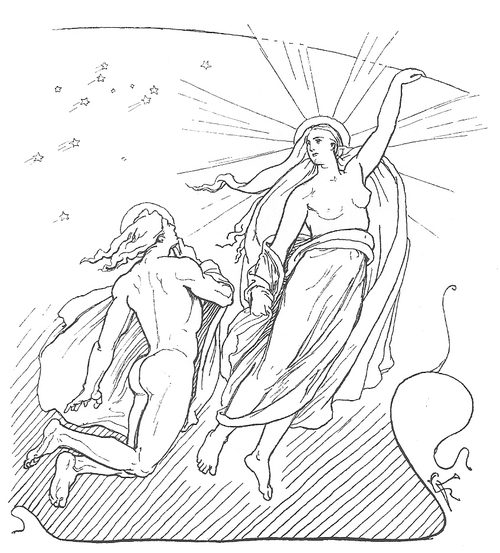
At the very beginning the sky has lights but no order. In Völuspá the sun, "the sister of the moon", throws her right hand over the rim of heaven, yet she does not know where her home should be; the moon does not know his power, and the stars do not know their stations Völuspá 5. The gods then meet in council and give names to night and evening, morning and noon, "the years to number" Völuspá 6. Time begins as an act of naming.
Snorri tells the same moment in physical terms. After building the earth from Ymir's body, the sons of Borr took the sparks and glowing embers flying out of Múspellheim and set them in the sky, gave each fire a place, and "shaped them courses"; from these, he says, "the days were reckoned, and the tale of years told" Gylfaginning 8.
Night and Day on horseback
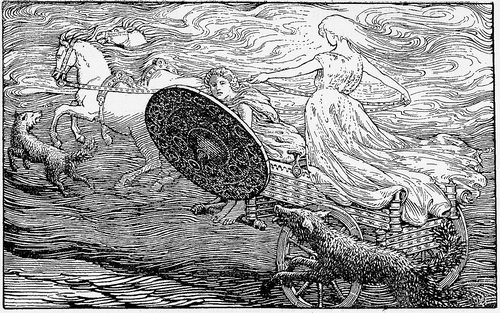
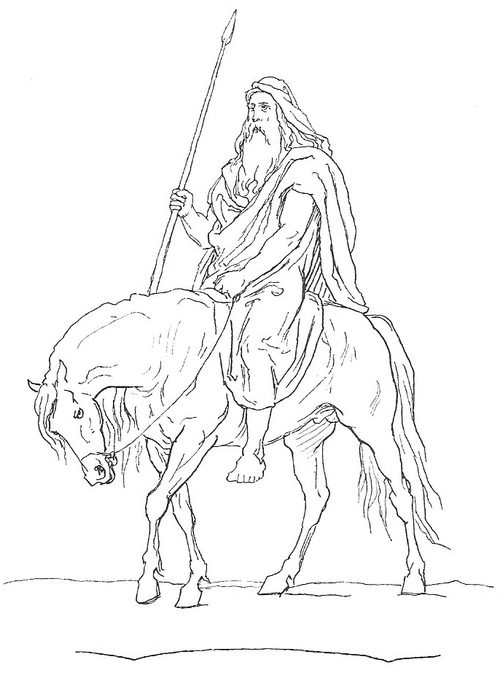
Snorri's next chapter is a family history Gylfaginning 10. A giant called Nörfi had a dark daughter, Night. She married three times: first a man named Naglfari, by whom she had Auðr; then Annarr, by whom she had Jörð, the Earth; and last "Dayspring" (Dellingr), one of the Æsir, by whom she had Day, "radiant and fair after his father". Allfather gave Night and Day each a horse and a chariot and sent them round the earth, one after the other, every two half-days.
Night rides before with the horse named Frosty-Mane, and on each morning he bedews the earth with the foam from his bit. The horse that Day has is called Sheen-Mane, and he illumines all the air and the earth from his mane.Gylfaginning 10
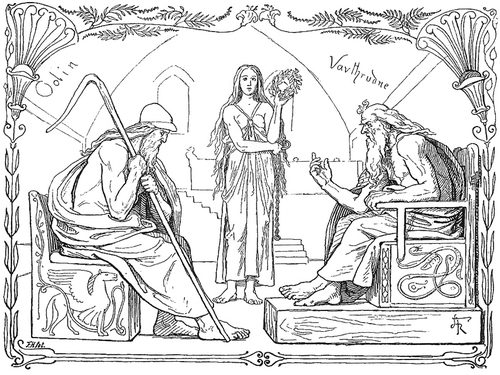
These are Skinfaxi and Hrímfaxi. Snorri is following Vafþrúðnismál, where Odin, in disguise, names them for the giant Vafþrúðnir: Skinfaxi draws the day "and brightly his mane doth burn" Vafþrúðnismál 12; Hrímfaxi brings night, and the foam from his bit falls as dew in the valleys Vafþrúðnismál 14. Later in the same contest the giant names Day's father as Delling and Night's father as Nor Vafþrúðnismál 25, which matches Snorri's genealogy.
Snorri's family tree creates a small problem of its own. A chapter earlier he has called Jörð Odin's "daughter and his wife" Gylfaginning 9; here she is the daughter of Night and Annarr. He does not reconcile the two.
The children of Mundilfari
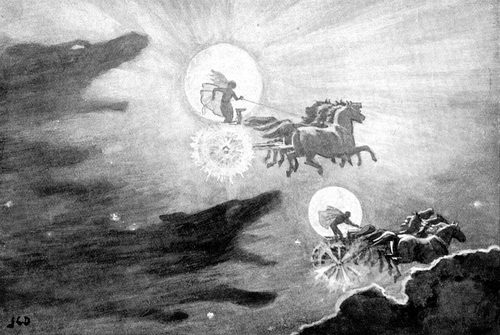
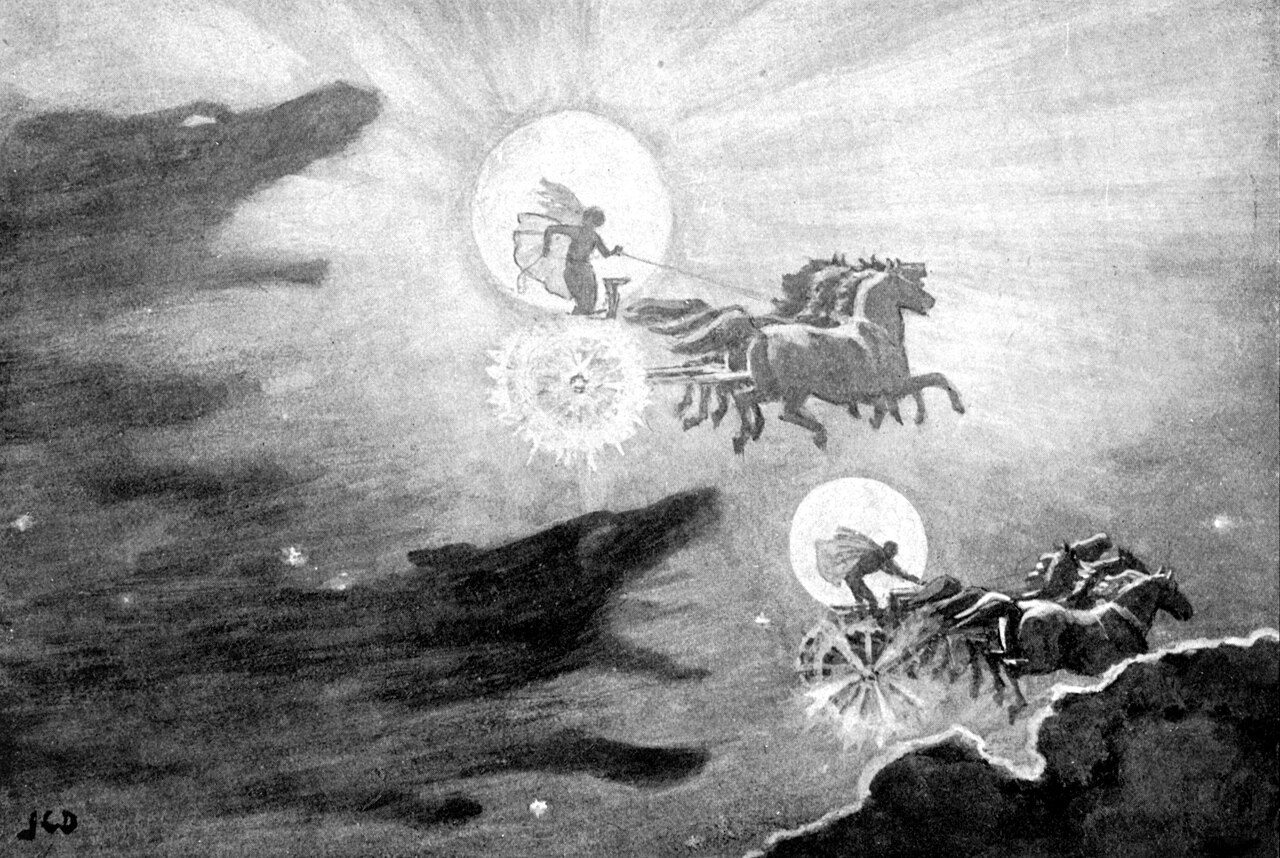
Sun and Moon are drivers, not the lights themselves. Vafþrúðnismál says simply that Mundilfari "begat the moon, and fathered the flaming sun", and that they run their round each day "to tell the time for men" Vafþrúðnismál 23. Snorri supplies a story Gylfaginning 11. Mundilfari had two children so beautiful that he named his son Moon and his daughter Sun, and married the girl to a man called Glenr. The gods took this as arrogance. They seized brother and sister and set them in the heavens: Sól to drive the horses of the sun's chariot, which the gods had made from Múspellheim's glowing stuff, and Máni to steer the moon and decide its waxing and waning.
The sun's horses are Árvakr and Alsviðr, "Early-Wake" and "All-Strong". In Grímnismál the gods have set "an iron cool" under their yokes Grímnismál 37; Snorri turns this into two wind-bags under the horses' shoulders, adding that "in some records that is called 'iron-coolness'" Gylfaginning 11, as if puzzling over a phrase he did not fully understand. Grímnismál adds a detail Snorri omits: a shield, Svalinn, stands in front of the sun, and if it fell, mountains and sea would burst into flame Grímnismál 38.
Máni has passengers. Snorri says he took two children from the earth, Bil and Hjúki, as they came from a well carrying a cask on a pole, and they follow him across the sky "as may be seen from the earth" Gylfaginning 11. Nothing else in the hosted texts tells of them.
The wolves
Gangleri remarks that the sun moves "almost as if she were afraid". She is. Two wolves run with her Gylfaginning 12: Sköll behind, who will catch her, and Hati Hróðvitnisson ahead, who wants the moon. They come from a giantess in Ironwood, east of Miðgarðr, who bears giants in wolf-shape, and one of her brood, "Moon-Hound", will gorge on the flesh of the dying, swallow the moon and spatter the sky with blood.
Skoll is the wolf that to IronwoodFollows the glittering god,And the son of Hrothvitnir, Hati, awaitsThe burning bride of heaven.Grímnismál 39
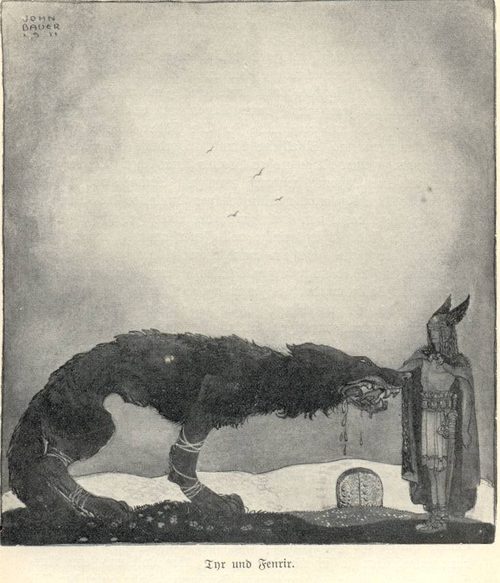
The sources do not agree on who catches whom. Grímnismál names Sköll and Hati but is ambiguous about their targets: "the glittering god" and "the burning bride of heaven" are usually both taken as the sun, which would put both wolves on her track Grímnismál 39. Snorri gives Hati the moon. Völuspá speaks of a single creature from the Ironwood brood who "was soon to steal the sun from the sky" Völuspá 40; but when Snorri quotes the same stanza his version calls it "the moon's taker" Gylfaginning 12. Vafþrúðnismál, finally, says it is Fenrir himself who "snatches" the sun Vafþrúðnismál 46-47.
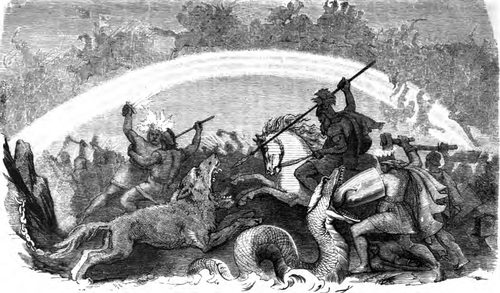
At Ragnarök the hunt ends. "The Wolf shall swallow the sun", the other wolf seizes the moon, and the stars vanish Gylfaginning 51; Völuspá sees the sun turn black and "the hot stars down from heaven" whirled Völuspá 57. But the sun is not quite lost. Before she is taken she bears a daughter, and the daughter will ride her mother's paths over the new world Vafþrúðnismál 47 Gylfaginning 53.
Where the story comes from
The poetic witnesses are Völuspá 5–6 and 40–41, Vafþrúðnismál 11–14, 22–25 and 46–47, and Grímnismál 37–39, all in the Codex Regius (about 1270) and all likely older. They give names and images, never connected stories. Snorri's Gylfaginning 10–12 (1220s) is the only source for Night's three husbands, for Mundilfari's pride and its punishment, for Bil and Hjúki, and for the wolves' mother in Ironwood. His Skáldskaparmál also lists poetic names for the sun, such as "Daughter of Mundilfari, Sister of the Moon, Wife of Glenr" Skáldskaparmál 26, showing that skalds used this genealogy.
Reading it today
Two features stand out. The sun is female and the moon male, the reverse of the Greek and Latin pattern; the Old Norse nouns sól and máni are feminine and masculine. And the whole arrangement is precarious: the lights are captives, driven on fixed courses, chased by predators that will one day win. Scholars have often connected the wolves with eclipses, and with folk sayings in later Scandinavia about wolves or dogs eating the sun; this is a plausible background rather than something the sources state.
Bil and Hjúki carrying their pail have sometimes been compared with the English nursery rhyme of Jack and Jill. The resemblance is striking, but no link between the two has ever been demonstrated.
Key passages
No knowledge she had where her home should be, The moon knew not what might was his. The stars knew not where their stations were.
Mundilferi is he who begat the moon, And fathered the flaming sun; The round of heaven each day they run, To tell the time for men.
Each morning foam from his bit there falls, And thence come the dews in the dales.
the gods were incensed at that insolence, and took the brother and sister, and set them up in the heavens
Skoll is the wolf that to Ironwood Follows the glittering god, And the son of Hrothvitnir, Hati, awaits The burning bride of heaven.
close cometh he that seeks her, and she has no escape save to run away
A daughter bright Alfrothul bears Ere Fenrir snatches her forth; Her mother's paths shall the maiden tread When the gods to death have gone.