Æsir
Frigg
Odin's wife and the foremost of the goddesses: she knows the fates of all but never speaks them, and her failed attempt to protect her son Baldr is the hinge of Norse myth.
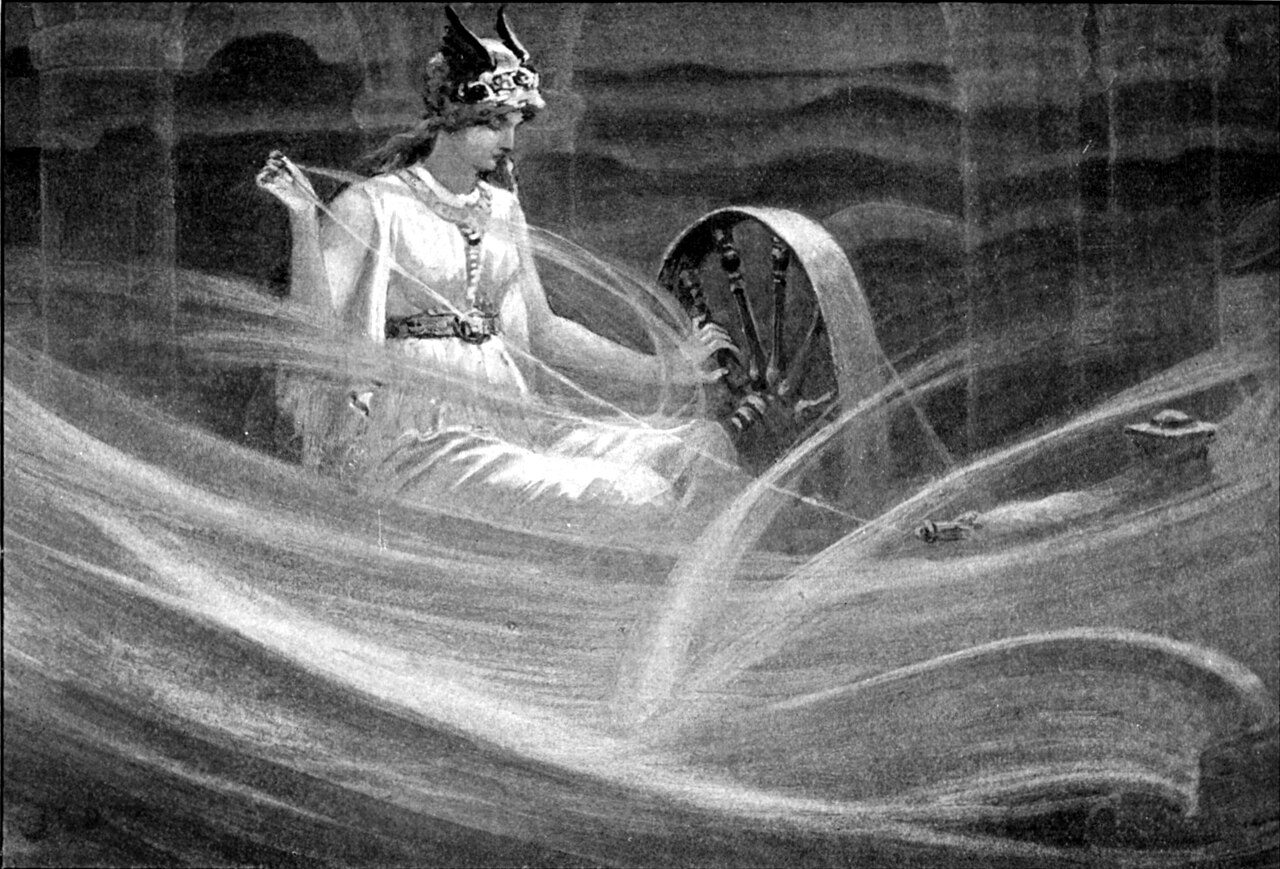
Frigg is Odin's wife and the first of the goddesses. Snorri calls her "the foremost" of the Ásynjur, with the glorious hall Fensalir Gylfaginning 35. Her defining trait is knowledge she does not use in speech: she "knows all the fates of men, though she speaks no prophecy" Gylfaginning 20. In Lokasenna, Freyja says the same: "The fate of all does Frigg know well, though herself she says it not" Lokasenna 29.
Wife of Odin
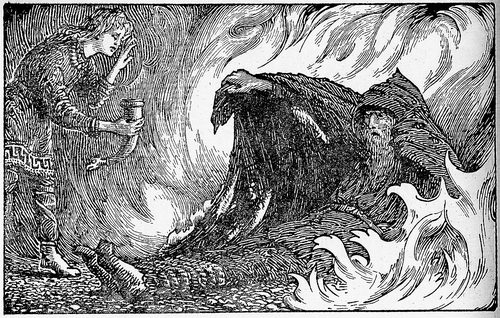
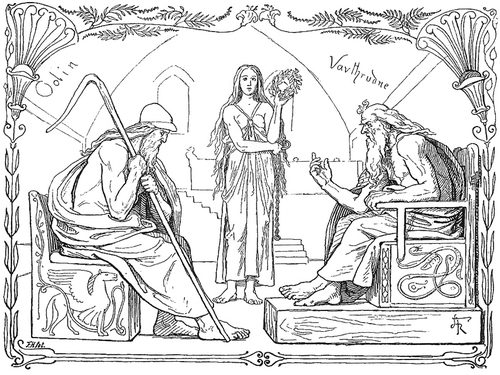
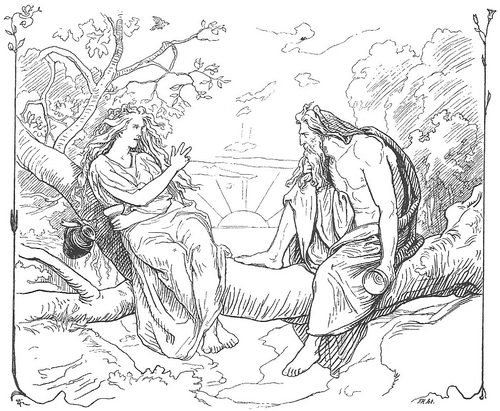
Frigg sits with Odin in Hliðskjálf, the seat from which the whole world can be seen Grímnismál, prose 2. The prose opening of Grímnismál shows her as his equal in cunning. The two have each fostered a boy; Odin boasts that his has become a king, and Frigg says that king is so stingy he tortures his guests. They wager, and Frigg sends her maid Fulla ahead to warn the king against a sorcerer, which leads to Odin being tortured between two fires Grímnismál, prose 2. In Vafþrúðnismál she tries to talk Odin out of visiting the giant, then wishes him a safe journey Vafþrúðnismál 2 Vafþrúðnismál 4.
Snorri gives her a household of goddesses: Fulla carries her casket and knows her secrets; Gná runs her errands; Hlín protects those Frigg wishes to save Gylfaginning 35. In Lokasenna Loki accuses her of sleeping with Odin's brothers Vili and Vé Lokasenna 26.
Mother of Baldr
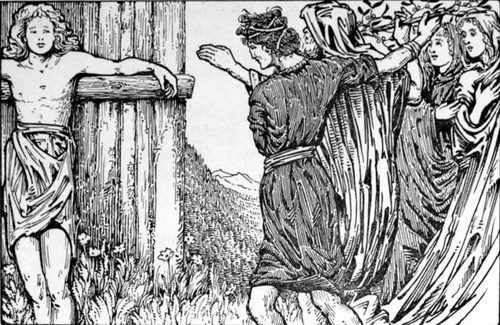
Frigg's great story is the death of her son Baldr. When Baldr had ominous dreams, she took oaths from fire, water, metals, stones, trees, sickness, beasts, birds and poisons that they would not harm him Gylfaginning 49. Disguised as a woman, Loki asked her whether everything had sworn. She told him about one shoot west of Valhöll, the mistletoe, which seemed "too young to ask the oath of" Gylfaginning 49. It killed Baldr.
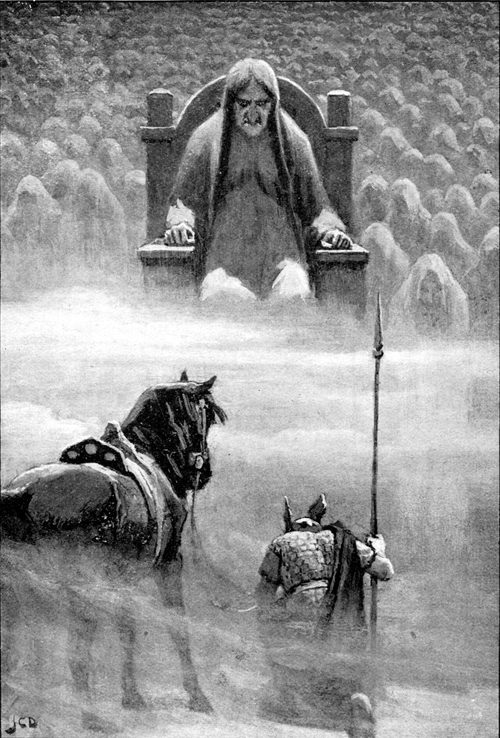
After his death she asked who would ride to Hel to ransom him, and promised her love and favour to the volunteer, Hermóðr Gylfaginning 49. Völuspá gives a briefer picture: Frigg weeping in Fensalir "for Valhall's need" Völuspá 34. At Ragnarök she suffers "another hurt", when Odin goes to fight the wolf Völuspá 53.
Loki's last taunt to her in Lokasenna is the cruellest: "Mine is the blame that Baldr no more thou seest ride home to the hall" Lokasenna 28.
Outside the Eddas
Snorri's Prologue makes her Frígídá, the human wife of a king named Vóden, gifted like him with second sight Prose Edda, Prologue. Paul the Deacon's history of the Lombards preserves a story in which Frea, Wodan's wife, tricks her husband into granting the Lombards victory, a close parallel to the wager in Grímnismál.
In the sources
Quoted from the hosted translations; each line is checked against the text when the site is built. Select a reference to read it in context.
Frigg is his wife, and she knows all the fates of men, though she speaks no prophecy
The fate of all does Frigg know well, Though herself she says it not.
And Frigg took oaths to this purport, that fire and water should spare Baldr, likewise iron and metal of all kinds
But in Fensalir did Frigg weep sore For Valhall's need
Othin and Frigg sat in Hlithskjolf and looked over all the worlds.
Call her Daughter of Fjörgynn, Wife of Odin, Mother of Baldr, Co-Wife of Jörd and Rindr and Gunnlöd and Grídr
Where the sources disagree or fall silent
- Völuspá 53 calls Frigg 'Hlin' when Odin goes to fight the wolf; Snorri, quoting the same stanza, lists Hlín as a separate goddess who guards people Frigg wishes to protect (Gylfaginning 35).
- Her father: Snorri says Fjörgvinn (Gylfaginning 9) or Fjörgynn (Skáldskaparmál 19); Bellows's Lokasenna 26 calls her 'Fjorgyn's wife', where the Old Norse word can also mean 'maiden' or 'daughter'. A Fjörgyn is also named as Thor's mother (Völuspá 56).
- Whether Sága, who drinks daily with Odin at Sökkvabekkr (Grímnismál 7), is another name for Frigg, as some scholars think, or a separate goddess, as Snorri lists her (Gylfaginning 35).
In modern culture
Not from the medieval sources.
English Friday is usually traced to Frīg, the Old English form of her name (Old High German Frīja); the overlap with Freyja in later folklore makes the link debated. Marvel's films call her Frigga, Thor's mother, which the Eddas do not: there Thor's mother is Jörð.