Æsir
Hermóðr
Odin's son who rode Sleipnir for nine nights down to Hel to ask for his brother Baldr's release, and brought back Hel's condition: that all the world must weep.
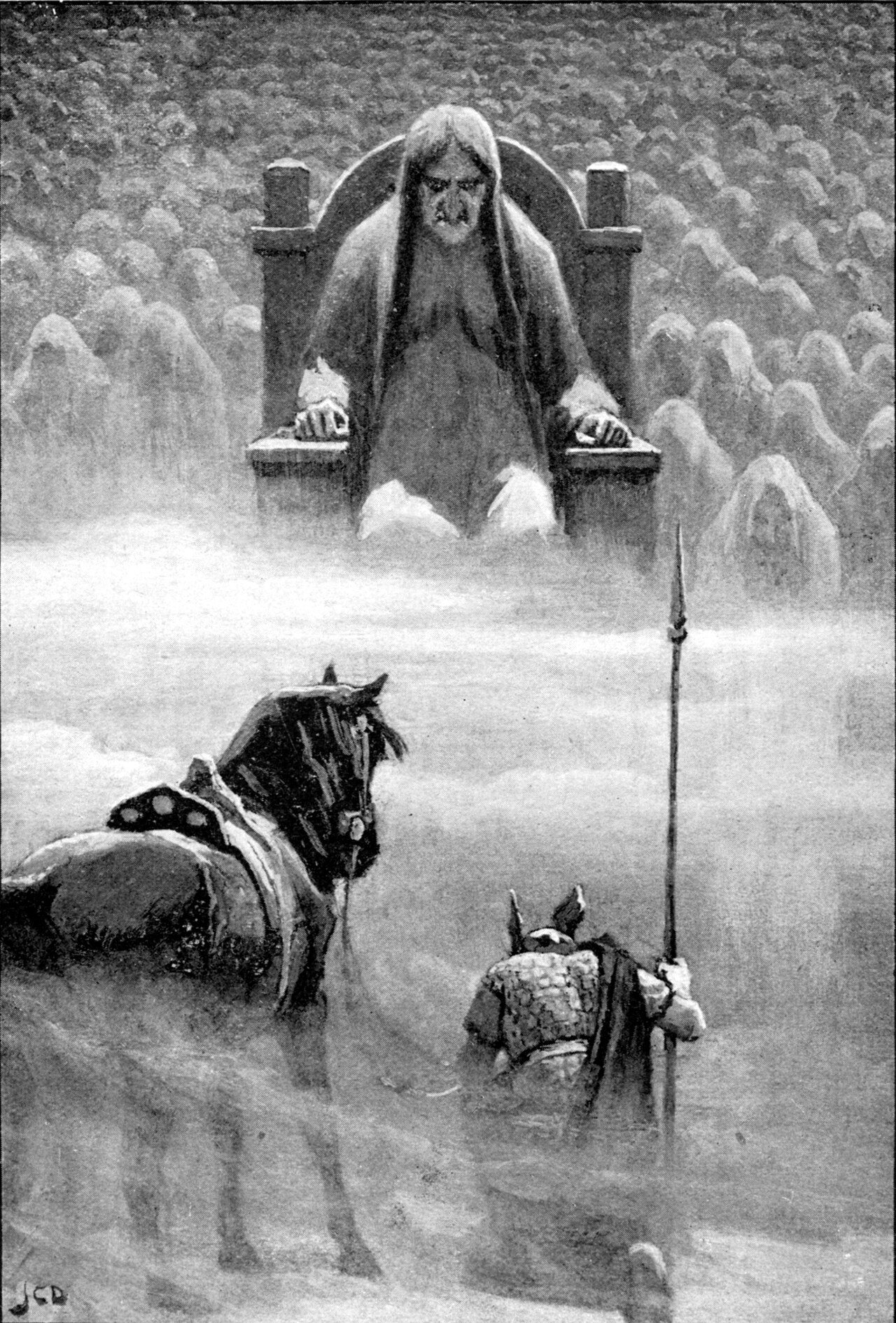
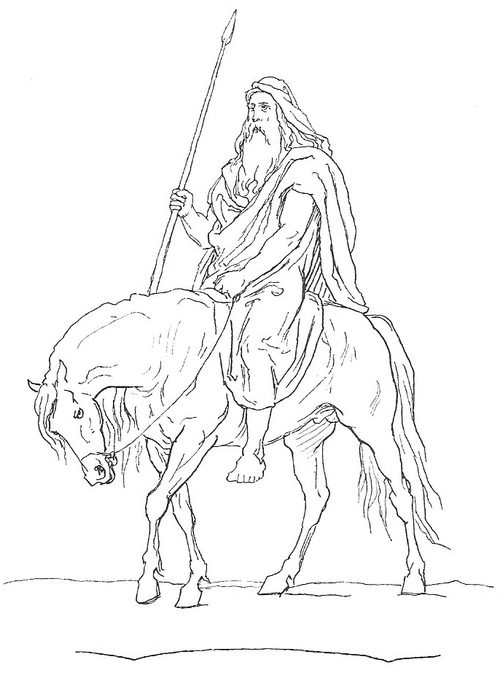
Hermóðr is known for one journey. After Baldr was killed, Frigg asked who among the gods would win all her love and favour by riding to Hel to offer a ransom. The volunteer was "Hermódr the Bold, Odin's son". He was given Sleipnir, Odin's eight-legged horse, and galloped off Gylfaginning 49.
The ride to Hel
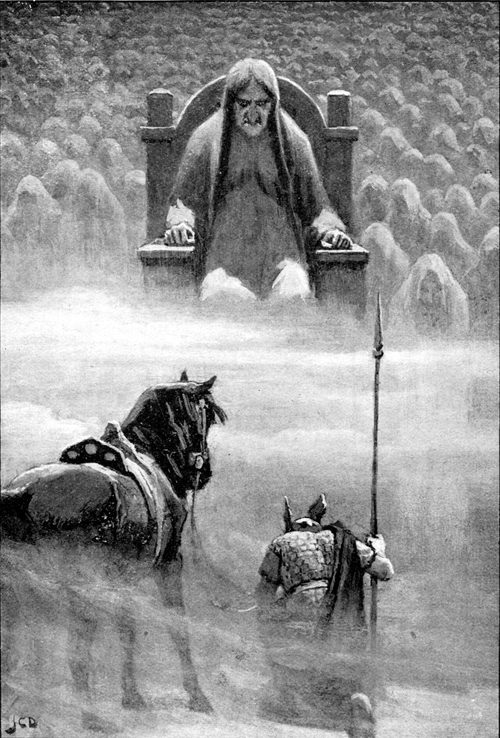
Snorri's account in Gylfaginning is the most detailed journey to the land of the dead in the Eddas. Hermóðr rode nine nights through dark, deep valleys until he reached the river Gjöll and its bridge, "thatched with glittering gold". The maiden Móðguðr, who guards it, told him that five companies of dead men had crossed the day before, yet the bridge thundered more under him alone, and he did not have the colour of the dead. She pointed the way: "down and north lieth Hel-way" Gylfaginning 49.
At the gate of Hel he tightened Sleipnir's girths and spurred him, and the horse cleared it without touching. Inside, Hermóðr found his brother sitting in the high seat, and stayed the night. In the morning he asked Hel to let Baldr ride home. She set a condition: if all things in the world, living and dead, wept for Baldr, he could return Gylfaginning 49. Baldr walked him out and sent the ring Draupnir back to Odin; Nanna sent gifts to Frigg and Fulla. Hermóðr rode home and reported what he had heard, and the gods sent messengers through the world to ask everything to weep. A single giantess refused, and Baldr stayed in Hel Gylfaginning 49.
Elsewhere
Hermóðr does not appear in any narrative poem of the Poetic Edda. A Hermoth receives "helm and mail-coat" from Odin in Hyndluljóð Hyndluljóð 2, in a stanza about the gifts Odin gives to heroes. In Eyvindr's poem on the death of King Hákon, quoted in Skáldskaparmál, Odin sends "Hermódr and Bragi" to greet the dead king arriving at Valhöll Skáldskaparmál 2. Whether these are the same Hermóðr is unclear; the Old English poem Beowulf also mentions a Danish king Heremod. Some scholars think the name belonged first to a legendary hero and was later attached to a son of Odin. See Hermóðr's ride to Hel.
In the sources
Quoted from the hosted translations; each line is checked against the text when the site is built. Select a reference to read it in context.
And he is named Hermódr the Bold, Odin's son, who undertook that embassy. Then Sleipnir was taken, Odin's steed, and led forward
he rode nine nights through dark dales and deep, so that he saw not before he was come to the river Gjöll
the steed leaped so hard over the gate that he came nowise near to it
Where the sources disagree or fall silent
- Hermóðr is called Odin's son only in this chapter of Gylfaginning (Gylfaginning 49); he is absent from Snorri's list of the twelve Æsir and from the kennings for Odin's sons.
- Whether the Hermóðr whom Odin sends to greet a dead king in Eyvindr's verse (Skáldskaparmál 2), or the Hermoth given helm and mail-coat in Hyndluljóð 2, is the same figure as Baldr's brother.