A myth retold · about 5 minutes
Odin's contest of wisdom with Vafþrúðnir
Against Frigg's advice, Odin goes in disguise to the wisest of the giants and stakes his head on a contest of questions about the creation, the gods and the end of the world. He wins with a question only he can answer.
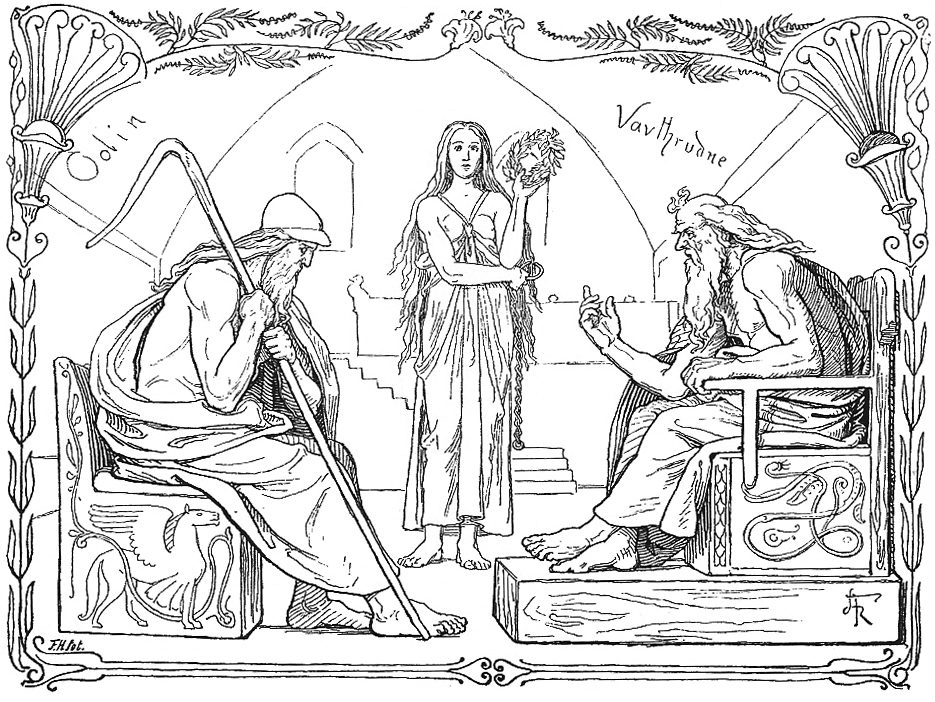
Vafþrúðnismál is a duel fought with questions. It is also one of the main sources for what the Norse believed about the beginning and end of the world, which is why Snorri quotes it so often in Gylfaginning. The story around the questions is short, but it has real tension: the loser's head is forfeit, and only the reader knows from the start who the guest is.
Frigg's warning
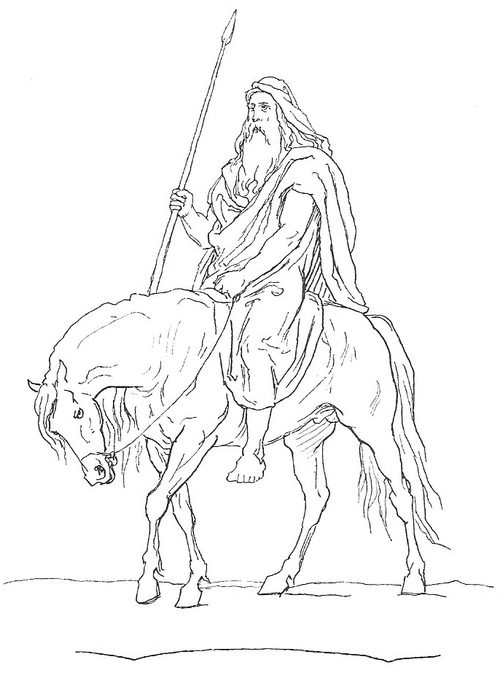
Odin told Frigg that he wanted to go and find Vafþrúðnir and test his own ancient wisdom against the giant's. Frigg wanted him to stay at home: she knew no giant equal in strength to Vafþrúðnir Vafþrúðnismál 1-2. Odin replied that he had travelled much and tested much, and wanted to see how the giant lived Vafþrúðnismál 3. Frigg gave way and wished him a safe road there and back: let his wits be sharp when he spoke with the giant Vafþrúðnismál 4.
The guest on the floor
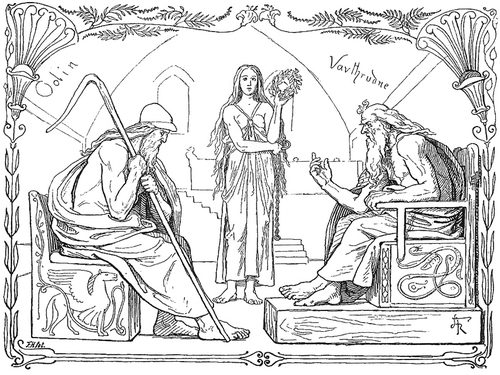
Odin came to the giant's hall and went straight in. He greeted his host and said he had come to see whether Vafþrúðnir was really wise Vafþrúðnismál 5-6. The giant asked who was speaking to him, and warned that the stranger would never leave the hall unless he proved the wiser Vafþrúðnismál 7. Odin gave his name as Gagnráðr and said he had come a long way, thirsty, hoping for a welcome Vafþrúðnismál 8. Offered a seat, he answered only that a poor man in a rich man's house should speak wisely or keep quiet Vafþrúðnismál 9-10, and stayed where he stood.
So the giant tested him standing on the floor. He asked the names of the horse that draws the day and the horse that draws the night, and Odin answered Skinfaxi and Hrímfaxi, adding that the dew in the valleys is foam from Hrímfaxi's bit. He asked the name of the river between gods and giants: Ifing, which never freezes. And the name of the field where Surtr and the gods will fight: Vígríðr, a hundred miles each way Vafþrúðnismál 11-18. Satisfied, Vafþrúðnir invited him to sit and set the stakes:
"Wise art thou, guest! To my bench shalt thou go,In our seats let us speak together;Here in the hall our heads, O guest,Shall we wager our wisdom upon."Vafþrúðnismál 19
The beginning of things
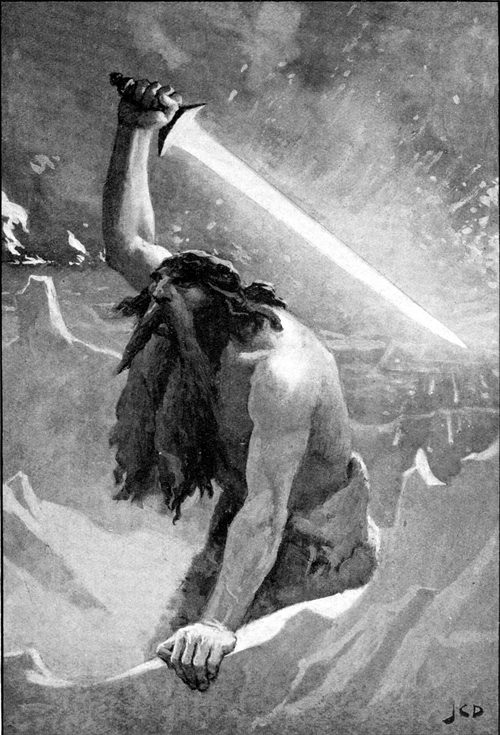
Now Odin asked, and the giant answered. Where did earth and sky come from? From Ymir: his flesh became the earth, his bones the mountains, his skull the sky and his blood the sea Vafþrúðnismál 20-21. Who fathered the moon and the sun? Mundilfari Vafþrúðnismál 22-23. Day's father is Dellingr; night was born of Nörr Vafþrúðnismál 24-25. Winter's father is Vindsvalr, and summer's Svásuðr Vafþrúðnismál 26-27.
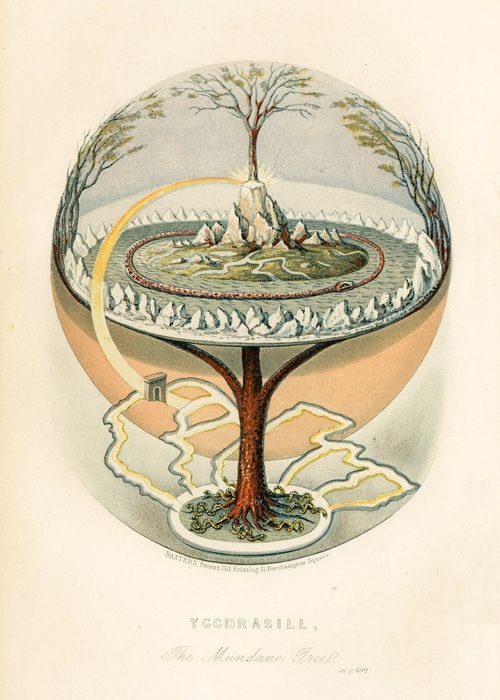
Who was the oldest giant? Bergelmir, born countless winters before the earth was made, son of Þrúðgelmir and grandson of Aurgelmir Vafþrúðnismál 28-29. Aurgelmir arose from drops of venom from Élivágar, which is why the giants are so fierce Vafþrúðnismál 30-31; and he had children without a wife, a boy and a girl growing under his arm and a six-headed son begotten by his two feet Vafþrúðnismál 32-33. The giant's own oldest memory was Bergelmir being laid in a boat Vafþrúðnismál 34-35. The wind comes from the wings of Hræsvelgr, a giant in eagle's form at the edge of heaven Vafþrúðnismál 36-37. Njörðr was created among the Vanir and given to the gods as a hostage, and will go home to them at the end Vafþrúðnismál 38-39. The warriors in Odin's hall fight each other every day and are healed to sit and drink Vafþrúðnismál 40-41.
The end of things
Then Odin asked how the giant knew all this. Vafþrúðnir said he had been to every world, nine worlds in all, down to Niflhel where the dead live Vafþrúðnismál 42-43. From here on, every question begins with the same refrain, "Much have I fared, much have I found", and every one is about the future.
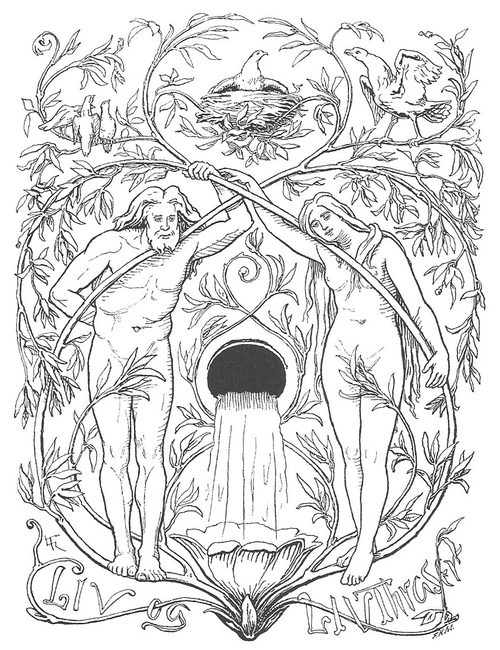
Who of mankind will live through the great winter? Líf and Lífþrasir, hidden in Hoddmímir's wood, eating the morning dew Vafþrúðnismál 44-45. What becomes of the sun when Fenrir takes it? She will have a daughter who will follow her mother's path Vafþrúðnismál 46-47. Who rules after Surtr's fire dies down? Víðarr and Váli in the home of the gods, and Móði and Magni will have Mjölnir Vafþrúðnismál 50-51. And what will be the death of Odin? The giant answered to Odin's face, still not knowing whom he was speaking to:
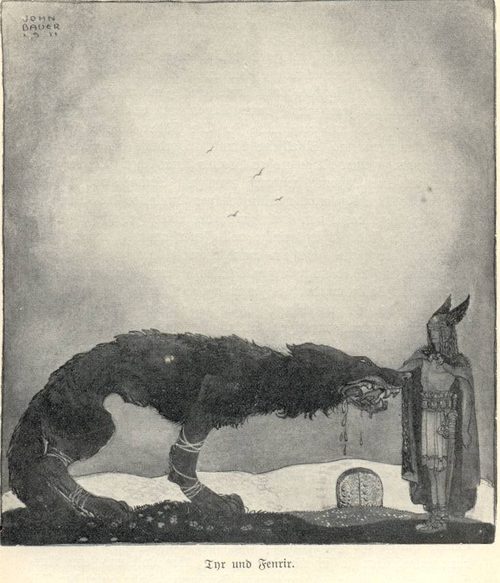
"The wolf shall fell the father of men,And this shall Vithar avenge;The terrible jaws shall he tear apart,And so the wolf shall he slay."Vafþrúðnismál 53
The last question
Then Odin asked the one question no one else could answer:
"Much have I fared, much have I found,Much have I got from the gods:What spake Othin himself in the ears of his son,Ere in the bale-fire he burned?"Vafþrúðnismál 54
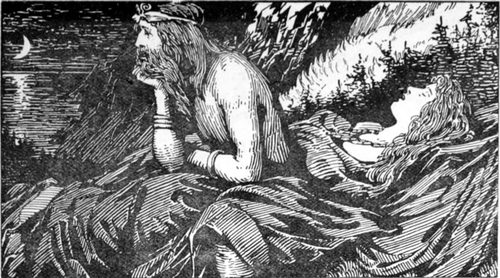
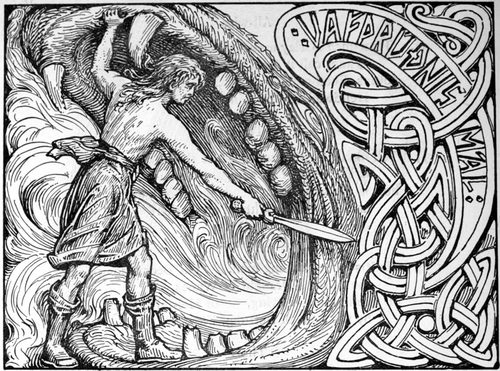
The son is Baldr, burned on his funeral pyre. Only the speaker could know what was whispered to him, and so the question gives the guest away. Vafþrúðnir saw that he was beaten and by whom: "With fated mouth" he had told of the fall of the gods; he had matched wisdom with Odin, "and ever the wiser thou art" Vafþrúðnismál 55. The poem ends there. Whether Odin took the giant's head is never said.
Where the story comes from
Vafþrúðnismál is in the Codex Regius (around 1270), and part of it also in the manuscript AM 748. It is usually thought to be a pagan-period poem, though its date is uncertain. Snorri's Gylfaginning (around 1220) follows the same idea, a disguised questioner and a contest of lore, and quotes many of these stanzas as authority. He sometimes reads them differently. Vafþrúðnir's oldest memory is Bergelmir "in a boat of old" Vafþrúðnismál 35; Snorri explains this with a flood of Ymir's blood that drowned all the frost-giants except Bergelmir, who escaped with his wife in a boat Gylfaginning 7. The poem says nothing of a flood.
Its account of creation largely matches Grímnismál Grímnismál 40, and its account of Odin's death matches Völuspá; Snorri also places the end-battle on Vígríðr Gylfaginning 51. Odin's last question appears again, with a different loser, in the riddle contest of the later Hervarar saga.
Reading it today
The poem belongs to a common Norse type, the wisdom contest, like Alvíssmál and the frame of Grímnismál: a speaker, often Odin in disguise, either reveals or extracts knowledge. Readers have noted the irony that the giant, proud of his knowledge of the gods' fate, explains Odin's death to Odin and never recognises him until the last line. Some scholars suggest that the giants, as the oldest beings, are imagined as the natural keepers of knowledge about the beginning of the world, which Odin must win from them.
Key passages
Amid all the giants an equal in might / To Vafthruthnir know I none.
Here in the hall our heads, O guest, / Shall we wager our wisdom upon.
Out of Ymir's flesh was fashioned the earth, / And the mountains were made of his bones
The wolf shall fell the father of men, / And this shall Vithar avenge
What spake Othin himself in the ears of his son, / Ere in the bale-fire he burned?
With Othin in knowledge now have I striven, / And ever the wiser thou art.