concept
The Æsir
Æsir
The main family of Norse gods, led by Odin and living in Asgard: Thor, Baldr, Týr, Heimdall and others, with the goddesses called Ásynjur. They fought and made peace with the Vanir.
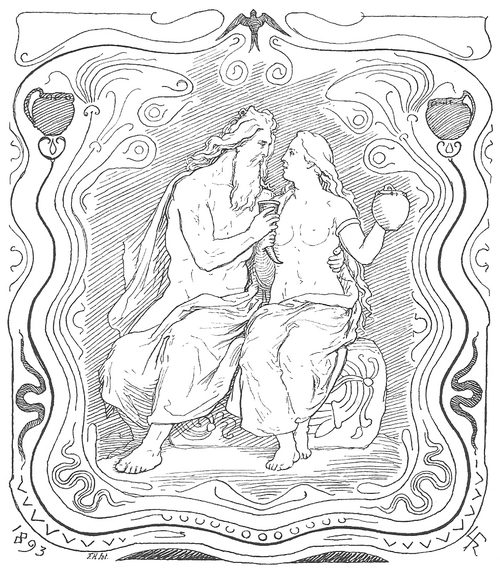
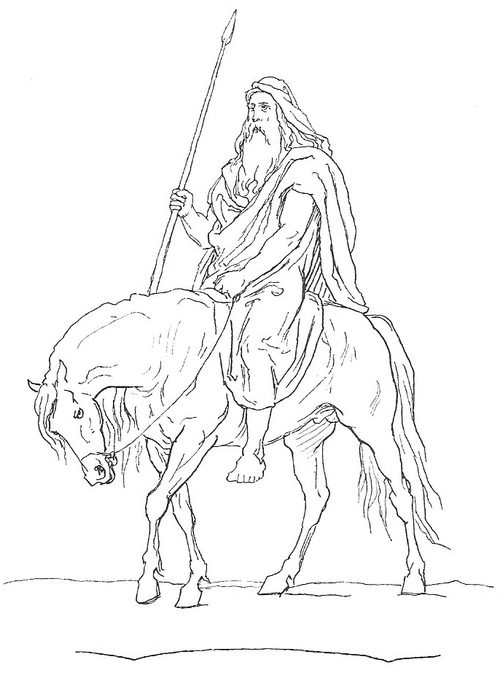
The Æsir are the gods of Asgard, the family of Odin. Snorri says "Odin is highest and eldest of the Æsir: he rules all things, and mighty as are the other gods, they all serve him as children obey a father" Gylfaginning 20. The goddesses are called Ásynjur, "Not less holy ... and they are of no less authority" Gylfaginning 20.
Who counts as one
Snorri says the Æsir are twelve Gylfaginning 20, then describes Thor, Baldr, Njörðr, Freyr, Týr, Bragi, Heimdall, Höðr, Víðarr, Váli, Ullr, Forseti and finally Loki, who is "Also numbered among the Æsir" Gylfaginning 21-33. The count does not work, and the list includes Njörðr and Freyr, who were born among the Vanir: Snorri says outright that "Njördr is not of the race of the Æsir" Gylfaginning 23. In practice "Æsir" often means simply "the gods", and the Vanir hostages came to count among them. The Ásynjur are listed separately, with Frigg first and Freyja, another Vanir goddess, among them Gylfaginning 35.
History of the gods
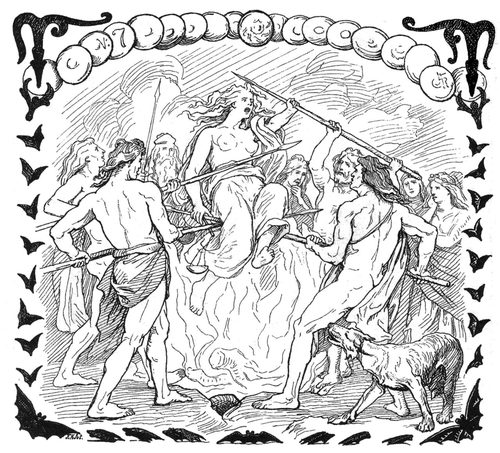
Völuspá tells the gods' story in outline. In the first age they meet at Iðavöllr, build shrines and forges, and play at tables, with "no lack" of gold Völuspá 7-8. Then come the war with the Vanir Völuspá 21-24, the death of Baldr, and Ragnarök, where most of the Æsir die. A few, Baldr and Höðr among them, return to the green world that rises after Völuspá 62.
Gods or men?
Snorri, a Christian writing around 1220, frames the myths in two ways. In Gylfaginning the Æsir speak of themselves as gods. But his Prologue explains them as human beings: "those men of Asia, who were called Æsir", led by Odin from Troy into Scandinavia, where their wisdom and good fortune made people worship them Prose Edda, Prologue. He even says of Asgard, "men call it Troy" Gylfaginning 9. This explanation, known as euhemerism, was common among medieval scholars; it tells us about Snorri's learning, not about pagan belief. The real word áss, "god", has relatives in Old English and Gothic and has nothing to do with Asia.
In the sources
Quoted from the hosted translations; each line is checked against the text when the site is built. Select a reference to read it in context.
The divine Æsir are twelve." Then said Jafnhárr: "Not less holy are the Ásynjur, the goddesses, and they are of no less authority.
At Ithavoll met the mighty gods, Shrines and temples they timbered high
When the king learned of the coming of those men of Asia, who were called Æsir
these were their names: Thor, Njördr, Freyr, Týr, Heimdallr, Bragi, Vídarr, Váli, Ullr, Hœnir, Forseti, Loki
Where the sources disagree or fall silent
- Snorri's 'twelve' Æsir do not add up: Gylfaginning lists Odin and then thirteen more (Gylfaginning 20-33), while the list of judges in Skáldskaparmál (Skáldskaparmál 1) is different again. Hyndluljóð says the gods were eleven when Baldr died (Hyndluljóð 30).