place
Valhalla
Valhöll
Odin's vast hall of the battle-dead, roofed with shields and raftered with spears, where the einherjar feast and fight each day until they march out to meet the wolf at Ragnarök.
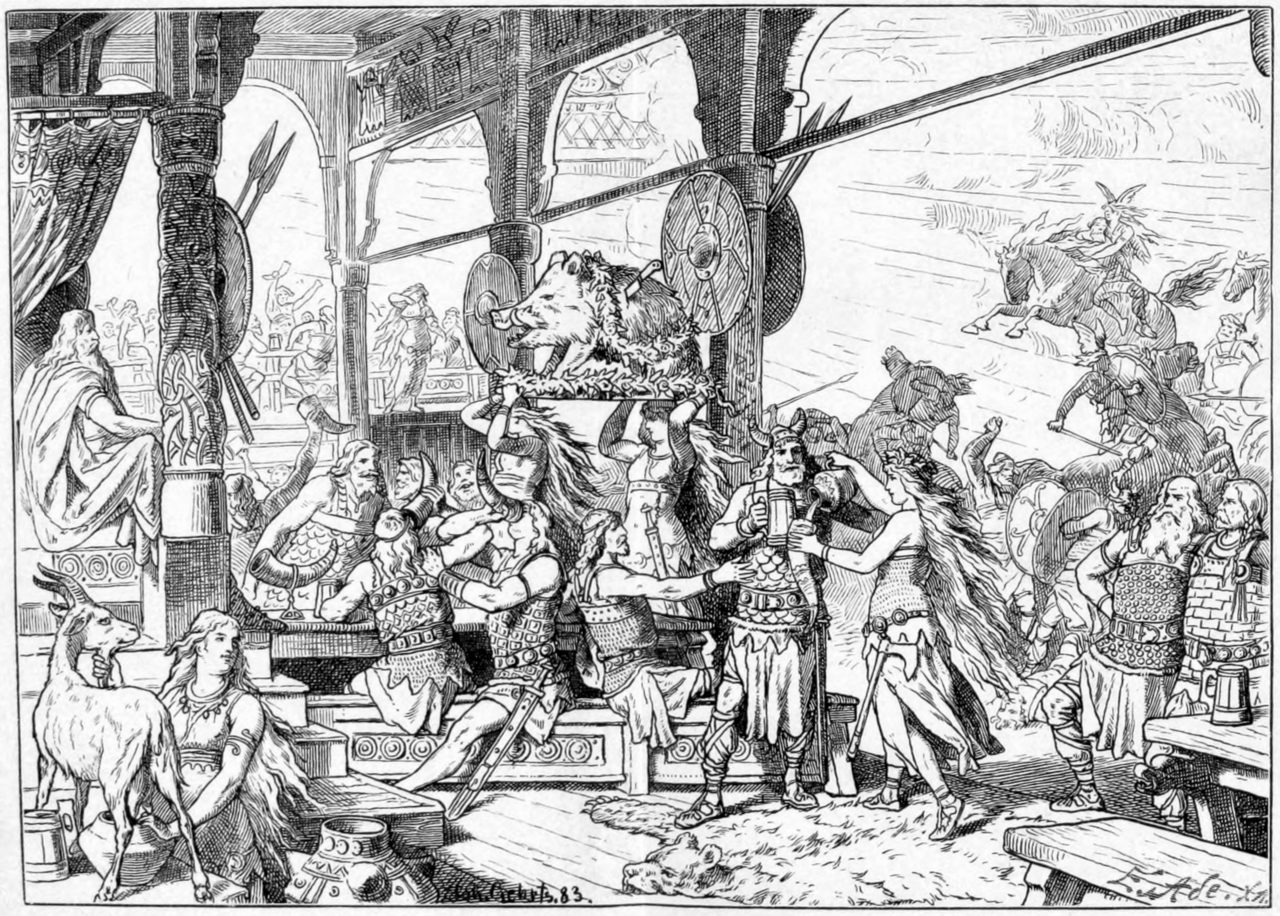
Valhalla, Old Norse Valhöll, "the hall of the slain", is Odin's hall for warriors who die in battle. The fullest picture of it comes in Grímnismál, where Odin describes the dwellings of the gods, and in Snorri's Gylfaginning, which retells that picture and adds to it.
The hall in Grímnismál
Valhalla stands, "gold-bright" and "stretching wide", in Glaðsheimr, and there Odin "each day" chooses "the men who have fallen in fight" Grímnismál 8. It is built out of the gear of war:
Easy is it to know for him who to OthinComes and beholds the hall;Its rafters are spears, with shields is it roofed,On its benches are breastplates strewn.Grímnismál 9
A wolf hangs by the western door and an eagle hovers over it Grímnismál 10. The way in is guarded: the dead must wade the roaring river Thund Grímnismál 21 and pass Valgrind, an ancient gate whose lock few understand Grímnismál 22. The hall has 540 doors, and through each one 800 warriors will march "when to war with the wolf they go" Grímnismál 23. Outside stand the goat Heiðrún, whose mead never fails Grímnismál 25, and the hart Eikþyrnir, from whose antlers the rivers flow Grímnismál 26. The warriors eat the meat of Sæhrímnir Grímnismál 18.
Snorri's Valhalla
Gylfaginning is set in a version of Valhalla. When King Gylfi comes to Ásgard in disguise, he sees a hall so high he cannot make out its top, "thatching ... laid with golden shields", and Snorri cites the skald Þjóðólfr of Hvinir for the shield-roof of Valhall Gylfaginning 2. Inside, some people are drinking and some are fighting. It turns out to be an illusion, and the three figures on the high seats answer Gylfi's questions.
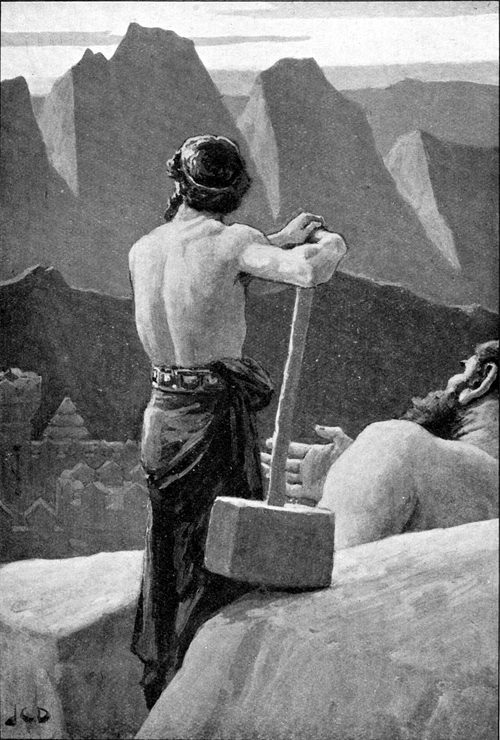
Snorri arranges the poem's details into a working household. The dead are "the sons of [Odin's] adoption", and he assigns them "Valhall and Vingólf" Gylfaginning 20. The boar Sæhrímnir is cooked every day and whole by evening Gylfaginning 38; Heiðrún fills a vat of mead daily from her udders Gylfaginning 39; the valkyries carry the drink Gylfaginning 36. Before the doors stands the grove Glasir, whose leaves are red gold Skáldskaparmál 34. Snorri also says the gods built Valhalla early, before the giant-builder came to wall Ásgard Gylfaginning 42, and that the giant Hrungnir once drank there as Odin's guest while Freyja poured for him, until Thor came home Skáldskaparmál 17.
Who goes there
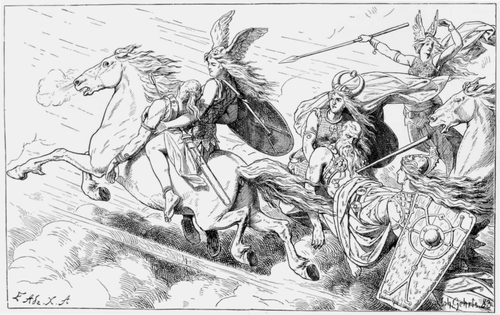
Popular tradition sends every fallen warrior to Valhalla. The sources do not. Grímnismál says Freyja chooses half the dead each day for her hall Fólkvangr, "And half does Othin have" Grímnismál 14, and Snorri repeats this Gylfaginning 24. Yet Snorri also has Gangleri say, uncorrected, that "all those men who have fallen in battle from the beginning of the world" come to Odin in Valhall Gylfaginning 38. The two statements do not fit together, and Snorri does not resolve them. He does draw a line against the other dead: Hel receives "men dead of sickness or of old age" Gylfaginning 34.
Named arrivals are kings and heroes. The tenth-century poem Eiríksmál, quoted in Skáldskaparmál, opens with Odin waking to "make Valhall ready / For troops of slain" because a prince is coming Skáldskaparmál 2. In the Helgi poems, when Helgi comes to Valhalla, Odin bids him "rule over everything with himself" Helgakviða Hundingsbana II, prose 14, and Helgi sets his old enemy Hunding to wash the heroes' feet and feed the swine Helgakviða Hundingsbana II 38. In Hyndluljóð, Freyja proposes to ride "To Valhall to seek the sacred hall" and win Odin's favour for her protégé Hyndluljóð 1.
What it is for
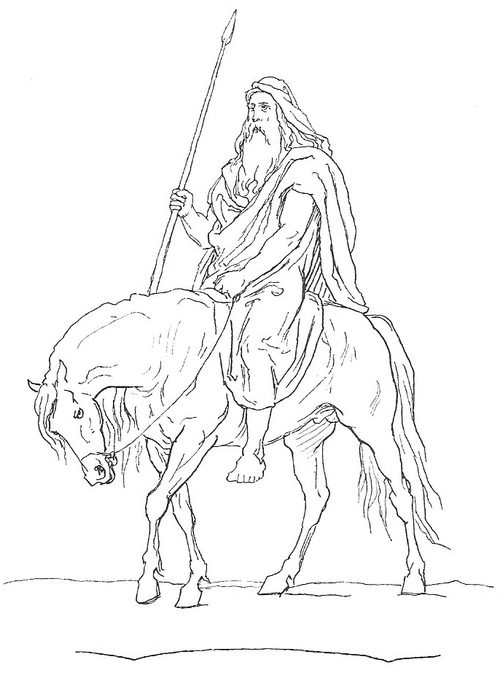
The hall is not a reward in itself. Its doors are counted for the day the army marches out, and Snorri says that however vast the host becomes, "it will seem all too small, in the time when the Wolf shall come" Gylfaginning 38. At Ragnarök Odin rides out at the head of the einherjar against Fenrir Gylfaginning 51, and the wolf kills him. See Einherjar for the warriors themselves.
In the sources
Quoted from the hosted translations; each line is checked against the text when the site is built. Select a reference to read it in context.
The fifth is Glathsheim, and gold-bright there Stands Valhall stretching wide; And there does Othin each day choose The men who have fallen in fight.
Its rafters are spears, with shields is it roofed, On its benches are breastplates strewn.
Five hundred doors and forty there are, I ween, in Valhall's walls; Eight hundred fighters through one door fare When to war with the wolf they go.
The half of the dead each day does she choose, And half does Othin have.
he saw there a hall so high that he could not easily make out the top of it: its thatching was laid with golden shields after the fashion of a shingled roof.
a very mighty multitude is there, but many more shall be, notwithstanding which it will seem all too small, in the time when the Wolf shall come.
I thought to rise ere day-break To make Valhall ready For troops of slain
In modern culture
Not from the medieval sources.
Wagner's Der Ring des Nibelungen made 'Walhall' the gods' fortress, built by giants, which burns at the end of Götterdämmerung; the giant-builder comes from Snorri's story of Ásgard's wall, not from Valhalla. Ludwig I of Bavaria named his hall of famous Germans near Regensburg the Walhalla (opened 1842). Today the word is a byword for a warrior's paradise, in heavy metal, video games and film, usually without Freyja's half-share of the dead or the purpose the sources give the hall: an army for the last battle.