
Gods and goddesses
The Æsir and Vanir, and the personified powers Snorri counts among them: Odin and Thor, Frigg and Freyja, and goddesses known from a single line of Gylfaginning.
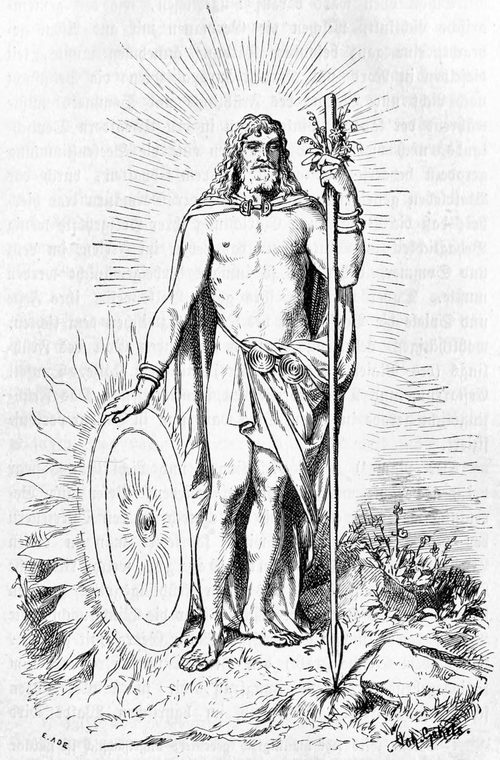 Baldr
Odin and Frigg's son, the brightest and best-loved of the gods. His death by a mistletoe dart, thrown by his blind brother Höðr, is the first great loss on the road to Ragnarök.
Borr
Son of Búri and father of Odin, Vili and Vé by the giantess Bestla. His sons killed Ymir and raised the earth, and the poems often call them simply 'Bur's sons'.
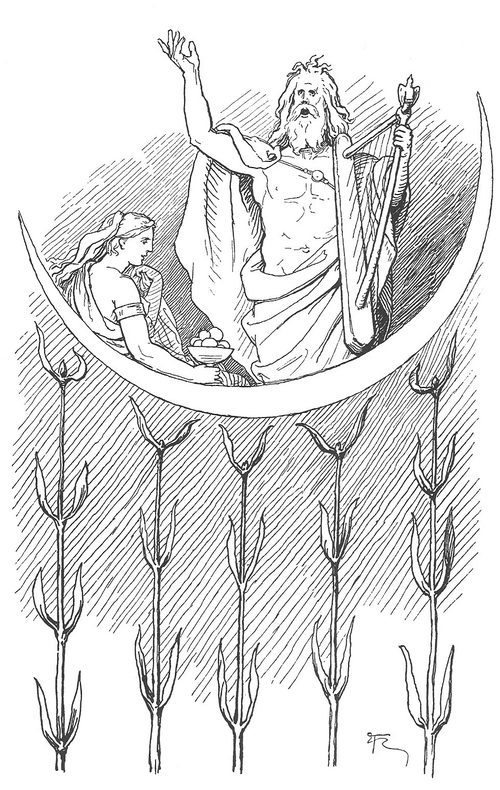 Bragi
The god of poetry and eloquence, husband of Iðunn. In Snorri's Skáldskaparmál he is the storyteller who explains the art of poetry to the sea-giant Ægir.
Búri
The first ancestor of the gods in Snorri's creation story: licked out of the salty ice by the cow Auðhumla, he was the father of Borr and grandfather of Odin.
Dagr
Day personified: son of Night and the bright Dellingr, he rides round the earth behind his mother on the horse Skinfaxi, whose mane lights the world.
Eir
A goddess whom Snorri ranks third among the Ásynjur and calls 'the best physician'; a maiden of the same name sits at Menglöð's knees in Svipdagsmál.
Forseti
Son of Baldr and Nanna, a god of justice whose hall Glitnir, pillared with gold and roofed with silver, is the best court among gods and men.
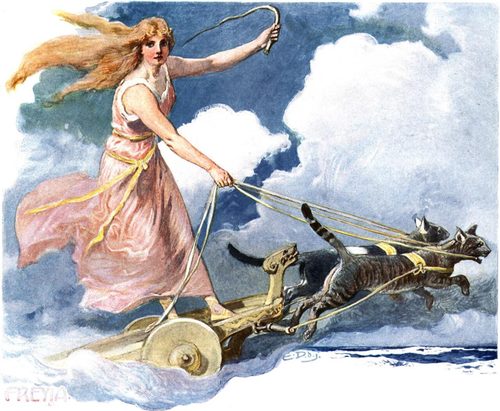 Freyja
The Vanir goddess of love, wealth and the slain: daughter of Njörðr, owner of the necklace Brísingamen, who takes half of those who fall in battle to her hall Fólkvangr.
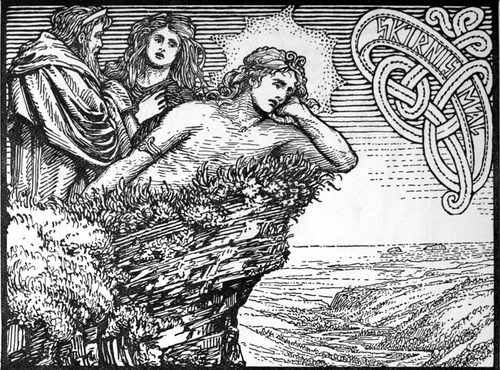 Freyr
The Vanir god of rain, sunshine, harvest and peace, son of Njörðr. He gave away his sword to win the giantess Gerðr, and will fall unarmed against Surtr at Ragnarök.
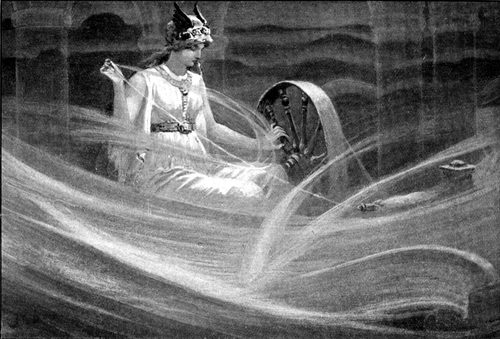 Frigg
Odin's wife and the foremost of the goddesses: she knows the fates of all but never speaks them, and her failed attempt to protect her son Baldr is the hinge of Norse myth.
Fulla
Frigg's maidservant and confidante, who carries her mistress's coffer, minds her shoes and knows her secrets; poets called gold 'Fulla's snood'.
Gefjun
The goddess who ploughed the Danish island of Zealand out of Sweden with four oxen, her sons by a giant. Snorri also calls her a virgin who receives women who die unmarried.
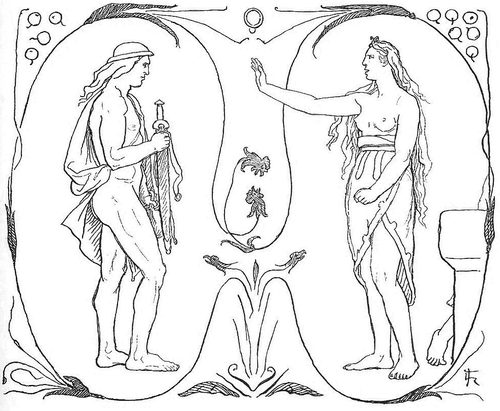 Gerðr
A giant's daughter so beautiful that light shone from her arms, whom Freyr's servant Skírnir won for him by bribes, threats and a runic curse.
Gná
Frigg's messenger, who rides through sky and sea on the horse Hófvarpnir; some of the Vanir once saw her flying overhead.
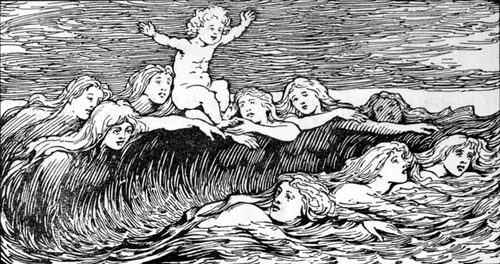 Heimdall Heimdallr
The watchman of the gods, born of nine mothers, who guards Bifröst from his hall Himinbjörg and will blow the Gjallarhorn when Ragnarök begins.
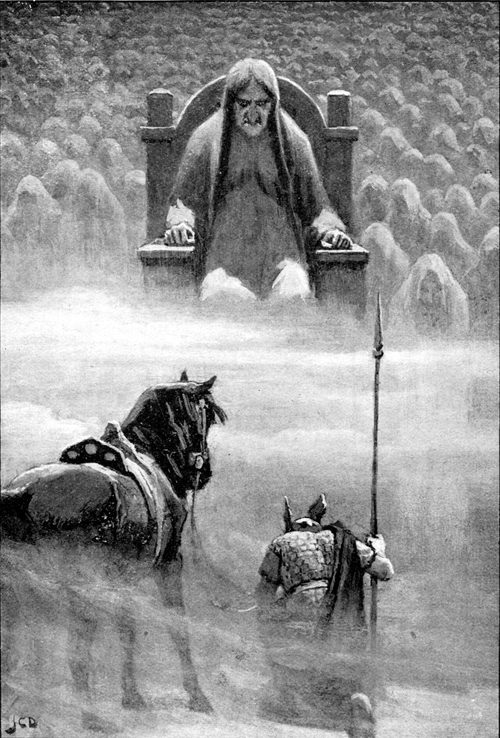 Hermóðr
Odin's son who rode Sleipnir for nine nights down to Hel to ask for his brother Baldr's release, and brought back Hel's condition: that all the world must weep.
Hlín
In Snorri, a goddess who guards the people Frigg wishes to save; in Völuspá, Hlín seems to be another name for Frigg herself.
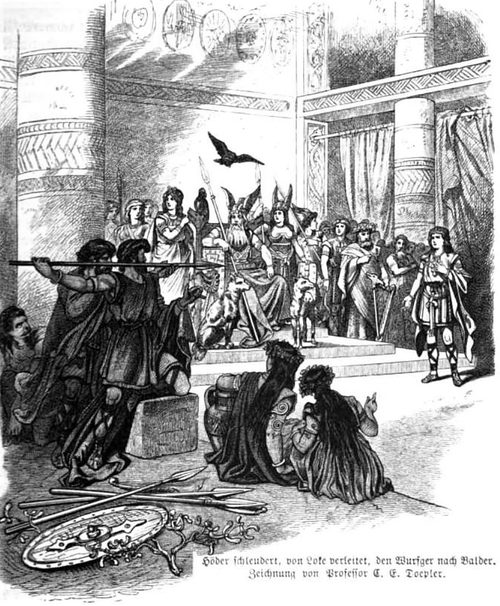 Höðr
The blind god who killed his brother Baldr with a shaft of mistletoe, guided, in Snorri's telling, by Loki. He is killed in revenge by Váli and returns with Baldr after Ragnarök.
Hœnir
A shadowy god, Odin's travelling companion, who gave sense to the first humans, went to the Vanir as a hostage after their war, and survives Ragnarök to take up the prophetic wand.
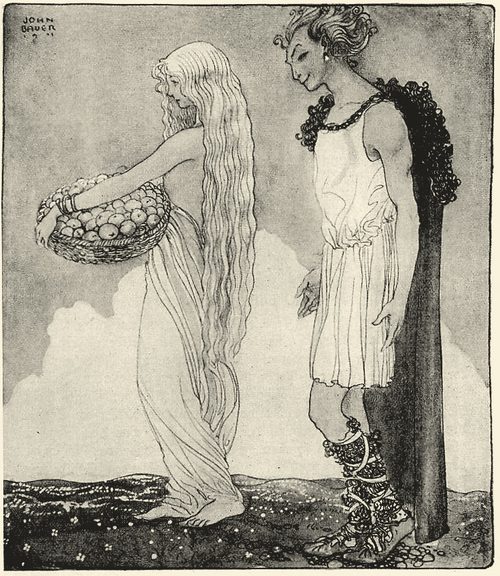 Iðunn
The goddess who keeps the apples that keep the gods young. When the giant Þjazi carried her off, the gods began to age, and Loki had to steal her back.
Jörð
The Earth personified as a goddess: Odin's bride and the mother of Thor, so that Thor is called the 'son of Earth'. Snorri gives her two incompatible parentages.
Kvasir
The wisest of beings, made from the spittle of the Æsir and Vanir at their peace-making. Two dwarves killed him and brewed his blood with honey into the mead of poetry.
Lofn
In Snorri's list of goddesses, the kindly Lofn wins Odin's or Frigg's leave for marriages that had been forbidden.
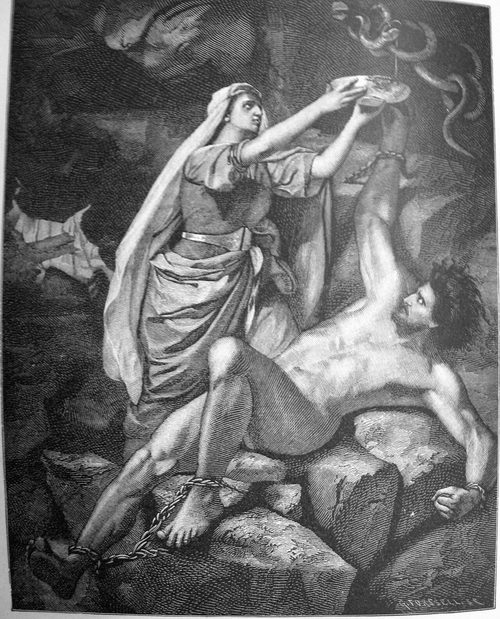 Loki
The giant-born trickster counted among the Æsir: father of Fenrir, the Midgard Serpent and Hel, contriver of Baldr's death, bound until Ragnarök.
Magni
Thor's son by the giantess Járnsaxa. At three nights old he lifted the dead giant Hrungnir's leg off his father; after Ragnarök he and his brother Móði inherit Mjöllnir.
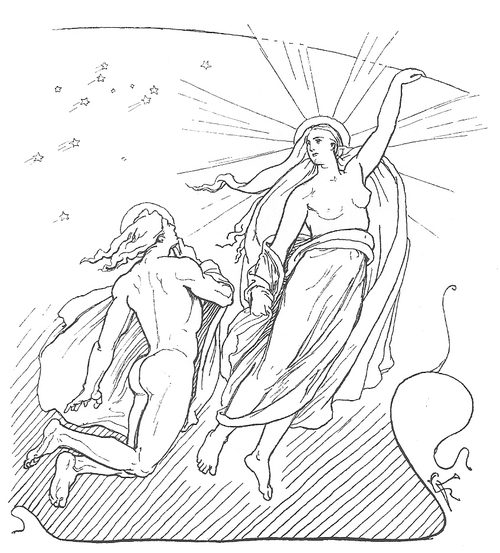 Máni
The moon as a god: son of Mundilfari and brother of the Sun, he steers the moon's course and governs its waxing and waning, pursued by a wolf.
Mímir
The wise guardian of the well beneath Yggdrasil, where Odin pledged an eye for a drink. In the poems only his head survives, and Odin consults it for secret knowledge.
Móði
A son of Thor, named only alongside his brother Magni: the two survive Ragnarök and inherit their father's hammer Mjöllnir.
Nanna
Baldr's wife and the mother of Forseti. When she saw Baldr's body carried to his ship her heart burst with grief, and she was burned on his pyre.
 Njörðr
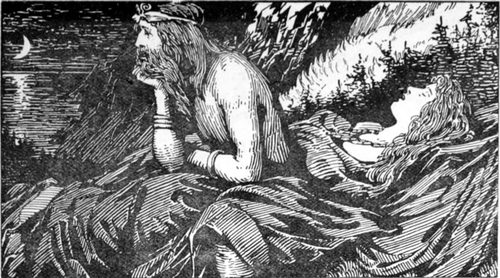
The Vanir god of the sea, winds and wealth, father of Freyr and Freyja. Sent to the Æsir as a hostage after their war, he married the giantess Skaði, an ill-matched union of sea and mountain.
Nótt
Night personified: a dark giant's daughter who rides around the earth on the horse Hrímfaxi, whose bit-foam falls as dew; mother of Day and of Earth.
 Odin Óðinn
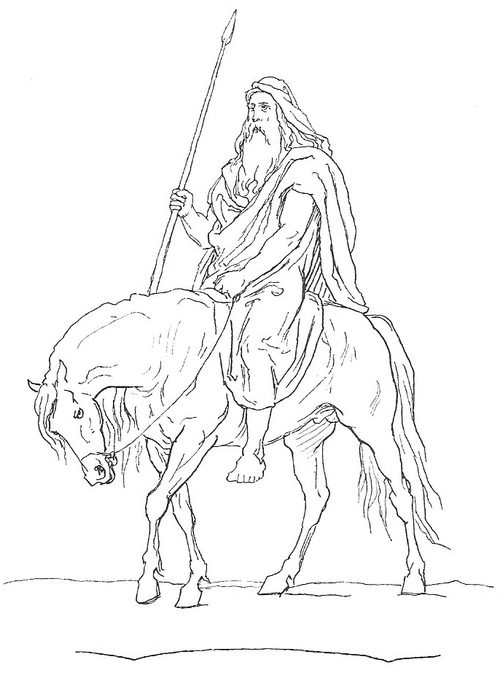
Chief of the Æsir: a one-eyed god of wisdom, poetry, magic, war and the dead, who gave an eye and hanged himself on a tree for knowledge, and who dies at Ragnarök.
Rindr
The mother of Váli, the son Odin fathered to avenge Baldr. The Eddas say almost nothing about her; a skaldic line says Odin won her by magic.
 Sága
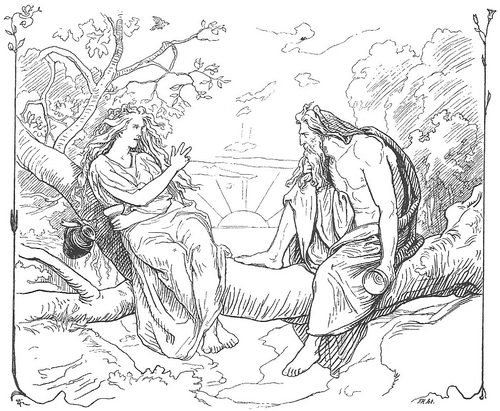
A goddess who drinks with Odin every day from golden cups at Sökkvabekkr, a hall among cool waves; Snorri ranks her second among the Ásynjur.
 Sif
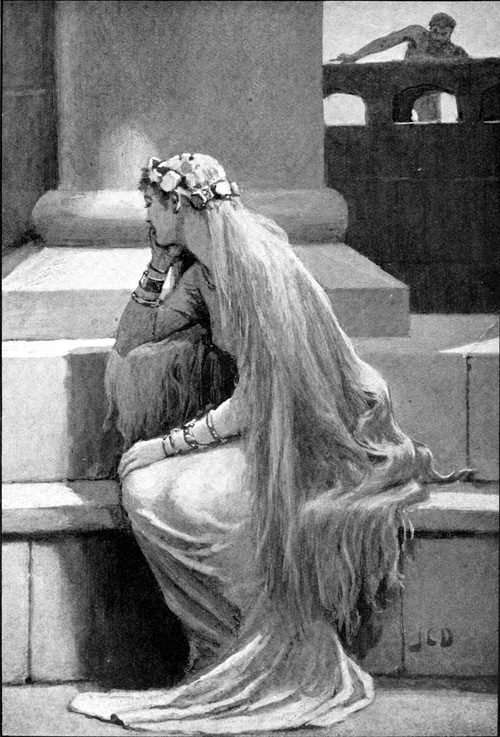
Thor's wife, mother of Ullr and Þrúðr, famous for the golden hair the dwarfs made for her after Loki cut off her own.
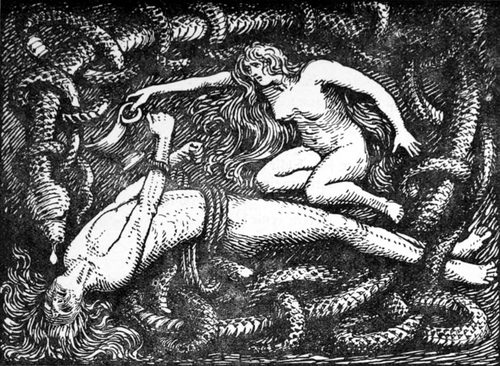 Sigyn
Loki's wife, counted among the goddesses, who stays beside her bound husband holding a bowl to catch the snake venom dripping onto his face.
Sjöfn
A goddess of love whom Snorri ranks seventh among the Ásynjur: she turns the thoughts of men and women towards love.
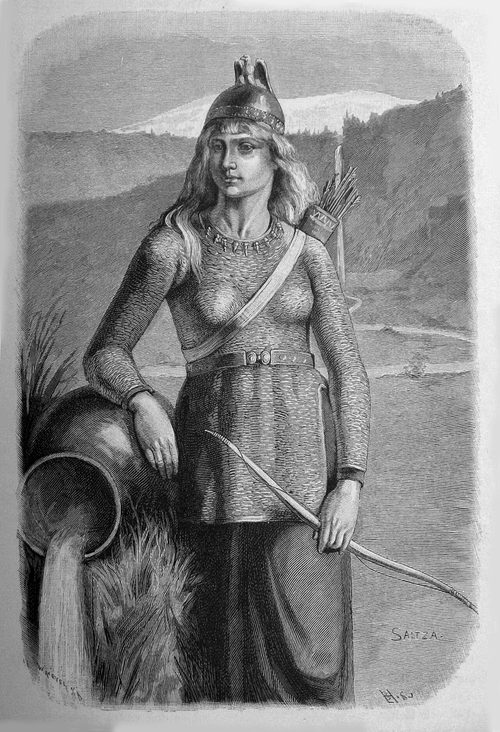 Skaði
A giantess who came to Asgard armed to avenge her father Þjazi, accepted a husband instead, and went back to the mountains to hunt on skis when the marriage to Njörðr failed.
Snotra
A prudent, gentle goddess whose name, Snorri says, gives the word snotr for a wise and moderate person; nothing else is known of her.
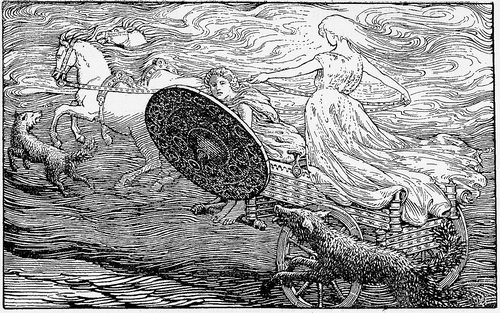 Sól
The sun as a goddess: daughter of Mundilfari and sister of the Moon, she drives the sun's horses across the sky with a wolf at her heels.
Syn
The goddess who keeps the hall door against unwelcome visitors and stands as defence for those who deny a charge at law.
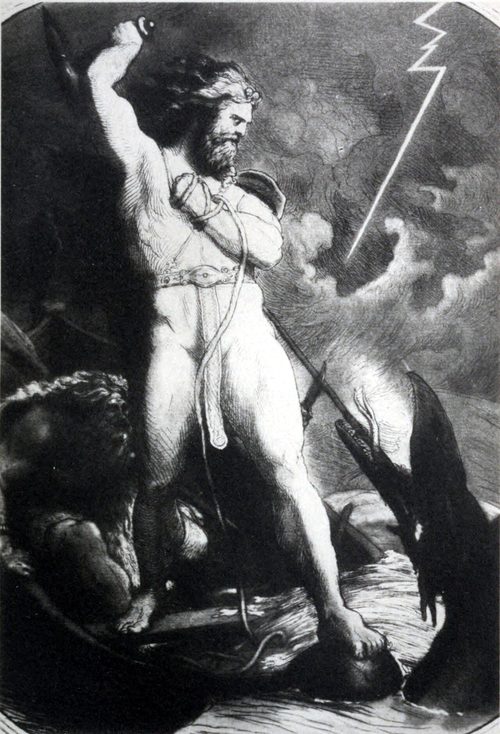 Thor Þórr
The thunder god, strongest of the Æsir: son of Odin and Earth, husband of Sif, and with his hammer Mjöllnir the gods' defender against the giants, until he dies killing the World Serpent.
Þrúðr
Daughter of Thor and Sif, known only from kennings. Poets called the giant Hrungnir 'Þrúðr's thief', hinting at a lost story of her abduction.
 Týr
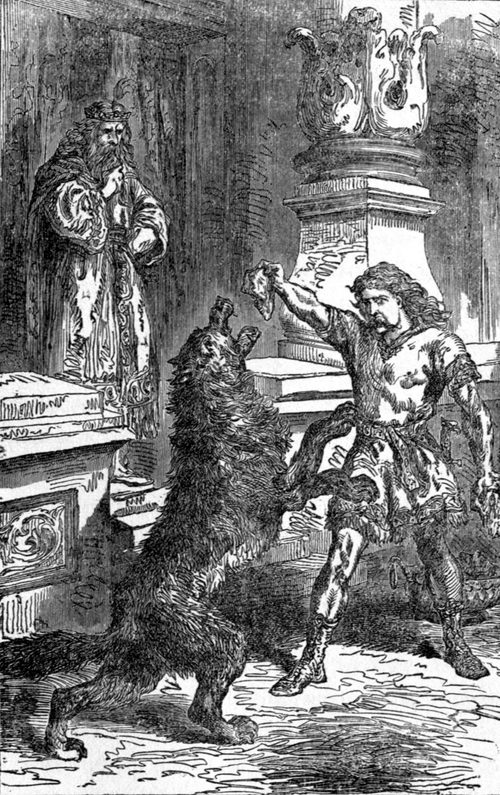
The one-handed god of battle and courage, who put his hand in the wolf Fenrir's mouth as a pledge so that the gods could bind it, and lost the hand.
Ullr
Sif's son and Thor's stepson, a god of the bow and the snowshoe whose many place-names hint at an importance the surviving myths no longer show.
 Váli
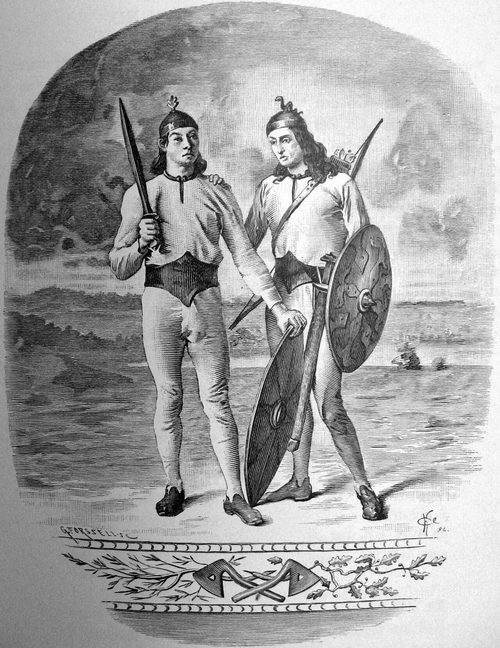
Odin's son by Rindr, born to avenge Baldr: at one night old, unwashed and uncombed, he killed Baldr's slayer Höðr. He survives Ragnarök.
Vár
The goddess who hears the oaths of men and women and punishes oath-breakers; in Þrymskviða the giant Thrym wants his bride blessed 'by the hand of Vár'.
 Víðarr
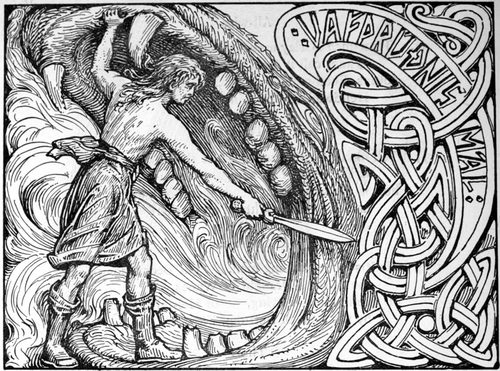
The silent son of Odin and the giantess Gríðr, nearly as strong as Thor. At Ragnarök he avenges his father by tearing apart the wolf Fenrir, and he survives into the new world.
Vili and Vé Vili ok Vé
Odin's two brothers, sons of Borr and Bestla. With Odin they killed Ymir, built the world from his body and gave life to the first humans, then all but vanish from the myths.
Vör
A wise and searching goddess from whom nothing can be hidden; she is known only from one sentence in Snorri's list of the Ásynjur.