
Stanza of the day
Loki spake:"Be silent, Tyr!for between two menFriendship thou ne'er couldst fashion;Fain would I tellhow Fenrir onceThy right hand rent from thee." Lokasenna 38
Norse mythology, from the sources
224 figures, places and things; 31 myths retold; and both Eddas in full, 1564 stanzas of the Poetic Edda and all of Snorri's Gylfaginning and Skáldskaparmál. Every quotation links to its line.
Ragnarök by Doepler, Emil Doepler (1905), public domain
Stanza of the day
Loki spake:"Be silent, Tyr!for between two menFriendship thou ne'er couldst fashion;Fain would I tellhow Fenrir onceThy right hand rent from thee." Lokasenna 38
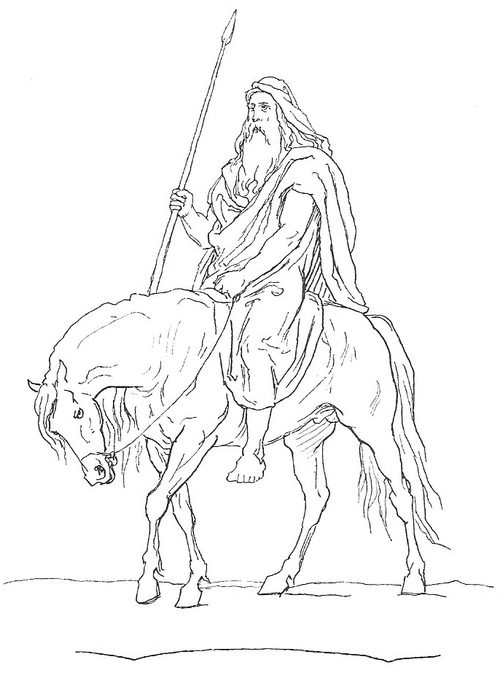 Odin Óðinn
Chief of the Æsir: a one-eyed god of wisdom, poetry, magic, war and the dead, who gave an eye and hanged himself on a tree for knowledge, and who dies at Ragnarök.
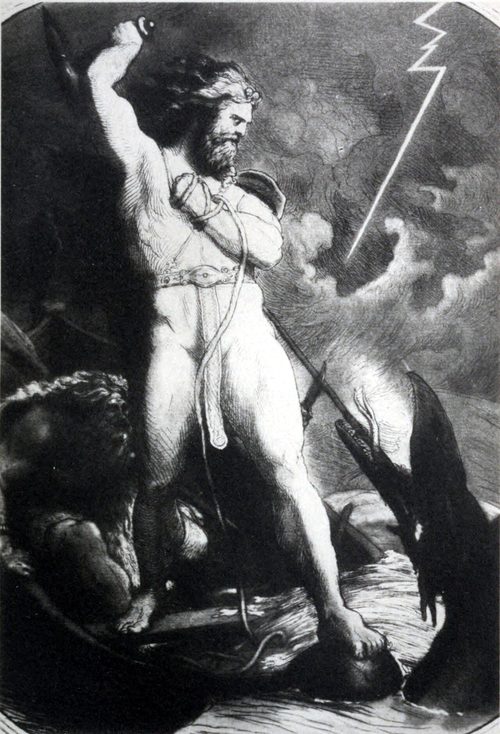 Thor Þórr
The thunder god, strongest of the Æsir: son of Odin and Earth, husband of Sif, and with his hammer Mjöllnir the gods' defender against the giants, until he dies killing the World Serpent.
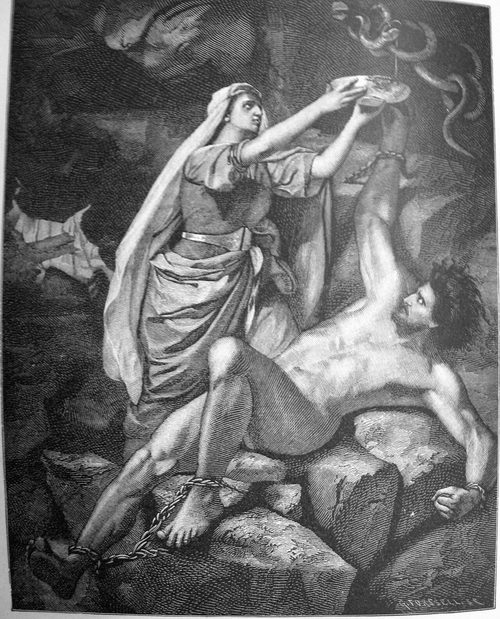 Loki
The giant-born trickster counted among the Æsir: father of Fenrir, the Midgard Serpent and Hel, contriver of Baldr's death, bound until Ragnarök.
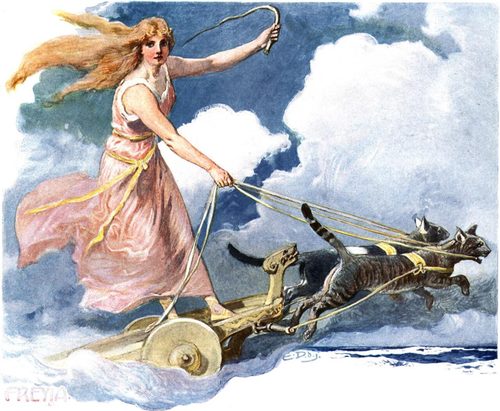 Freyja
The Vanir goddess of love, wealth and the slain: daughter of Njörðr, owner of the necklace Brísingamen, who takes half of those who fall in battle to her hall Fólkvangr.
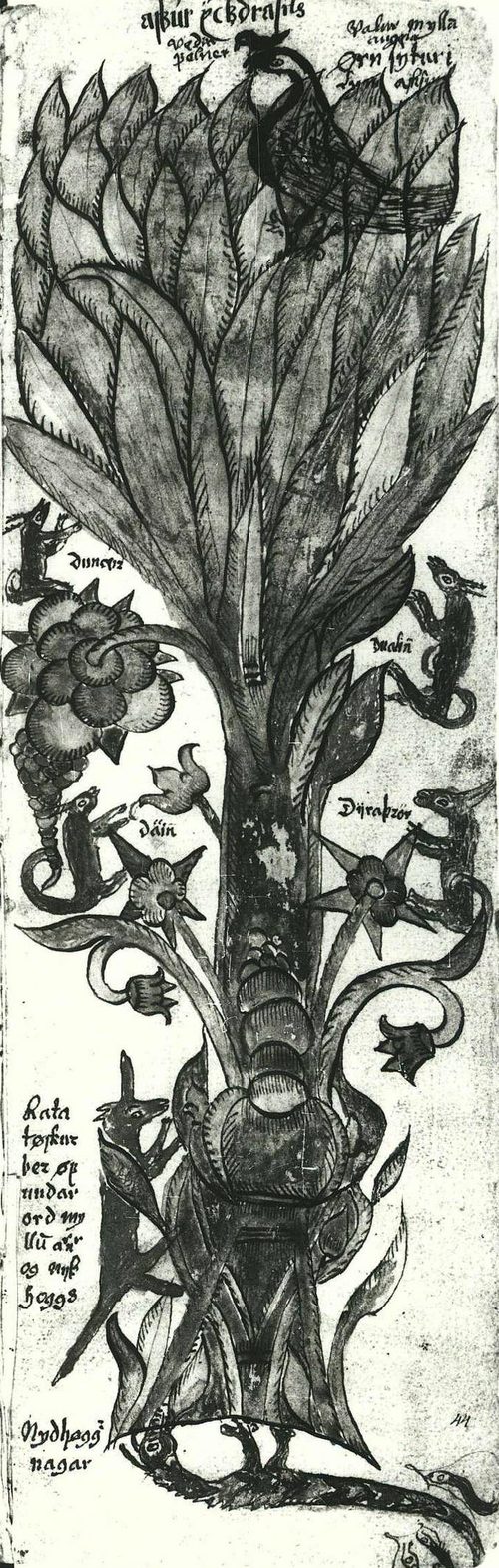
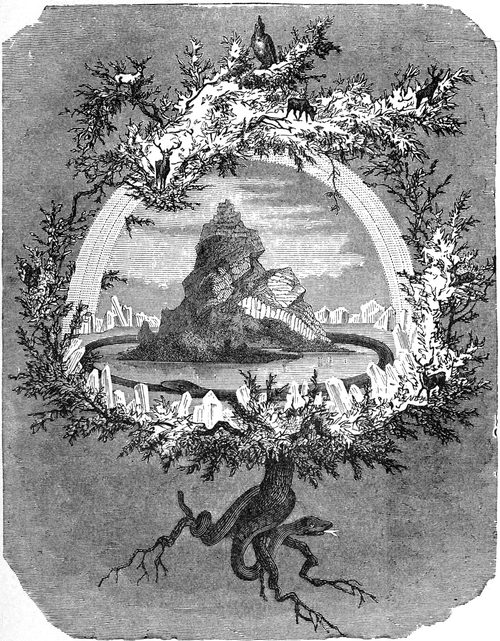 Yggdrasil Yggdrasill
The world-ash at the centre of the Norse cosmos: its roots reach the realms of gods, giants and the dead, and the gods hold court beneath it every day.
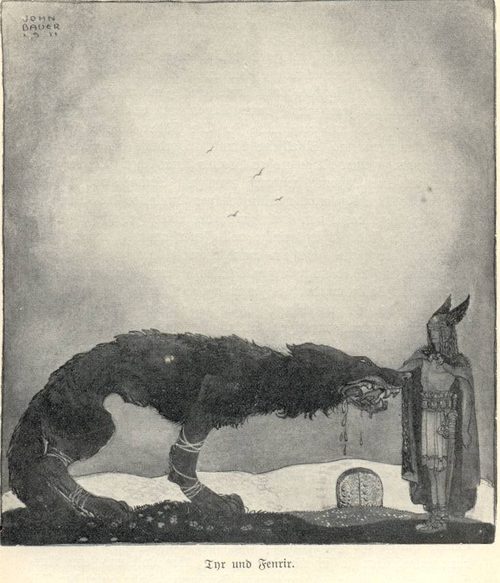 Fenrir
The giant wolf fathered by Loki on Angrboða, raised by the gods, bound with the fetter Gleipnir at the cost of Týr's hand, and fated to swallow Odin at Ragnarök.
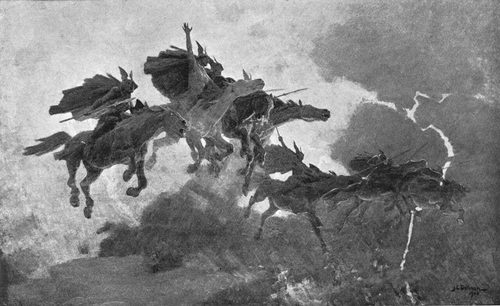 Valkyries valkyrjur
Odin's battle-maidens, who ride to war to decide who falls and bring chosen warriors to Valhalla; in the heroic poems some are also mortal princesses who love and protect a hero.
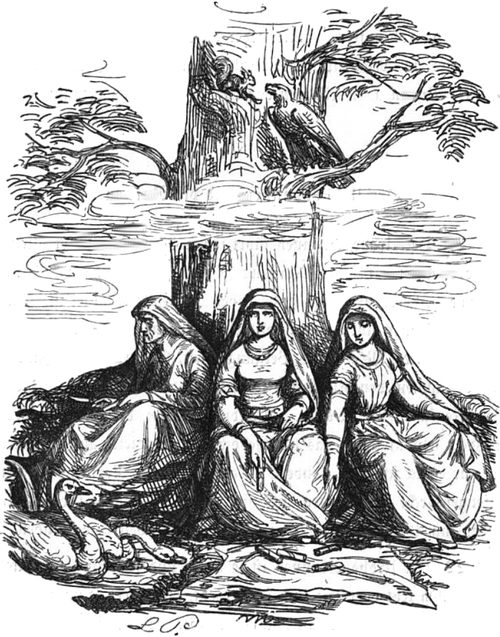 The Norns nornir
The female powers who fix the lives and deaths of gods and men: three named Norns by the well under Yggdrasil, and many lesser norns who come to every birth.
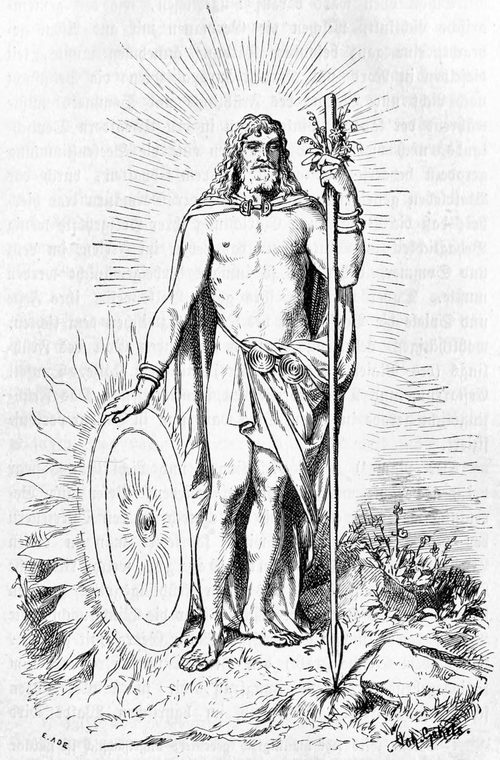 Baldr
Odin and Frigg's son, the brightest and best-loved of the gods. His death by a mistletoe dart, thrown by his blind brother Höðr, is the first great loss on the road to Ragnarök.
Mjölnir Mjöllnir
Thor's short-handled hammer, forged by the dwarf brothers Brokkr and Sindri: it never misses, always returns to his hand, kills giants, and hallows brides, pyres and the dead goats it brings back to life.
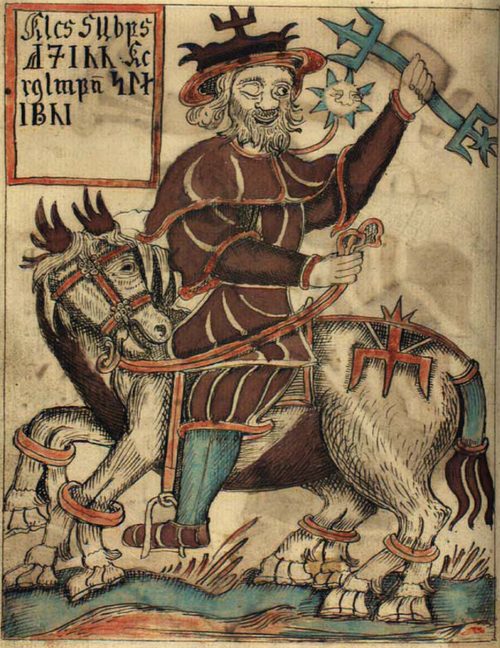 Sleipnir
Odin's grey, eight-legged horse, best of all steeds, foaled by Loki after he lured away the giant builder's stallion Svaðilfari.
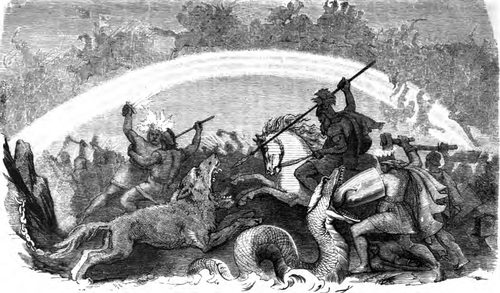 Ragnarök
The foretold end of the gods' world: wolves swallow sun and moon, Loki and the monsters break loose, the gods fall in battle, Surtr burns the earth, and a new world rises.
 The making of the world
Before anything existed there was only a yawning gap. Fire and ice met in it, the giant Ymir woke out of the melting rime, and Odin and his brothers killed him and built the world from his body.
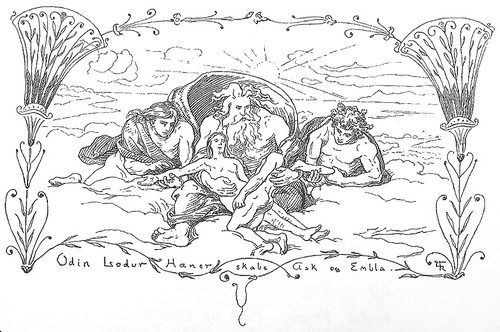 Ask and Embla: the first humans
Three gods walking by the shore find two lifeless pieces of wood, Ask and Embla, and give them breath, mind, warmth and colour. Völuspá and Snorri agree on the gifts but not on who gave them.
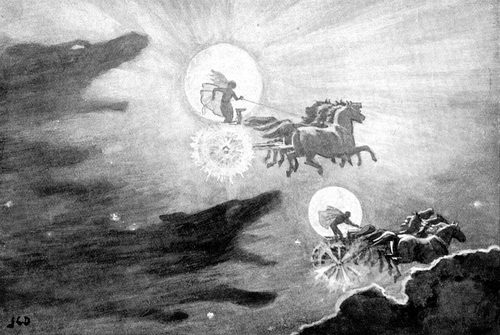 Sun, Moon, Night and Day
How the Norse sources explain the sky's clock: Night and Day ride round the world on two horses, the children of Mundilfari drive the sun and moon, and two wolves chase them until the end of the world.
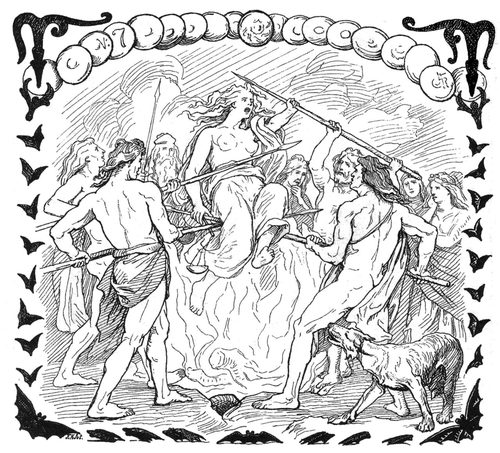 The war of the Æsir and the Vanir
The first war in the world, fought between the two families of gods. The surviving texts give only fragments — a witch burned three times, Odin's spear, a broken wall, a truce sealed with spittle and hostages — but they add up to the story of how the Vanir came to live among the Æsir.
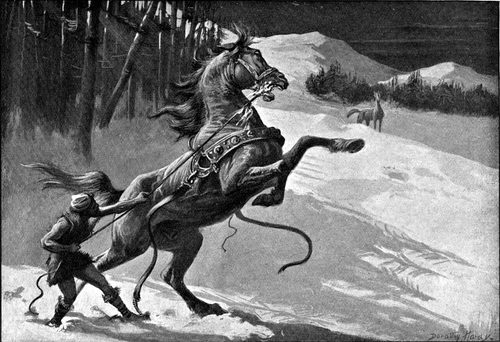 The giant builder and the wall of Asgard
A stranger offers to wall the gods' stronghold in a single winter, for the price of Freyja, the sun and the moon. When he is about to win, Loki saves the gods by turning himself into a mare — and gives birth to Sleipnir.
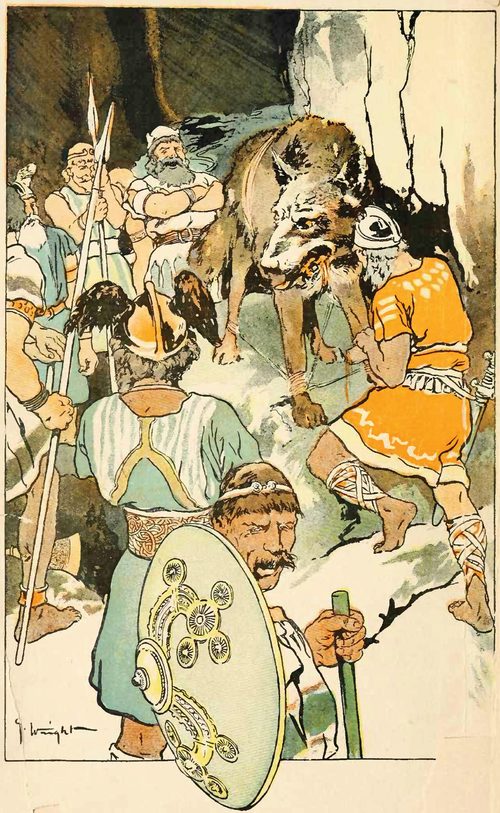 The binding of Fenrir
The gods raise Loki's wolf-son Fenrir at home until they fear him, then trick him into a magic fetter made of impossible things. Týr puts his hand in the wolf's mouth as a pledge, and loses it.
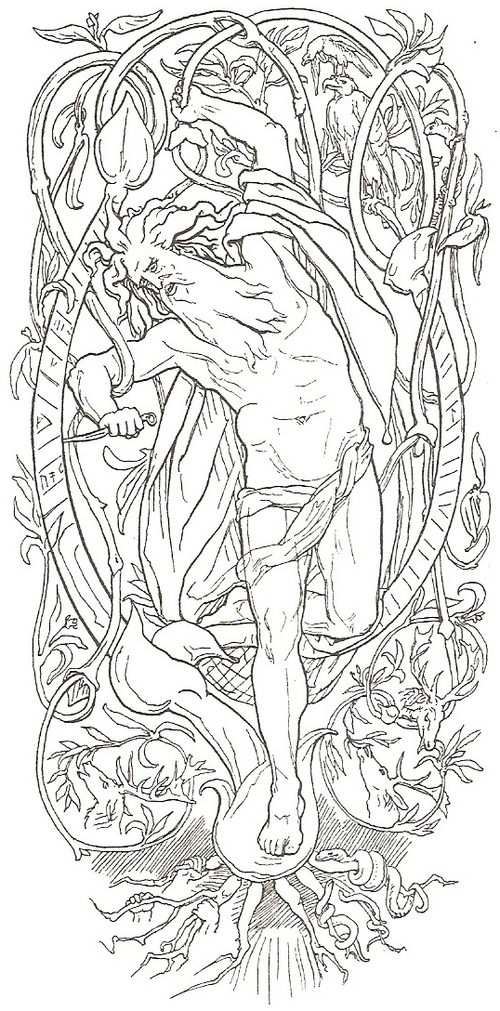 Odin on the tree: how the runes were won
In Hávamál Odin tells how he hung for nine nights on a windswept tree, wounded with a spear and given to himself, without food or drink, until he seized the runes and fell back. It is the most famous passage in Old Norse poetry, and one of the most mysterious.
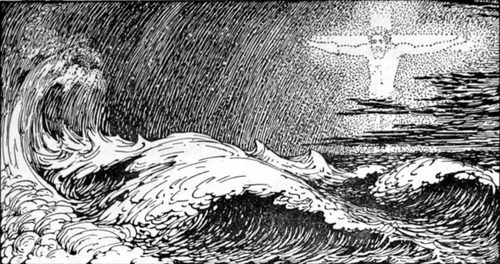 Odin's eye and Mímir's well
Odin gave one of his eyes as a pledge for a drink from the well of wisdom kept by Mímir. The sources tell it in a few lines, and the eye's hiding-place becomes one of the secrets the seeress of Völuspá throws back at the god.
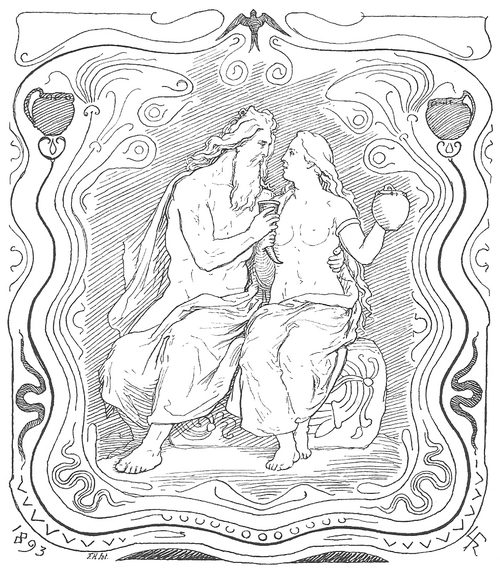 The mead of poetry
From the spittle of the gods' peace comes Kvasir, wisest of beings; from his blood two dwarfs brew a mead that makes poets. It passes to the giant Suttungr, and Odin wins it by labour, seduction and theft, flying home as an eagle.
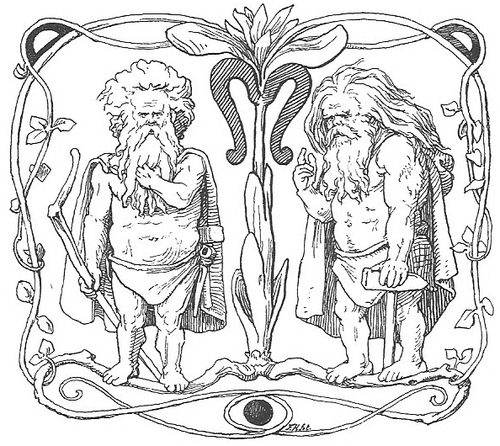 The treasures of the gods: Sif's hair and Brokkr's wager
Loki shaves Sif's head, and to save his own skin sets two families of dwarf-smiths competing. The result is six treasures — golden hair, a folding ship, a spear, a ring, a golden boar and Thor's hammer — and Loki's lips sewn shut.
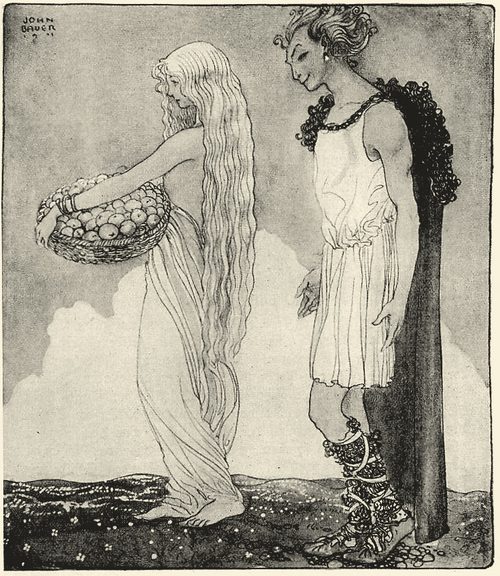 The theft of Iðunn and her apples
Caught by a giant in eagle's shape, Loki buys his freedom by luring Iðunn and her apples out of Asgard. The gods grow old, and Loki must steal her back as a falcon, with Þjazi beating after him.
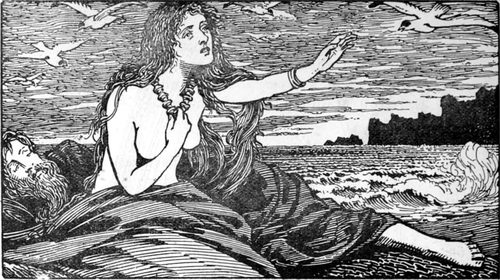 Skaði chooses a husband
Þjazi's daughter Skaði comes armed to Asgard for vengeance and accepts a settlement instead: a husband chosen by his feet, and a laugh. She picks Njörðr, hoping for Baldr, and the marriage of mountain and sea does not last.
Anonymous poems about gods and heroes, most of them preserved in one Icelandic manuscript of about 1270, the Codex Regius. Some may be centuries older than the parchment. Here in Henry Adams Bellows's 1923 translation, with his notes, every stanza numbered and linkable.
A handbook for poets written about 1220 by the Icelander Snorri Sturluson, who retold the myths so that the old kennings would still be understood. Here in Arthur Gilchrist Brodeur's 1916 translation.