Æsir
Víðarr
The silent son of Odin and the giantess Gríðr, nearly as strong as Thor. At Ragnarök he avenges his father by tearing apart the wolf Fenrir, and he survives into the new world.
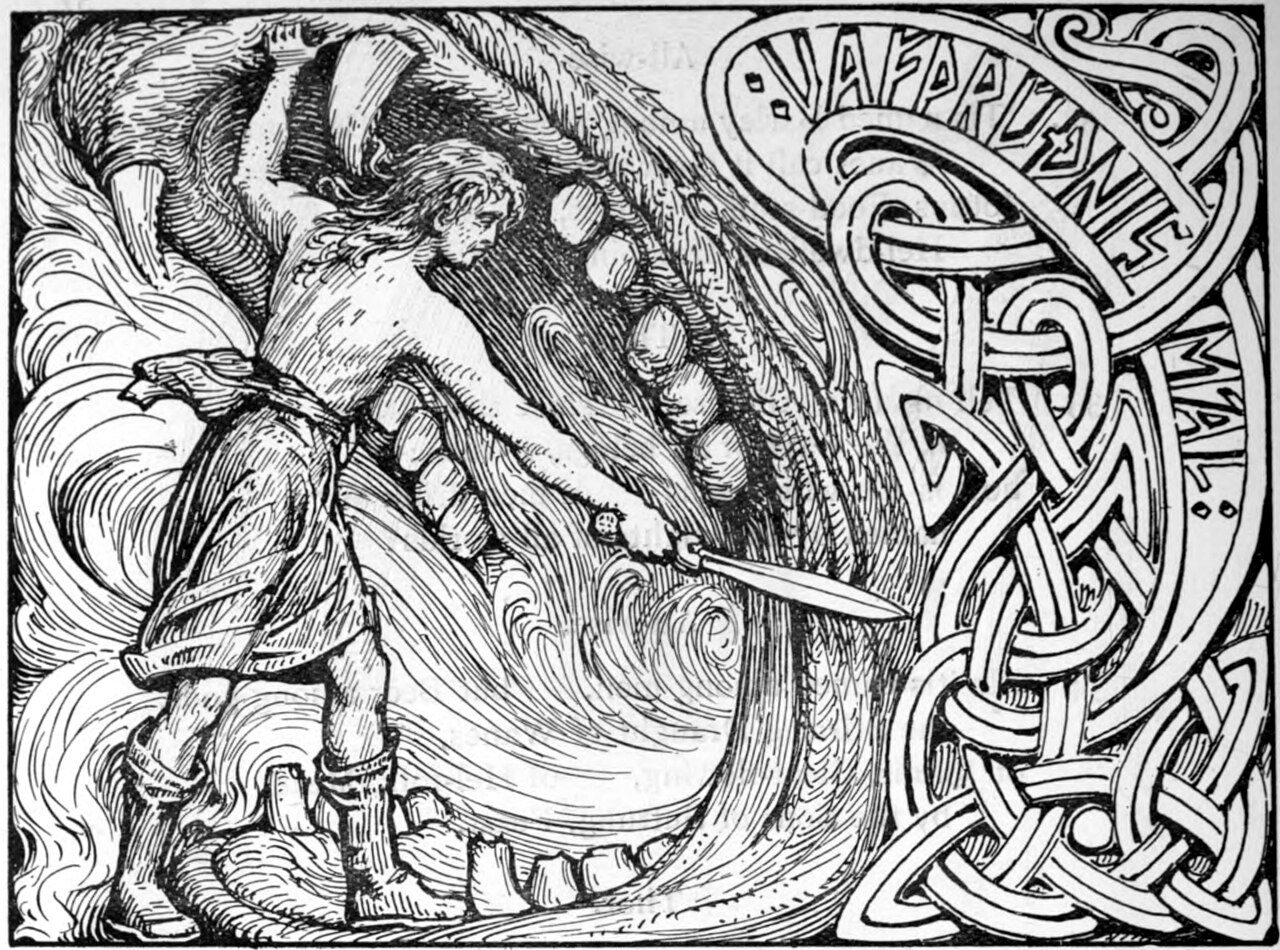
Víðarr is the god who avenges Odin. Snorri's introduction is short and odd: he is "the silent god. He has a thick shoe. He is nearly as strong as Thor; in him the gods have great trust in all struggles" Gylfaginning 29. His mother is the giantess Gríðr Skáldskaparmál 18.
The wolf
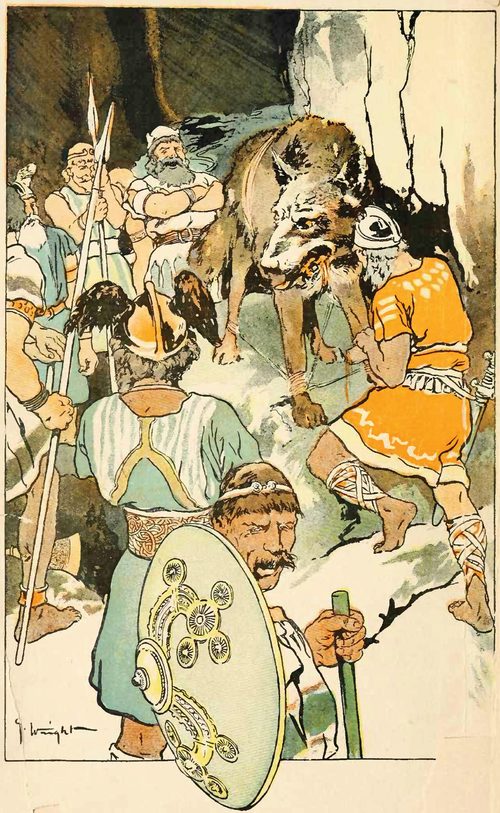
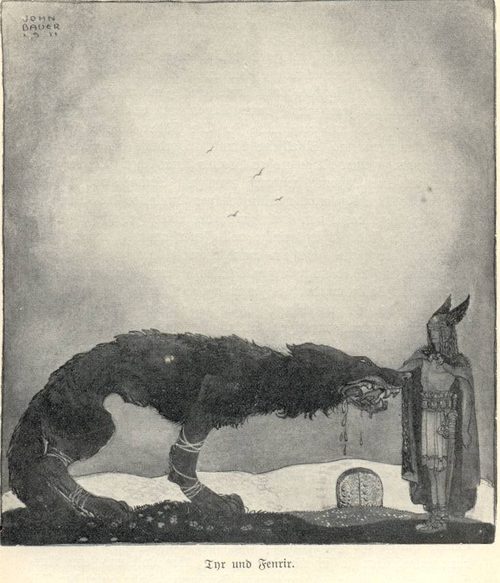
At Ragnarök Fenrir swallows Odin. Víðarr kills the wolf at once, and the sources describe how in three ways. Völuspá has him thrust a sword "full to the heart" of "the giant's son" Völuspá 54. In Vafþrúðnismál he tears the jaws apart Vafþrúðnismál 53. Snorri combines the images and adds the shoe: Víðarr sets one foot on the wolf's lower jaw, takes the upper jaw in his hand and tears the gullet apart Gylfaginning 51.
The wolf shall fell the father of men,And this shall Vithar avenge;The terrible jaws shall he tear apart,And so the wolf shall he slay.Vafþrúðnismál 53
The shoe, Snorri says, has been gathering material since the beginning of time: it is made of the scraps of leather that people cut from their shoes at the toe and heel, "therefore he who desires in his heart to come to the Æsir's help should cast those scraps away" Gylfaginning 51. Skáldskaparmál calls him "Possessor of the Iron Shoe" Skáldskaparmál 11, which does not quite match.
Grímnismál gives him a land, Viði, full of trees and tall grass, and recalls the son leaping from his horse there to avenge his father Grímnismál 17.
In Ægir's hall and after the end
Víðarr has one scene in the poems before Ragnarök. In Lokasenna, when Loki demands a seat at the feast, Odin tells Víðarr to stand and give the "wolf's father" his place Lokasenna 10, and Víðarr pours him a drink Lokasenna, prose 4. The scene hints at a careful pairing: Loki's son will kill Odin, and Víðarr will kill Loki's son.
Víðarr survives. "In the gods' home Vithar and Vali shall dwell, when the fires of Surt have sunk" Vafþrúðnismál 51, and Snorri says neither sea nor fire harmed them Gylfaginning 53.
A carved stone cross at Gosforth in Cumbria, from the tenth century, shows a figure holding open the jaws of a beast with one foot on its lower jaw; many scholars read it as Víðarr and Fenrir.
In the sources
Quoted from the hosted translations; each line is checked against the text when the site is built. Select a reference to read it in context.
Vídarr is the name of one, the silent god. He has a thick shoe. He is nearly as strong as Thor
Then comes Sigfather's mighty son, Vithar, to fight with the foaming wolf; In the giant's son does he thrust his sword Full to the heart: his father is avenged.
The wolf shall fell the father of men, And this shall Vithar avenge; The terrible jaws shall he tear apart
on that foot he has the shoe, materials for which have been gathering throughout all time
Filled with growing trees and high-standing grass Is Vithi, Vithar's land
Where the sources disagree or fall silent
- How Víðarr kills the wolf: with a sword to the heart (Völuspá 54), by tearing its jaws apart (Vafþrúðnismál 53), or by standing on its lower jaw and tearing the upper (Gylfaginning 51). Snorri quotes the Völuspá stanza right after his own version without noting the difference.
- Why he is called silent: no source explains it. A common guess links it to a vow of silence until vengeance is taken.