concept
Runes
rúnar
The letters of the old Germanic alphabets, used from about the 2nd century AD for inscriptions, and in myth the secret signs Odin won by hanging on the tree, carved for victory, healing and protection.
Runes are two things at once. They are a real alphabet, carved by real people on stone, wood, metal and bone for more than a thousand years. In the myths they are also secret signs of power, which Odin won by suffering and which the wise carve for victory, love, healing and protection. The Old Norse word rún covers both meanings. It means a letter, and it means a secret. This page keeps the history and the myth apart.
The historical alphabets
The runic alphabet is named the futhark after its first six letters, f, u, þ, a, r, k. The oldest form, the Elder Futhark, has 24 runes. The oldest generally accepted inscriptions date from around the 2nd century AD, mostly short texts on weapons, brooches and combs found in southern Scandinavia and northern Germany. The full row is carved on the Kylver stone from Gotland (c. 400). The letter shapes were adapted from a Mediterranean alphabet, most likely Latin or a northern Italic script, by people in contact with the Roman world. The angular shapes, with no horizontal strokes, are usually explained as suited to carving across the grain of wood.
During the 8th century, Scandinavians simplified the row to the 16-rune Younger Futhark, the alphabet of the Viking Age. Most of the several thousand runestones were raised in that period, the great majority in Sweden and many of them by Christians. They include the Rök stone in Östergötland, the longest runic inscription, and the Jelling stones, on which Harald Bluetooth claimed to have made the Danes Christian. In England and Frisia the row was expanded instead, into the Anglo-Saxon futhorc. Medieval Scandinavians went on using runes alongside the Latin alphabet. Hundreds of everyday messages carved on sticks have been found at Bryggen in Bergen, and in parts of rural Sweden runes were still written in the early modern period. Each rune had a name, preserved in the medieval rune poems: fé "wealth", úr, þurs "giant", óss "god", and so on.
Real inscriptions show the same mixture of the practical and the sacred as the poems. Most are names, memorials and owners' marks. Some carry charm-words or curses. One stone from about 600, at Noleby in Sweden, calls its rune "of divine origin". Hávamál uses the same expression of runes "that the gods so great have made" Hávamál 79.
How Odin won the runes
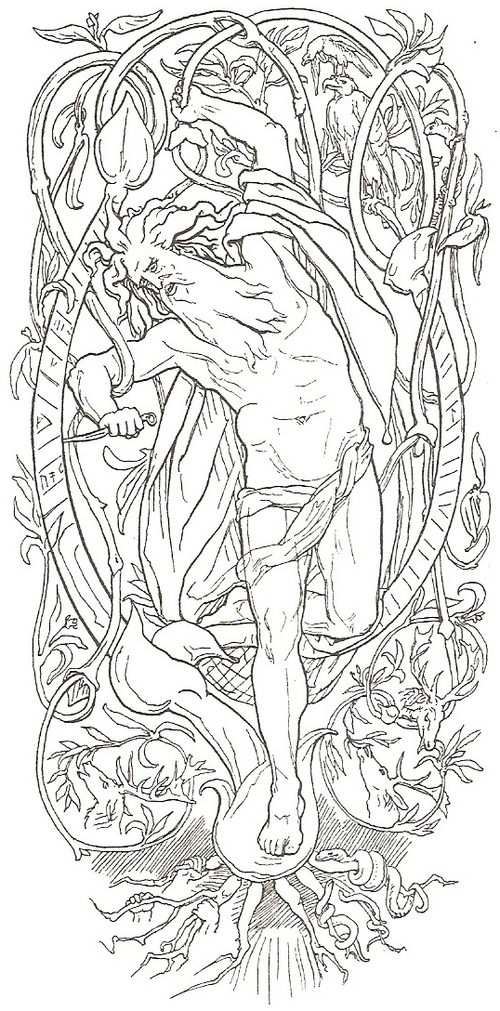
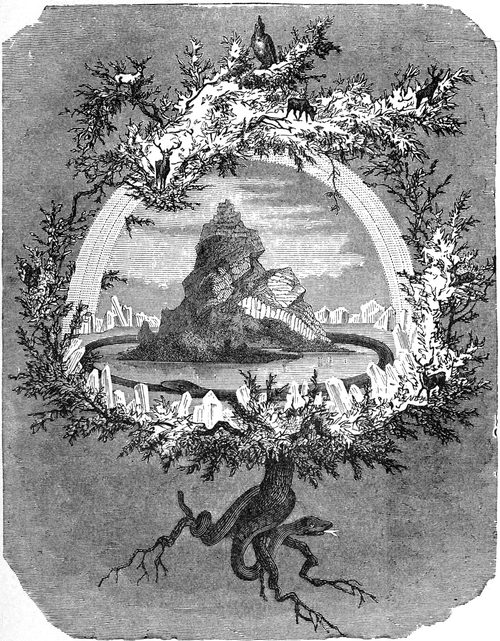
Hávamál tells, in Odin's own voice, how the runes came to him (see Odin on the tree: how the runes were won). He hung "on the windy tree … for nights full nine", wounded with a spear and "offered … to Othin, myself to myself" Hávamál 139. Then:
None made me happy with loaf or horn,And there below I looked;I took up the runes, shrieking I took them,And forthwith back I fell.Hávamál 140
The poem goes on to say that runes are "fateful signs, That the king of singers colored" Hávamál 143. In Bellows "colored" translates a word for painting, and real runestones were painted. It names who carved them for each race: "Othin for the gods, Dain for the elves, And Dvalin for the dwarfs" Hávamál 144. Then comes a set of questions about rune-craft: do you know how to write, to read, to tint, to test, to ask, to offer, to send, to sacrifice? Hávamál 145. The eighteen spells that follow are songs, not runes, with one exception: for the twelfth, Odin writes and colours runes so that a hanged man will come down and talk to him Hávamál 158. See Galdr.
Runes in the heroic poems
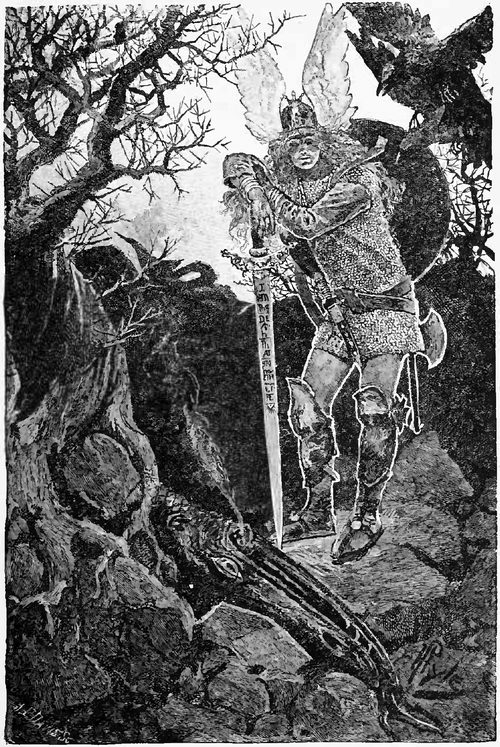
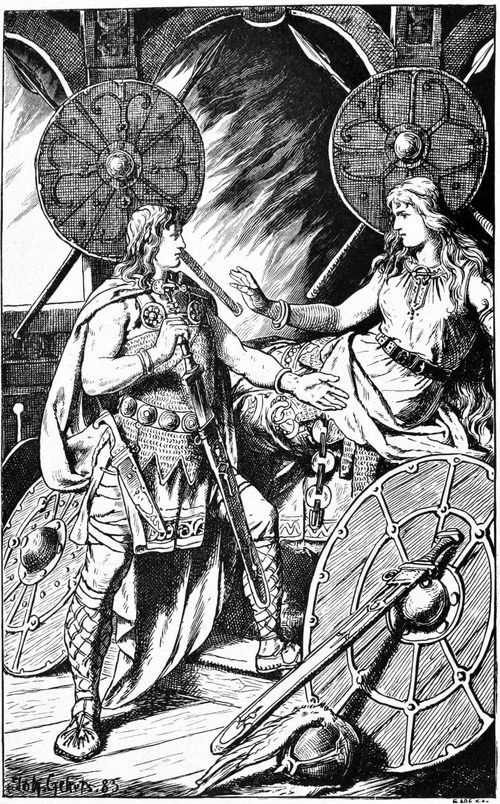
In Sigrdrífumál the valkyrie Sigrdrifa gives Sigurth a whole curriculum. Victory-runes go on the sword-hilt, with Tyr's name called twice Sigrdrífumál 6. Ale-runes go on the horn and the back of the hand, with "Need" marked on the nails Sigrdrífumál 7. Birth-runes are carved on the palms Sigrdrífumál 8, wave-runes on stem and rudder Sigrdrífumál 9, branch-runes for healing on bark Sigrdrífumál 10. Týr and Need (nauð) are also the names of the runes for t and n, so the poem may be naming letters as well as powers. It ends with an image of where runes came from: they were carved, then "shaved off … And mixed with the holy mead", and shared among gods, elves, Vanir and men Sigrdrífumál 18.
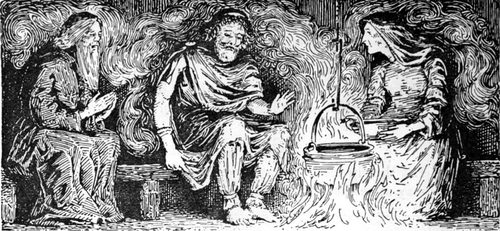
The same poems also show runes used simply as writing. In Atlamál, Guthrun sends her brothers a rune-message warning them not to come to Atli. The messenger Vingi alters it Atlamál in grœnlenzku 4. Hogni's wife Kostbera, "cunning in rune-craft", reads it by the fire and sees that the meaning has been twisted Atlamál in grœnlenzku 9 Atlamál in grœnlenzku 12. In Rígsþula, knowing runes is the mark of the nobleman Jarl and of his son Kon, the future king Rígsþula 36 Rígsþula 44.
The Eddic picture of rune-magic, then, is a craft of writing: carving, colouring, scraping, and saying words over what is carved. The poems never describe runes being cast or drawn for fortune-telling. Modern rune divination draws on Tacitus's account of Germanic lot-casting and on 20th-century inventions more than on the Eddas.
In the sources
Quoted from the hosted translations; each line is checked against the text when the site is built. Select a reference to read it in context.
None made me happy with loaf or horn, And there below I looked; I took up the runes, shrieking I took them, And forthwith back I fell.
Runes shalt thou find, and fateful signs, That the king of singers colored, And the mighty gods have made;
Winning-runes learn, if thou longest to win, And the runes on thy sword-hilt write;
Shaved off were the runes that of old were written, And mixed with the holy mead, And sent on ways so wide;
Wise was Kostbera, and cunning in rune-craft, The letters would she read by the light of the fire;
But Kon the Young learned runes to use, Runes everlasting, the runes of life;
Where the sources disagree or fall silent
- Which Mediterranean alphabet the runes were adapted from (Latin and northern Italic alphabets are the main candidates), and where and when the adaptation happened.
- Whether runes were ever used for divination in the pagan period: Tacitus describes lots marked with signs, but does not say they were runes.
- What the ritual detail of Sigrdrífumál 18 (runes shaved into mead) reflects in actual practice.
In modern culture
Not from the medieval sources.
Runes have had a long second career. The Austrian occultist Guido von List published an invented 18-rune 'Armanen' row in 1908, and Nazi organisations took rune forms as emblems (the SS's double 'sig' rune); some of these signs are still used by far-right groups, which colours how runes are seen today. Rune divination with marked stones was popularised by Ralph Blum's The Book of Runes (1982), which added a blank rune with no medieval precedent. Tolkien used Old English runes on Thror's map in The Hobbit (1937). The Bluetooth logo joins the Younger Futhark runes for H and B, the initials of the 10th-century Danish king Harald Bluetooth.