A myth retold · about 5 minutes
The world reborn
After Ragnarök a green earth rises from the sea. Surviving gods meet on Iðavöllr, Baldr returns from Hel, two humans come out of hiding, and a new sun rides the sky. The sources do not agree on who survives.
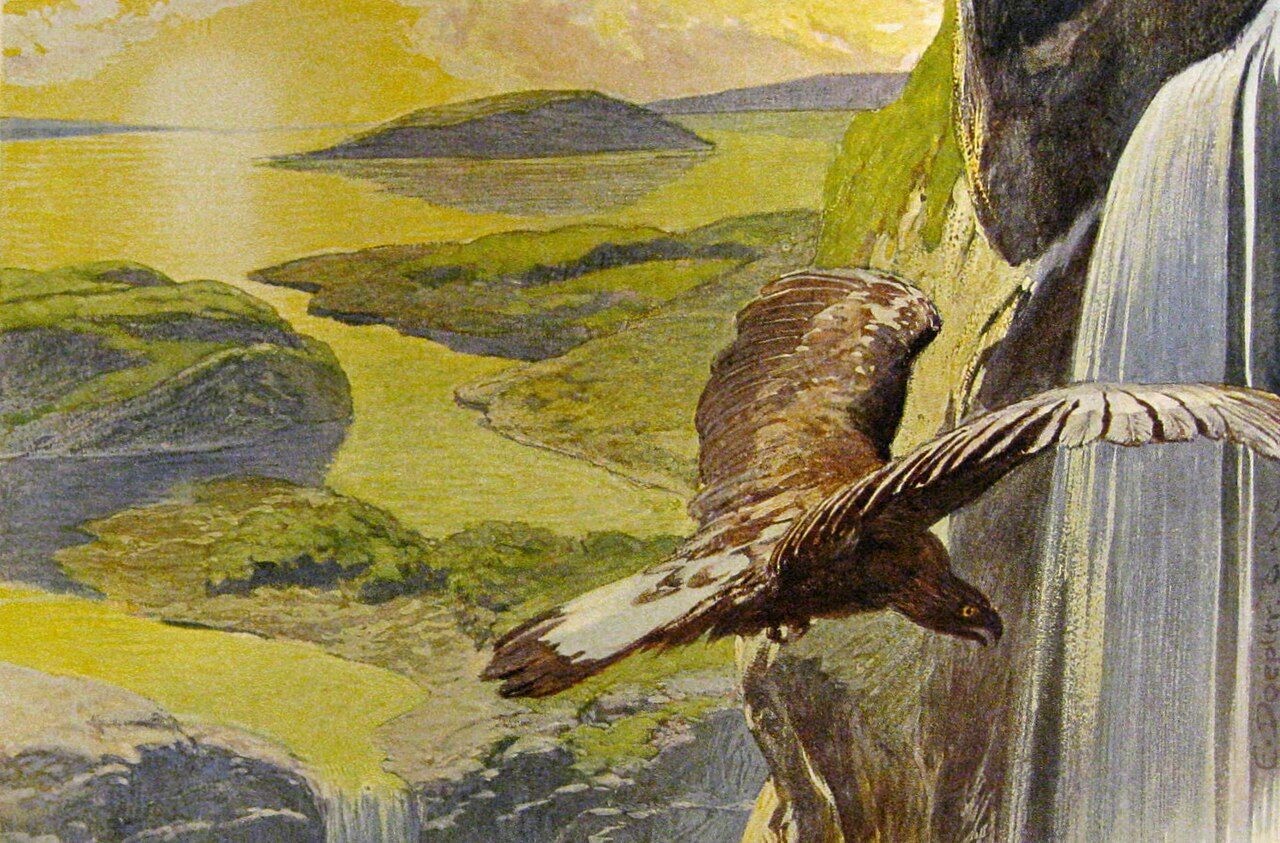
Ragnarök is not quite the end. After the sun turns black and the earth sinks into the sea Völuspá 57, the poems and Snorri all see something come after: a second world, washed clean, with a few gods and two humans to live in it. The sources agree on the shape of this new world but differ on who is in it. The retelling below follows Völuspá and brings in Vafþrúðnismál and Snorri's Gylfaginning where they add to it.
The green earth
The seeress who has just described the fire looks again:
Now do I see the earth anewRise all green from the waves again;The cataracts fall, and the eagle flies,And fish he catches beneath the cliffs.Völuspá 59
Snorri repeats this in prose. The earth comes up from the sea "green and fair", and crops grow there without being sown Gylfaginning 53. Völuspá says the same of the fields: "fields unsowed bear ripened fruit, All ills grow better" Völuspá 62.
The gods who return
On Iðavöllr, the plain where the gods built their first halls, the surviving gods meet. They talk about the "terrible girdler of earth", the world serpent, and remember the mighty past and the ancient runes of Odin Völuspá 60. In the grass they find the golden tables (or game-pieces) the gods owned in the beginning Völuspá 61. In Snorri these are "golden chess-pieces" Gylfaginning 53, and they recall the opening of the poem, where the gods "played at tables" in their golden age at Iðavöllr Völuspá 7-8.
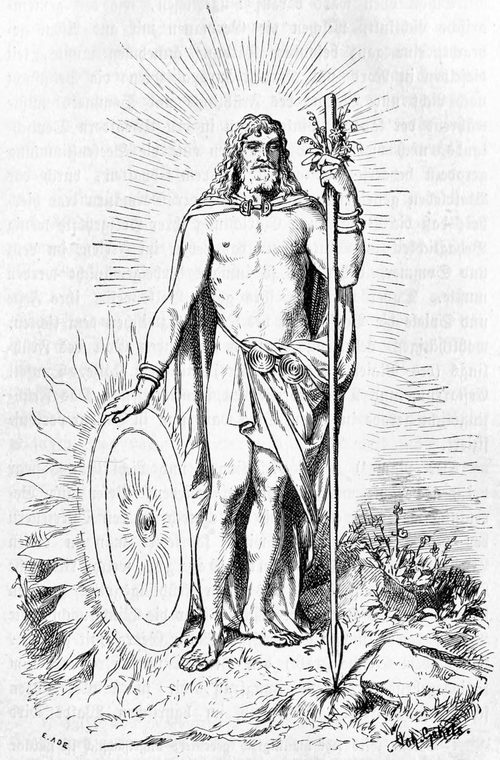
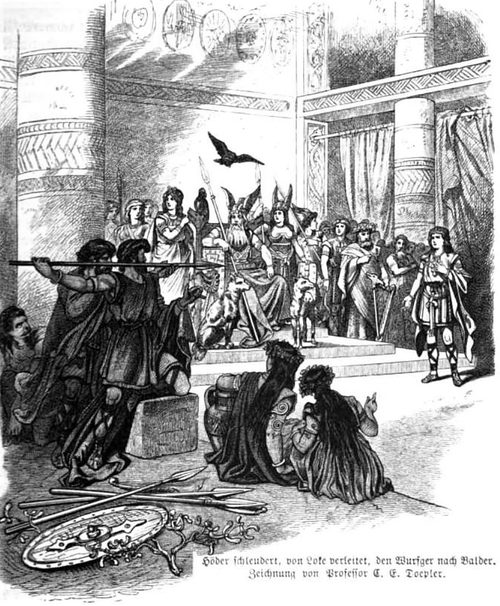
Baldr comes back from Hel, and with him Höðr, the brother who killed him. The two live together in Odin's battle-hall Völuspá 62. Hœnir takes up the wand of prophecy, and "the sons of the brothers of Tveggi" (Tveggi being a name of Odin) live in Vindheim, "the wind's home" Völuspá 63.
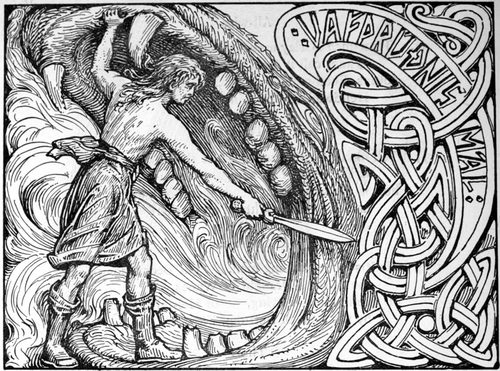
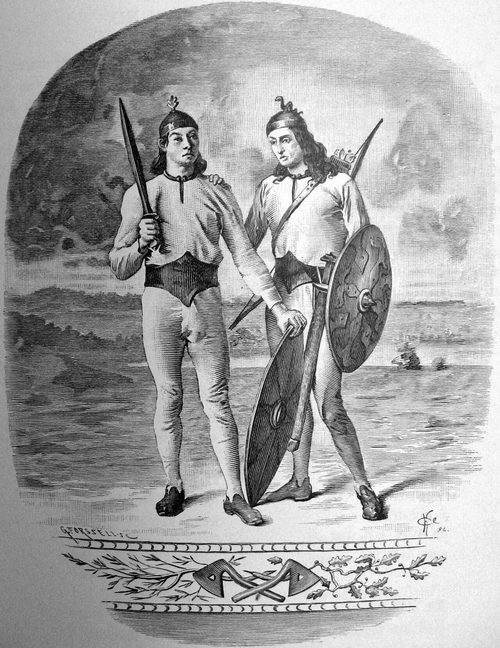
Vafþrúðnismál gives a different list. When Odin asks who will rule the gods' realm "when the fires of Surt have sunk", the giant names Víðarr and Váli, the two avenger-sons of Odin, and Thor's sons Móði and Magni, who will inherit Mjöllnir after their father falls Vafþrúðnismál 51. Snorri puts both lists together: Víðarr and Váli survive, unharmed by sea or fire, and settle on Iða-Plain where Ásgard once stood; Móði and Magni come with Mjöllnir; then Baldr and Höðr come from Hel, and they all sit together and talk of the Midgard Serpent and Fenrir Gylfaginning 53.
People and a new sun
Völuspá says nothing of human survivors. Vafþrúðnismál does:
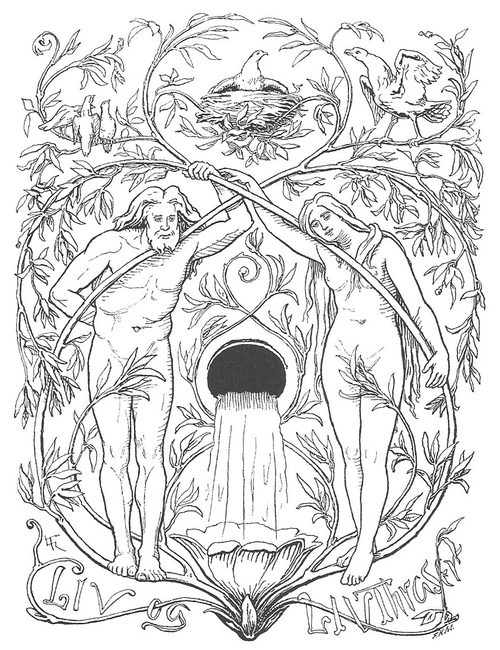
Vafthruthnir spake:"In Hoddmimir's wood shall hide themselvesLif and Lifthrasir then;The morning dews for meat shall they have,Such food shall men then find."Vafþrúðnismál 45
Snorri adds that they lie hidden "during the Fire of Surtr", and that their children will fill the world Gylfaginning 53. The names are usually translated "life" and "eager for life"; see Líf and Lífþrasir.
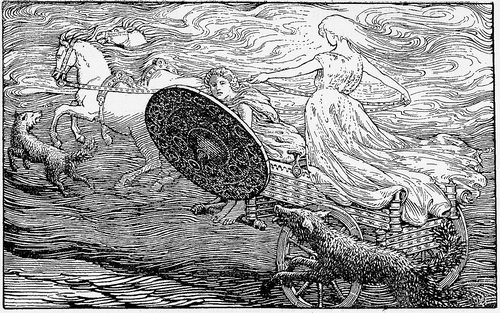
The sky also gets a new light. The sun, Sól, is swallowed at Ragnarök, but before that happens she bears a daughter as bright as herself, and the daughter rides her mother's road Vafþrúðnismál 46-47. Snorri tells this as one more wonder Gylfaginning 53.
The hall on Gimlé
Völuspá's vision climbs higher:
More fair than the sun, a hall I see,Roofed with gold, on Gimle it stands;There shall the righteous rulers dwell,And happiness ever there shall they have.Völuspá 64
Then "a mighty lord" comes "on high, all power to hold", who rules all lands Völuspá 65. The rest of the stanza is missing. And the last image is not peaceful at all. The dragon Níðhöggr comes flying up from below, from the dark hills, carrying the bodies of the dead on his wings, and the seeress sinks back into silence Völuspá 66.
Where the story comes from
There are three main witnesses. Völuspá (stanzas 59–66), probably about the year 1000, gives the new earth, Iðavöllr, the returning gods, Gimlé, the mighty lord and Níðhöggr. Vafþrúðnismál gives the survivors as answers in a wisdom contest: Líf and Lífþrasir Vafþrúðnismál 45, the sun's daughter Vafþrúðnismál 47, the four younger gods Vafþrúðnismál 51, and three throngs of protecting maidens who come "of the giants' kin" Vafþrúðnismál 49. It also says that Njörðr will go home to the Vanir "at the fall of the world" Vafþrúðnismál 39. Snorri's Gylfaginning 52–53 (c. 1220s) unites the two poems.
Where they differ:
- Who survives. Völuspá names Baldr, Höðr and Hœnir Völuspá 62-63; Vafþrúðnismál names Víðarr, Váli, Móði and Magni Vafþrúðnismál 51. Neither list contains the other. Snorri simply includes everyone Gylfaginning 53.
- Human survivors. Only in Vafþrúðnismál and Snorri. Völuspá has none.
- Gimlé. In Völuspá the golden hall appears only in the new world Völuspá 64. Snorri makes it a hall that already stands in heaven and "shall stand when both heaven and earth have departed" Gylfaginning 17. He says the All-Father receives the just there after death Gylfaginning 3, and calls it the best place to be after the fire Gylfaginning 52.
- The halls of the dead. Völuspá describes the gold hall of Sindri's race, Brimir's beer-hall and the snake-hall on Náströnd before Ragnarök in the poem Völuspá 37-39. Snorri moves all of them to the time after the fire, as places of reward and punishment Gylfaginning 52.
- Níðhöggr. Völuspá ends with the dragon in flight Völuspá 66. Snorri does not mention it in the new world.
Hyndluljóð, in its short Völuspá-like passage, also looks beyond the end: "Then comes another, a greater than all, Though never I dare his name to speak" Hyndluljóð 45.
Reading it today
Two stanzas draw most of the debate. The "mighty lord" of Völuspá 65 is read by many scholars as Christ or the Christian God, and the stanza has sometimes been thought a later addition. Others argue it could be a native idea. The unnamed "greater than all" of Hyndluljóð has received the same readings. Níðhöggr's flight is just as disputed. Some read it as evil surviving into the new world. Others think the dragon is leaving, or that the seeress has returned from the future to her own grim present as she sinks. That the world rises again also distinguishes Norse myth from purely final apocalypses, though some scholars suspect Christian influence here too. The cyclical reading, in which the world will end and rise more than once, is a modern interpretation; the sources describe one renewal only.
Key passages
Now do I see the earth anew Rise all green from the waves again
Then fields unsowed bear ripened fruit, All ills grow better, and Baldr comes back
In Hoddmimir's wood shall hide themselves Lif and Lifthrasir then
In the gods' home Vithar and Vali shall dwell, When the fires of Surt have sunk; Mothi and Magni shall Mjollnir have
In that time the earth shall emerge out of the sea, and shall then be green and fair; then shall the fruits of it be brought forth unsown.
From below the dragon dark comes forth, Nithhogg flying from Nithafjoll