A myth retold · about 5 minutes
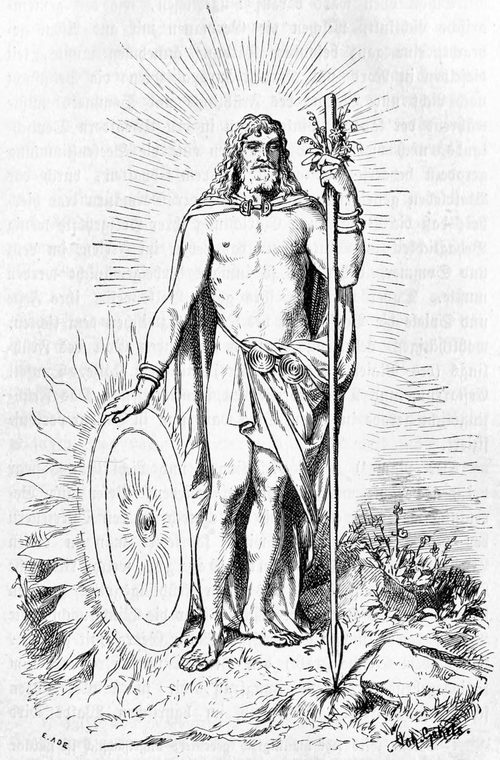
Odin as Grímnir between the fires
To win a wager with Frigg, Odin visits his foster-son King Geirröðr in disguise and is tortured between two fires for eight nights. Given a drink by the king's young son, he pours out a vision of the gods' halls and the world-tree, then reveals himself, and the king falls on his own sword.
Grímnismál is mostly a catalogue: of the gods' homes, of the rivers of heaven, of the creatures of the world-tree and of Odin's own names. But the catalogue is spoken by a god who has been tortured for eight nights, and it is framed by a sharp little story of rivalry between Odin and Frigg that ends in a king's death.
Two foster-sons
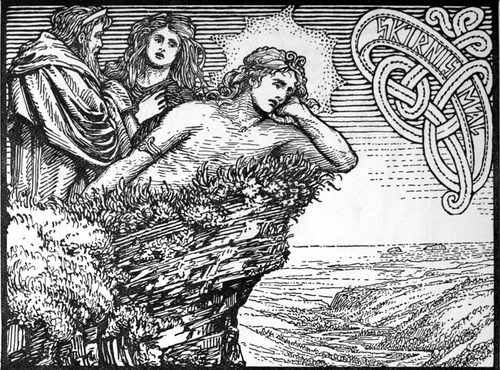
King Hrauðungr had two sons, Agnarr, aged ten, and Geirröðr, aged eight. Out fishing in a small boat, they were blown out to sea and wrecked in the dark on a strange shore. A poor couple took them in for the winter: the woman looked after Agnarr, the man after Geirröðr, and taught him wisdom. In spring the man gave them a boat, and as they set off he spoke privately with Geirröðr. They reached their father's landing-place. Geirröðr, in the bow, jumped ashore, pushed the boat back out and said, "Go thou now where evil may have thee!" The boat drifted away with Agnarr in it. Geirröðr went up to the house, found his father dead, and was made king Grímnismál, prose 1.
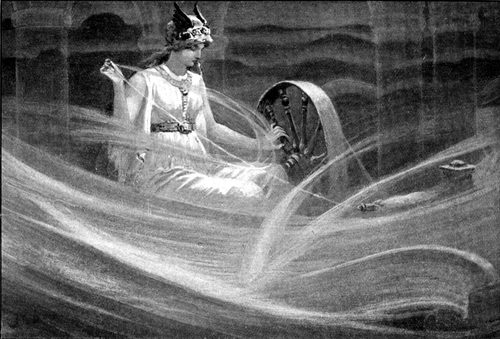
The prose never says so outright, but the poor couple were evidently Odin and Frigg. Sitting in Hliðskjálf, from which they could see all the worlds, Odin taunted his wife:
Seest thou Agnar, thy fosterling, how he begets children with a giantess in the cave? But Geirröth, my fosterling, is a king, and now rules over his land.Grímnismál, prose 2
Frigg answered that Geirröðr was so stingy that he tortured his guests if he thought too many came. Odin called it the greatest of lies, and they made a bet Grímnismál, prose 2.
The man the dogs would not touch
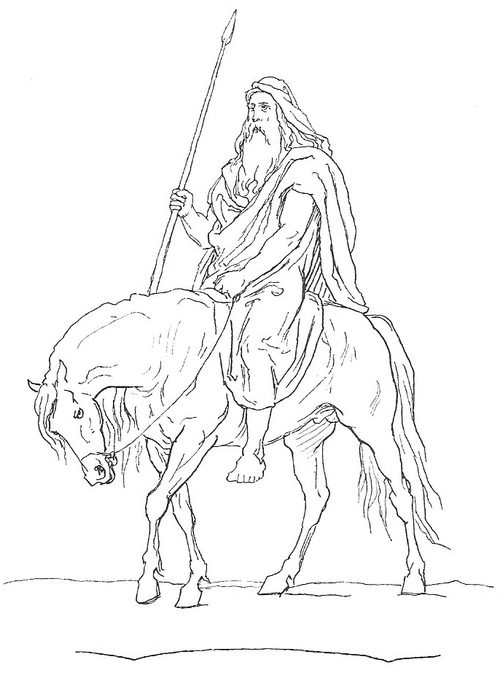
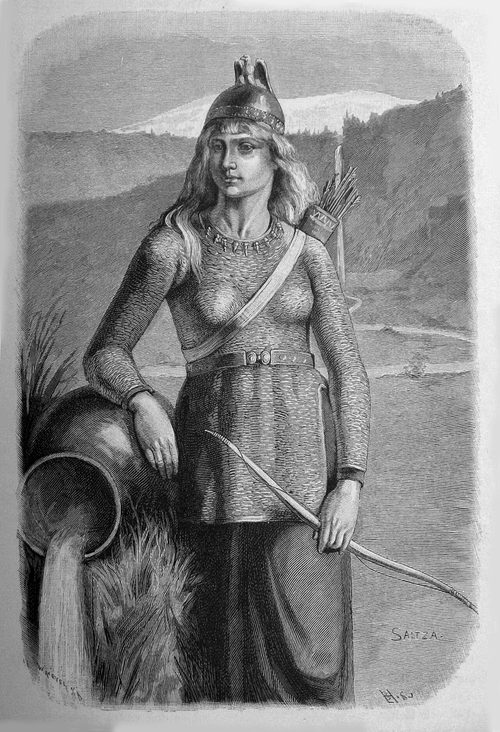
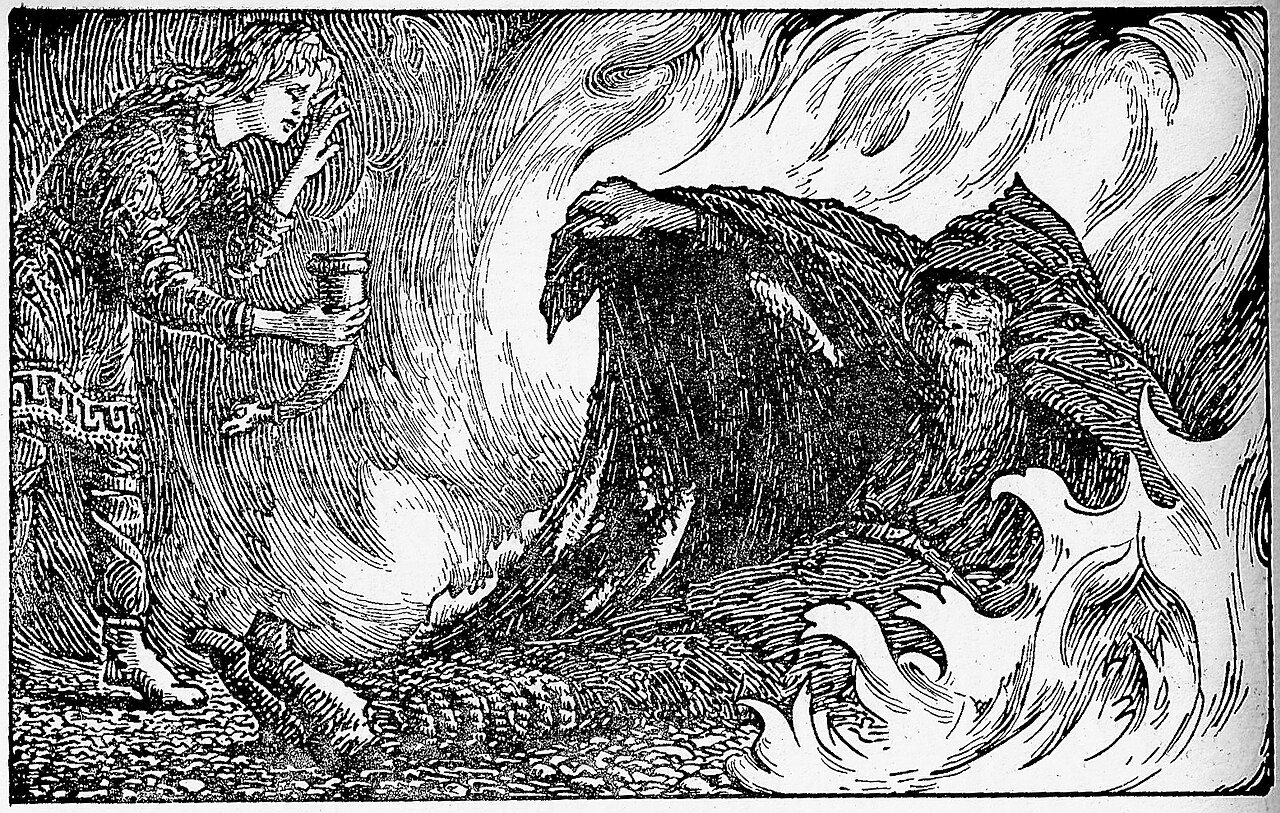
Frigg sent her servant Fulla to King Geirröðr with a warning: a sorcerer had come into his land to bewitch him, and he could be known by this sign, that no dog was fierce enough to attack him. The prose admits it was a great slander that Geirröðr was inhospitable, but the king had the man arrested whom the dogs would not touch. He wore a dark-blue cloak and called himself Grímnir ("the masked one"), and would say nothing more. To make him talk the king set him between two fires, and he sat there for eight nights Grímnismál, prose 2.
The king had a son, ten years old, named Agnarr after his lost uncle. The boy went to Grímnir with a full horn and gave him a drink, saying his father did wrong to torment an innocent man. The fire had come so close that Grímnir's cloak was burning Grímnismál, prose 2. Then he spoke.
The vision
Hot art thou, fire! too fierce by far;Get ye now gone, ye flames!The mantle is burnt, though I bear it aloft,And the fire scorches the fur.'Twixt the fires now eight nights have I sat,And no man brought meat to me,Save Agnar alone, and alone shall ruleGeirröth's son o'er the Goths.Grímnismál 1-2
For his single drink, he told Agnarr, the boy would never get a greater reward Grímnismál 3. What follows is the reward: a tour of the divine world.
He named the homes of the gods one after another: Thor's in Þrúðheimr; Ullr's Ýdalir; Álfheimr, given to Freyr as a tooth-gift; Sökkvabekkr where Odin and Sága drink from golden cups; Glaðsheimr with the gold-bright hall of Valhalla, roofed with shields and raftered with spears Grímnismál 4-10. Þrymheimr, once Þjazi's and now Skaði's; Breiðablik, where Baldr lives in a land free of evil; Himinbjörg, where Heimdallr drinks good mead; Fólkvangr, where Freyja chooses half of the slain and Odin takes the other half Grímnismál 11-14.
He told how Odin feeds his food to his wolves and lives on wine alone Grímnismál 19, and how his two ravens fly out over the world each day:
O'er Mithgarth Hugin and Munin bothEach day set forth to fly;For Hugin I fear lest he come not home,But for Munin my care is more.Grímnismál 20
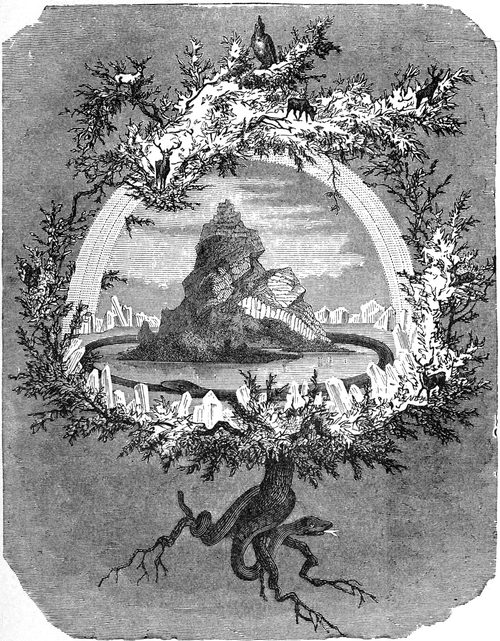
He counted the doors of Valhalla, five hundred and forty, through each of which eight hundred warriors will march out to fight the wolf; and the rooms of Thor's hall Bilskirnir, the greatest house he had seen Grímnismál 23-24. He named the goat and the hart that stand by Valhalla and bite the branches of the tree Læraðr, and the long list of rivers that flow from the hart's horns Grímnismál 25-28. He described Yggdrasil, its three roots, the squirrel running up and down it, the harts and serpents gnawing it, and the "great evil" it suffers Grímnismál 31-35. He told how the world was made from Ymir's body Grímnismál 40-41 and listed the best of everything: Yggdrasil of trees, Skíðblaðnir of ships, Odin of gods, Sleipnir of horses Grímnismál 44.
Then he hinted at himself. He had raised his face to the gods, he said, and the message had gone out to all who drink at Ægir's benches Grímnismál 45. He began to recite his names, dozens of them: Grímr, Gangleri, Herjann, Hárbarðr and the rest. "A single name have I never had", he said, and "Grimnir they call me in Geirröth's hall" Grímnismál 46-50.
The sword on the king's knee
The tone changed. Geirröðr, he said, was drunk, and had lost the favour of Odin and all his warriors. "Now come to me if thou canst!" Grímnismál 51-53 And finally:
Now am I Othin, Ygg was I once,Ere that did they call me Thund;Grímnismál 54
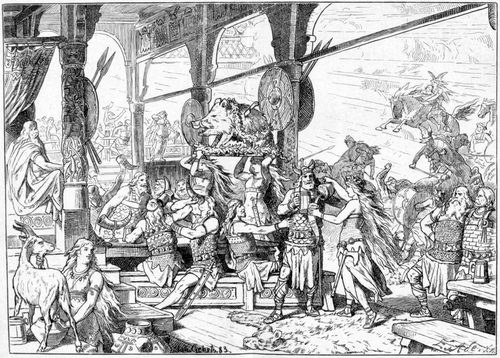
King Geirröðr had been sitting with his sword half-drawn across his knees. When he heard that it was Odin, he jumped up to pull him from the fire. The sword slipped from his hand and fell hilt-down; the king tripped and fell forward onto it, and it ran him through. Odin vanished, and Agnarr ruled there as king for a long time Grímnismál, prose 3.
Where the story comes from
Grímnismál is in the Codex Regius (around 1270), with the prose frame. The verses are generally thought to be older than the prose, and the prose story may have been added by a compiler to explain them. Snorri does not tell the frame story at all, but he quotes the poem more than almost any other in his account of the gods' world in Gylfaginning, sometimes disagreeing with it: Grímnismál places Hel, the frost-giants and mankind under Yggdrasil's three roots Grímnismál 31, while Snorri puts the roots among the Æsir, the frost-giants and over Niflheimr Gylfaginning 15. Nothing else in the Eddas mentions Agnarr or King Geirröðr; the king is unrelated to the giant Geirröðr whom Thor kills (Thor in the hall of Geirröðr).
There is also an awkward point inside the frame: the prose calls Frigg's charge "a very great slander", yet the king does torture his guest Grímnismál, prose 2. Frigg wins the wager by planting the suspicion that makes it come true.
Reading it today
The scene of a god suffering between fires until he speaks visions has invited comparison with Odin's other ordeals, especially his nine nights hanging on the tree in Hávamál (see Odin on the tree: how the runes were won). Scholars have read the eight nights of fasting and heat as a picture of the kind of ordeal that brings ecstatic knowledge, and the poem as a revelation granted to the one person, a child, who shows hospitality. Hospitality is the poem's moral centre: the king who fails it dies on his own sword; the boy who offers a drink gets a kingdom.
Key passages
Seest thou Agnar, thy fosterling, how he begets children with a giantess in the cave? But Geirröth, my fosterling, is a king, and now rules over his land.
The king had him tortured to make him speak, and set him between two fires, and he sat there eight nights.
'Twixt the fires now eight nights have I sat, / And no man brought meat to me, / Save Agnar alone
O'er Mithgarth Hugin and Munin both / Each day set forth to fly
Now am I Othin, Ygg was I once, / Ere that did they call me Thund
The king stumbled and fell forward, and the sword pierced him through, and slew him.