giant
Angrboða
The giantess in Jötunheim with whom Loki fathered Fenrir, the Midgard Serpent and Hel; the sources name her and say almost nothing else.
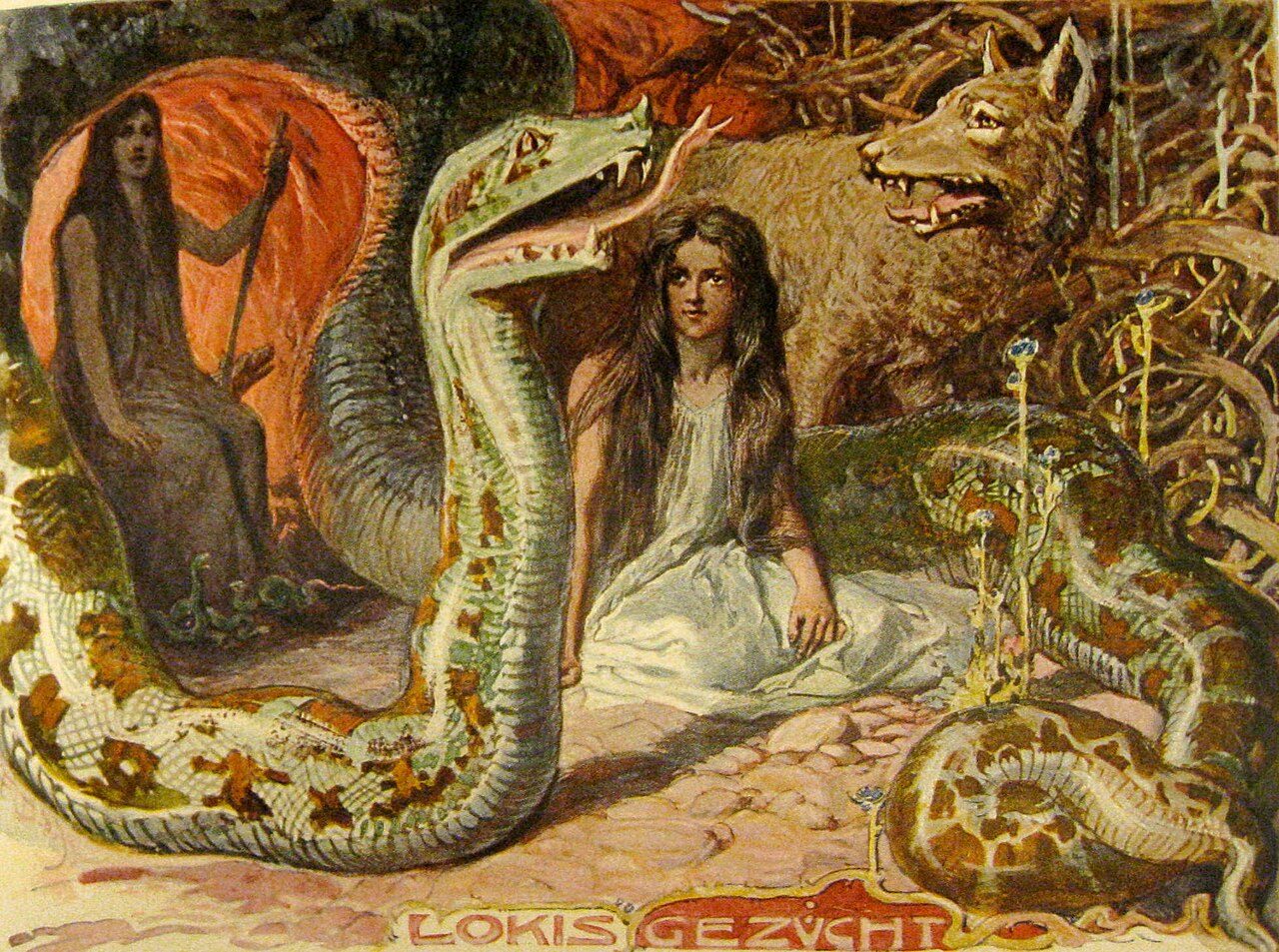
Angrboða is the mother of Loki's three monstrous children: Fenrir, Jörmungandr and Hel. Snorri calls her "a certain giantess in Jötunheim," and that is all he says about her as a person Gylfaginning 34. The children were raised in Jötunheim until the gods, warned by prophecy, took them away. Snorri adds that the gods expected evil "first from the mother's blood, and yet worse from the father's," so her giant ancestry counted against the children.
The Poetic Edda mentions her once, in Hyndluljóð's catalogue of strange births: "The wolf did Loki with Angrbotha win" Hyndluljóð 42.
That is the whole of the evidence. The name itself, usually read as "grief-bidder," says much: it reads like a name chosen for the mother of the wolf that will kill Odin. Some modern readers connect her with the "giantess old in Ironwood" who bears the wolf-brood in Völuspá Völuspá 40, but the poem does not name that giantess.
In the sources
Quoted from the hosted translations; each line is checked against the text when the site is built. Select a reference to read it in context.
Angrboda was the name of a certain giantess in Jötunheim, with whom Loki gat three children: one was Fenris-Wolf, the second Jörmungandr—that is the Midgard Serpent,—the third is Hel.
The wolf did Loki with Angrbotha win
Where the sources disagree or fall silent
- Some scholars identify her with the old giantess of the Ironwood who 'bore the brood of Fenrir' (Völuspá 40), but no source makes the connection.
In modern culture
Not from the medieval sources.
Modern novels and games often give Angrboða a full personality, as a witch of the Ironwood or as Loki's true love; these are inventions built on two lines of medieval text.