creature
Jörmungandr
Loki's serpent son, thrown by Odin into the ocean, where it grew to encircle the whole earth; Thor's great enemy, whom he hooks once and kills at Ragnarök.
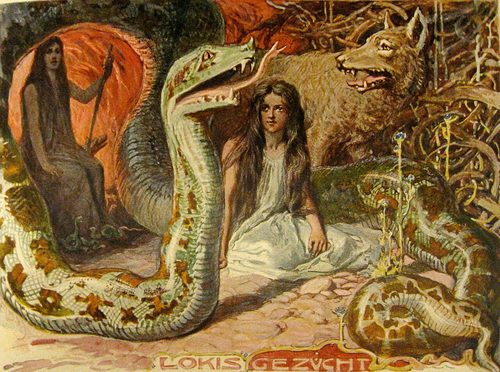
Jörmungandr, the Midgard Serpent, is the second of Loki's three children by the giantess Angrboða Gylfaginning 34. Snorri tells how the gods, warned by prophecy, had the children brought to Odin, who threw the serpent into the sea. There it grew until it lay right round the inhabited world, Miðgarðr, biting its own tail. The poems rarely use its proper name: Bellows's Hymiskviða calls it "the foe of the gods, / The girdler of all the earth beneath" and "the brother of Fenrir" Hymiskviða 23-24.
Thor's enemy
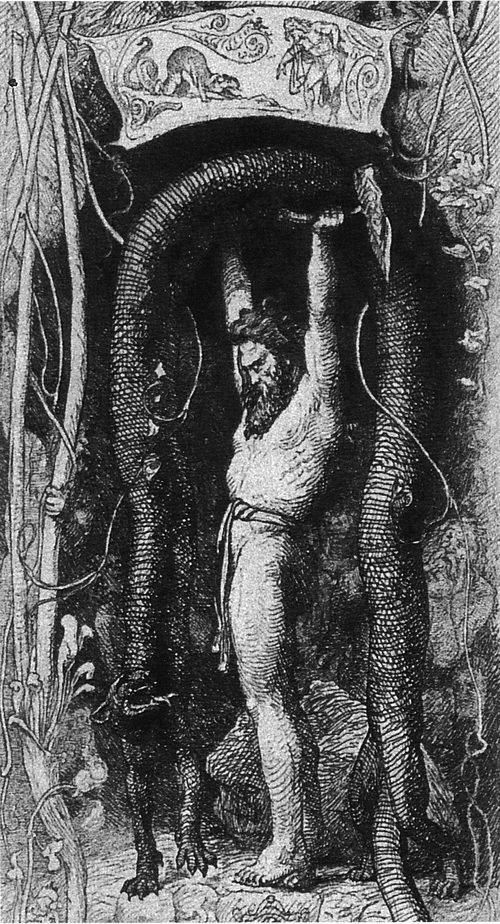
Almost every story about the serpent is a story about Thor. At Útgarða-Loki's hall Thor is challenged to lift a grey cat and manages to raise only one of its feet from the floor Gylfaginning 46; next morning the giant admits the cat was the Midgard Serpent, and that everyone was terrified to see Thor lift it so far Gylfaginning 47.
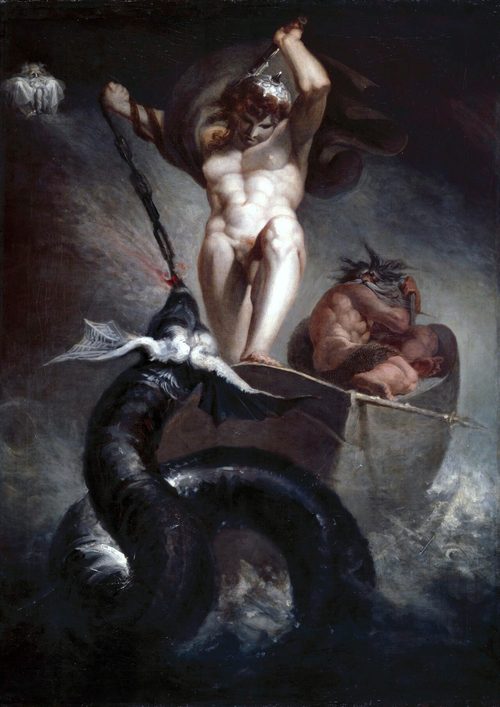
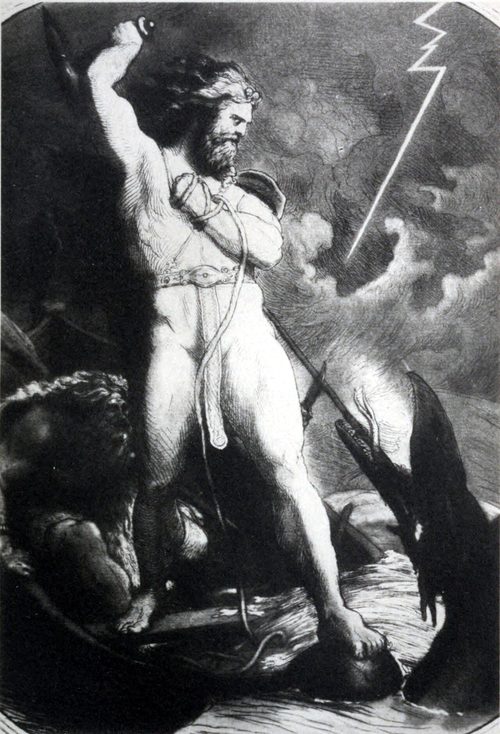
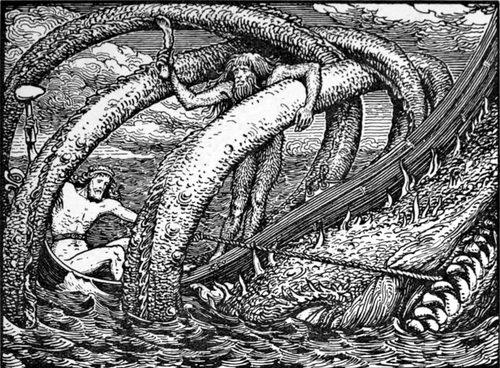
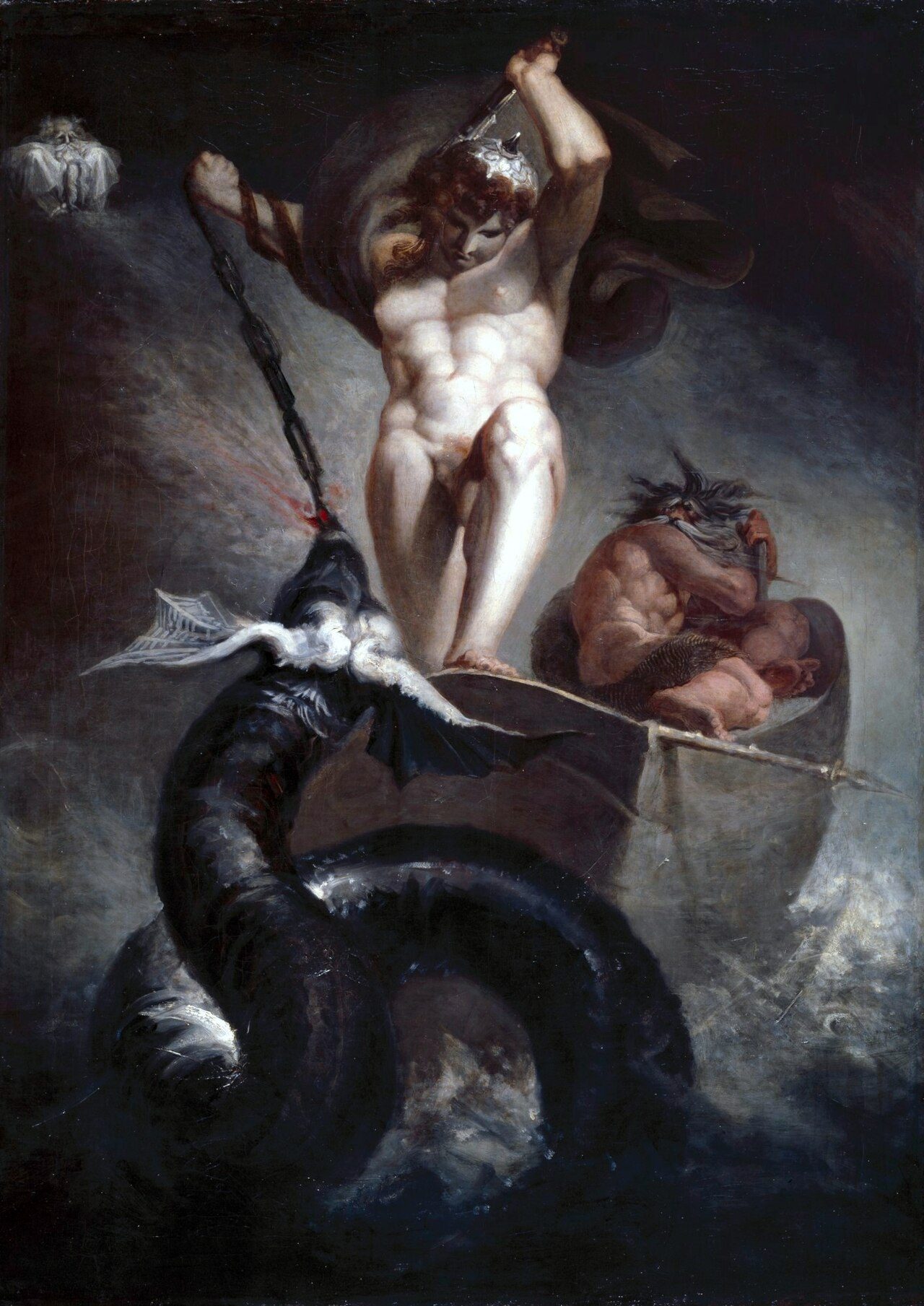
The famous meeting is the fishing trip with the giant Hymir (see Thor fishes for the World Serpent). In Hymiskviða Thor baits his hook with an ox-head, hauls the serpent to the gunwale and strikes its head with his hammer; the monsters roar, the earth shakes, and "Then sank the fish in the sea forthwith" Hymiskviða 23-25. Snorri's version is more dramatic and less conclusive. Thor braces so hard that his feet go through the bottom of the boat, and he and the serpent glare at each other while it blows venom. Then the terrified Hymir cuts the line. Thor throws his hammer after it, and "men say that he struck off its head against the bottom; but I think it were true to tell thee that the Midgard Serpent yet lives" Gylfaginning 48. The scene was popular well outside the Eddas: Snorri quotes skaldic verses on it Skáldskaparmál 4.
At Ragnarök
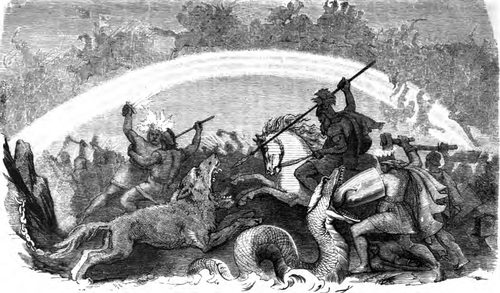
When the end comes the serpent rises in fury and the sea floods the land Völuspá 50. Snorri says it blows so much venom that it poisons air and water, and it takes its place beside the wolf Gylfaginning 51. Thor goes against it and kills it, but the venom kills him too:
In anger smites the warder of earth,—Forth from their homes must all men flee;—Nine paces fares the son of Fjorgyn,And, slain by the serpent, fearless he sinks.Völuspá 56
In the new world the surviving gods sit together and talk "Of the terrible girdler of earth" Völuspá 60.
Outside the Eddas
Thor's fishing for the serpent is one of the few Norse myths that can be traced in carved stone as well as in poetry. Scholars widely identify it on picture stones and carvings such as the Altuna runestone in Sweden and a stone at Gosforth in Cumbria, which show a figure fishing from a boat, in some cases with an ox-head as bait.
In the sources
Quoted from the hosted translations; each line is checked against the text when the site is built. Select a reference to read it in context.
he cast the serpent into the deep sea, where he lies about all the land; and this serpent grew so greatly that he lies in the midst of the ocean encompassing all the land, and bites upon his own tail
There gaped at the bait the foe of the gods, The girdler of all the earth beneath.
the giant fumbled for his fish-knife and hacked off Thor's line at the gunwale, and the Serpent sank down into the sea
Nine paces fares the son of Fjorgyn, And, slain by the serpent, fearless he sinks.
That cat was not as it appeared to thee: it was the Midgard Serpent
Where the sources disagree or fall silent
- Hymiskviða has Thor strike the serpent's head with his hammer (Hymiskviða 24), and Snorri reports a tradition that he struck off its head, but Snorri himself says the serpent still lives (Gylfaginning 48).
In modern culture
Not from the medieval sources.
The Midgard Serpent appears widely in fantasy and games, often simply as 'the World Serpent'; the God of War games (2018, 2022) make it a character. The image of a serpent biting its own tail invites comparison with the ancient ouroboros symbol, a comparison modern writers often make; Snorri gives only the detail itself.