object
Mjölnir
Mjöllnir
Thor's short-handled hammer, forged by the dwarf brothers Brokkr and Sindri: it never misses, always returns to his hand, kills giants, and hallows brides, pyres and the dead goats it brings back to life.
Mjölnir is Thor's hammer, the weapon that keeps the giants out of the gods' world. Snorri lists it first among Thor's three treasures: the giants "know" it "when it is raised on high", and "it has bruised many a skull among their fathers or their kinsmen" Gylfaginning 21. The other two treasures exist to serve it. The girdle of might (Megingjörð) doubles Thor's strength, and he "cannot do without" his iron gloves "when he uses his hammer-shaft" Gylfaginning 21.
How it was made
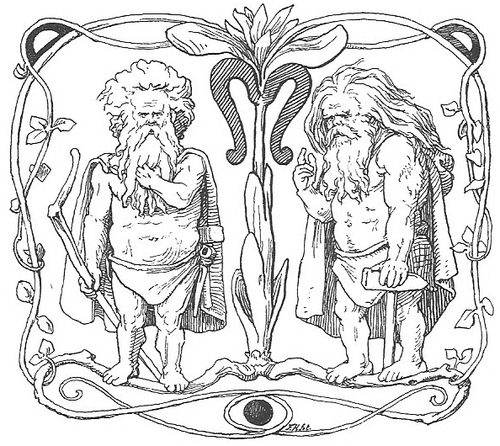
The only account of the forging is Snorri's, in Skáldskaparmál Skáldskaparmál 35. Loki has cut off Sif's hair. To save himself he gets new golden hair made by Ívaldi's sons, and with it the ship Skíðblaðnir and the spear Gungnir. Then he bets his head that the dwarf Brokkr's brother cannot make three treasures as good. While the brother works the forge and Brokkr works the bellows, a fly stings Brokkr three times, the last time on the eyelid. Brokkr lets go of the bellows for a moment, and the iron in the fire comes out as a hammer with a handle a little too short.
The gods still judge it the best of the six gifts, because "in it there was the greatest defence against the Rime-Giants" Skáldskaparmál 35. Brokkr explains what it does. Thor can strike as hard as he likes and it will not fail; thrown, it never misses and always comes back to his hand; and it can shrink small enough to carry inside his shirt.
Then he gave the hammer to Thor, and said that Thor might smite as hard as he desired, whatsoever might be before him, and the hammer would not failSkáldskaparmál 35
A weapon against giants
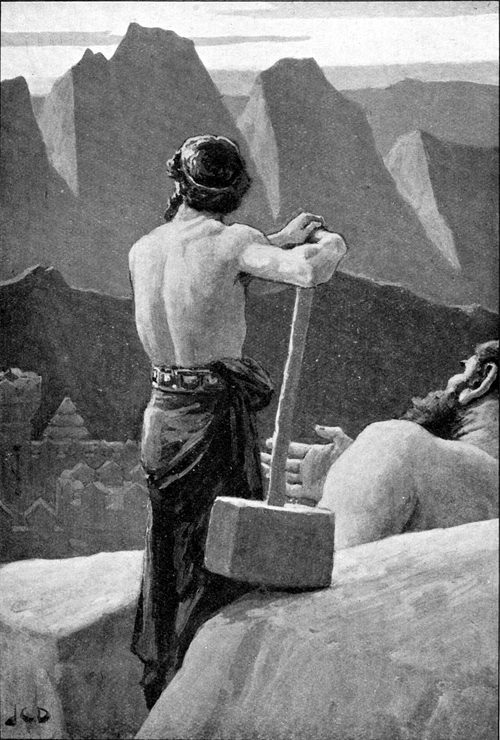
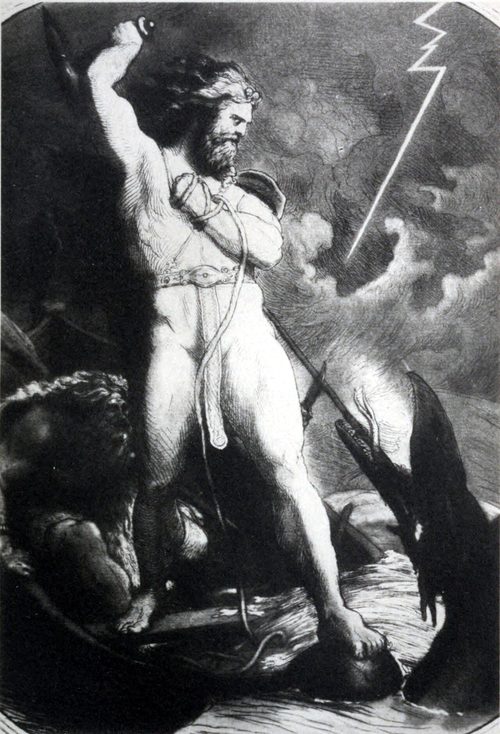
Most of the hammer's stories end with a giant's skull broken. It bursts the skull of the giant who built the wall of Ásgard "into small crumbs" Gylfaginning 42. Thrown at Hrungnir, it meets his whetstone in mid-air, shatters it and goes on to smash his head Skáldskaparmál 17, which is why the poems call Thor "Hrungnir's slayer" Lokasenna 61. In Hymiskvida Thor uses "Mjollnir, the lover of murder" against the giants chasing him from Hymir's hall Hymiskviða 37.
The stories also play with the idea of Thor without it. In Þrymskviða the giant Þrymr steals it and hides it "eight miles down deep in the earth" Þrymskviða 7. In Snorri's account of Geirröðr, Loki tricks Thor into going to the giant's house without hammer or girdle Skáldskaparmál 18. At Útgarðr Thor hits the sleeping Skrýmir three times without hurting him. Útgarða-Loki later explains that the blows were real and that he had dodged them by trickery Gylfaginning 45 Gylfaginning 47.
Hallowing
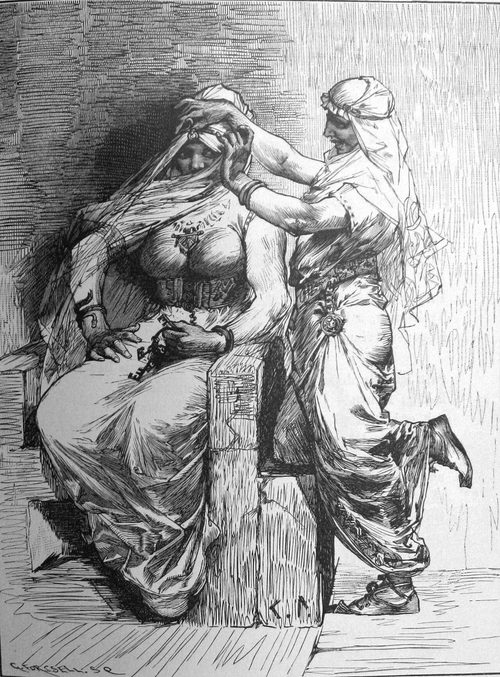
The hammer also blesses. Thor raises it over the hides of his slaughtered goats, and they stand up alive Gylfaginning 44. He hallows Baldr's funeral pyre with it Gylfaginning 49. In Þrymskviða the giant has the hammer brought in "to hallow the bride" and laid on her knees, and that wedding blessing is the moment Thor gets it back Þrymskviða 30-31. None of these passages explains the custom. Scholars have often compared the hammer-blessing of a bride with marriage and fertility rites, but that is a reading of the poem, not something it says.
After Ragnarök
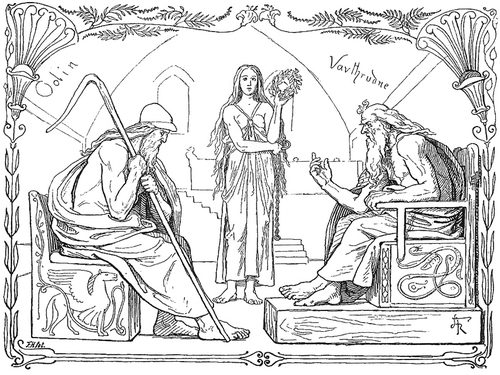
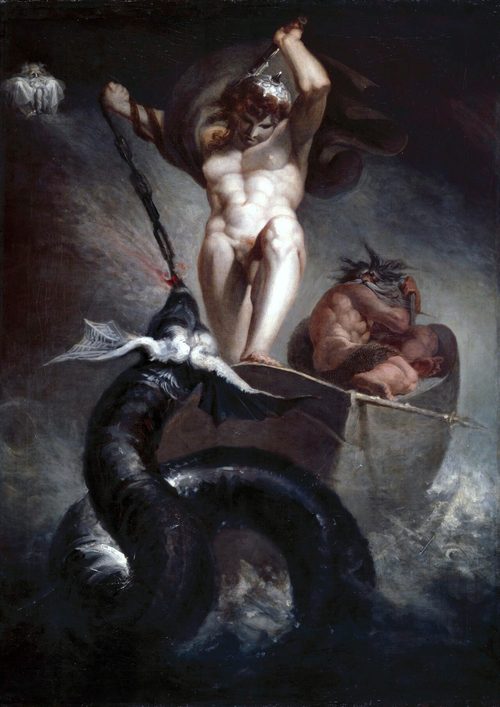
Thor dies fighting the Midgard Serpent, but his hammer survives. Vafþrúðnir tells Odin that "Mothi and Magni shall Mjollnir have" in the new world Vafþrúðnismál 51, and Snorri quotes a version of the same stanza Gylfaginning 53.
Outside the Eddas
Small hammer pendants have been found across Viking-Age Scandinavia, and a few Danish runestones carve a hammer or ask Thor to hallow the runes. Archaeologists usually read these as signs of devotion to Thor. Some have suggested the pendants were worn in answer to the Christian cross, but that is debated.
In the sources
Quoted from the hosted translations; each line is checked against the text when the site is built. Select a reference to read it in context.
if he threw it at anything, it would never miss, and never fly so far as not to return to his hand
one is the hammer Mjöllnir, which the Rime-Giants and the Hill-Giants know, when it is raised on high
Bring in the hammer to hallow the bride; On the maiden's knees let Mjollnir lie
took the hammer Mjöllnir, swung it up, and hallowed the goat-hides; straightway the he-goats rose up
Then Thor stood by and hallowed the pyre with Mjöllnir
Mothi and Magni shall Mjollnir have When Vingnir falls in fight.
Unmanly one, cease, or the mighty hammer, Mjollnir, shall close thy mouth
Where the sources disagree or fall silent
- Snorri does not say the fly that stings Brokkr at the forge is Loki, though the story implies it and most retellings say so.
- The sources disagree about the smith's name: Brodeur's text of Skáldskaparmál names Sindri, while other manuscripts (and many modern books) name him Eitri.
In modern culture
Not from the medieval sources.
Small hammer-shaped pendants of silver, iron and amber were worn in Viking-Age Scandinavia and are now the best-known symbol of Norse religion; reproductions are sold everywhere and the hammer is a common emblem of modern heathen groups. The US Department of Veterans Affairs added it to its approved headstone emblems in 2013. In Marvel comics, from Journey into Mystery #83 (1962), the hammer can be lifted only by someone 'worthy'. That test is a modern invention: in the myths the hammer is stolen by a giant and handled by a dwarf, and nothing says anyone but Thor is unable to lift it.