Vanir
Freyr
The Vanir god of rain, sunshine, harvest and peace, son of Njörðr. He gave away his sword to win the giantess Gerðr, and will fall unarmed against Surtr at Ragnarök.
Freyr is the god of the Vanir who matters most to ordinary life: rain, sun, crops, peace and wealth. Snorri calls him "the most renowned of the Æsir", though by birth he belongs to the Vanir, and says men pray to him "for fruitful seasons and peace" Gylfaginning 24. His father is Njörðr and his sister is Freyja Gylfaginning 24. His home is Álfheimr, the elves' world, which the gods gave him "as a tooth-gift", a present for his first tooth Grímnismál 5.
The courtship of Gerðr
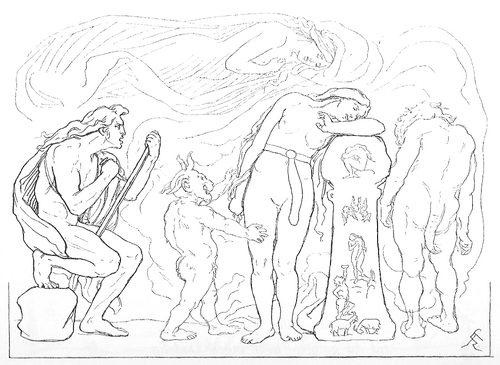
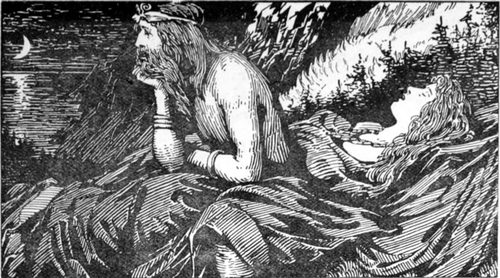
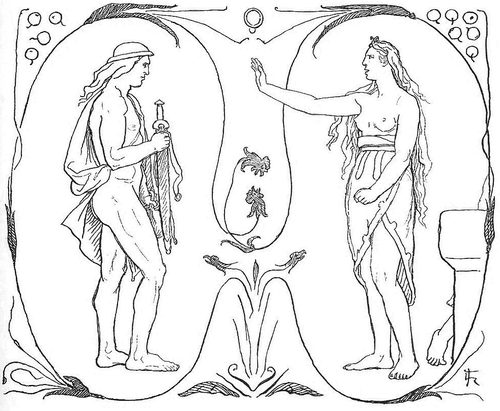
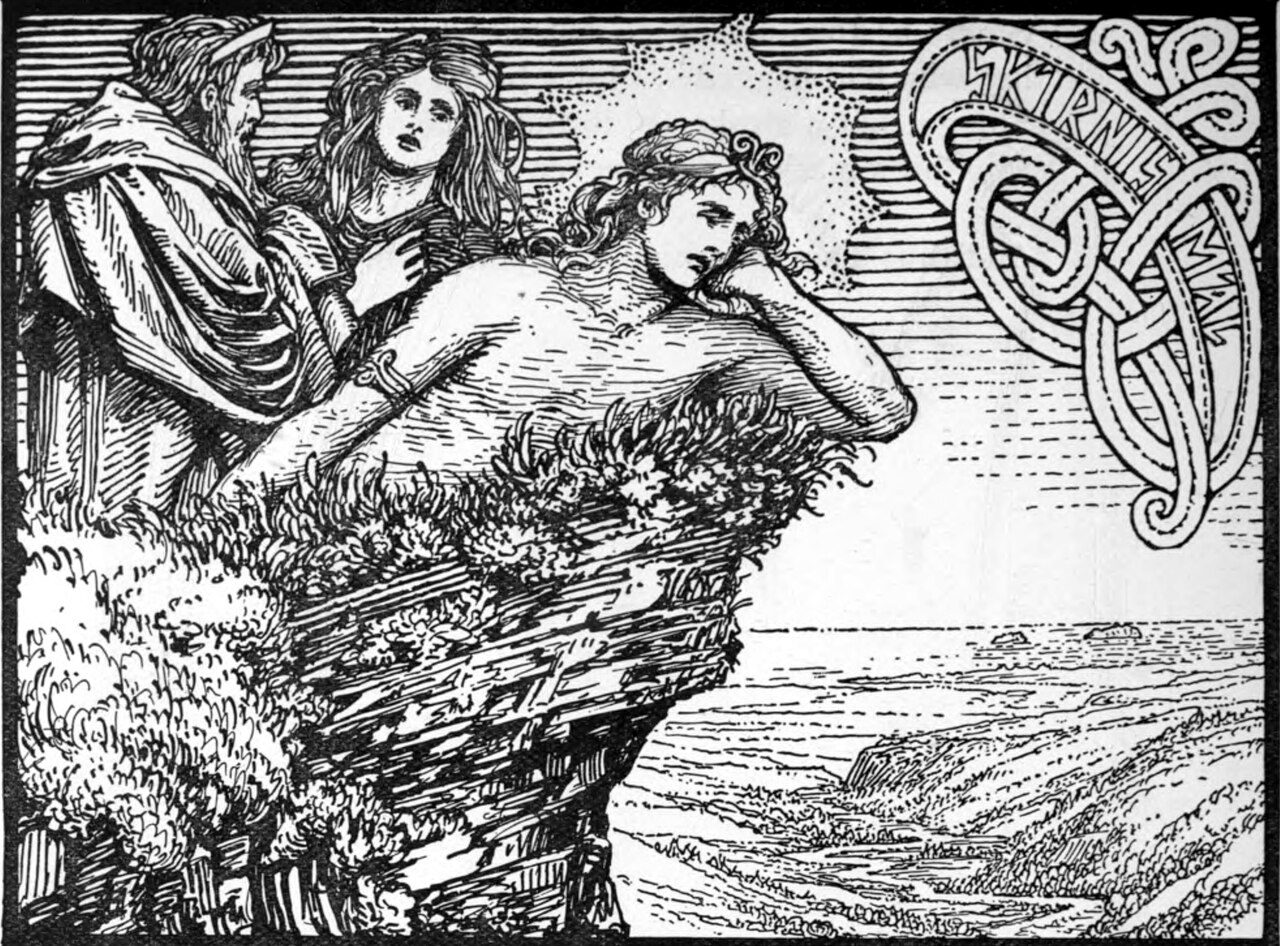
The one full story about Freyr is the poem Skírnismál, retold by Snorri (see Freyr and Gerðr). Freyr sits in Odin's high seat Hliðskjálf and looks into Jötunheim. There he sees a giant's daughter, Gerðr, walking from her father Gymir's house:
From Gymir's house I beheld go forthA maiden dear to me;Her arms glittered, and from their gleamShone all the sea and sky.Skírnismál 6
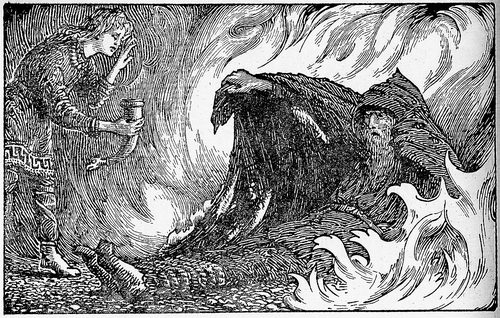
He falls silent and will not eat or sleep. Snorri treats it as a punishment: "his overweening pride, in having presumed to sit in that holy seat, was avenged upon him" Gylfaginning 37. His servant Skírnir agrees to woo Gerðr for him in exchange for Freyr's horse and his sword, which "will fight of itself if a worthy hero wields it" Skírnismál 9. The poem then shows how the wooing really goes. Gerðr refuses golden apples and a ring; Skírnir threatens to behead her, then curses her with runes until she agrees to meet Freyr in nine nights Skírnismál 19-40. Freyr's answer is the most quoted line about him: "Long is one night, longer are two; How then shall I bear three?" Skírnismál 43. Snorri leaves out the threats and the curse; in his version Skírnir simply woos her and gets her promise Gylfaginning 37. Hyndluljóð confirms the outcome: "Freyr's wife was Gerth, the daughter of Gymir" Hyndluljóð 32.
The price of the sword
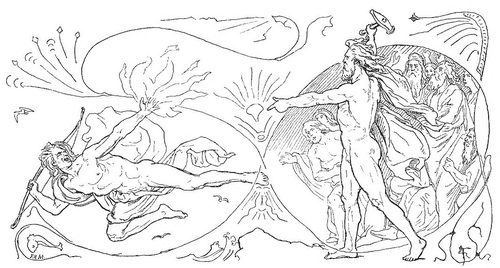
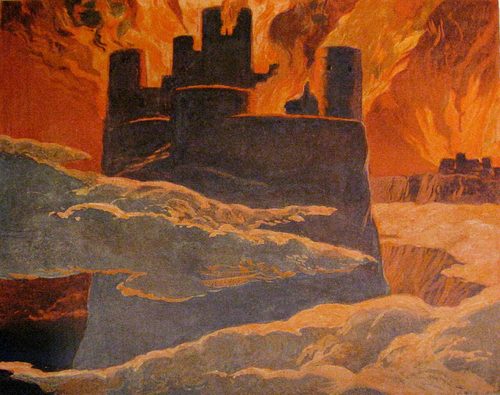
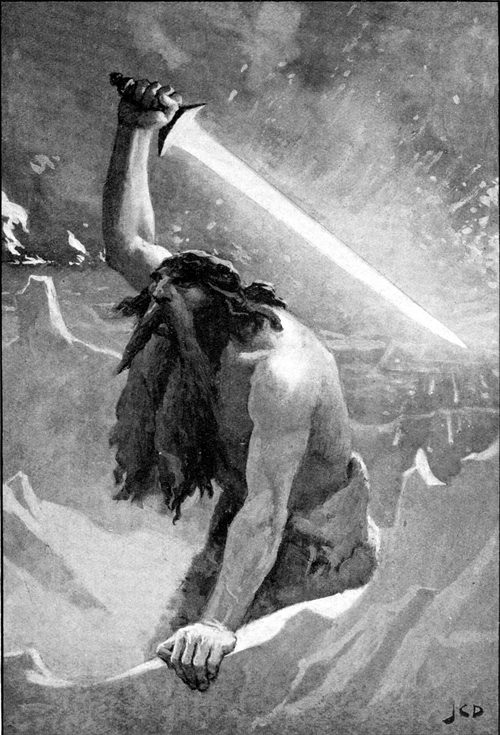
The gift of the sword has consequences. Snorri says it is why Freyr fought the giant Beli with a hart's antler, and that he will regret it most "when he misses his sword on that day that the Sons of Múspell go a-harrying" Gylfaginning 37. At Ragnarök he fights Surtr and falls, "it is to be his death that he lacks that good sword of his, which he gave to Skírnir" Gylfaginning 51. Völuspá tells the same end in one line, calling him "Beli's fair slayer" Völuspá 53, and in Lokasenna Loki taunts him with it: "thou shalt weaponless wait, poor wretch" Lokasenna 42. See Freyr's sword.
Treasures, followers and character
Freyr owns two dwarf-made treasures. The ship Skíðblaðnir, made by the sons of Ivaldi, always has a fair wind and folds up to fit in a pouch Gylfaginning 43; the boar Gullinbursti, forged by the dwarf Sindri, runs through air and sea and lights the dark with its bristles Skáldskaparmál 35. Freyr was also one of the three judges, with Odin and Thor, who ruled on those treasures Skáldskaparmál 35. He drove to Baldr's funeral in a chariot drawn by the boar Gylfaginning 49.
The sources give him a gentle reputation. In Lokasenna, Týr defends him as the best of the gods, one who "harms not maids nor the wives of men, And the bound from their fetters he frees" Lokasenna 37; two servants, Byggvir and Beyla, attend him Lokasenna, prose 1, and Byggvir calls him "Ingunar-Freyr" Lokasenna 43. Loki's reply is the charge of incest, made against Freyja and Njörðr too Lokasenna 32 Lokasenna 36.
Beyond the Eddas
Outside the Eddas, Freyr was a god of kings. Snorri's own Ynglinga saga makes him an early king of the Swedes under the name Yngvi-Freyr, ancestor of the Yngling dynasty, and the Eddas use Yngvi-forms of his name too ("Ingvi-Freyr's high kindred", Skáldskaparmál 22). The 11th-century chronicler Adam of Bremen describes a statue of a fertility god he calls Fricco in the temple at Uppsala, which scholars usually identify with Freyr. Many Scandinavian place-names contain his name, a sign that he was widely worshipped.
In the sources
Quoted from the hosted translations; each line is checked against the text when the site is built. Select a reference to read it in context.
Freyr is the most renowned of the Æsir; he rules over the rain and the shining of the sun, and therewithal the fruit of the earth
From Gymir's house I beheld go forth A maiden dear to me; Her arms glittered, and from their gleam Shone all the sea and sky.
The daughter of Gymir with gold didst thou buy, And sold thy sword to boot
And Alfheim the gods to Freyr once gave As a tooth-gift in ancient times.
Of the heroes brave is Freyr the best Here in the home of the gods; He harms not maids nor the wives of men
And Beli's fair slayer seeks out Surt
Where the sources disagree or fall silent
- Who Freyr's mother was. Loki says Njörðr had him by his own sister (Lokasenna 36); no text names her.
- Whether Freyr's sword is the same as the sword Lævateinn or Surtr's sword, as some modern readers propose; no medieval text says so.
In modern culture
Not from the medieval sources.
Freyr is less visible in modern popular culture than Thor or Loki. He appears in Wagner's Ring as Froh, a minor god who helps build the rainbow bridge, and as a character in games such as God of War Ragnarök (2022), which makes him a Vanir leader in exile. Modern heathen groups often honour him at harvest and Yule; this is a revival, not a continuous tradition.