world
Muspellsheimr
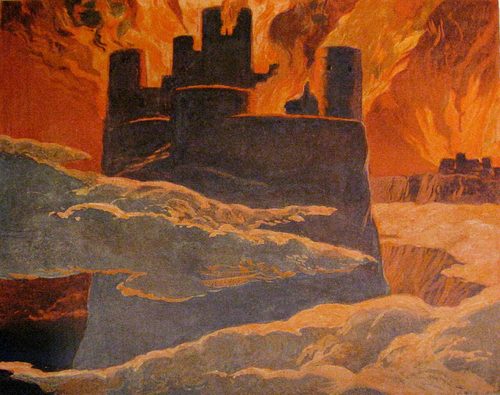
The burning world of the far south, guarded by Surtr: its sparks lit the sun and stars at creation, and its 'sons' ride out to destroy the world at Ragnarök.
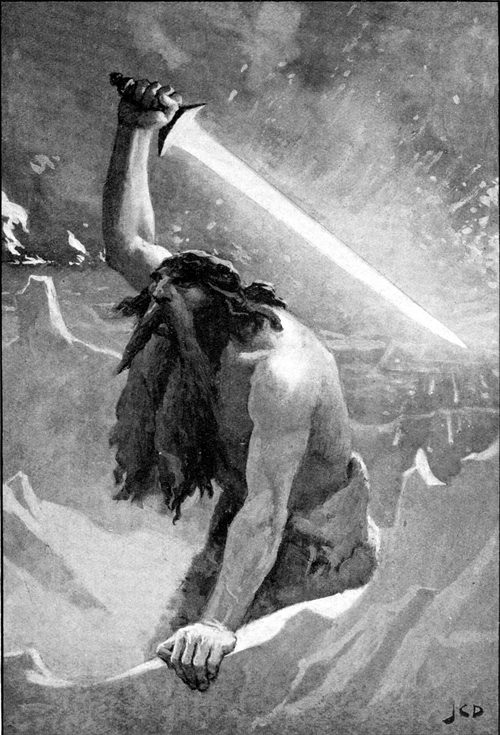
Múspell is the fiery world of the south in Snorri's account of creation. Before the earth was shaped, Snorri says, there were two regions: misty, icy Niflheim in the north and Múspell in the south, "light and hot ... glowing and burning," closed to anyone who does not belong there. Its guardian is the giant Surtr with his flaming sword Gylfaginning 4.
At the beginning
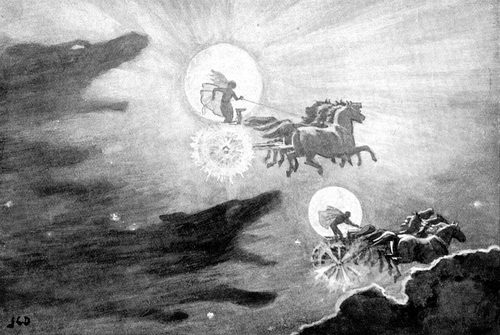
Múspell's heat is one half of creation. Sparks and glowing masses flew out of it into the southern part of Ginnungagap, the Yawning Void; where that heat met the rime from the north, the ice melted and dripped, and life quickened in the drops as the giant Ymir Gylfaginning 5. Later Odin and his brothers took more sparks from Múspellheim and set them in the sky as the sun, moon and stars Gylfaginning 8, and the sun's chariot was made from the same glowing stuff Gylfaginning 11.
At the end
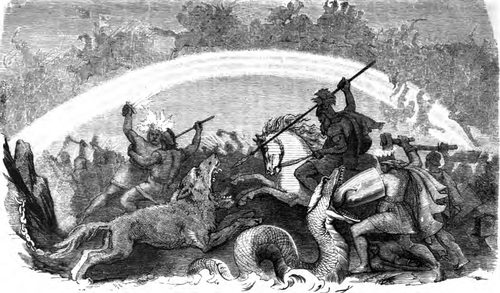
Múspell returns as an army. The "sons of Múspell" will ride over Bifröst and break it Gylfaginning 13. At Ragnarök Surtr rides at their head with fire before and behind, and they form a bright company of their own on the battlefield Gylfaginning 51. Snorri also says that the great ship Naglfar belongs to Múspell Gylfaginning 43. In the poems Múspell is only ever this host: Loki warns Freyr of the day "when Muspell's sons through Myrkwood ride" Lokasenna 42.
The word
The word is a puzzle. Outside Norse it appears in two Christian poems of the ninth century: the Old Saxon Heliand uses mudspelli for the end of the world, and an Old High German poem on the Last Judgment is now called Muspilli after the word. Scholars disagree about whether the word passed from Christian into Norse usage or is an older shared Germanic term for the world's end by fire. Either way, it seems to have meant the catastrophe before it meant a place; the world "Múspellsheimr" may be Snorri's own systematic arrangement.
In the sources
Quoted from the hosted translations; each line is checked against the text when the site is built. Select a reference to read it in context.
Yet first was the world in the southern region, which was named Múspell; it is light and hot; that region is glowing and burning, and impassable to such as are outlanders and have not their holdings there.
just as cold arose out of Niflheim, and all terrible things, so also all that looked toward Múspellheim became hot and glowing
they took the glowing embers and sparks that burst forth and had been cast out of Múspellheim, and set them in the midst of the Yawning Void, in the heaven
But when Muspell's sons through Myrkwood ride, Thou shalt weaponless wait, poor wretch.
Where the sources disagree or fall silent
- In the poems Múspell is a host ('Muspell's sons'), not a place; the world called Múspellsheimr is known only from Snorri.
- Snorri's quotation of Völuspá has 'Múspell's folk' coming over the sea with Loki steering (Gylfaginning 51), where Bellows's Völuspá has 'the people of Hel' (Völuspá 51).