object
Naglfar
The great ship made of dead men's nails that breaks loose at Ragnarök and carries the giants against the gods; Snorri names Hrymr as its steersman.
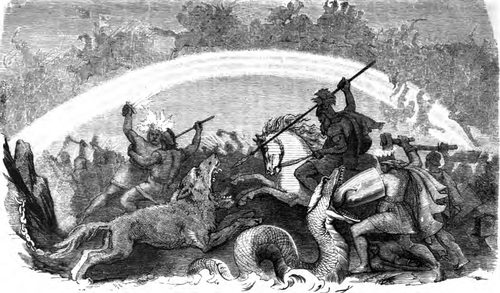
Naglfar is the ship of the end of the world. Völuspá mentions it once, at the climax of the prophecy: as Hrymr comes from the east and the serpent churns the sea, "Naglfar is loose" Völuspá 50.
Snorri adds the detail everyone remembers. The ship is made of the nails of dead men, so anyone who dies with untrimmed nails adds material to it; it is wise to cut them, since gods and men alike would prefer the ship to be finished late. When the sea floods the land at Ragnarök, Naglfar floats free, and "Hrymr is the name of the giant who steers Naglfar" Gylfaginning 51. Elsewhere he calls it the largest of ships and says that "Múspell has it" Gylfaginning 43.
The sources do not quite agree on who sails in it. Völuspá names Hrymr and Naglfar together but does not say Hrymr steers; the next stanza has a ship from the north with "the people of Hel" and Loki at the helm Völuspá 51. Snorri's version of that stanza has "Múspell's folk" and Loki steering Gylfaginning 51, while his prose gives the ship to Hrymr. Whether there was one ship of the dead or two, and who commanded it, the sources leave unclear.
In the sources
Quoted from the hosted translations; each line is checked against the text when the site is built. Select a reference to read it in context.
From the east comes Hrym with shield held high; In giant-wrath does the serpent writhe; O'er the waves he twists, and the tawny eagle Gnaws corpses screaming; Naglfar is loose.
It is made of dead men's nails; wherefore a warning is desirable, that if a man die with unshorn nails, that man adds much material to the ship Naglfar
Naglfar is the largest ship; Múspell has it.
Where the sources disagree or fall silent
- Snorri gives Naglfar to Múspell (Gylfaginning 43) but says the giant Hrymr steers it (Gylfaginning 51); Völuspá names Hrym and Naglfar in one stanza without linking them, and puts Loki at the helm of a different ship (Völuspá 50-51).