creature
Níðhöggr
The dragon that gnaws the root of Yggdrasil from below and feeds on the dead at Náströnd; at the end of Völuspá it flies up with corpses on its wings.
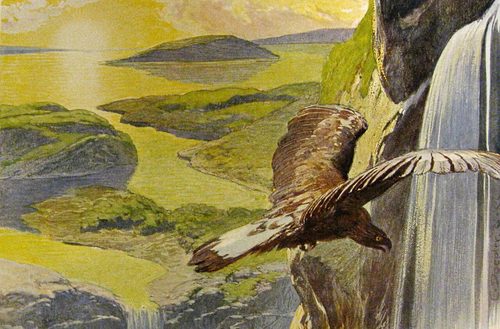
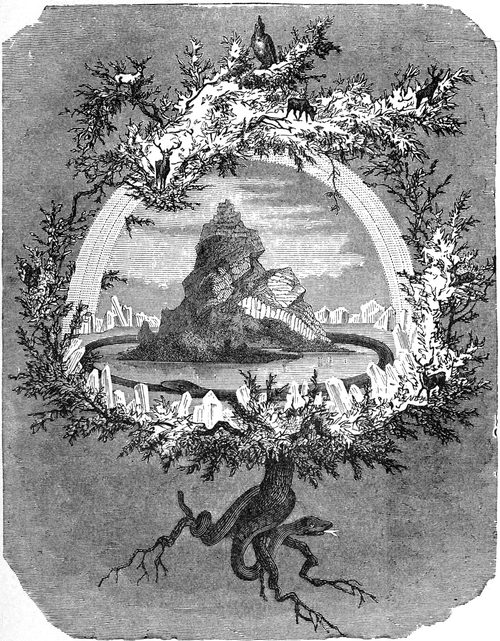
Níðhöggr is a dragon, or serpent, that lives beneath the world tree. In Grímnismál it gnaws the roots of Yggdrasil while a hart bites the top and the trunk rots Grímnismál 35, and the squirrel Ratatoskr runs up and down the trunk carrying the eagle's words down to it Grímnismál 32. Snorri places it under the root that stands over Niflheim, at the spring Hvergelmir, surrounded by more serpents than anyone can count Gylfaginning 15-16. Snorri says Ratatoskr carries "envious words" between the two, so the eagle and the dragon are quarrelling Gylfaginning 16.
Feeder on the dead
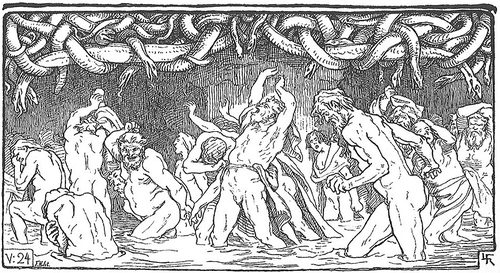
Völuspá shows another side. At Náströnd, where oath-breakers and murderers wade through venom, "Nithhogg sucked the blood of the slain" Völuspá 39. Snorri quotes a line that seems to be about the same creature at Hvergelmir: "There the cursed snake tears dead men's corpses" Gylfaginning 52.
The last line
Níðhöggr has the last word in Völuspá. After the seeress has seen the green new world, the gods returning and the golden hall at Gimlé, she sees something else:
From below the dragon dark comes forth,Nithhogg flying from Nithafjoll;The bodies of men on his wings he bears,The serpent bright: but now must I sink.Völuspá 66
Readers disagree about what this means. Some take it as a sign that evil survives into the new world; others as the dragon carrying away the dead to judgment; others as the moment the seeress's trance breaks and the vision returns to the present. The poem does not explain it.
In the sources
Quoted from the hosted translations; each line is checked against the text when the site is built. Select a reference to read it in context.
The hart bites its top, its trunk is rotting, And Nithhogg gnaws beneath.
From above the words of the eagle he bears, And tells them to Nithhogg beneath.
There Nithhogg sucked the blood of the slain
From below the dragon dark comes forth, Nithhogg flying from Nithafjoll; The bodies of men on his wings he bears
the third stands over Niflheim, and under that root is Hvergelmir, and Nídhöggr gnaws the root from below
Where the sources disagree or fall silent
- What Níðhöggr's appearance at the very end of Völuspá means is disputed: a lingering threat in the new world, a sign that evil is judged, or the seeress's vision fading back into the present (Völuspá 66).