world
Yggdrasil
Yggdrasill
The world-ash at the centre of the Norse cosmos: its roots reach the realms of gods, giants and the dead, and the gods hold court beneath it every day.
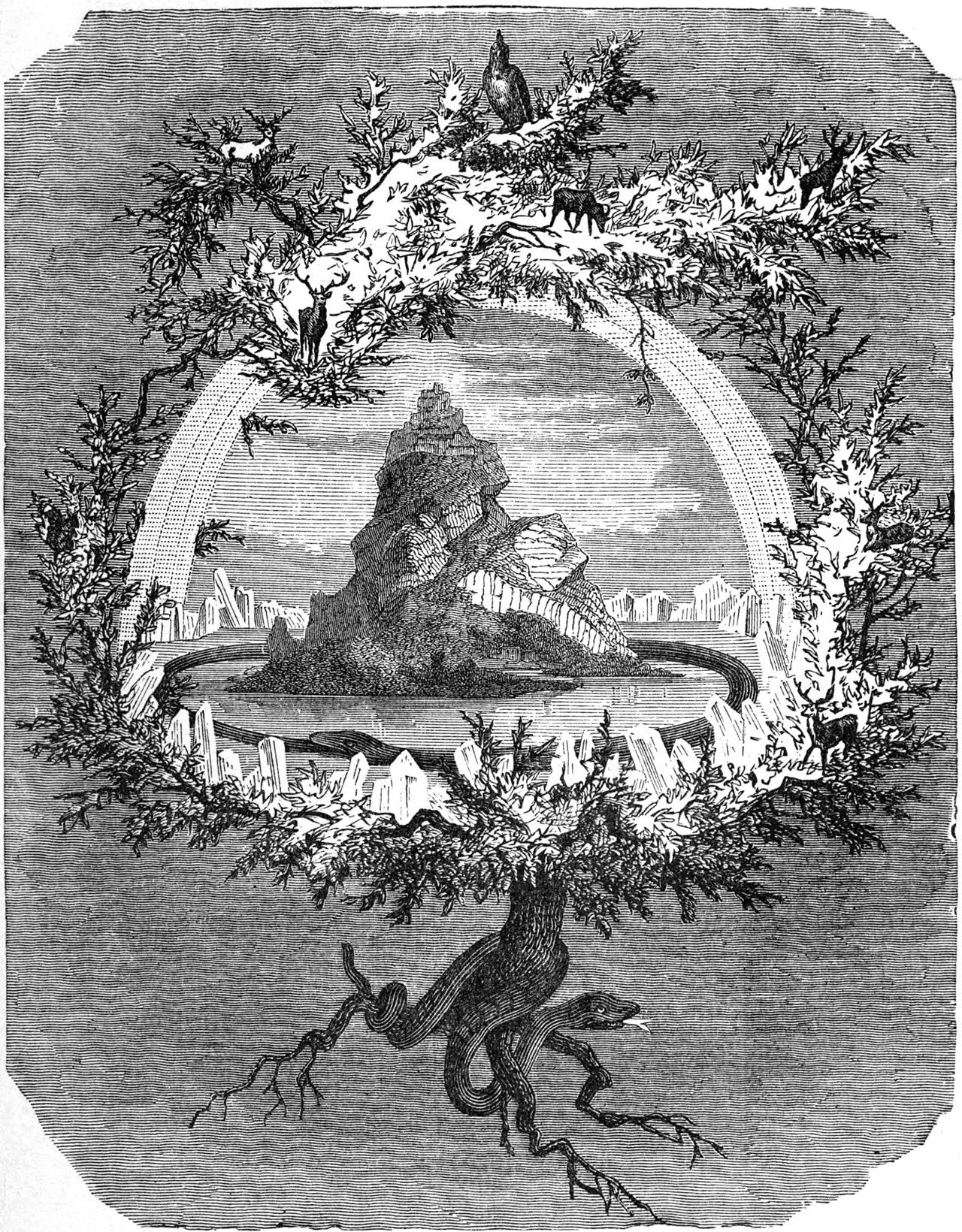
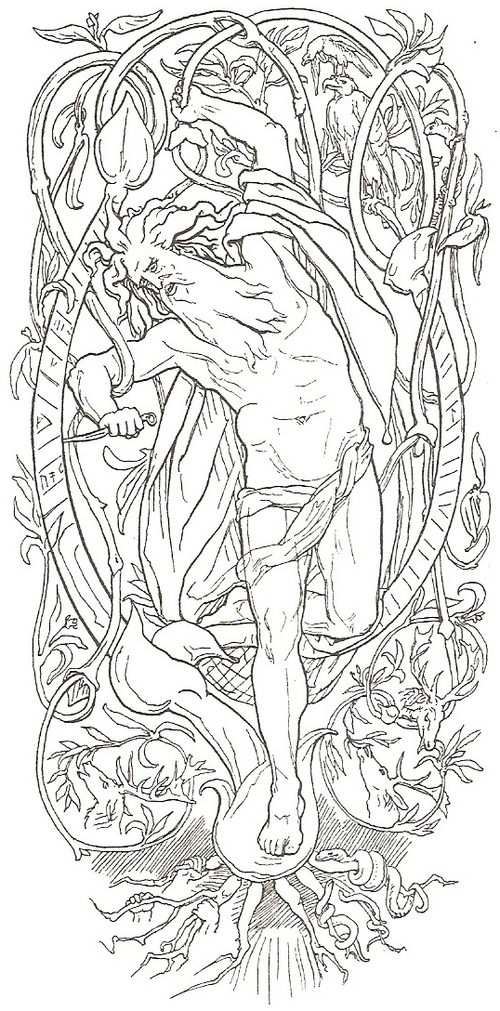
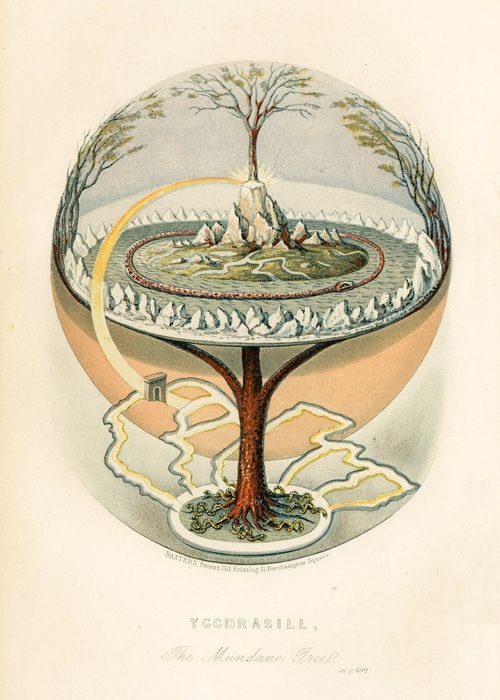
Yggdrasil is the great ash tree that holds the Norse world together. The poems never describe it from a distance: they show parts of it — a root here, a well there, an animal in its branches — and leave the listener to assemble the whole. The seeress of Völuspá remembers "nine worlds … in the tree" before anything else existed Völuspá 2, and later sees it standing green over Urðr's well, wet with a white water from which the dew falls into the valleys Völuspá 19.
Roots, wells and creatures
The two main sources disagree about the roots. In Grímnismál, Odin, speaking as Grímnir, says the three roots run to Hel, to the frost-giants and to the lands of men Grímnismál 31. Snorri's Gylfaginning places them among the Æsir, among the frost-giants (where Mímir's well lies) and over Niflheim, where the spring Hvergelmir rises and Níðhöggr gnaws from below Gylfaginning 15. A third root, in Snorri's account, stands in heaven above Urðr's well, where the gods ride over Bifröst each day to hold their court.
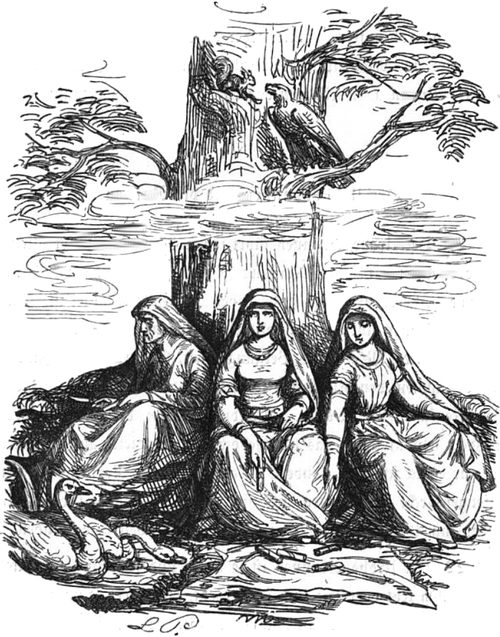
The tree is crowded with life and with damage. An eagle sits at the top, the hawk Veðrfölnir between its eyes; the squirrel Ratatoskr carries insults up and down the trunk between the eagle and the dragon Grímnismál 32; four harts browse the branches; serpents chew the roots Gylfaginning 16. Grímnismál sums it up: the ash "great evil suffers, far more than men do know" Grímnismál 35. The Norns tend it by pouring water and clay from their well over it so that its limbs do not wither.
The tree at the end
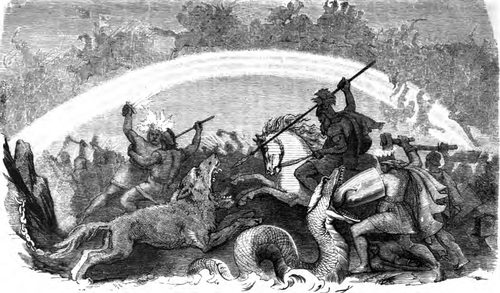
When Ragnarök begins, "Yggdrasil shakes" and its old limbs shiver Völuspá 47. Neither Völuspá nor Snorri says it falls. Snorri adds that two humans, Líf and Lífþrasir, survive the fire hidden in a place called Hoddmímir's Holt, which many readers take to be the tree itself; the text does not say so directly.
The name
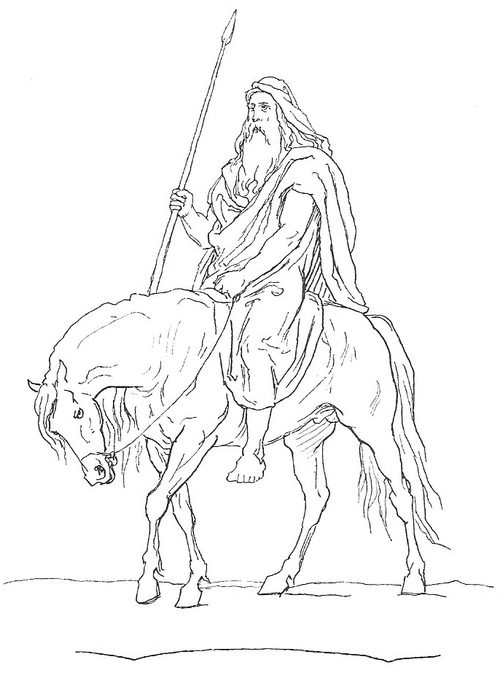
The usual explanation reads the name as "the horse of Yggr", Yggr being one of Odin's names and "horse" a poetic word for a gallows. That would tie the tree to the story in Hávamál of Odin hanging nine nights "on the windy tree" to win the runes (see Odin on the tree: how the runes were won). The poem itself does not name the tree it hangs him on, so the link, though widely accepted, is an inference.
In the sources
Quoted from the hosted translations; each line is checked against the text when the site is built. Select a reference to read it in context.
An ash I know, Yggdrasil its name, With water white is the great tree wet
Nine worlds I knew, the nine in the tree With mighty roots beneath the mold.
Three roots there are that three ways run 'Neath the ash-tree Yggdrasil
Yggdrasil's ash great evil suffers, Far more than men do know
The Ash is greatest of all trees and best: its limbs spread out over all the world and stand above heaven.
Yggdrasil shakes, and shiver on high The ancient limbs
In modern culture
Not from the medieval sources.
The world tree is one of the most reproduced Norse images today, from 19th-century book illustrations to logos, tattoos and video games such as God of War (2018), where the realms hang from its branches. These pictures often show the nine worlds neatly arranged on three levels; the medieval sources never give such a map.