Ásynjur
Sól
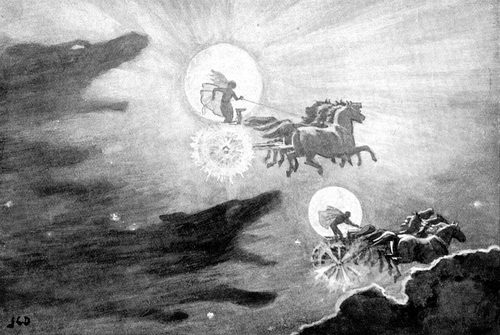
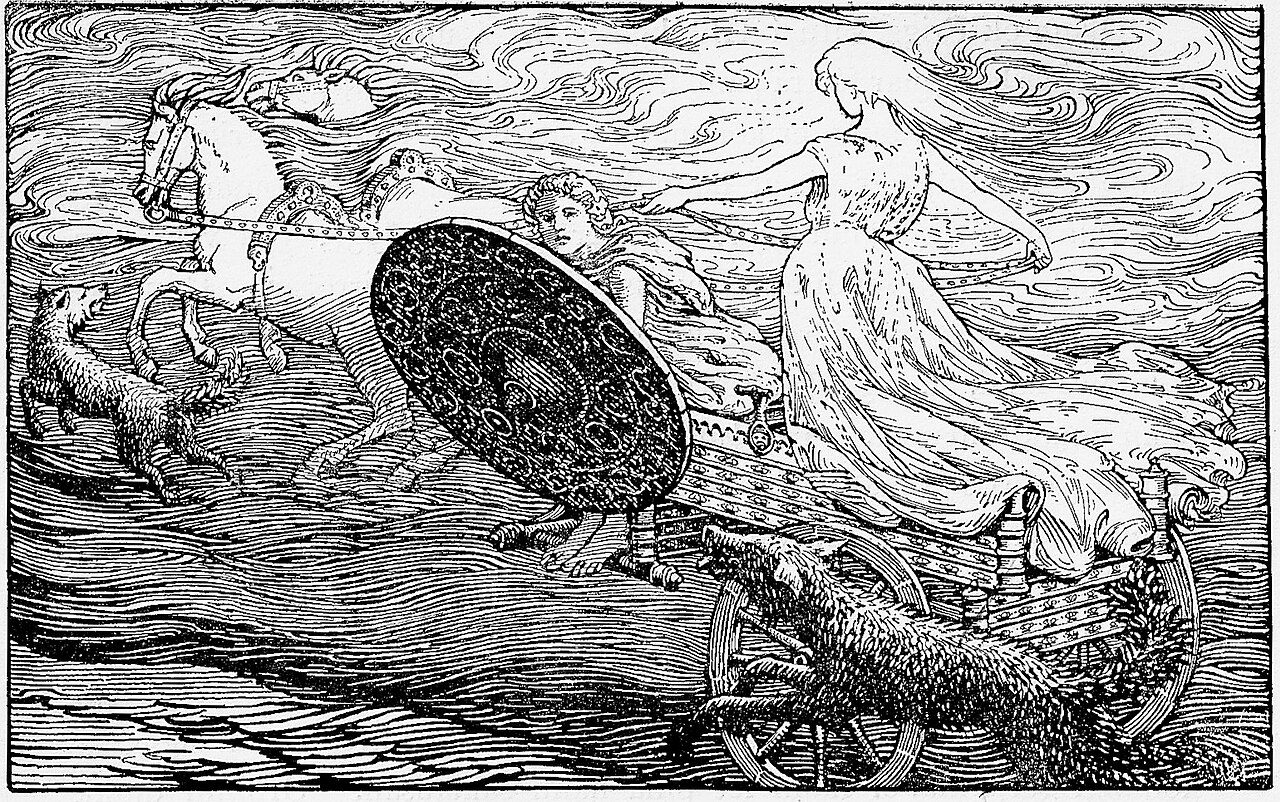
The sun as a goddess: daughter of Mundilfari and sister of the Moon, she drives the sun's horses across the sky with a wolf at her heels.
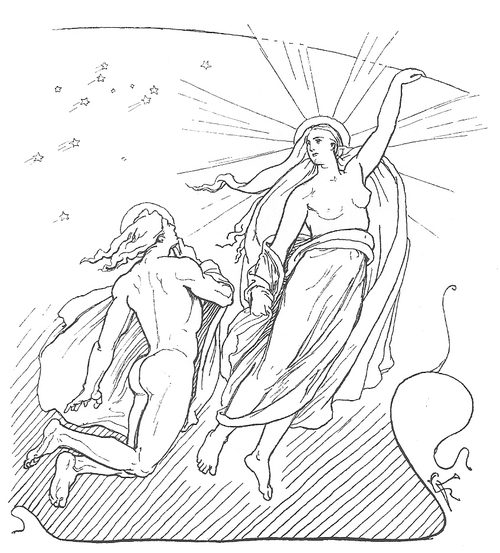
In Norse myth the sun is a woman. The poems call her the sister of the moon Völuspá 5 and the child of Mundilfari Vafþrúðnismál 23; Snorri turns this into a story and gives her the name Sól, which is simply the word for "sun".
Mundilfari's daughter
According to Gylfaginning, a man called Mundilfari had two children so beautiful that he named the boy Moon and the girl Sun, and married the girl to a man called Glenr. The gods took offence at this presumption, seized the brother and sister and set them in the sky. Sól was made to drive the horses that pull the sun's chariot, which the gods had made from the sparks of Múspellheim Gylfaginning 11. The horses are Árvakr and Alsviðr, and a cooling device under their shoulders keeps them from burning.
The story is Snorri's. Vafþrúðnismál says only that Mundilfari "fathered the flaming sun" and that sun and moon run the round of heaven "to tell the time for men" Vafþrúðnismál 23. Snorri's account also sits awkwardly beside his own creation story, where the gods make the heavenly lights from Múspellheim's sparks without any human children involved Gylfaginning 8. He seems to keep both: the sun is a fiery body, and Sól is its driver. The poems do not make this distinction. In Grímnismál the horses themselves "drag / Weary the weight of the sun" Grímnismál 37, and a shield, Svalinn, stands before the sun to keep the world from burning Grímnismál 38.
The chase and the end
Sól hurries across the sky because a wolf, Sköll, follows her Grímnismál 39. Snorri says Sköll will catch her Gylfaginning 12, and at Ragnarök "the Wolf shall swallow the sun" Gylfaginning 51. Völuspá speaks of one of Fenrir's brood who will "steal the sun from the sky" Völuspá 40, and at the end "the sun turns black" Völuspá 57. Before the end, however, she bears a daughter as bright as herself, who will ride her mother's paths in the new world Vafþrúðnismál 47; Snorri quotes the same stanza Gylfaginning 53.
Snorri counts Sól among the Ásynjur Gylfaginning 35, and the skalds called the sun "Daughter of Mundilfari, Sister of the Moon, Wife of Glenr" Skáldskaparmál 26. Of Glenr nothing more is known.
In the sources
Quoted from the hosted translations; each line is checked against the text when the site is built. Select a reference to read it in context.
Mundilferi is he who begat the moon, And fathered the flaming sun; The round of heaven each day they run, To tell the time for men.
they were so fair and comely that he called his son Moon, and his daughter Sun, and wedded her to the man called Glenr.
The sun, the sister of the moon, from the south Her right hand cast over heaven's rim; No knowledge she had where her home should be
Skoll is the wolf that to Ironwood Follows the glittering god
A daughter bright Alfrothul bears Ere Fenrir snatches her forth; Her mother's paths shall the maiden tread
In modern culture
Not from the medieval sources.
A sun goddess appears outside Scandinavia too: the Old High German Second Merseburg Charm names Sunna alongside Frija (Frigg) and Volla. In modern German the sun is still grammatically feminine (die Sonne) and the moon masculine (der Mond), as in Old Norse.