god or goddess
Máni
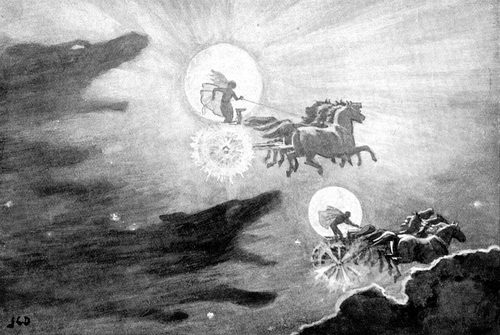
The moon as a god: son of Mundilfari and brother of the Sun, he steers the moon's course and governs its waxing and waning, pursued by a wolf.
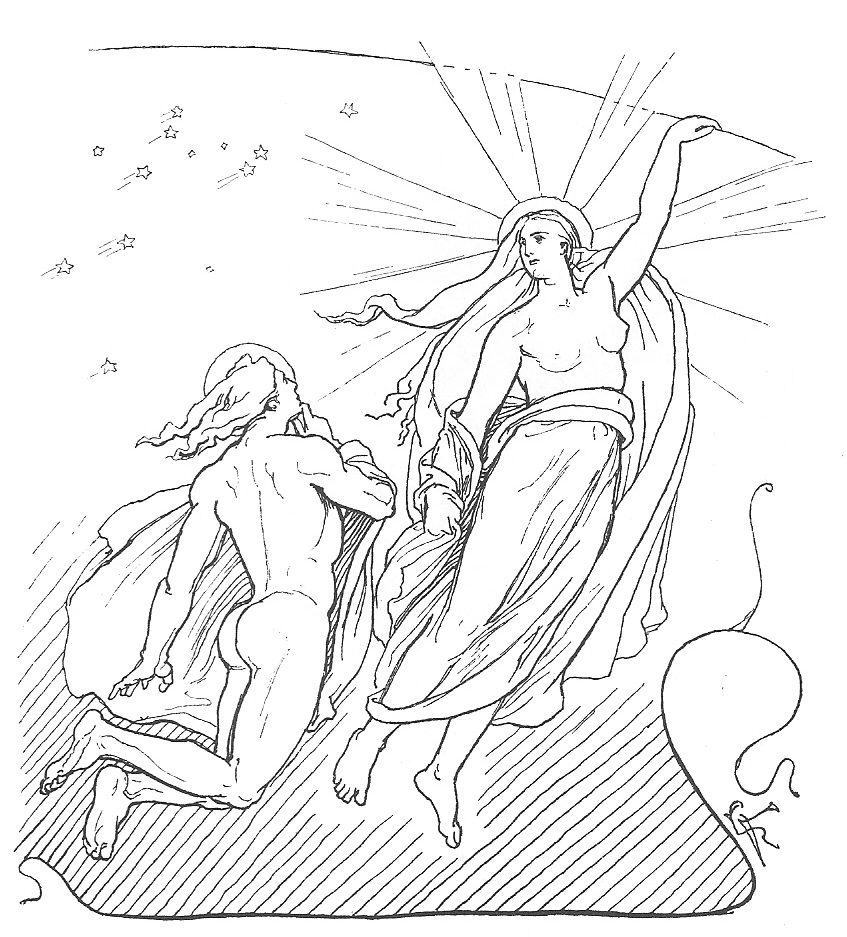
The moon in Norse myth is male, the brother of the sun. The poems say that Mundilfari "begat the moon, / And fathered the flaming sun" Vafþrúðnismál 23, and that the sun is "the sister of the moon" Völuspá 5. Snorri names the pair Máni and Sól, the ordinary words for moon and sun.
Steering the moon
In Snorri's story, Mundilfari named his beautiful children after the moon and sun, and the gods, angered by his pride, set them in the sky. Máni "steers the course of the moon, and determines its waxing and waning" Gylfaginning 11. The poems say something similar without the personal story: the moon, "full moon and old", was made by the gods "to tell the time for men" Vafþrúðnismál 25, and at the creation the gods named "the waning moon" so that years could be counted Völuspá 6.
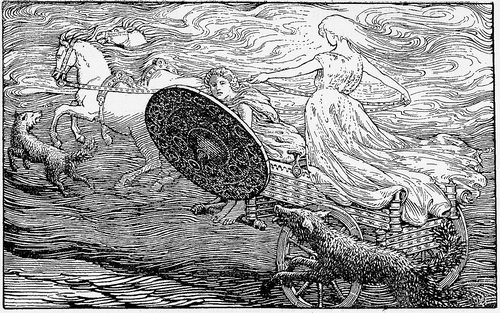
Snorri adds a detail found nowhere else. Máni took up from the earth two children, Bil and Hjúki, as they came from the well Byrgir carrying a cask called Sægr on a pole called Simul; their father was Viðfinnr, and they follow the moon "as may be seen from the earth" Gylfaginning 11. This looks like an explanation of the markings on the moon's face, though Snorri does not say so. He later counts Bil among the Ásynjur Gylfaginning 35.
Names and wolves
In Alvíssmál, Thor asks the dwarf what the moon is called in every world. Gods call it "Flame", giants "The Goer", dwarfs "The Gleamer", elves "The Teller of Time" Alvíssmál 14.
Like his sister, Máni is chased. Snorri says the wolf Hati Hróðvitnisson runs before the sun "eager to seize the moon", and that a wolf called Moon-Hound will one day swallow it Gylfaginning 12; at Ragnarök "the other wolf shall seize the moon" Gylfaginning 51. See Sköll and Hati.
In the sources
Quoted from the hosted translations; each line is checked against the text when the site is built. Select a reference to read it in context.
Moon steers the course of the moon, and determines its waxing and waning. He took from the earth two children, called Bil and Hjúki
Mundilferi is he who begat the moon, And fathered the flaming sun
The moon knew not what might was his.
'Moon' with men, 'Flame' the gods among, 'The Wheel' in the house of hell
Where the sources disagree or fall silent
- Grímnismál 39 says the wolf Hati waits for 'the burning bride of heaven'. Since the moon is male in Norse, the phrase may mean the sun; Snorri makes Hati the moon's pursuer (Gylfaginning 12).
In modern culture
Not from the medieval sources.
A suggestion made in the 19th century, and still often repeated, links Hjúki and Bil with the English nursery rhyme 'Jack and Jill', since they too carry a pail. There is no evidence for the connection.