Vanir
Njörðr
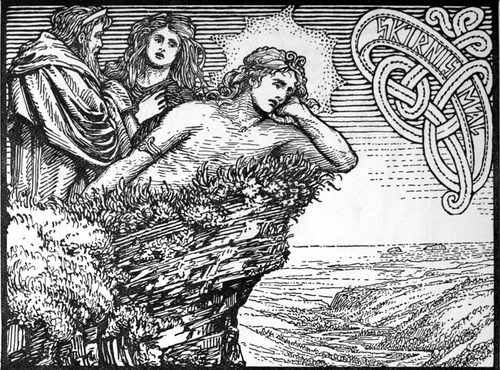
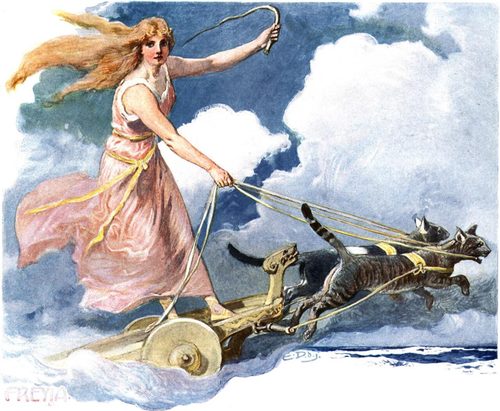
The Vanir god of the sea, winds and wealth, father of Freyr and Freyja. Sent to the Æsir as a hostage after their war, he married the giantess Skaði, an ill-matched union of sea and mountain.
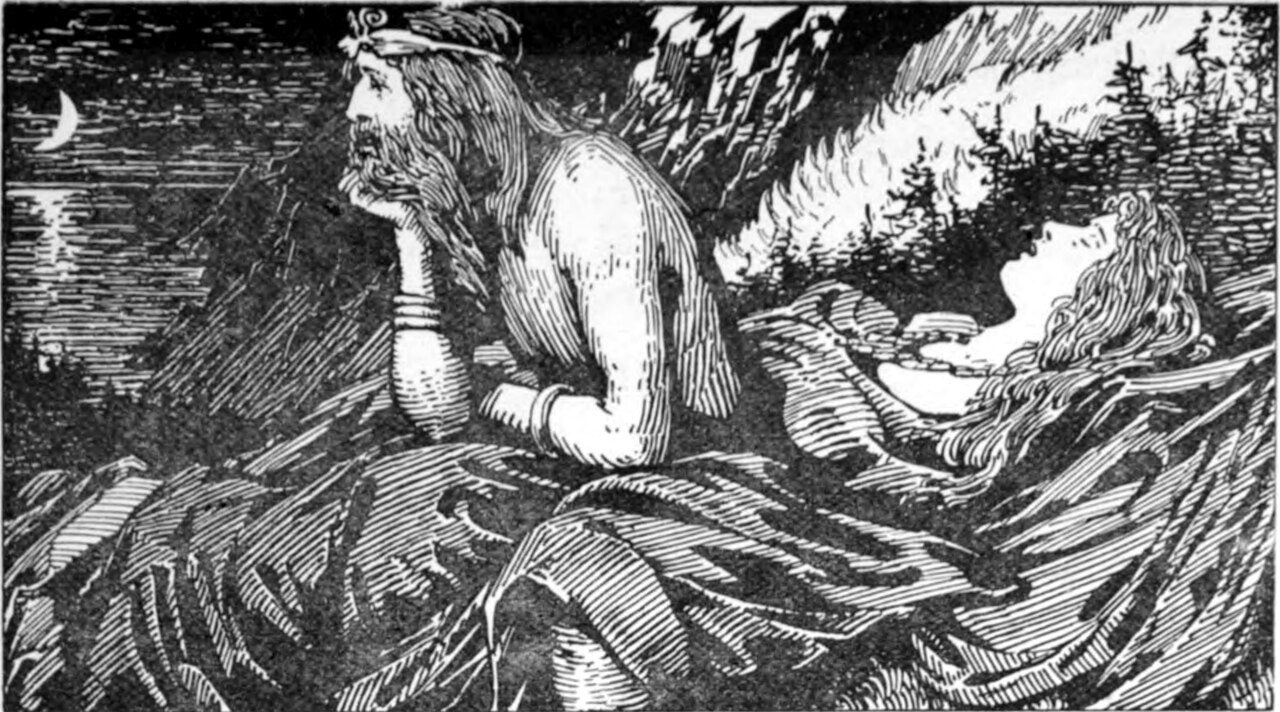
Njörðr is the god of the sea and of the wealth that comes from it. Snorri says "He rules the course of the wind, and stills sea and fire; on him shall men call for voyages and for hunting", and that he is so rich he can grant men land and goods Gylfaginning 23. His hall is Nóatún, where "The sinless ruler of men there sits In his temple timbered high" Grímnismál 16. He is the father of Freyr and Freyja Gylfaginning 24, and poets call him "Father of Freyr and Freyja, God of Wealth-Bestowal" Skáldskaparmál 6.
The hostage
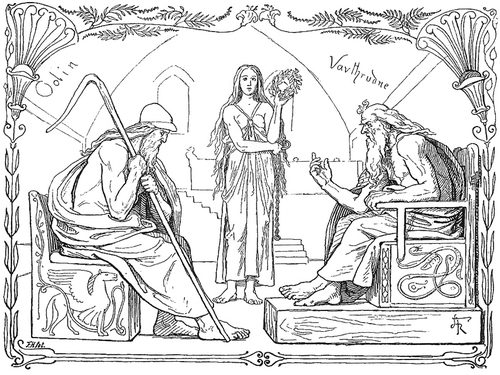
Njörðr was not born among the Æsir. When Odin asks how he came to the gods "Though of gods he was never begot", the giant Vafþrúðnir answers that the Vanir made him and "gave him as pledge to the gods", and that at the end of the world he will go home to the Vanir Vafþrúðnismál 38-39. Snorri explains: after their war the Vanir sent Njörðr as a hostage, and the Æsir sent Hœnir in exchange Gylfaginning 23 (see The war of the Æsir and the Vanir). In Lokasenna Loki turns this into an insult, claiming that giants' daughters used his mouth as a privy while he was away Lokasenna 34. Njörðr replies that the exile paid off, since it gave him Freyr, "whom no man hates" Lokasenna 35.
Sea and mountain
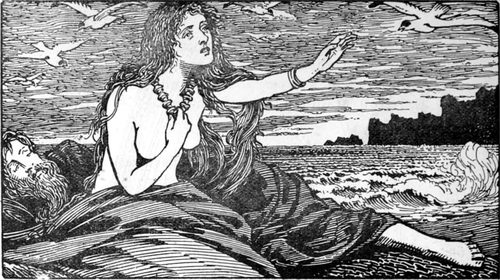
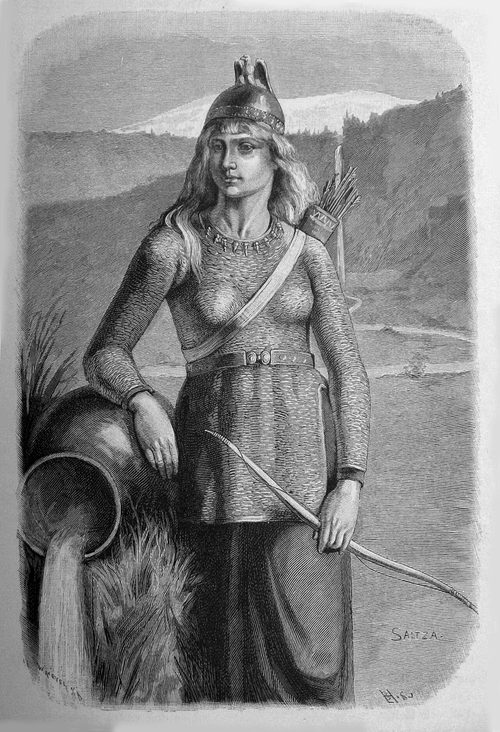
Njörðr's marriage is a story about incompatible homes. The giantess Skaði came to Asgard to avenge her father Þjazi, and as part of the settlement she was allowed to choose a husband by looking only at the feet. She picked the most beautiful pair, hoping for Baldr; they were Njörðr's Skáldskaparmál 1 (see Skaði chooses a husband). They agreed to spend nine nights in her father's mountain home, Þrymheimr, and nine at Nóatún by the sea. Neither could bear the other's home. Njörðr sang that after the song of swans the wolves' howling sounded ill, and Skaði that the screaming seabirds woke her every morning Gylfaginning 23. She went back to the mountains, and Snorri records that "Skadi departed from Njördr" Skáldskaparmál 6.
Older roots
Loki's charge that Njörðr fathered Freyr on his own sister Lokasenna 36 is the only hint in the Eddas of an earlier wife. Snorri's Ynglinga saga, outside the Eddas, says such sibling marriage was the custom among the Vanir. Scholars have long compared Njörðr with Nerthus, a goddess whose cult among Germanic tribes the Roman historian Tacitus described around AD 98; the names correspond exactly, but the relationship is unclear.
In the sources
Quoted from the hosted translations; each line is checked against the text when the site is built. Select a reference to read it in context.
He rules the course of the wind, and stills sea and fire; on him shall men call for voyages and for hunting.
In the home of the Wanes did the wise ones create him, And gave him as pledge to the gods; At the fall of the world shall he fare once more Home to the Wanes so wise.
The eleventh is Noatun; there has Njorth For himself a dwelling set
Loath were the hills to me, I was not long in them, Nights only nine; To me the wailing of wolves seemed ill, After the song of swans.
The son did I have whom no man hates, And foremost of gods is found.
Where the sources disagree or fall silent
- How Njörðr relates to Tacitus's Nerthus: the names match, but Nerthus is a goddess of the earth. Scholars have proposed a divine pair, a change of sex, or a coincidence.
- Who the mother of Freyr and Freyja was. Loki says Njörðr had his son by his own sister (Lokasenna 36); no source names her.
In modern culture
Not from the medieval sources.
Njörðr is little used in modern fiction. His name survives in Scandinavian place-names, and the Vanir god Njord appears in some video games and in modern heathen practice as a patron of sailors and fishermen.