Æsir
Forseti
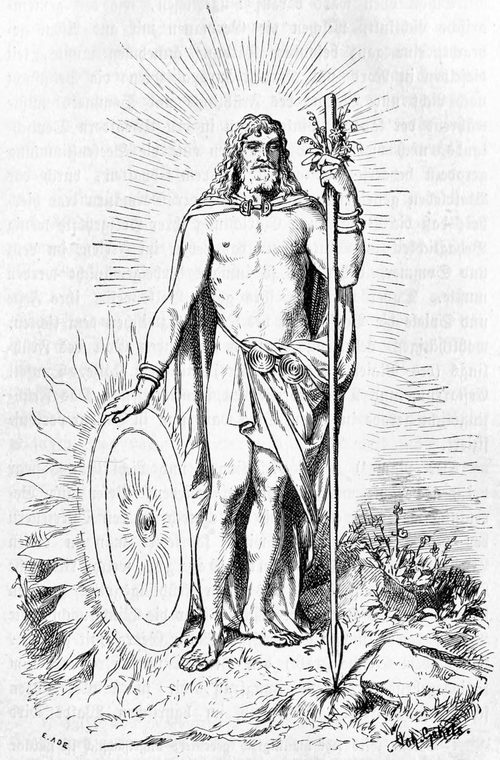
Son of Baldr and Nanna, a god of justice whose hall Glitnir, pillared with gold and roofed with silver, is the best court among gods and men.
Forseti is the god of settled disputes. In Grímnismál, Odin, listing the dwellings of the gods, comes to the tenth: Glitnir, with golden pillars and a silver roof, where Forseti spends most of his days "and sets all strife at end" Grímnismál 15.
Snorri adds his family and his role. Forseti is "the son of Baldr and Nanna daughter of Nep", and whoever brings him a quarrel from a law-suit goes home reconciled: "That is the best seat of judgment among gods and men" Gylfaginning 32. Skáldskaparmál calls Baldr "Father of Forseti" Skáldskaparmál 5 and lists Forseti among the twelve gods who sat as judges when Ægir visited Ásgard Skáldskaparmál 1.
No story about Forseti survives. He takes no part in Baldr's death, the vengeance that follows, or Ragnarök.
Outside Scandinavia, early medieval writers mention a god Fosite worshipped by the Frisians on an island, usually identified as Heligoland. Many scholars connect the two names; others think the Frisian god was borrowed into Norse tradition and only later attached to Baldr's family. The link is plausible but unproven.
In the sources
Quoted from the hosted translations; each line is checked against the text when the site is built. Select a reference to read it in context.
The tenth is Glitnir; its pillars are gold, And its roof with silver is set; There most of his days does Forseti dwell, And sets all strife at end.
All that come to him with such quarrels as arise out of law-suits, all these return thence reconciled. That is the best seat of judgment among gods and men