god or goddess
Dagr
Day personified: son of Night and the bright Dellingr, he rides round the earth behind his mother on the horse Skinfaxi, whose mane lights the world.
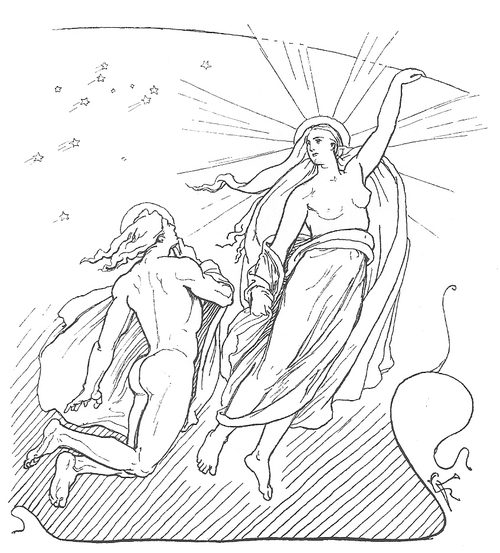
Dagr, Day, is the son of Night. In Vafþrúðnismál, Odin asks where day and night came from, and the giant answers that "the father of day is Delling called, / And the night was begotten by Nor" Vafþrúðnismál 25. Snorri combines the two lines into a family: Night's third husband was Dellingr ("Dayspring" in Brodeur's translation), "of the race of the Æsir", and their son was Day, "radiant and fair after his father" Gylfaginning 10.
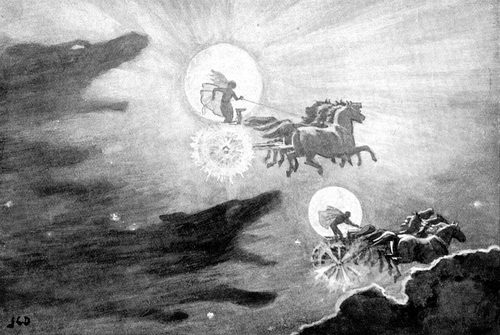
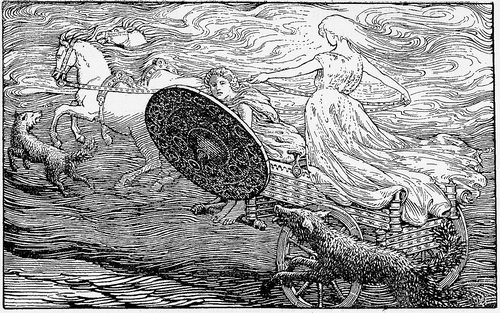
Allfather gave mother and son each a horse and a chariot and set them riding round the earth. Night goes first; Day follows on Skinfaxi, "Sheen-Mane", who "illumines all the air and the earth from his mane" Gylfaginning 10. The poem already knows the horse: Skinfaxi draws "the glittering day" and "brightly his mane doth burn" Vafþrúðnismál 12. See Skinfaxi and Hrímfaxi.
Day has no story of his own. In Snorri's arrangement, Day lights the world while the sun, driven by Sól, is a separate thing; the poems do not explain how the two relate. A Skáldskaparmál list gives Day a second horse, Glaðr Skáldskaparmál 57.
In the sources
Quoted from the hosted translations; each line is checked against the text when the site is built. Select a reference to read it in context.
Last of all Dayspring had her, and he was of the race of the Æsir; their son was Day: he was radiant and fair after his father.
The father of day is Delling called
Skinfaxi is he, the steed who for men The glittering day doth draw; The best of horses to heroes he seems, And brightly his mane doth burn.