place
Breiðablik
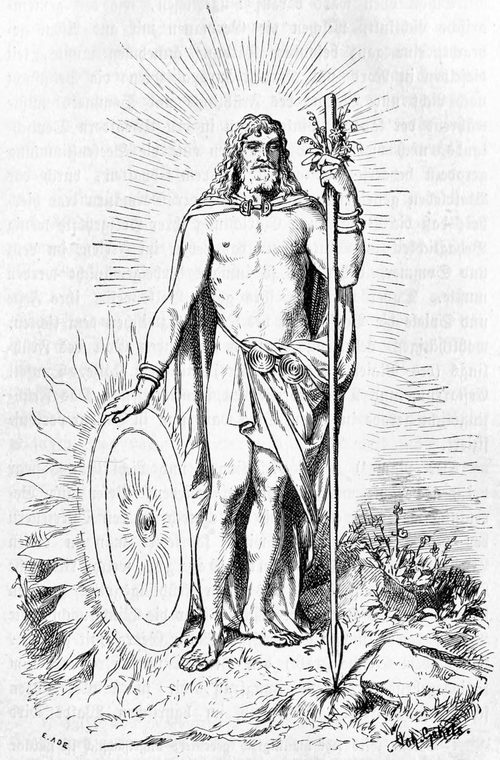
Baldr's hall, the fairest dwelling in heaven, in a land where nothing unclean may be and where, the poem says, there are fewest baleful runes.
Breiðablik is the hall of Baldr. Grímnismál lists it seventh: Baldr has made himself a dwelling there, "In the land I know that lies so fair, / And from evil fate is free" Grímnismál 12.
Snorri calls it the fairest dwelling in heaven Gylfaginning 17. In his chapter on Baldr he says that "in that place may nothing unclean be" and quotes the same stanza Gylfaginning 22. Brodeur's version of the last line is closer to the Old Norse: the land where there lie "fewest baneful runes", meaning evil signs or curses. Bellows's "from evil fate is free" is a freer rendering of the same words. The two English translations of one stanza thus look more different than the sources do.
The stanza has an obvious irony that many readers have noted: the god whose hall is freest from evil is the one who is killed. Nothing in the texts places the killing at Breiðablik. Snorri sets it at the gods' assembly Gylfaginning 49.
In the sources
Quoted from the hosted translations; each line is checked against the text when the site is built. Select a reference to read it in context.
The seventh is Breithablik; Baldr has there For himself a dwelling set, In the land I know that lies so fair, And from evil fate is free.
Then there is also in that place the abode called Breidablik, and there is not in heaven a fairer dwelling.
Breidablik 't is called, where Baldr has A hall made for himself: In that land where I know lie Fewest baneful runes.