Seiðr Loom

world

Asgard

Ásgarðr

The stronghold of the Æsir, walled against the giants, full of halls such as Valhall and Bilskirnir; Snorri also identifies it, confusingly, with Troy.

Ásgarðr is the home of the Æsir, a fortified enclosure built to keep the giants out. The word is plain: garðr means a fenced yard or stronghold, the same element as in Miðgarðr. The poems mention it by name only in passing — Thor and Týr set out "from Asgarth" to visit Hymir Hymiskviða 7 — and they spend more time on its separate halls than on the place as a whole.

Halls and wall

Grímnismál gives the fullest tour, though without using the name. Odin lists the gods' homes: Thor's Thrúðheimr, Ullr's Ýdalir, Álfheimr given to Freyr, Valhall in Glaðsheimr, Baldr's Breiðablik, Heimdallr's Himinbjörg and others, ten or more in all Grímnismál 4 Grímnismál 8 Grímnismál 12. Snorri adds the court at Iðavöllr with its twelve seats, the goddesses' hall Vingólf and the gods' forge Gylfaginning 14, and Odin's high seat Hliðskjálf from which he sees the whole world Gylfaginning 9.

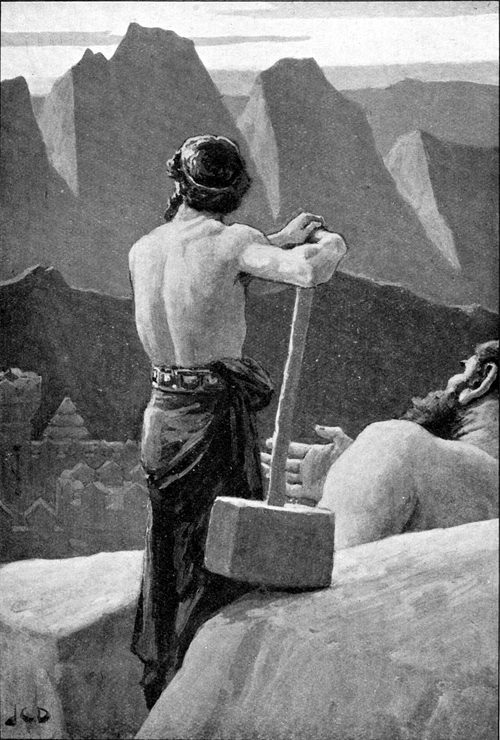
The wall matters in the stories. In Völuspá it is broken by the Vanir in the first war Völuspá 23. Snorri tells how a giant mason offered to rebuild it in one winter and was cheated of his fee by Loki's trick (see The giant builder and the wall of Asgard) Gylfaginning 42. In Þrymskviða Loki warns that if the hammer is not recovered, "the giants in Asgarth" will dwell Þrymskviða 17. Ásgarðr is a place under siege.

Snorri's two Ásgards

Snorri describes Ásgard in two ways at once. In the myth, the sons of Borr build it "in the middle of the world" after making Miðgarðr Gylfaginning 9. But he adds "men call it Troy", and his Prologue explains the gods as human kings from Troy who travelled north and were worshipped Prose Edda, Prologue. He even speaks of an "Elder Ásgard" where Odin had twelve names Gylfaginning 3. Most scholars read this as Snorri's learned frame, written by a Christian for whom the old gods had to be explained as men; the myths inside the frame treat Ásgard as the gods' own world.

After the end

Ásgarðr does not survive Ragnarök as a city. Völuspá has the surviving gods meet again at Iðavöllr and find their golden gaming pieces in the grass Völuspá 60 Völuspá 61; Snorri says they will dwell "at Ida-Plain, where Ásgard was before" Gylfaginning 53.

In the sources

Quoted from the hosted translations; each line is checked against the text when the site is built. Select a reference to read it in context.

Next they made for themselves in the middle of the world a city which is called Ásgard; men call it Troy.
Gylfaginning 9 Snorri places Ásgard at the centre of the world and, in the same breath, equates it with Troy.
that was in the place which is called Ida-field, in the midst of the town.
Gylfaginning 14 The gods plan their town at Iðavöllr, build their court of twelve seats and a forge.
Else will the giants in Asgarth dwell If thy hammer is brought not home to thee.
Þrymskviða 17 Loki warns Thor that without Mjöllnir the giants will take Ásgarðr: the hammer is its defence.
The wall that girdled the gods was broken, And the field by the warlike Wanes was trodden.
Völuspá 23 In the war with the Vanir the gods' wall is breached: the oldest reference to Ásgarðr's fortifications.
there came at that time a certain wright and offered to build them a citadel in three seasons
Gylfaginning 42 Snorri's story of the giant builder who walls Ásgard for the price of Freyja, the sun and the moon.
they shall dwell at Ida-Plain, where Ásgard was before.
Gylfaginning 53 After Ragnarök the surviving gods live where Ásgard had stood.

Where the sources disagree or fall silent

  • The poems rarely name Ásgarðr; it is unclear whether the poets thought of it as a separate world or simply as the gods' home on or above the earth.
  • Snorri's identification of Ásgard with Troy belongs to his learned framework; how far he believed it is debated.

In modern culture

Not from the medieval sources.

Asgard is best known today from Marvel Comics, where it first appeared in the early 1960s, and from Marvel's Thor films (2011 onward), which make it a gleaming city on a floating continent. It also appears in the God of War games and in Wagner's Ring, where the gods' new fortress is called Walhall. The idea of Asgard as a separate 'realm' reached by the rainbow bridge comes mainly from Snorri.
Myths with Asgard

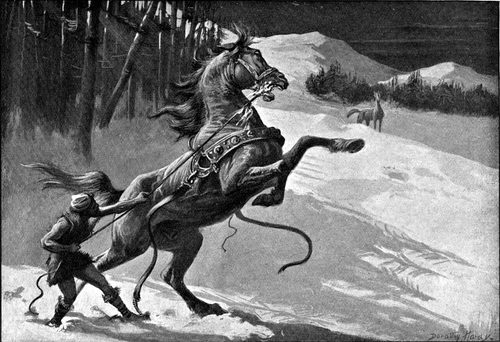
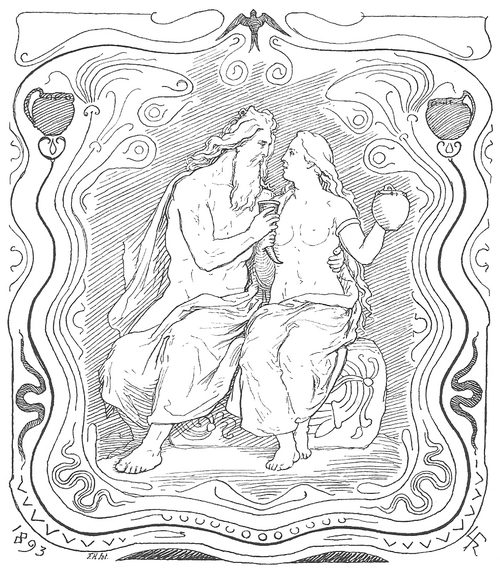
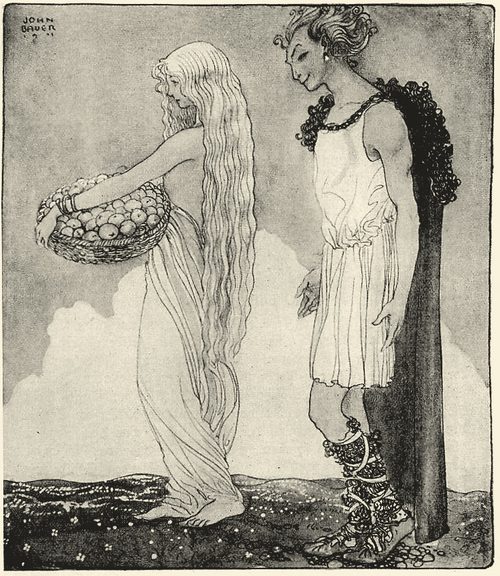
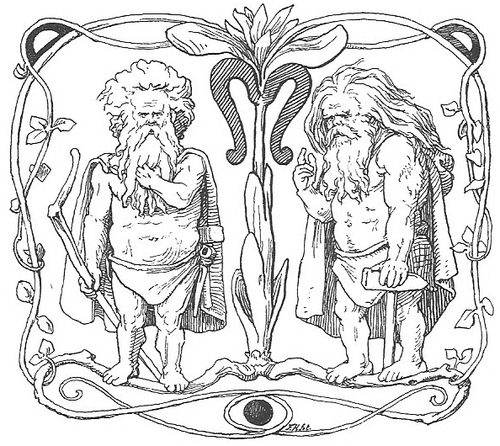
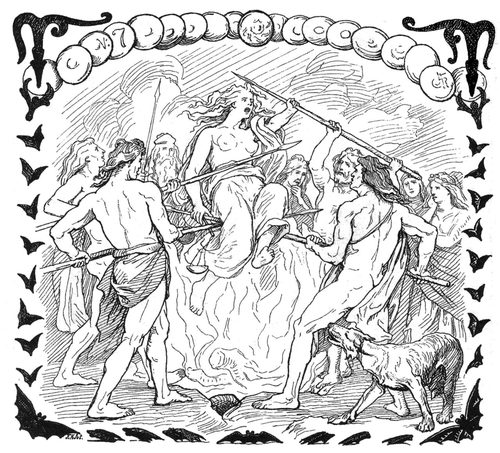
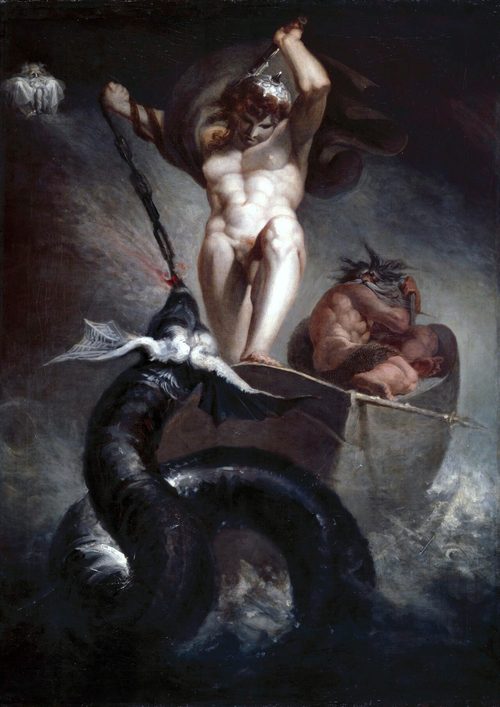
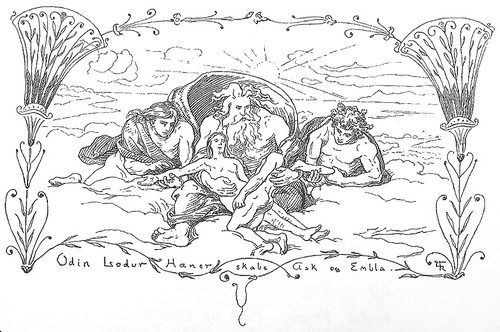
Ask and Embla: the first humans Three gods walking by the shore find two lifeless pieces of wood, Ask and Embla, and give them breath, mind, warmth and colour. Völuspá and Snorri agree on the gifts but not on who gave them. Skaði chooses a husband Þjazi's daughter Skaði comes armed to Asgard for vengeance and accepts a settlement instead: a husband chosen by his feet, and a laugh. She picks Njörðr, hoping for Baldr, and the marriage of mountain and sea does not last. The giant builder and the wall of Asgard A stranger offers to wall the gods' stronghold in a single winter, for the price of Freyja, the sun and the moon. When he is about to win, Loki saves the gods by turning himself into a mare — and gives birth to Sleipnir. The mead of poetry From the spittle of the gods' peace comes Kvasir, wisest of beings; from his blood two dwarfs brew a mead that makes poets. It passes to the giant Suttungr, and Odin wins it by labour, seduction and theft, flying home as an eagle. The theft of Iðunn and her apples Caught by a giant in eagle's shape, Loki buys his freedom by luring Iðunn and her apples out of Asgard. The gods grow old, and Loki must steal her back as a falcon, with Þjazi beating after him. The treasures of the gods: Sif's hair and Brokkr's wager Loki shaves Sif's head, and to save his own skin sets two families of dwarf-smiths competing. The result is six treasures — golden hair, a folding ship, a spear, a ring, a golden boar and Thor's hammer — and Loki's lips sewn shut. The war of the Æsir and the Vanir The first war in the world, fought between the two families of gods. The surviving texts give only fragments — a witch burned three times, Odin's spear, a broken wall, a truce sealed with spittle and hostages — but they add up to the story of how the Vanir came to live among the Æsir. Thor fishes for the World Serpent Sent to fetch a giant's brewing kettle, Thor goes fishing with the giant Hymir, baits his hook with an ox-head and hauls the Midgard Serpent up to the gunwale. The poem Hymiskvíða and Snorri tell it differently, and disagree on how it ended. Thor's duel with Hrungnir A horse race with Odin brings the stone-headed giant Hrungnir drunk and boasting into Asgard. Thor challenges him to the first single combat of his life, kills him with Mjölnir, and carries a piece of the giant's whetstone in his skull for ever after. Thrym steals Thor's hammer Thor wakes to find Mjölnir gone. The giant Þrymr will return it only for Freyja as his bride, so Thor goes to the wedding himself, in a veil, with Loki as his bridesmaid.

Related

The Æsir Æsir The main family of Norse gods, led by Odin and living in Asgard: Thor, Baldr, Týr, Heimdall and others, with the goddesses called Ásynjur. They fought and made peace with the Vanir. Midgard Miðgarðr The world of humans, made by Odin and his brothers from the body of the giant Ymir and fenced with his eyebrows against the giants who live around the ocean's edge. Bifröst The bridge between earth and heaven, which Snorri identifies with the rainbow; the gods ride over it each day, Heimdallr guards it, and it breaks at Ragnarök. Iðavöllr The plain at the heart of the gods' home where they first built their temples and forges, and where the surviving gods meet again after Ragnarök. Valhalla Valhöll Odin's vast hall of the battle-dead, roofed with shields and raftered with spears, where the einherjar feast and fight each day until they march out to meet the wolf at Ragnarök. Glaðsheimr The gold-bright place where Valhalla stands, according to Grímnismál; Snorri makes it the golden hall of the gods' twelve judgment seats. Hliðskjálf Odin's high seat, from which he can see over all the worlds; Frigg shares it with him, and Freyr's one forbidden turn in it costs him his sword. Odin Óðinn Chief of the Æsir: a one-eyed god of wisdom, poetry, magic, war and the dead, who gave an eye and hanged himself on a tree for knowledge, and who dies at Ragnarök. The nine worlds níu heimar The Eddas say there are nine worlds but never list them; the familiar list of nine realms is a modern reconstruction built mostly from Snorri's place-names. Jötunheimr The land of the giants, at the edge of the world beyond rivers and sea, usually to the east of the gods and men. Thor goes there to fight, and gods go there to court and steal.