concept
The giants (jötnar)
jötnar
The giants of Norse myth: the oldest race in the world, descended from Ymir, wise and often wealthy, enemies of the gods yet their kin, their wives and their mothers.
The giants are the oldest beings in the Norse world and the gods' great opponents. The sources use several words for them. Jötunn (plural jötnar) is the most common, along with þurs and troll. Snorri's translator Brodeur renders the main kinds as "Rime-Giants" and "Hill-Giants". Bellows usually writes "giants" or "frost-giants". Neither Edda gives a single description of what a giant looks like. Some have many heads, some are mountain-sized, and some are the most beautiful women in the world.
Origins
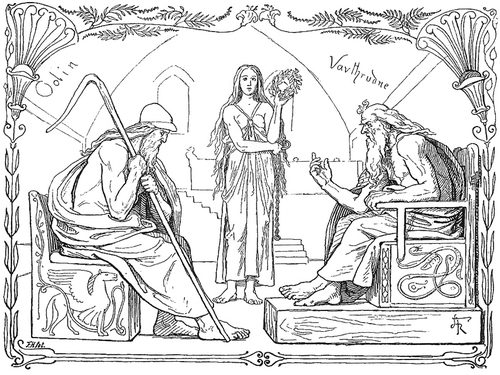
Giants came before gods. Vafþrúðnir, himself a giant, tells Odin that venom dripped from the icy rivers of Élivágar "and waxed till a giant it was; and thence arose our giants' race" Vafþrúðnismál 31. Snorri builds this into a full account. The first giant, Ymir, forms in Ginnungagap where heat meets rime; a man and a woman grow under his arm while he sleeps, and one foot begets a son on the other Gylfaginning 5. Odin and his brothers are only half of this stock: their mother Bestla is the daughter of the giant Bölþorn Gylfaginning 6.
The gods kill Ymir, and his blood drowns all the giants except Bergelmir, who escapes with his household on a boat Gylfaginning 7. The world is made from Ymir's body. The gods give the giants lands along the outer shore of the ocean and raise Midgard from Ymir's brows "against the hostility of the giants" Gylfaginning 8. From then on, the giants' world (Jötunheimr, or Útgarðr) lies at the edge, usually to the east, across water or ice.
Enemies, in-laws and teachers
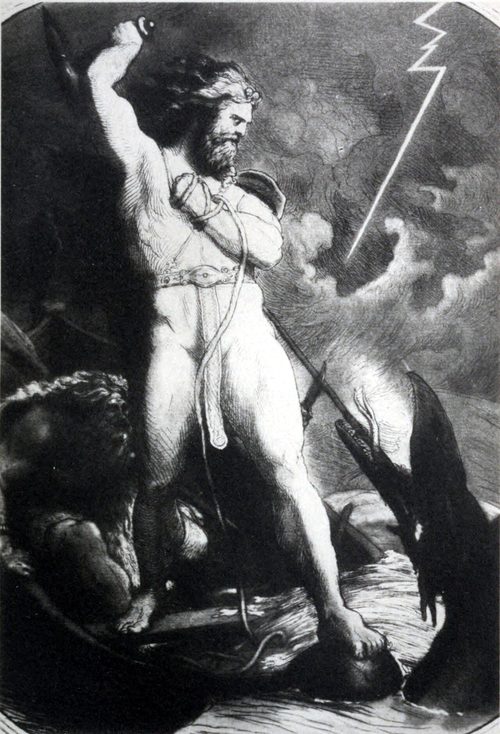
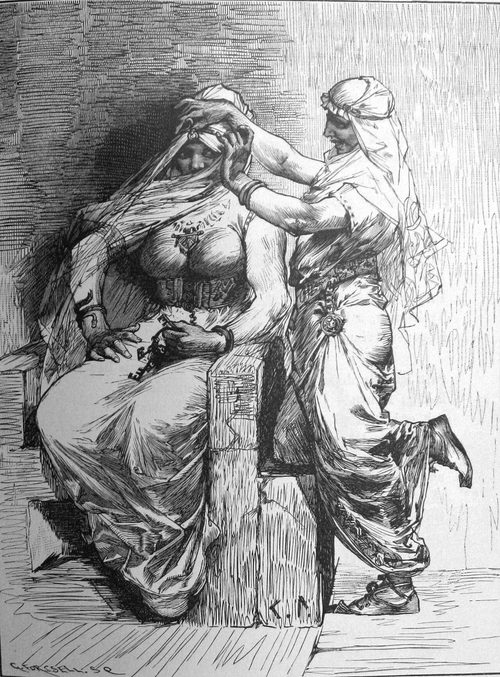
Much of the mythology is the gods dealing with giants. Thor is always "gone into the eastern region to fight trolls" Gylfaginning 42, and his hammer Mjölnir is described by its effect on giant skulls Gylfaginning 21. Giants steal from the gods (Þrymr takes the hammer, Þjazi takes Iðunn) and want goddesses as brides. Þrymr wants Freyja, and Hrungnir boasts that he will carry off Freyja and Sif Skáldskaparmál 17.
Yet the gods marry them and descend from them. Njörðr marries Skaði, daughter of Þjazi Gylfaginning 23. Freyr wins Gerðr, daughter of Gymir and a Hill-Giant mother Gylfaginning 37. Loki, counted among the Æsir, is the son of "Fárbauti the giant" Gylfaginning 33. Giants are also keepers of wisdom and wealth. The seeress of Völuspá was fed by "the giants of yore" Völuspá 2. Vafþrúðnir knows the history of the world from its beginning to its end and holds his own against Odin until the last question Vafþrúðnismál 55. Odin wins the mead of poetry by stealing it from the giant Suttungr.
I remember yet the giants of yore,Who gave me bread in the days gone by;Völuspá 2
At the end
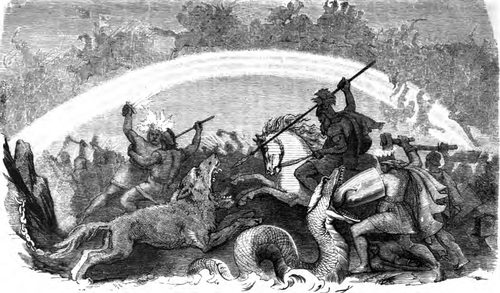
At Ragnarök "all Jotunheim groans" Völuspá 48. The giant Hrymr comes from the east Völuspá 50, and in Snorri's version he leads "all the Rime-Giants" to the last battle beside Loki Gylfaginning 51. Surtr, who burns the world, is often counted among them, but the texts do not call him a giant outright.
Reading the giants
Many scholars treat the giants as the forces of nature and disorder: frost, mountains, sea and fire, set against the ordered world of gods and men. Others stress that the line between gods and giants is thin and often crossed, by marriage, by descent and by stolen goods. That is easier to fit to the sources than a simple war of good and evil. Both readings are interpretations; the texts tell stories rather than explain the giants.
In the sources
Quoted from the hosted translations; each line is checked against the text when the site is built. Select a reference to read it in context.
Down from Elivagar did venom drop, And waxed till a giant it was; And thence arose our giants' race
By no means do we acknowledge him God; he was evil and all his kindred: we call them Rime-Giants.
they drowned all the race of the Rime-Giants, save that one, whom giants call Bergelmir, escaped with his household
along the strand of that sea they gave lands to the races of giants for habitation
I remember yet the giants of yore, Who gave me bread in the days gone by
the hammer Mjöllnir, which the Rime-Giants and the Hill-Giants know, when it is raised on high
then Loki and Hrymr shall come there also, and with him all the Rime-Giants
Where the sources disagree or fall silent
- The texts never draw clear lines between jötnar, þursar, trolls and risar; Snorri's 'Rime-Giants' and 'Hill-Giants' look like two kinds, but no source defines the difference.
- Whether Snorri's flood that drowns the giants (Gylfaginning 7) is in Vafþrúðnismál is debated: the poem says only that Bergelmir 'in a boat of old was borne' (Vafþrúðnismál 35).
In modern culture
Not from the medieval sources.
Giants in today's games, films and fantasy fiction (the frost giants of Marvel's Jotunheim, the jötnar of God of War) are usually a race of monstrous enemies. The sources are more mixed: their giants are often wise, rich, hospitable or beautiful, and the gods marry them. The modern frost giant, blue and icy, owes more to the word 'rime' in English translations than to any description in the texts.