world
Midgard
Miðgarðr
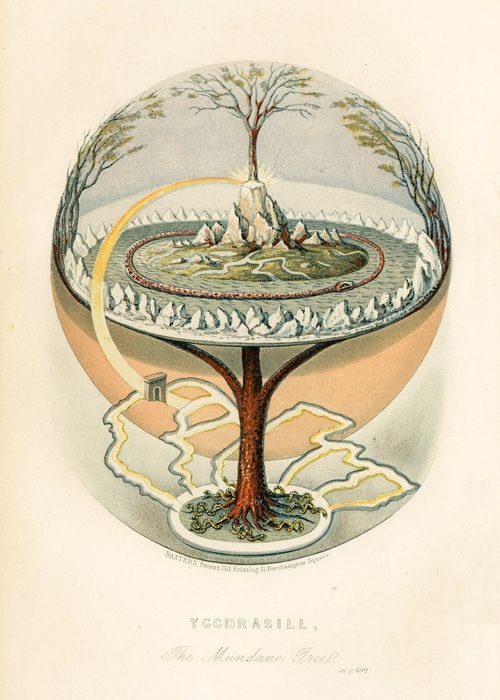
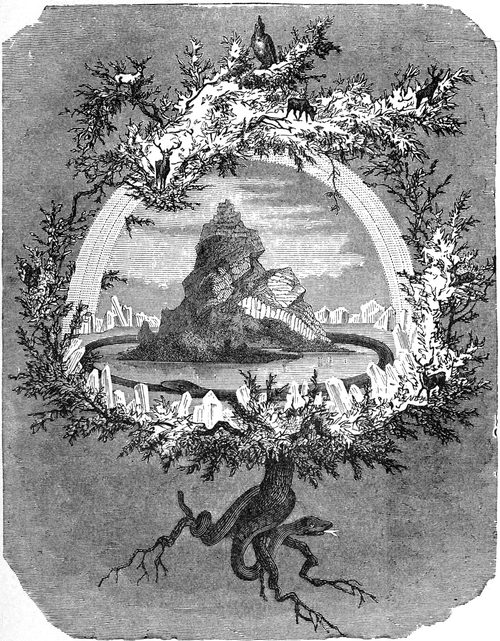
The world of humans, made by Odin and his brothers from the body of the giant Ymir and fenced with his eyebrows against the giants who live around the ocean's edge.
Miðgarðr is the world of humans. Its name means "the middle enclosure", and both halves of the word count: it lies in the middle, and it is fenced in. Older Germanic languages had the same word for the inhabited earth, which suggests the idea is much older than the Eddas.
How it was made
Völuspá is brief: "Bur's sons lifted the level land, / Mithgarth the mighty there they made", and the sun warmed the stones until green leeks grew Völuspá 4. Grímnismál and Vafþrúðnismál add the grim detail that the world was built from the body of the giant Ymir — earth from his flesh, hills from his bones, sky from his skull — and that Miðgarðr itself was made from his eyebrows "for the sons of men" Grímnismál 40 Grímnismál 41 Vafþrúðnismál 21.
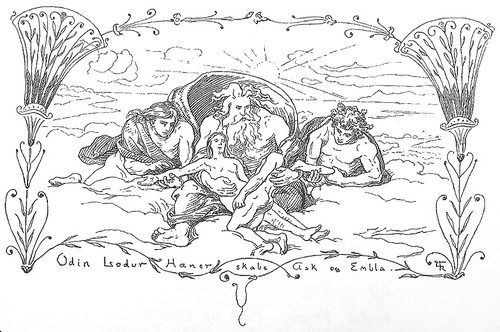
Snorri puts these pieces together into a map. The earth is ring-shaped, with the deep sea around it; the giants were given lands along the outer shore; and on the inner earth the gods raised Ymir's brows as a wall "against the hostility of the giants" and called it Midgard Gylfaginning 8. Then Odin and his brothers made the first humans, Askr and Embla, who "received a dwelling-place under Midgard" Gylfaginning 9. Only after that, Snorri says, did the gods build Ásgard for themselves.
A world under threat
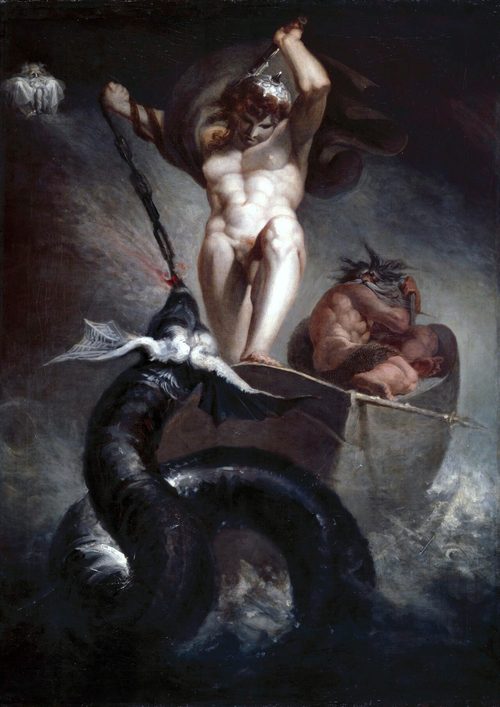
Miðgarðr is defined by what lies outside it. The sea around it holds the serpent Jörmungandr, whom Brodeur calls the Midgard Serpent because he lies in the ocean "encompassing all the land" Gylfaginning 34. Thor's fights with giants are what keep it inhabited; in Hárbarðsljóð he boasts that without them "no men would there be in Mithgarth more" Hárbarðsljóð 23. Odin's ravens Huginn and Muninn fly over it every day Grímnismál 20.
Snorri uses the name loosely. In the story of the giant builder, the gods fear giants who "should come in over Midgard" Gylfaginning 42, which treats Midgard as the whole earth between the giants and the gods. Whether the poets meant the walled enclosure only or the whole human world is not clear; the two senses probably sat side by side.
In the sources
Quoted from the hosted translations; each line is checked against the text when the site is built. Select a reference to read it in context.
Then Bur's sons lifted the level land, Mithgarth the mighty there they made
Mithgarth the gods from his eyebrows made, And set for the sons of men
on the inner earth they made a citadel round about the world against the hostility of the giants, and for their citadel they raised up the brows of Ymir the giant, and called that place Midgard.
O'er Mithgarth Hugin and Munin both Each day set forth to fly
And large were the giants' throng if all were alive; No men would there be in Mithgarth more.
Where the sources disagree or fall silent
- The sources disagree on whether Miðgarðr is the whole inhabited earth or only the walled enclosure within it; Snorri uses it both ways.
In modern culture
Not from the medieval sources.
The Old English cognate middangeard and its Middle English descendant 'middel-erde' gave J. R. R. Tolkien his 'Middle-earth'. In Marvel's films and the God of War games Midgard is simply Earth, the human realm among the others.