world
Hel (the realm)
Hel
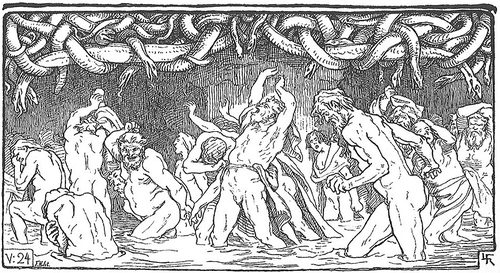
The underworld of the dead, ruled by Loki's daughter Hel: reached by the Hel-way and the Gjöll bridge, set down and to the north, under one root of Yggdrasil.
Hel is the Norse world of the dead and also the name of the woman who rules it (Hel). The poems mostly speak of it as a destination: men "go to Hel," the dead "throng Hel-way," and Sigurd tells Fáfnir he will lie "where Hel shall have thee" Fáfnismál 21. Very few passages describe the place itself, and the most detailed are Snorri's.
Where it is
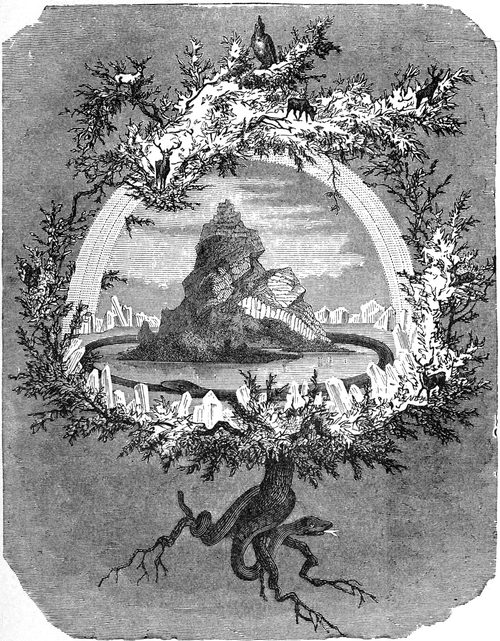
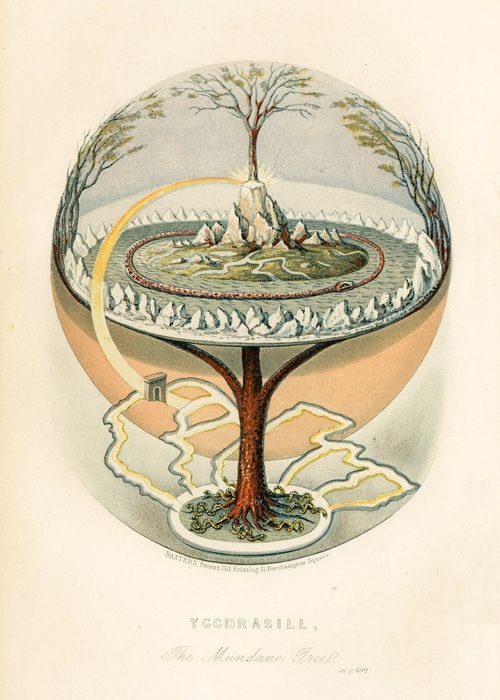
Snorri places Hel deep and to the north. In his first account, "evil men go to Hel and thence down to the Misty Hel; and that is down in the ninth world" Gylfaginning 3. Odin gave Loki's daughter "power over nine worlds" in Niflheim Gylfaginning 34. In Grímnismál, Hel lies under one of the three roots of Yggdrasil Grímnismál 31, and the rivers of the world flow down until "hence they fall to Hel" Grímnismál 28. Vafþrúðnir calls Niflhel "the home where dead men dwell" Vafþrúðnismál 43.
The road
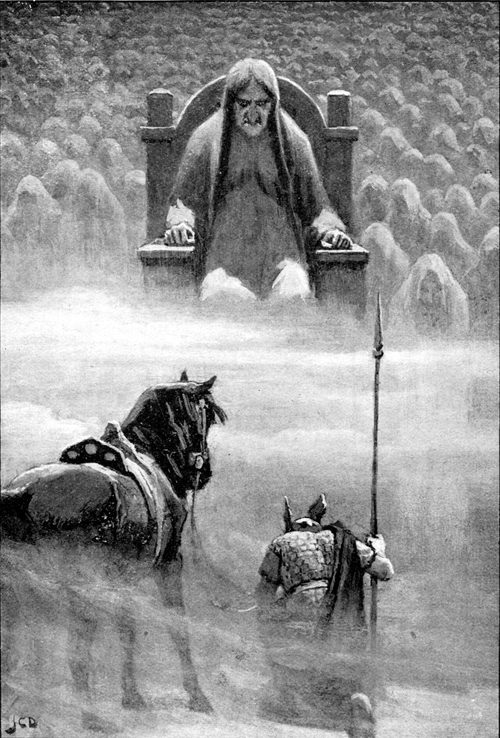
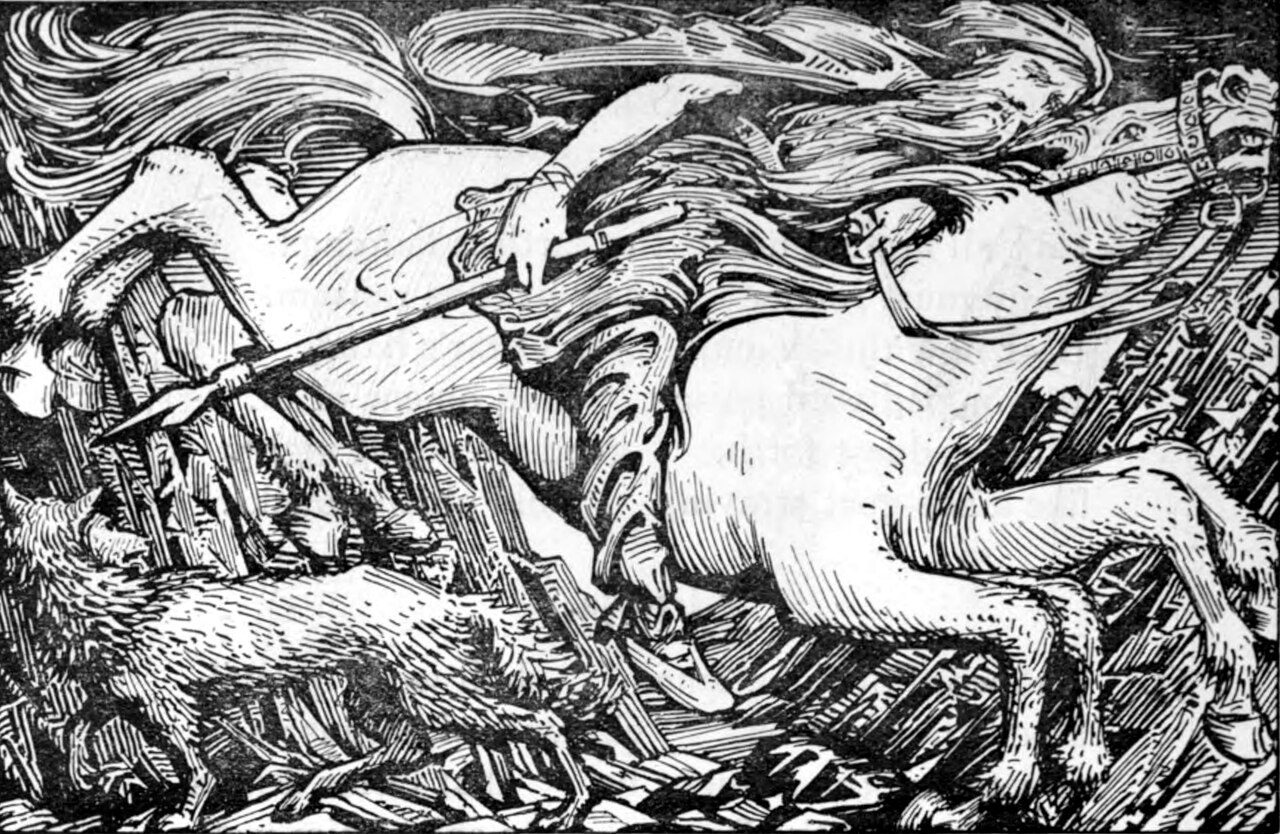
The fullest picture is the ride of Hermóðr to bring back Baldr (see Hermóðr's ride to Hel). He rode nine nights through dark, deep valleys to the river Gjöll and a bridge "thatched with glittering gold," guarded by a maiden named Móðguðr. She told him five companies of dead men had crossed the day before, yet the bridge rang louder under him alone, and he did not have the colour of the dead. "Down and north lieth Hel-way," she said. At Hel-gate he spurred Sleipnir over the gate without touching it and found Baldr in the high seat of the hall Gylfaginning 49.
Odin makes the same journey in Baldrs draumar: he rides Sleipnir "down to Niflhel deep," meets a bloody hound coming from Hel, and reaches "the house so high of Hel" Baldrs draumar 2-3. The hall is not grim there: its benches are decked with rings and gold, and the mead is brewed for Baldr Baldrs draumar 6-7.
Who goes there
The sources give no single rule. Snorri says Hel receives those who die "of sickness or of old age" Gylfaginning 34, leaving the battle-dead for Odin's Valhöll. Elsewhere he sends "evil men" there Gylfaginning 3. But Baldr, who was killed and was the best of the gods, goes to Hel as well, and in the heroic poems slain warriors are sent "to hell" as a matter of course Atlamál in grœnlenzku 38. For the place of punishment for oath-breakers and murderers, see Náströnd.
At Ragnarök "the people of Hel" sail against the gods with Loki Völuspá 51.
In the sources
Quoted from the hosted translations; each line is checked against the text when the site is built. Select a reference to read it in context.
he rode nine nights through dark dales and deep, so that he saw not before he was come to the river Gjöll and rode onto the Gjöll-Bridge
evil men go to Hel and thence down to the Misty Hel; and that is down in the ninth world
To nine worlds came I, to Niflhel beneath, The home where dead men dwell.
'Neath the first lives Hel, 'neath the second the frost-giants
Thence rode he down to Niflhel deep, And the hound he met that came from hell.
Where the sources disagree or fall silent
- The sources do not agree on who goes to Hel. Snorri says those who die of sickness or old age (Gylfaginning 34), but also that 'evil men' go there (Gylfaginning 3), and Baldr, who was killed, goes there too.
- Whether Hel and Niflhel (Misty Hel) are one place or two levels is unclear even in Snorri.
In modern culture
Not from the medieval sources.
In modern games and fantasy, including God of War (2018), 'Helheim' is usually a frozen, misty land of the dead. The cold matches Snorri's Niflheim; the Eddas themselves give few details of the landscape.