world
Útgarðr
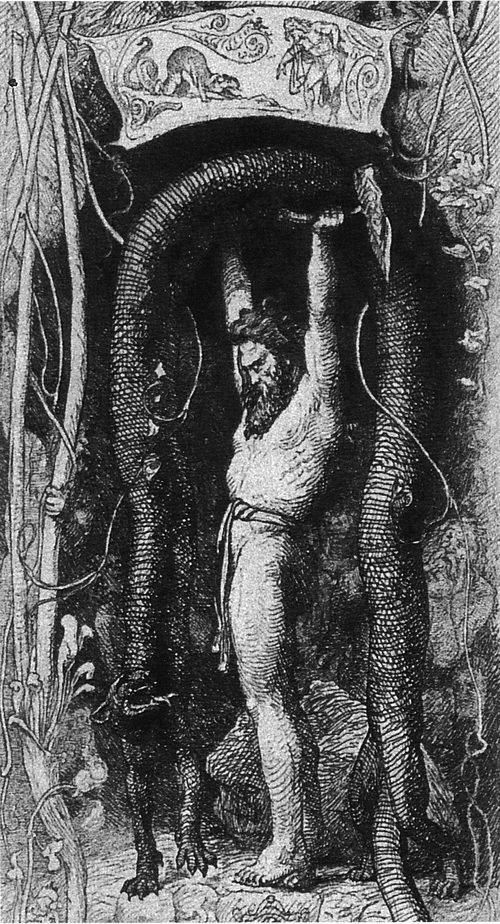
The castle of the giant Útgarða-Loki, far to the east beyond the sea, so huge that Thor's party must crane their necks to see over it. It vanishes when Thor tries to smash it.
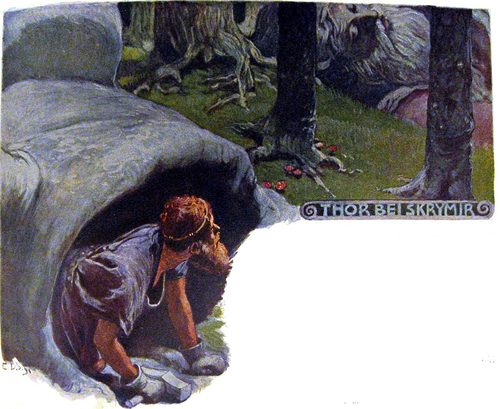
Útgarðr is the stronghold of Útgarða-Loki and the setting for the contests of Thor's visit. It is named only in Gylfaginning. To get there, Thor travels "eastward toward Jötunheim and clear to the sea", crosses the deep sea, walks a day through a great forest Gylfaginning 45, and then goes on east until midday Gylfaginning 46.
The castle stands on a plain. It is so tall that the travellers "set their necks down on their backs" to see its top, and its gate grating will not open for Thor, so they squeeze in between the bars Gylfaginning 46. Inside is a hall with two long benches of men, "most of them … big enough". Afterwards, its lord admits that he would never have let Thor in had he known how strong he was. When Thor turns back to smash the walls, he finds only "a wide and fair plain, but no castle" Gylfaginning 47.
Útgarðr and Miðgarðr
The name means "outer enclosure", the opposite of Midgard, the "middle enclosure" where people live. Some 20th-century scholars built a whole model of the Norse world on this pair, setting the ordered, fenced home (innangarðs) against the wild, giant-haunted outside (útangarðs). The model is useful but modern. The sources use the name Útgarðr only for this one castle, and they place giants in many lands: Jötunheimr, beyond Élivágar, or on the outer shore of the ocean Gylfaginning 8.
In the sources
Quoted from the hosted translations; each line is checked against the text when the site is built. Select a reference to read it in context.
ye shall see taller men, if ye come into Útgardr
Then they saw a castle standing in a certain plain, and set their necks down on their backs before they could see up over it.
he saw there a wide and fair plain, but no castle
Where the sources disagree or fall silent
- Útgarðr is named only in Snorri's tale of Thor's journey (Gylfaginning 45–47). Whether it is the same place as Jötunheimr, a part of it, or a stronghold beyond it, the text does not say.