concept
Elves
álfar
A race of beings constantly named alongside the gods in Eddic poetry but almost never described; Snorri divides them into shining light-elves and pitch-black dark-elves.
Elves are everywhere in Eddic poetry and almost nowhere in its stories. The poets name them as a matter of course beside the gods, but no poem describes an elf or tells where elves came from, and only one figure called an elf has a story of his own.
Gods and elves
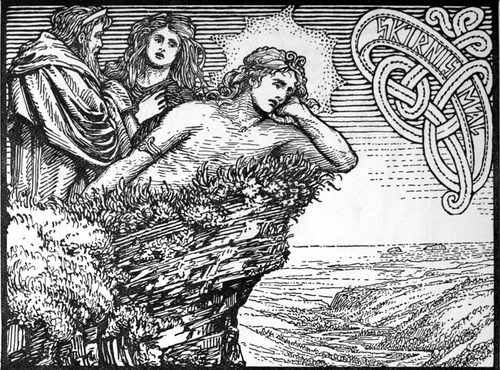
The commonest phrase is "gods and elves". At Ragnarök the seeress of Völuspá asks "How fare the gods? how fare the elves?" Völuspá 48. In Þrymskviða the giant asks Loki the same thing, and Loki answers "Ill fare the gods, ill fare the elves!" Þrymskviða 6. In Lokasenna the guests at Ægir's hall are "the gods and elves who are gathered here" Lokasenna 2 Lokasenna 30. Freyr complains that "no one of gods or elves" will let him have Gerðr Skírnismál 7, and Gerðr in turn asks Skírnir whether he is "of the elves or the offspring of gods, / Or of the wise Wanes" Skírnismál 17.
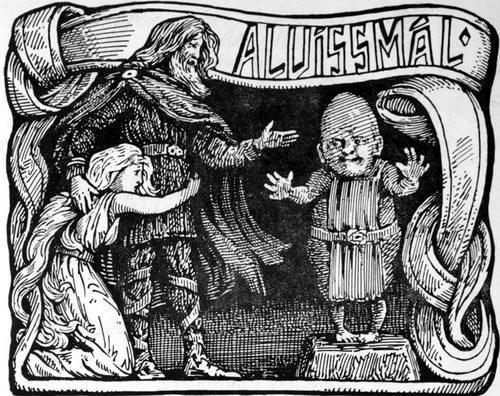
The pairing suggests that elves were thought of as close to the gods, perhaps a lesser divine people. Grímnismál gives their home, Álfheimr, to Freyr Grímnismál 5, and Alvíssmál lists the elves among the peoples who have their own words for things, separate from gods, Vanir, giants, men and dwarfs Alvíssmál 10. In Hávamál each race has its own rune-carver: Odin for the gods, Dáinn for the elves, Dvalinn for the dwarfs Hávamál 144. Some of the Norns are "to elves … kin" Fáfnismál 13.
Völundr, 'greatest of elves'
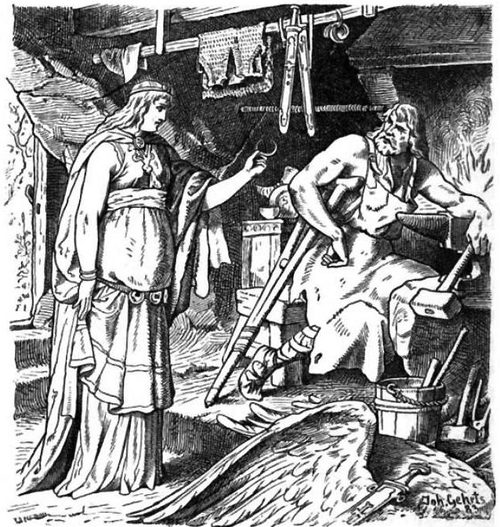
The one named figure called an elf is Völundr, the smith of Völundarkviða. The prose calls him a son of a king of the Finns, yet in the poem he is "master of elves" and "greatest of elves" Völundarkviða 13 Völundarkviða 15. How a human smith can be an elf is never explained, and the title may be honorific.
Snorri's light and dark elves
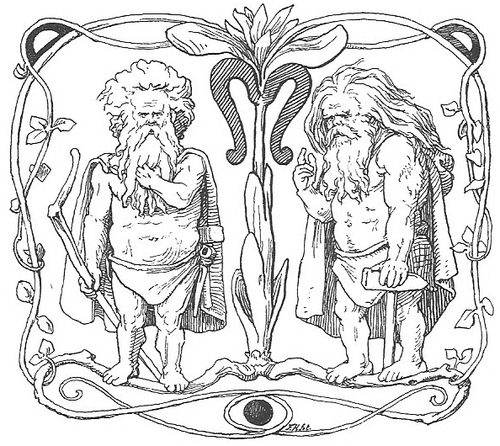
Snorri gives the only description. In heaven is Álfheimr, "where dwell the peoples called Light-Elves; but the Dark-Elves dwell down in the earth, and they are unlike in appearance, but by far more unlike in nature. The Light-Elves are fairer to look upon than the sun, but the Dark-Elves are blacker than pitch" Gylfaginning 17. He adds that the highest heaven is now inhabited only by light-elves Gylfaginning 17. Elsewhere he calls the Dwarves "Black Elves" Skáldskaparmál 35. Whether his dark-elves, his black elves and the dwarves are one people is debated; the poems keep elves and dwarves distinct (see Svartálfaheimr).
Outside the Eddas there is evidence that elves received worship. The skald Sigvatr Þórðarson, travelling in Sweden around 1020, describes being turned away from a farm because an "elf-sacrifice" (álfablót) was under way. The details of such rites are unknown.
In the sources
Quoted from the hosted translations; each line is checked against the text when the site is built. Select a reference to read it in context.
How fare the gods? how fare the elves? All Jotunheim groans, the gods are at council
From the gods and elves who are gathered here No friend in words shalt thou find.
And Alfheim the gods to Freyr once gave As a tooth-gift in ancient times.
The Light-Elves are fairer to look upon than the sun, but the Dark-Elves are blacker than pitch.
How gottest thou, Völund, greatest of elves, These treasures of ours in Ulfdalir?
Othin for the gods, Dain for the elves
Where the sources disagree or fall silent
- The Eddas never explain what elves are or how they differ from the Vanir; some scholars have suggested the two overlapped.
- Snorri's light-elves and dark-elves have no clear counterpart in the poems; the division may be his own scheme.
- Some of the Norns are said to be of elf-kin (Fáfnismál 13, Gylfaginning 15); nothing more is said.
In modern culture
Not from the medieval sources.
Modern elves come mainly from later folklore and from Tolkien, whose tall, wise, immortal Elves draw loosely on Snorri's light-elves; Christmas elves and Shakespeare's tiny fairies come from other strands of the tradition. The Eddas never describe an elf's height, ears or lifespan.