Völsung
Sigmundr
Son of Völsungr and father of Sinfjötli, Helgi and Sigurðr: a king so hardy that poison could not hurt him, who fell in battle against the sons of Hunding.
Sigmundr, son of Völsungr, is the father of the Völsung heroes, and the hosted Eddas tell surprisingly little about him directly. The prose piece Frá dauða Sinfjötla makes him a king in the land of the Franks. His sons were Sinfjötli, the eldest, then Helgi and Hámundr. His wife Borghildr was Sinfjötli's stepmother Frá dauða Sinfjötla, prose 1; the Helgi poems make her Helgi's mother Helgakviða Hundingsbana I 1. With his second wife, Hjördís, daughter of King Eylimi, he had Sigurðr Frá dauða Sinfjötla, prose 2.
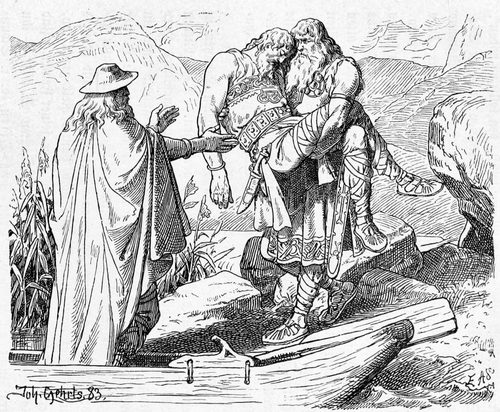
The same prose gives the one scene in which he acts. Borghildr offers Sinfjötli poisoned ale three times. Sigmundr, whom no poison could harm inside or out, drinks the first two horns himself. At the third he tells his son, fatally, "Let it trickle through your beard, Son!" He then carries the body to a fjord, where a stranger in a boat takes the corpse and vanishes Frá dauða Sinfjötla, prose 1. Snorri repeats that Sigmundr could drink venom unharmed, while Sinfjötli and Sigurðr were proof only against venom from outside Skáldskaparmál 41.
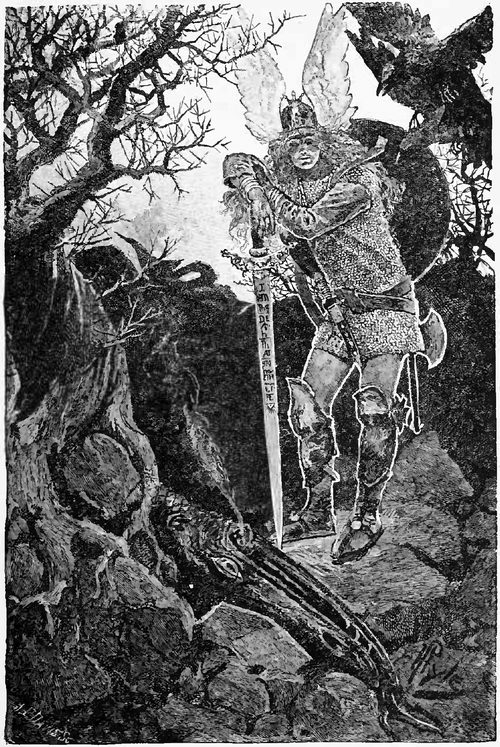
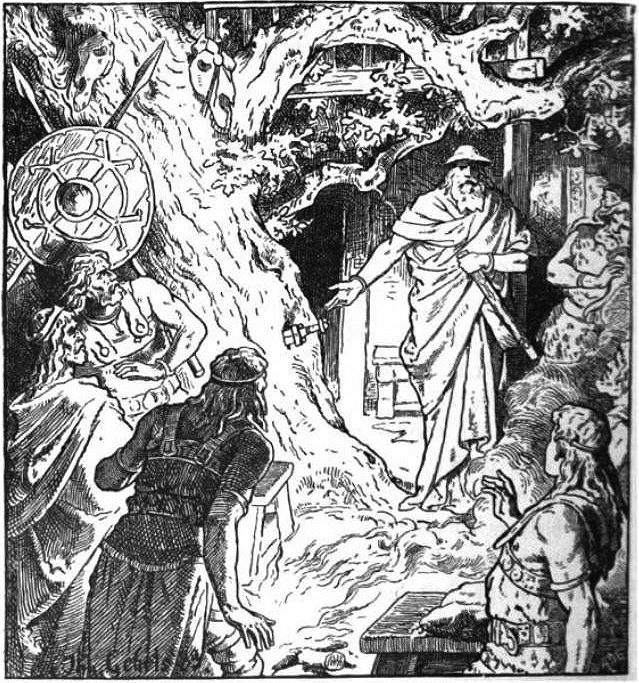
He fell fighting the sons of Hunding Frá dauða Sinfjötla, prose 2, and avenging him is Sigurðr's first deed Reginsmál 26. Hyndluljóð says Odin gave him a sword Hyndluljóð 2. In the later Völsunga saga that sword, pulled from a tree trunk and broken by Odin in Sigmundr's last battle, is reforged as Gramr. The Eddas do not make that link.
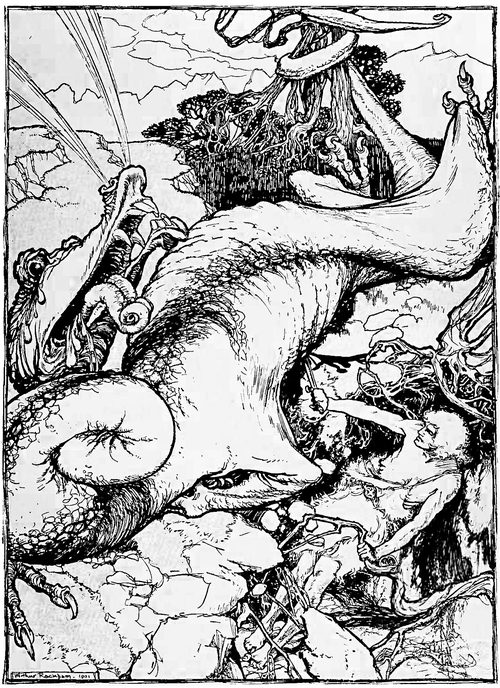
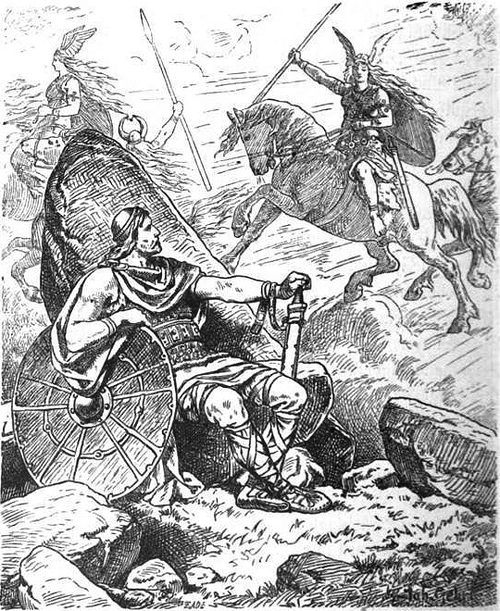
Outside Scandinavia his fame is older than his son's. Beowulf credits Sigemund with the dragon-slaying. In the Old Norse Eiríksmál, a 10th-century poem, Odin sends Sigmundr and Sinfjötli to welcome a dead king into Valhalla.
In the sources
Quoted from the hosted translations; each line is checked against the text when the site is built. Select a reference to read it in context.
It is said that Sigmund was so hardy that poison might not harm him, either outside or in
King Sigmund fell in a battle with the sons of Hunding
To Hermoth gave he helm and mail-coat, And to Sigmund he gave a sword as gift.
Now the bloody eagle with biting sword Is carved on the back of Sigmund's killer
Where the sources disagree or fall silent
- The Eddas never tell how he came by his sword, or the incest with his sister Signý from which Völsunga saga says Sinfjötli was born; these are known only from the saga.
In modern culture
Not from the medieval sources.
The Old English Beowulf has a minstrel sing of Sigemund the Wælsing, who killed a dragon and won its hoard, with his nephew Fitela at his side: the oldest surviving telling of the family's legend, in which the dragon-slayer is Sigmundr, not Sigurðr. Wagner's Siegmund in Die Walküre draws on the Völsunga saga story of the sword in the tree.