place
Fensalir
Frigg's hall, 'most glorious' in Snorri's words; there she wept for Baldr, and there Loki tricked her into naming the mistletoe.
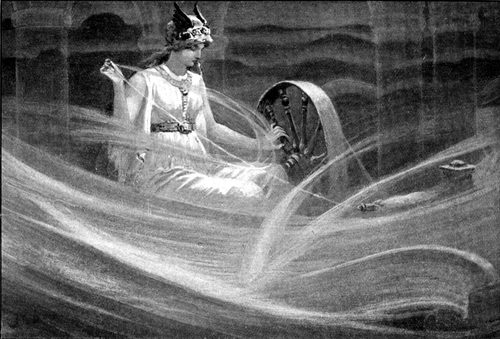
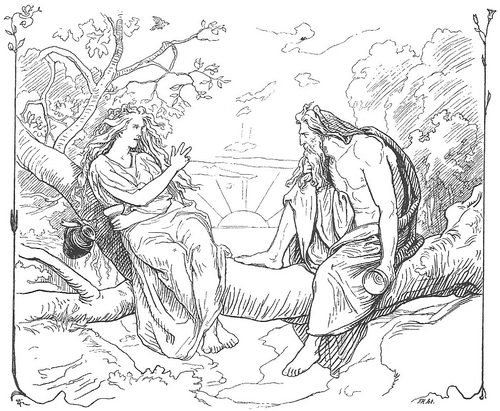
Fensalir, "the fen-halls", is Frigg's home. Snorri names it as her estate and calls it "most glorious" Gylfaginning 35, and skalds could call Frigg "Mistress ... of Fensalir" Skáldskaparmál 19. Strikingly, it is missing from the list of divine halls in Grímnismál.
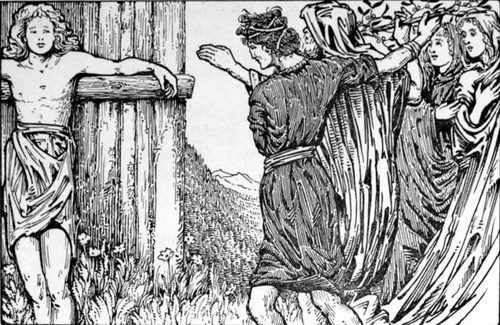
The hall matters in the story of Baldr's death. In Snorri's telling, Loki came "to Fensalir to Frigg" disguised as a woman and got her to say that one thing had not sworn to spare Baldr: the mistletoe growing west of Valhall Gylfaginning 49. Völuspá gives the other side: after Baldr's death, "in Fensalir did Frigg weep sore / For Valhall's need" Völuspá 34. That stanza is the only mention of Fensalir in the poems.
Why the queen of the gods lives in a marsh is never explained. Scholars have connected the watery name with Sökkvabekkr, the hall of Sága among the waves, and suggested the two goddesses may be one. That is an interpretation, not something the texts say.
In the sources
Quoted from the hosted translations; each line is checked against the text when the site is built. Select a reference to read it in context.
Frigg is the foremost: she has that estate which is called Fensalir, and it is most glorious.
But in Fensalir did Frigg weep sore For Valhall's need: would you know yet more?
He went to Fensalir to Frigg, and made himself into the likeness of a woman.