Völsung
Helgi Hundingsbane
Helgi Hundingsbani
Son of Sigmundr and Borghildr who kills King Hunding, wins the valkyrie Sigrún against her family's will, is killed by her brother and returns from his burial mound for one night.
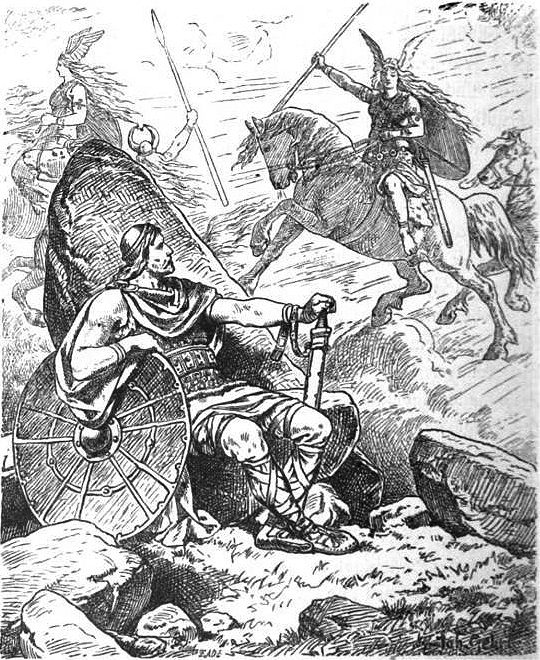
Helgi Hundingsbane is the Völsung hero of two Eddic poems, Helgakviða Hundingsbana I and II. He is the son of Sigmundr and Borghildr and half-brother of Sinfjötli Helgakviða Hundingsbana I 8. The prose names him after the earlier hero Helgi Hjörvarðsson Helgakviða Hundingsbana II, prose 1. His story is a love story set among feuds. He wins the valkyrie Sigrún by killing her betrothed and her father, and he is killed in turn by her brother.
Birth and first battles
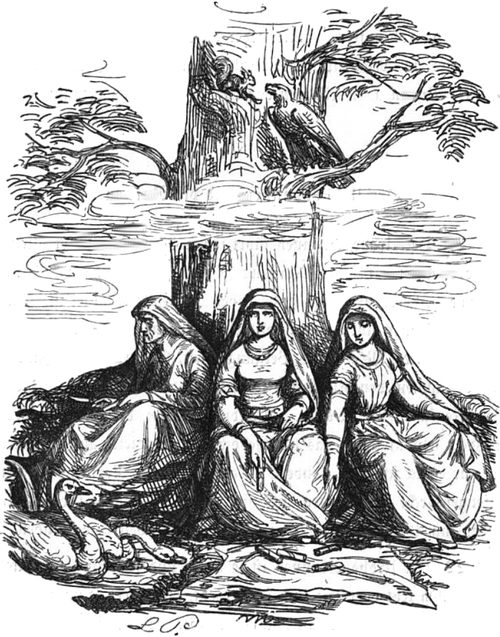
The first poem opens with his birth at Brálundr. The Norns come by night and fasten his fate across the sky, and ravens rejoice that a warrior is born Helgakviða Hundingsbana I 2-6. At fifteen he kills King Hunding, then refuses compensation to Hunding's sons and kills four of them at Logafjöll Helgakviða Hundingsbana I 10-14. The second poem tells it differently. Helgi spies on Hunding's household, escapes the search by dressing as a slave-woman and grinding at the mill, and only then kills Hunding Helgakviða Hundingsbana II, prose 2 Helgakviða Hundingsbana II 2-4 Helgakviða Hundingsbana II, prose 5.
Sigrún
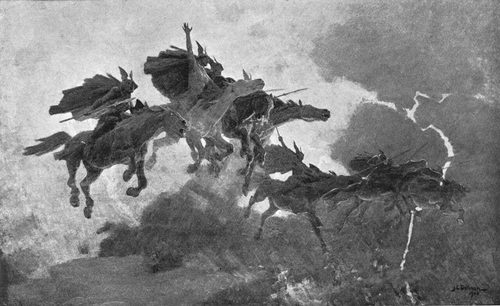
After the battle a band of valkyries appears in a glitter of light, and Sigrún, daughter of King Högni, comes down to him. Her father has promised her to Höðbroddr, son of Granmarr, and she asks Helgi to fight for her Helgakviða Hundingsbana I 15-20. (This Högni is not Gunnarr's brother.) Helgi gathers a fleet. Sigrún shields it from a storm, and Sinfjötli trades insults with Höðbroddr's brother before the battle at Frekasteinn, where Granmarr's sons fall Helgakviða Hundingsbana I 31 Helgakviða Hundingsbana I 55-58. The second poem adds the cost. Sigrún's father and her brother Bragi died fighting Helgi. Only her brother Dagr was spared, and he swore peace Helgakviða Hundingsbana II, prose 10 Helgakviða Hundingsbana II 18.
Death and return
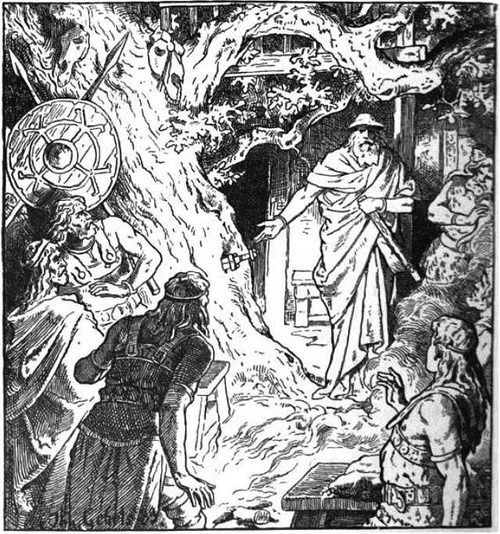
The peace does not hold. Dagr sacrifices to Odin for vengeance, receives Odin's spear and kills Helgi at Fjöturlundr Helgakviða Hundingsbana II, prose 13. Sigrún curses her brother. Dagr answers that "Othin is ruler of every ill" Helgakviða Hundingsbana II 29-33. In Valhalla Odin shares his rule with Helgi, and Helgi sets the dead Hunding to wash feet and feed swine Helgakviða Hundingsbana II, prose 14 Helgakviða Hundingsbana II 38.
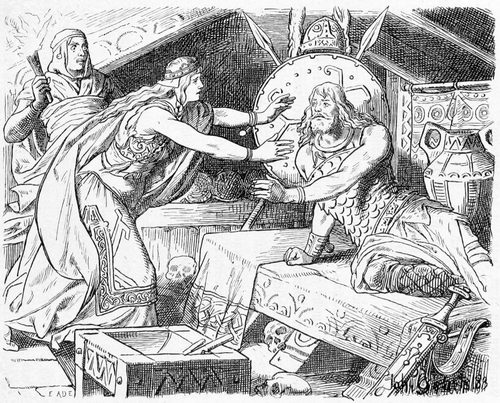
Then comes the poem's famous ending. A maid sees Helgi ride with his men to his burial mound. Sigrún goes in to him and kisses the dead king, whose hair is heavy with frost. He tells her that each of her tears falls bloody on his breast. She makes a bed in the mound and sleeps in his arms. Before the cock crows he must ride back along the reddened ways Helgakviða Hundingsbana II 39-48:
"Now must I ride the reddened ways,And my bay steed set to tread the sky;Westward I go to wind-helm's bridges,Ere Salgofnir wakes the warrior throng."Helgakviða Hundingsbana II 48
He does not come again, and Sigrún soon dies of grief. The prose closes with a note: "it was believed in olden times that people were born again, but that is now called old wives' folly". It adds that Helgi and Sigrún were reborn as Helgi Haddingjaskati and the valkyrie Kára Helgakviða Hundingsbana II, prose 21. The same prose had already said that Sigrún was the earlier valkyrie Sváva reborn Helgakviða Hundingsbana II, prose 6.
In the sources
Quoted from the hosted translations; each line is checked against the text when the site is built. Select a reference to read it in context.
'Twas night in the dwelling, and Norns there came, Who shaped the life of the lofty one
Short time for war the chieftain waited, When fifteen winters old he was; Hunding he slew
Othin gave Dag his spear. Dag found Helgi, his brother-in-law, at a place which is called Fjoturlund.
Thou alone, Sigrun of Sevafjoll, Art cause that Helgi with dew is heavy
he became Helgi Haddingjaskati, and she Kara the daughter of Halfdan
Where the sources disagree or fall silent
- The two Helgi poems disagree on how he killed Hunding and name Hunding's sons differently (Hovarth / Hervarth).
- Whether the three Helgis (Hjörvarðsson, Hundingsbane, Haddingjaskati) were once one hero; the manuscript prose says they were the same souls reborn.
In modern culture
Not from the medieval sources.
The night Sigrún spends with her dead husband in his mound is often counted among the finest scenes in Old Norse poetry. The idea that a mourner's tears trouble the dead returns in later Scandinavian balladry, most famously the Danish ballad of Aage and Else, where the dead lover says her tears fill his coffin with blood.